
Your cart is currently empty!
Trump’s $250 Bill Push Is Real, But Two Federal Laws Say Otherwise
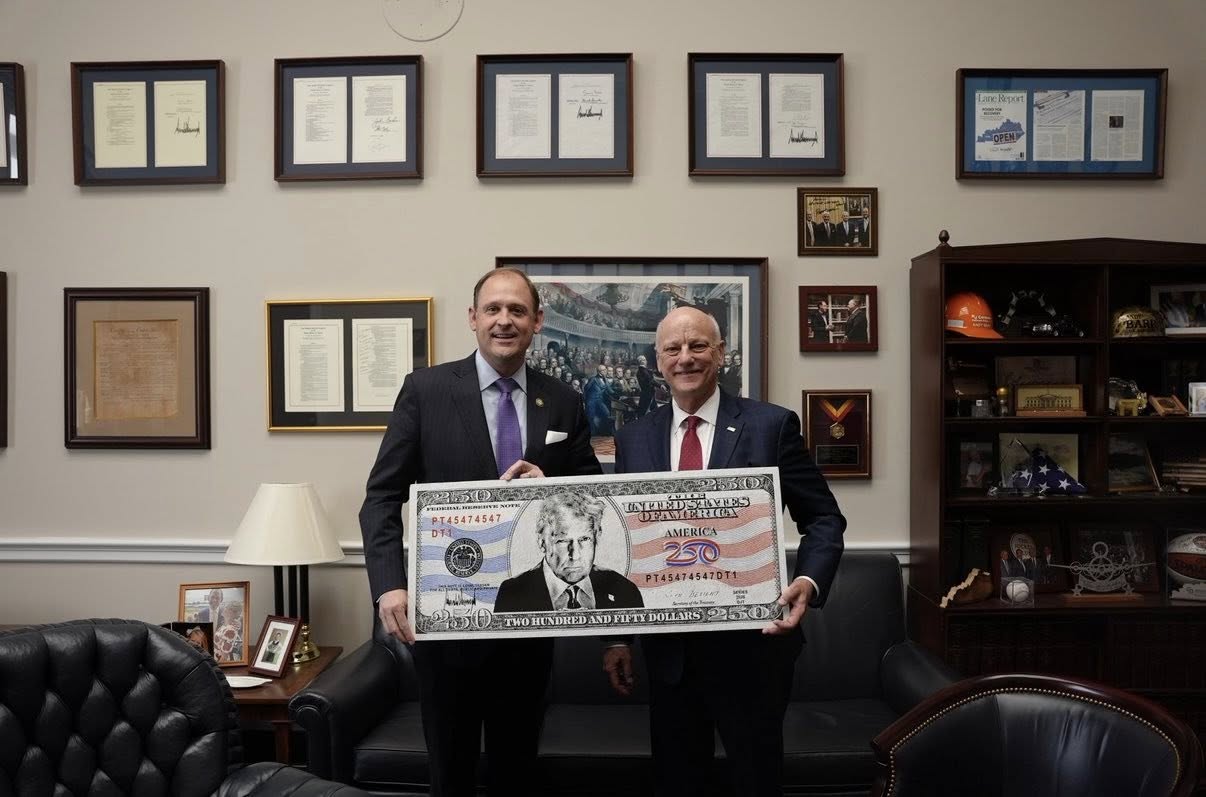
America marks 250 years of independence in July 2026, and the Trump administration has decided the occasion deserves a specific kind of monument. Behind closed doors at the Bureau of Engraving and Printing, prototype designs have been commissioned for a denomination that does not currently exist in American law, featuring a portrait of a living person that federal statute explicitly prohibits from appearing on U.S. currency.
Contents
show
Two separate laws sit between the White House and that goal. Neither has stopped the administration from moving ahead with preparation. What comes next depends almost entirely on a Congress whose arithmetic does not obviously favor the outcome the administration wants, and on a timeline that currency experts say cannot realistically align with the July celebrations, regardless of how fast legislation might move.
A Bill That Started in South Carolina
Rep. Joe Wilson of South Carolina introduced the “Donald J. Trump $250 Bill Act” in February 2025, tying the proposal to the Semiquincentennial, the formal name for the 250th anniversary of American independence. Wilson framed the legislation as both an economic statement and a symbolic act of national recognition, arguing that a new denomination was an appropriate way to honor a president he credited with addressing economic hardship.
“Bidenflation has destroyed the economy forcing American families to carry more cash. President Trump is working tirelessly to fight inflation and help American families. This achievement is deserving of currency recognition, which is why I am grateful to introduce this legislation. The most valuable bill for the most valuable President!” Wilson wrote in his announcement.
Wilson later confirmed he had discussed moving the bill forward with the House Financial Services Committee chair on multiple occasions, and that both Treasury Secretary Scott Bessent and Trump had spoken with him to express personal support. Despite those conversations, the legislation has not moved out of committee. A Republican committee aide told Axios the panel remained in active discussions with members and senators, suggesting internal deliberation rather than any momentum toward a floor vote.
Prototype Designs Already in Preparation

Even without congressional authorization, activity at the Bureau of Engraving and Printing moved ahead in parallel. U.S. Treasurer Brandon Beach and a senior adviser pushed bureau staff to prepare prototype designs for the note. Per reporting by the Washington Post, at least one design has already been reviewed by senior administration officials.
British artist Iain Alexander, who describes himself as a royal portrait artist and former Olympic squad swimmer, developed the mock-up after direct conversations with Trump. One proposed design places Trump’s portrait at the center of the bill, flanked by Trump’s signature and Bessent’s, with patriotic red, white, and blue accents and a logo marking the Semiquincentennial. Alexander said Trump reviewed the design and requested specific modifications to the color scheme and anniversary branding before giving his approval.
“He absolutely loved it,” Alexander said of Trump’s reaction to the revised design. Beach acknowledged in a letter to Wilson’s office, provided to Axios by the congressman, that he was fully aware of the legal prohibition against living people appearing on currency. He argued, nonetheless, that honoring a sitting president during the 250th anniversary was appropriate. After the Washington Post’s reporting became public, the Treasury Department issued a clarification stating the bureau was conducting appropriate planning and due diligence in response to active legislation, and that no bill would be printed before Congress formally acts.
Two Laws That Say No
Federal law places two distinct barriers in front of the proposal, and both require congressional action to clear.
First is the 1866 Thayer Amendment, passed after Spencer Clark, then superintendent of the currency bureau, placed his own likeness on a five-cent note during the Civil War era and triggered a public outcry. Congress responded by prohibiting the portrait of any living person from appearing on U.S. currency, bonds, or securities. American currency has carried that restriction for more than 150 years, a product partly of the young nation’s deliberate rejection of European monarchical tradition, where reigning rulers routinely appeared on money.
Second, the U.S. Code specifies the denominations of Federal Reserve notes. That list includes $1, $2, $5, $10, $20, $50, and $100. A $250 denomination does not appear anywhere in current law. Creating a new denomination requires an act of Congress, not a directive from Treasury.
Bessent addressed both issues at a White House briefing, acknowledging his legal mandates as Treasury Secretary while making clear he personally saw no problem with the underlying concept. He said Treasury would follow the law and that everything rested with Capitol Hill, while also stating he did not believe there was anything inappropriate about recognizing the president in office during America’s 250th anniversary on a commemorative note.
Getting Through Congress Would Be Difficult
Even with Republican majorities in both chambers, the legislative math is narrow. Wilson’s bill would need a simple majority to clear the House. Senate passage presents a steeper challenge. Moving a bill through the Senate under standard procedure requires 60 votes to overcome a filibuster, and Republicans hold 53 seats. Reaching that threshold without Democratic support, which has not materialized and shows no sign of arriving, would require a different procedural approach or a shift in Democratic positions that nothing in the current political climate suggests is coming.
Currency experts have also raised a separate practical constraint. Developing a new denomination involves security feature design, integration with Federal Reserve systems, and ATM compatibility testing across the country. Under normal conditions, those processes take years. Administration officials have publicly framed the $250 bill as connected to July 2026 anniversary celebrations, but that timeline and the realistic development timeline for a new banknote are not compatible under any scenario currently on the table.
Democrats Move to Block It
Political opposition arrived fast after the Washington Post’s reporting and Bessent’s public comments at his briefing. Senator Mark Warner of Virginia, a senior member of the Senate Banking Committee, placed the $250 bill proposal within a broader pattern of what he described as self-referential presidential spending and misplaced priorities.
“As Americans struggle with the rising cost of gas, groceries, housing, and health care, President Trump’s priorities for taxpayer dollars are completely detached from the challenges families face every day: a gold-plated ballroom; a monument blocking Arlington National Cemetery; renaming buildings and airports after himself; rewards for allies who attacked the Capitol on January 6; a passport bearing his image; and now, apparently, even a proposal for a $250 bill with his face on it. If this White House put even half as much energy into working to lower costs as it does into stoking the president’s ego, American families wouldn’t need that new $250 bill just to fill up their gas tanks,” Warner said.
House Minority Leader Hakeem Jeffries dismissed the proposal on X, writing that the White House should get over itself and that the July 4th anniversary belongs to the American journey rather than to any one individual. Several other Democratic lawmakers have separately introduced legislation designed to block Trump’s portrait or signature from appearing on U.S. currency in any form, adding a counter-legislative dimension to a debate that had already grown contentious.
What Supporters Say It Is Really About
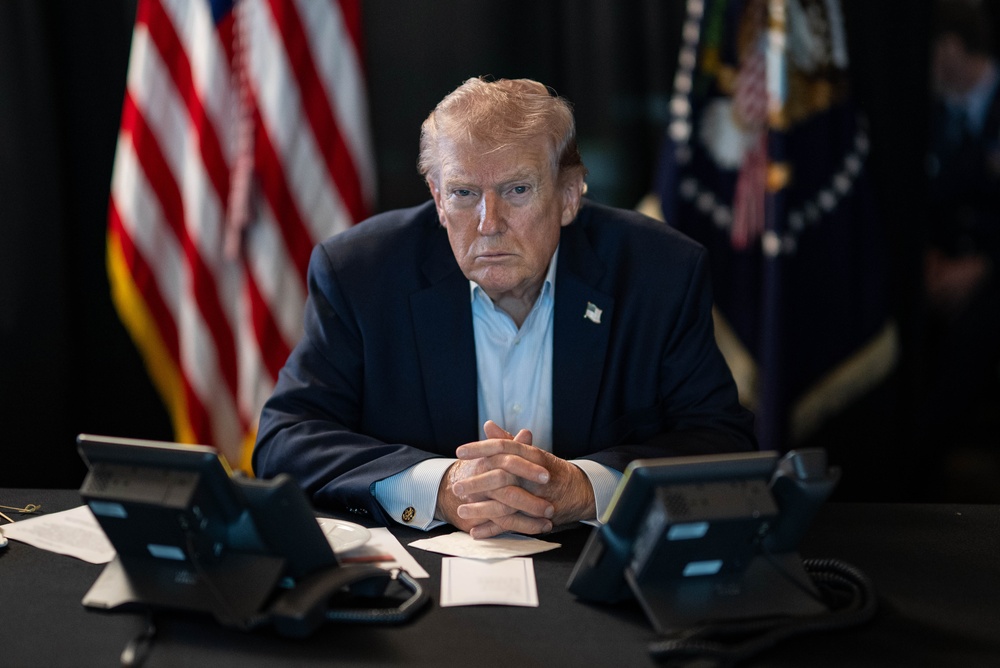
Administration allies have pushed back against the framing that the proposal is primarily about self-promotion, arguing instead that it represents appropriate recognition of a president in office during a once-in-250-years national milestone. Bessent, pressed at his briefing by a reporter who noted that many Americans face real financial pressure, said he saw nothing inappropriate about the concept and defended the idea of honoring a president during an anniversary of that scale.
Supporters have framed the bill as recognition of what they describe as a Golden Age economic revival under Trump’s leadership, connecting it to a broader commemorative effort rather than treating it as a standalone symbolic act. Beach’s letter to Wilson made similar reasoning explicit, arguing that the significance of the 250th anniversary elevated the case for putting a president’s image on a commemorative note above standard objections to the practice.
What Is Already Moving Forward
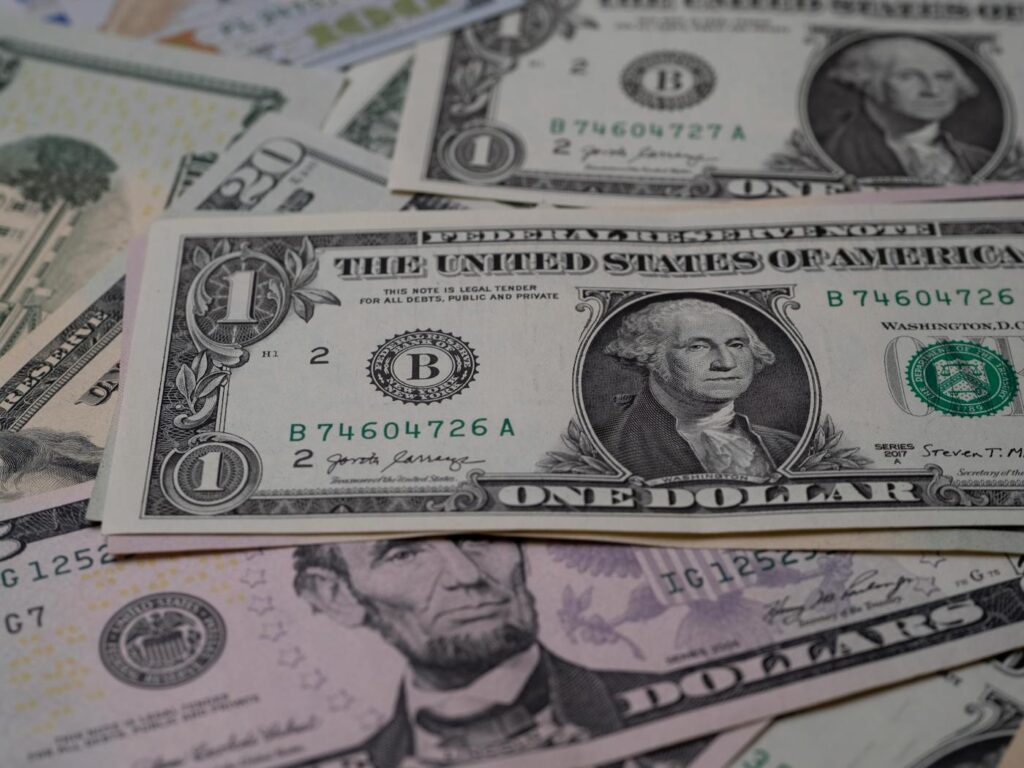
Separate from the $250 bill debate, significant commemorative changes are already underway for the Semiquincentennial and face none of the same legal barriers. Earlier this year, the New York Times reported that Trump’s signature would appear on U.S. paper currency alongside Bessent’s name, a historic first for a sitting president that does not trigger the portrait prohibition because it applies to images rather than signatures.
At the U.S. Mint, coinage across multiple denominations is already being updated. A new quarter featuring five designs tied to American history, a dime whose image has not changed in 80 years, and updates to the nickel and half dollar are all moving forward with “1776 ~ 2026” dual dates added to mark the occasion. None of those changes requires new legislation.
A $250 bill with a living president’s portrait occupies an entirely different legal category, and no amount of commemorative momentum can move it past two statutes without congressional votes that do not yet exist. Whether those votes materialize before July 2026 remains an open question, but the gap between the administration’s stated ambition and the Senate arithmetic it would need to close that gap is real, documented, and wider than anything announced so far has managed to narrow.
Featured Image Source: Facebook/Congressman Andy Barrfacebook.com/photo.php?fbid=1468047394684730&set=pb.100044384501201.-2207520000&type=3
America 250th Anniversary, currency denomination law, Federal Reserve notes, living person on currency law, political news 2026, Republican Legislation, Semiquincentennial 2026, Senate filibuster currency, Treasury Department news, Trump $250 bill, Trump administration news, Trump commemorative bill, Trump currency, Trump portrait currency, Trump signature currency, US currency law, US Mint 2026 coins