
Your cart is currently empty!
The Unbroken Record of Billy Walkabout: The Most Decorated Native American Vietnam Soldier
When Billy Walkabout graduated from U.S. Grant High School in Oklahoma City in 1968, he was eighteen years old, a member of the Cherokee tribe of Anishanoi, and about to enlist in the United States Army. What came next would occupy twenty-three months of his life, produce a collection of military honors without parallel among Native American soldiers in the Vietnam War, and leave marks on his body and mind that never fully healed.
Contents
show
His story is not widely known outside military history circles, which is part of why it deserves to be told in full. What Walkabout did in a jungle southwest of Hue on a single afternoon in November 1968 earned him the Army’s second-highest award for valor. What he did before and after that afternoon filled out a record that the Department of Defense would later describe in plain terms: the most decorated Native American soldier of the Vietnam War.
Born Into the Blue Holly Clan
Walkabout was born in March 1949 in Cherokee County, Oklahoma, into the Cherokee tribe of Anishanoi, known also as the Blue Holly Clan. He was the son of Warren Walkabout and Bobby Jean Chaudion Walkabout, and he grew up in Oklahoma City, where he attended U.S. Grant High School. After graduating in 1968, he enlisted in the Army and was assigned as an infantryman to Company F, 58th Infantry Regiment, 101st Airborne Division, one of the most operationally active units in Vietnam.
He was eighteen when he arrived in Southeast Asia. By the time he left, he had spent twenty-three months in the field and accumulated a set of decorations that most career soldiers would never approach in a lifetime of service.
November 20, 1968
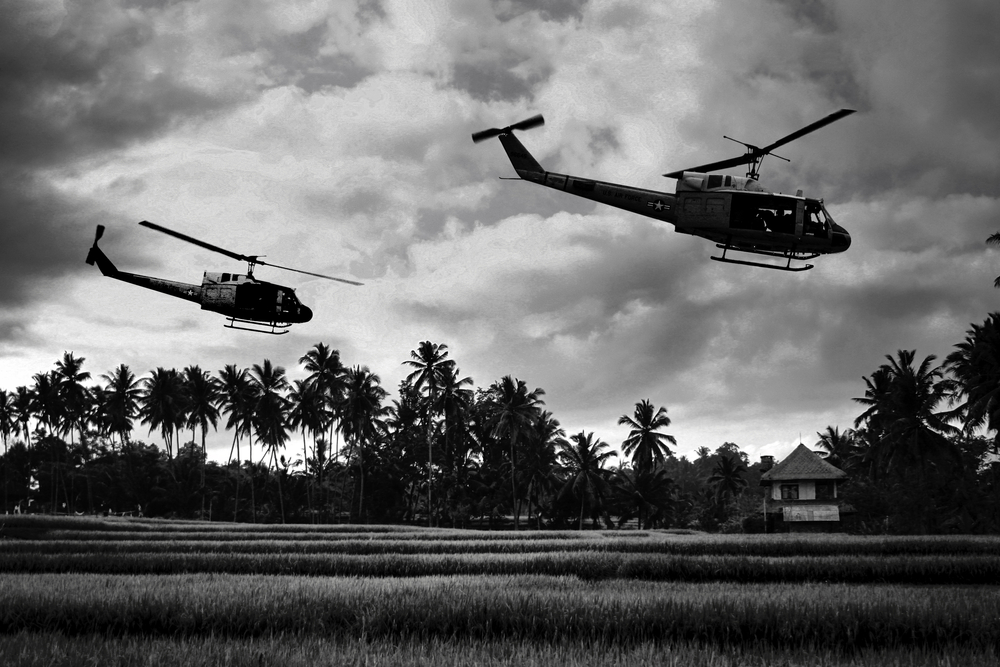
What happened on that date is recorded in detail in the citation for Walkabout’s Distinguished Service Cross, and the precision of that language does more justice to the events than any summary can.
Walkabout, then holding the rank of Specialist Four, was part of a long-range reconnaissance patrol operating southwest of Hue. After the patrol successfully ambushed an enemy squad on a jungle trail, the team radioed for helicopter extraction and began moving toward the pickup zone. As the lead man moved forward, he was hit by automatic weapons fire. Walkabout rose from cover, laid suppressive fire on the attackers, and helped pull the wounded man back to the group. He then administered first aid and prepared the soldier for medical evacuation.
As that man was being loaded onto the extraction helicopter, the enemy attacked again. Walkabout moved under fire to reposition himself between his team and the direction of the assault, placing himself where the enemy was concentrating its attack. He held that position and kept firing.
Then a command-detonated mine went off inside the patrol’s perimeter. Three men died instantly. Every surviving member of the patrol, including Walkabout, was wounded.
What he did next is described in the citation’s own words. “Although stunned and wounded by the blast, Sgt. Walkabout rushed from man to man administering first aid, bandaging one soldier’s severe chest wound and reviving another soldier by heart massage.”
He then coordinated gunship and tactical air strikes on the enemy positions. When the next evacuation helicopters arrived, the patrol was still under fire. Walkabout worked alone to get his disabled comrades aboard each aircraft. He did not allow himself to be extracted until every casualty had been evacuated and friendly reinforcements had arrived on the ground.
What the Decorations Represent
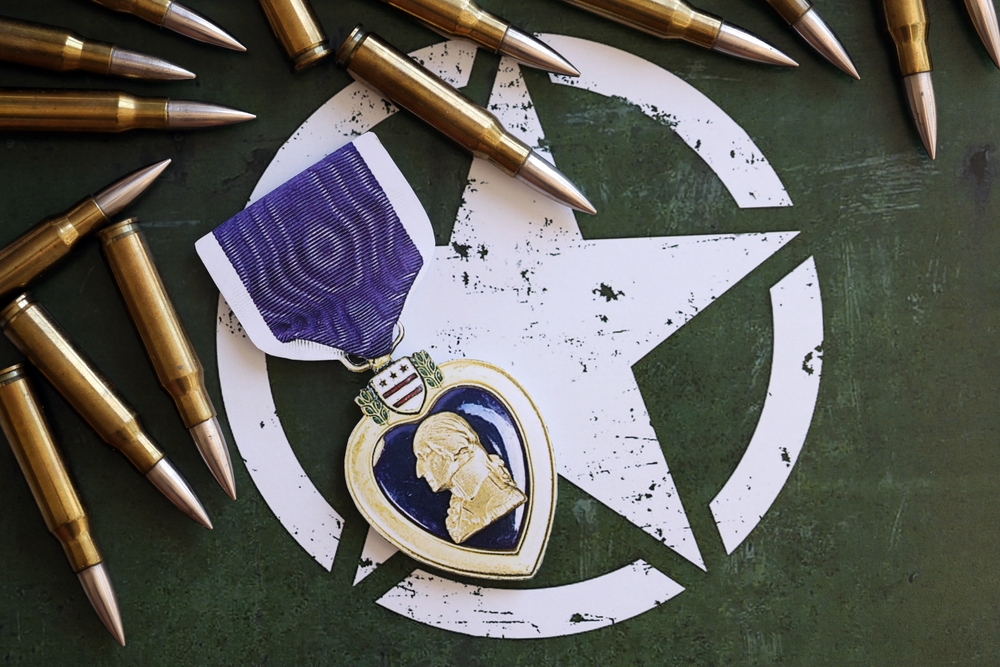
A single afternoon’s actions earned Walkabout the Distinguished Service Cross, the Army’s second-highest award for valor, given for extraordinary heroism against an armed enemy in circumstances that set a soldier apart from all but the rarest examples of military courage. Across his full service, Walkabout received five Silver Stars, ten Bronze Stars, and six Purple Hearts, in addition to the Distinguished Service Cross.
Each Purple Heart marks a documented wound received in combat. Six of them across twenty-three months in the field is not an abstraction. It is a record of a body repeatedly placed in the way of weapons and surviving each time, though not without cost. The Silver Stars and Bronze Stars represent individual acts of valor across multiple engagements, each one assessed and confirmed through the Army’s awards process.
Walkabout eventually rose to the rank of second lieutenant before leaving the Army. His membership organizations after the war reflected the seriousness with which he took his obligations to fellow veterans: he held life memberships in the Military Order of the Purple Heart, the Disabled American Veterans, the Legion of Valor, and the Veterans of Foreign Wars of the United States.
What He Said About It
In a 1986 interview with the Associated Press, Walkabout spoke about what Vietnam had cost him. He did not reach for euphemism or soften the answer for a civilian audience.
“War is not hell,” Walkabout said. “It’s worse.” He was talking about twenty-three months of combat that left him with disabling physical injuries and memories that he described as refusing to fade. The interview was given nearly two decades after the patrol southwest of Hue, and the weight of it had not lifted.
The Long Aftermath
Walkabout came home from Vietnam carrying what the war had put in him, and he was honest in later years about how difficult the years that followed had been. He spoke about failed marriages, suicidal thoughts, and extended periods of self-isolation during which he would withdraw from contact with other people for as long as six months at a time.
Post-traumatic stress was not widely understood or treated in the years immediately following Vietnam, and many of the men who carried it home did so without adequate support from the institutions that had sent them overseas. Walkabout’s experience of those years was not unusual among combat veterans of his generation, which makes it no less serious and no less worth acknowledging.
What helped him, he said, was not therapy or institutional recognition but Native American powwows, gatherings where he was regularly welcomed as an honored guest. In those spaces, among people who understood something about carrying history in the body and finding ways to move through it, Walkabout found a form of grounding that other venues had not provided. His Cherokee identity, present from birth as part of who he was, became in some sense a source of continuity across the rupture that combat had created.
A Life Built After the War
In April 2000, more than three decades after his service in Vietnam, Walkabout married Juanita Medbury-Walkabout. Together, they had three children: Amy Rene, Justin, and Trista. He settled in Montville, Connecticut, near other Native American tribal members, including the Mashantucket Pequot and Mohegan, building a life in a community that connected back to something he had always carried.
His stepdaughter, Randi Johnson, later spoke publicly about what his final years had looked like. Agent Orange, the defoliant used widely by U.S. forces during the Vietnam War and now linked to a range of serious health conditions in veterans who were exposed to it, had affected Walkabout’s kidneys. He spent his last years on a transplant waiting list and underwent dialysis three times a week. The war had not finished with his body when he came home in the late 1960s. It continued its work for decades afterward.
His Death and Burial
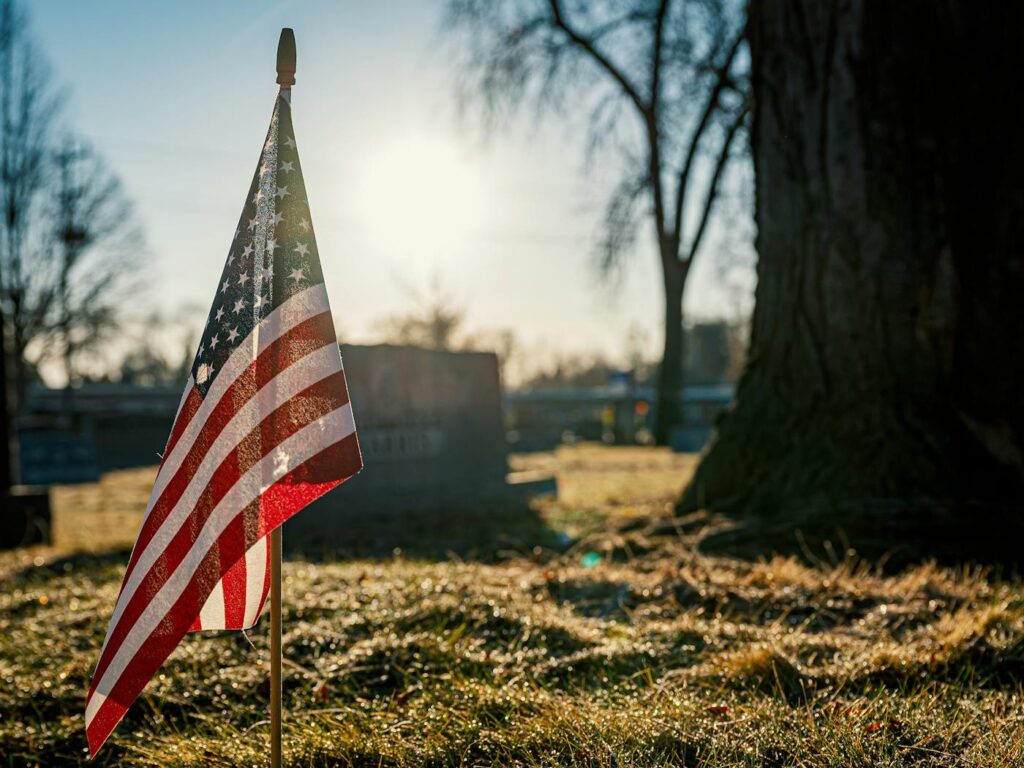
Walkabout died on March 13, 2007, at a hospital in Norwich, Connecticut, of pneumonia and kidney failure. He was fifty-seven years old. The health conditions that killed him had been worsened by his exposure to Agent Orange, a defoliant whose manufacturers and the government that deployed it are still, more than fifty years later, being held to account through ongoing claims processes and litigation.
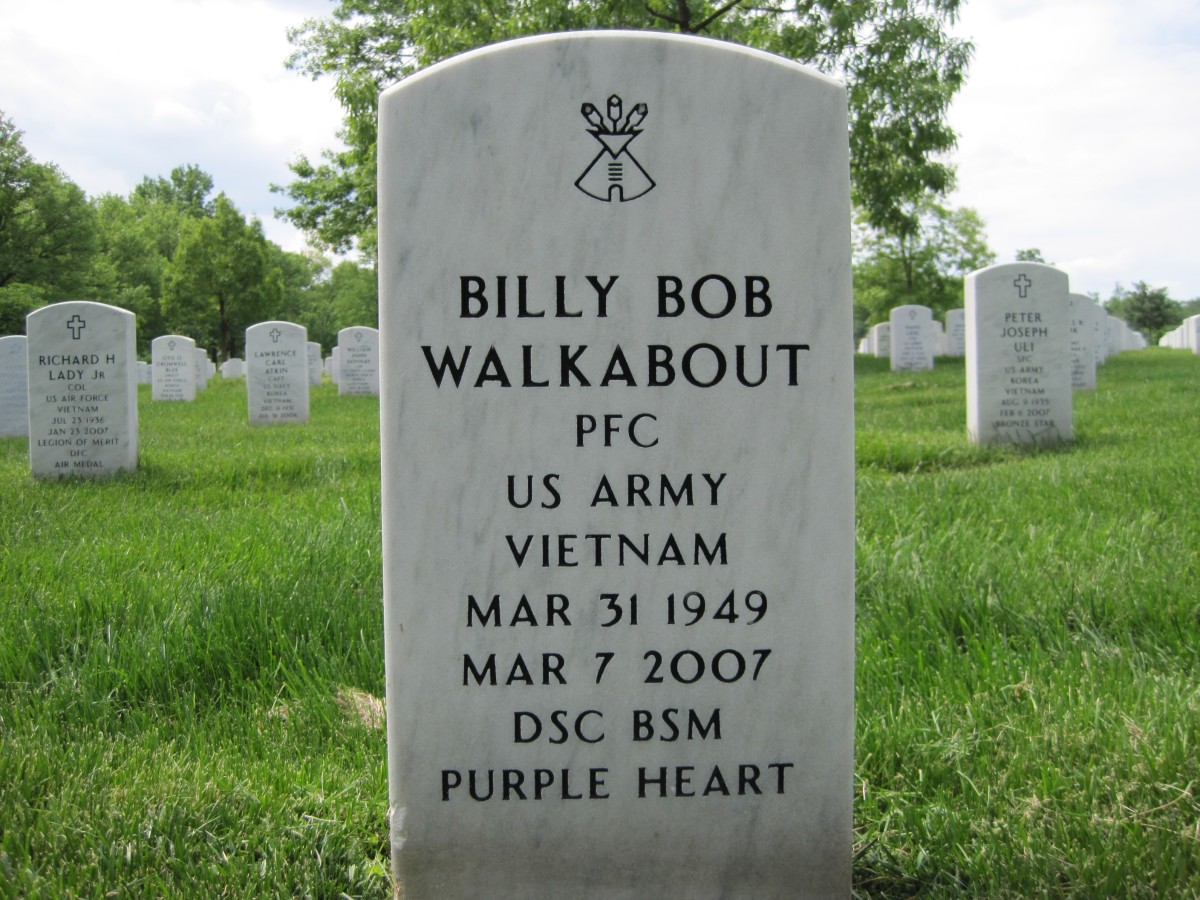
He is buried at Arlington National Cemetery, among the soldiers and veterans whose service earned them a place in that ground. His grave marker carries his name and rank. The full weight of what he did in November 1968, and across the twenty-three months before and after, does not fit on a marker.
The Department of Defense’s designation of Walkabout as the most decorated Native American soldier of the Vietnam War is a formal statement about a specific category of record. What it points toward is something less easily classified: a young man from Cherokee County, Oklahoma, who went to a war, made decisions under conditions that most people will never face, brought as many of his fellow soldiers home as he could, and then spent the rest of his life carrying what that cost.
The citation for his Distinguished Service Cross closes in the language that military commendations use for moments that language can only partly reach, describing actions in keeping with the highest traditions of military service that reflected credit upon himself, his unit, and the United States Army. What it cannot fully convey is what Walkabout himself conveyed in a single sentence to a reporter in 1986, twenty years after he had earned that citation and everything that came with it.