
Your cart is currently empty!
Trump’s ‘Dead Fish’ Handshake With Macron Speaks Volumes, Body Language Experts Say
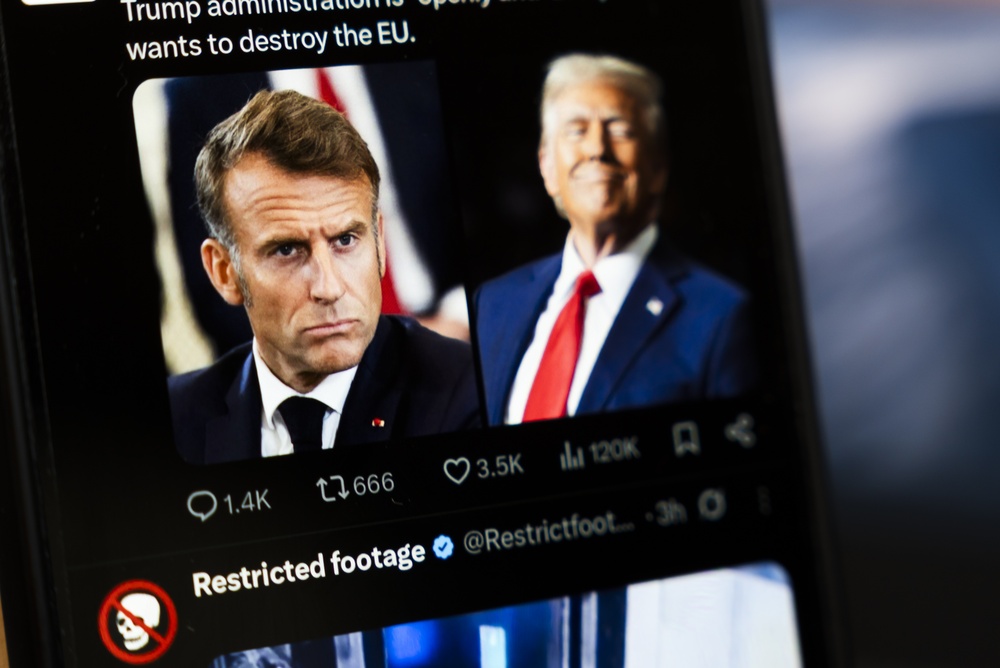
Donald Trump and Emmanuel Macron have spent years turning the simple act of shaking hands into something closer to a contest, trading grips so forceful and prolonged that they became a recurring spectacle of their own. So when the two leaders came together at the G7 summit and produced something altogether different, a flat, oddly limp exchange with none of the usual theater, it did not go unnoticed.
Contents
show
Body language experts who examined the moment say the handshake revealed more than either president likely intended, and their readings paint a picture at odds with the warm words Trump offered about his French counterpart that same day. What the gesture appeared to communicate, along with the unusual circumstances surrounding it, has become a small but telling subject of analysis.
The Handshake That Caught Everyone’s Attention
The encounter unfolded at the G7 summit in Evian-les-Bains, France, between Trump, 80, and Macron, 48. To casual observers, it might have passed as an ordinary greeting, but those who study such interactions closely saw something worth dissecting.
The footage shows a handshake that was nearly vertical in its orientation. Trump’s wrist hung straight down while Macron reached upward to meet it, and the exchange lacked the firm elbow pump that typically accompanies a confident grip. Eye contact between the two men was minimal. Adding to the oddness, Trump appeared to close his eyes just before taking Macron’s hand, a small gesture that several analysts would later seize on. Against the backdrop of the leaders’ shared history, the whole interaction looked conspicuously out of character.
A Sharp Break From Their Combative History
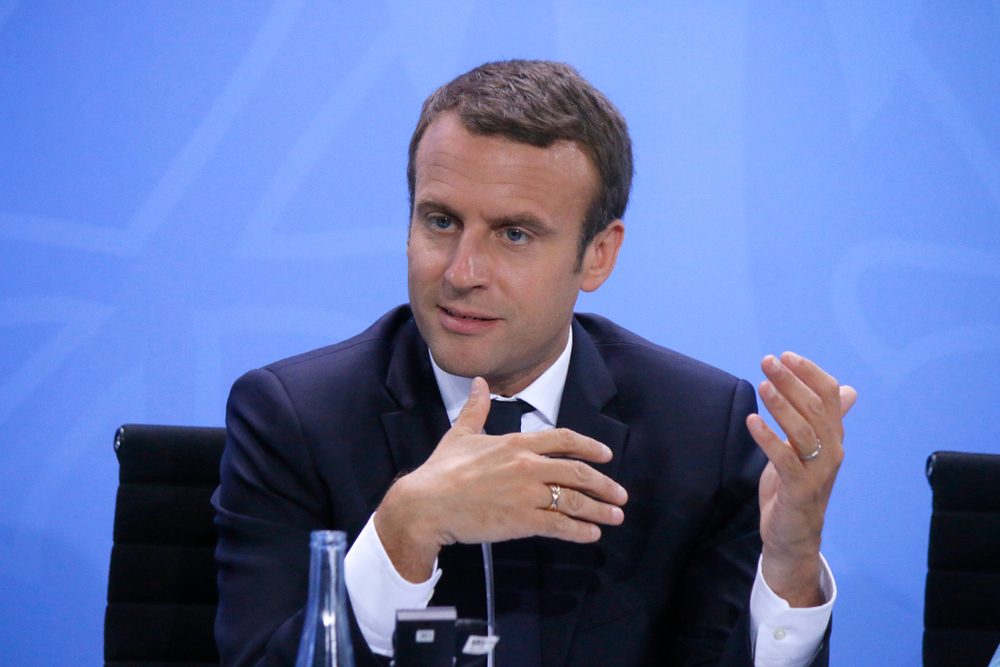
Understanding why the handshake drew attention requires recalling what came before it. Trump and Macron built a reputation for famously intense, drawn-out handshakes, including one infamous grip in 2017 that lasted nearly 30 seconds. Their greetings became a kind of running theme, each one parsed for signs of who had gained the upper hand.
Trump in particular is known for a distinctive approach, often described as a “yank-and-grab,” in which he tugs the other person toward him and refuses to let go. That forceful energy is practically a signature. None of it appeared at the G7. The contrast was made sharper still by an exchange earlier the same day, when Trump was seen shaking the hand of Macron’s wife, Brigitte, for around 13 seconds, an interaction multiple outlets described as awkward. That he would linger so long over one handshake and offer such a flat, lifeless grip to her husband only heightened the sense that something was off.
What ‘Dead Fish’ Actually Means
The most detailed analysis came from clinical psychologist and behavioral expert Denise Dudley, who spoke to The Huffington Post. She identified the gesture as a textbook example of a particular and unflattering category of handshake.
“Trump is literally hanging his hand downward,” Dudley said, explaining that this style, commonly known as the “dead fish” handshake, leaves the other person to “do all the work.”
For Dudley, the mechanics carried a clear message about the relationship between the two leaders. She read the gesture as a sign that Trump could not be bothered to address Macron in a way that looked pleasant, effectively forcing the French president to reach in and find his hand. A dead fish handshake, in her interpretation, communicates a refusal to extend full energy and a pointed unwillingness to acknowledge the other person as an equal. She even put words to the internal attitude she believed the gesture conveyed, imagining a sentiment along the lines of bracing oneself to do something one would rather avoid.
Other Experts Weigh In
Dudley was not alone in finding the handshake revealing. Behavioral scientist Abbie Maroño was similarly direct, calling it a limp handshake without hesitation and reading it as passive to the point of rudeness. She described the encounter as feeling so passive that it came across as disrespectful, as though the interaction simply was not worth Trump’s time.
Body language expert Traci Brown approached it from a different angle, focusing on how dramatically the moment departed from Trump’s usual persona. Given his reputation for power and force, she found the absence of energy especially striking.
“It’s off-brand for him,” Brown said. “His brand is power and force, and so this is the exact opposite of that.”
That observation captures much of why the handshake registered as notable. For a figure who has made physical dominance a recognizable part of his public style, a weak and disengaged grip read almost as a departure from character.
Words Versus Body Language
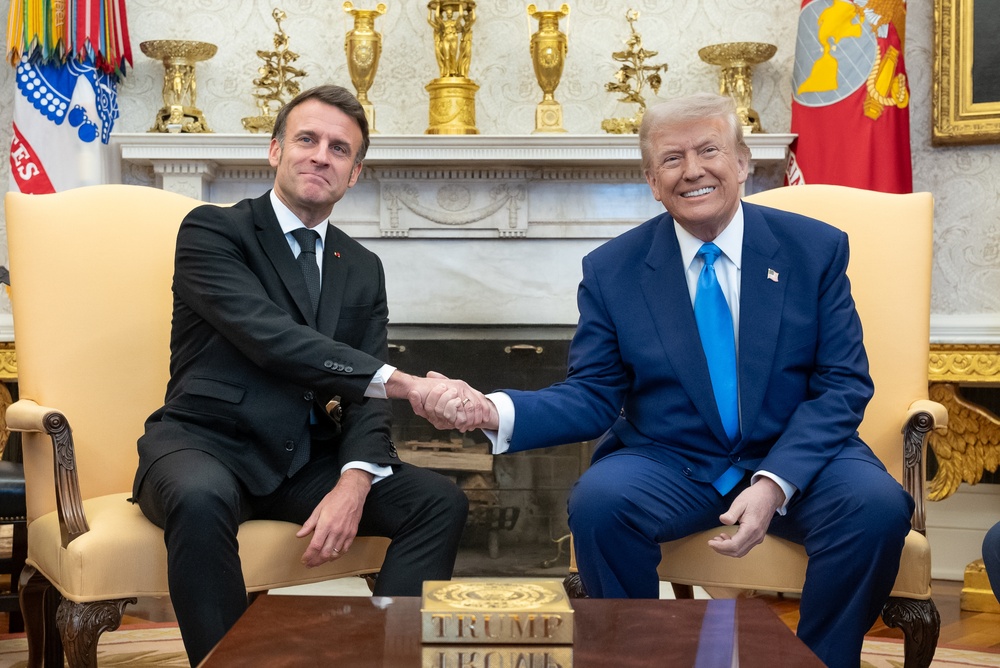
What gives the analysis its sharpest edge is the contradiction the experts identified between Trump’s gestures and his words. At the summit, Trump referred to Macron as “a very special friend,” a description that sits uneasily beside a handshake the experts read as dismissive.
The analysts argued that the body often reveals what words conceal. Brown noted that handshakes tell you what is going on deeply and unconsciously with people, suggesting that the limp grip offered a more honest window into Trump’s state of mind than his friendly language did. Maroño made the point even more plainly, framing it as a classic case of words saying one thing and the body saying another, and explaining that when the two diverge, she tends to trust what the body communicates. That tension, between the warm public statement and the cool physical gesture, sits at the center of why the moment invited so much interpretation in the first place.
The Timing Raises Questions
Beyond the handshake itself, the experts pointed to the circumstances surrounding it as potentially significant. The greeting came just a day after Trump’s late-night UFC celebration marking his 80th birthday, an event held at the White House as part of the country’s 250th anniversary festivities. Brown suggested the proximity of the two occasions may have played a role in Trump’s flat demeanor.
“It seems like someone stayed up too late,” she said, adding that Trump appeared to be there in body, but that was the extent of it. It is worth treating this as the experts’ speculation rather than fact. They offered fatigue as one plausible explanation for the low-energy exchange, a reading informed by the timing, but it remains an inference drawn from observation rather than anything confirmed about Trump’s condition that day.
A Broader Conversation About Trump’s Stamina
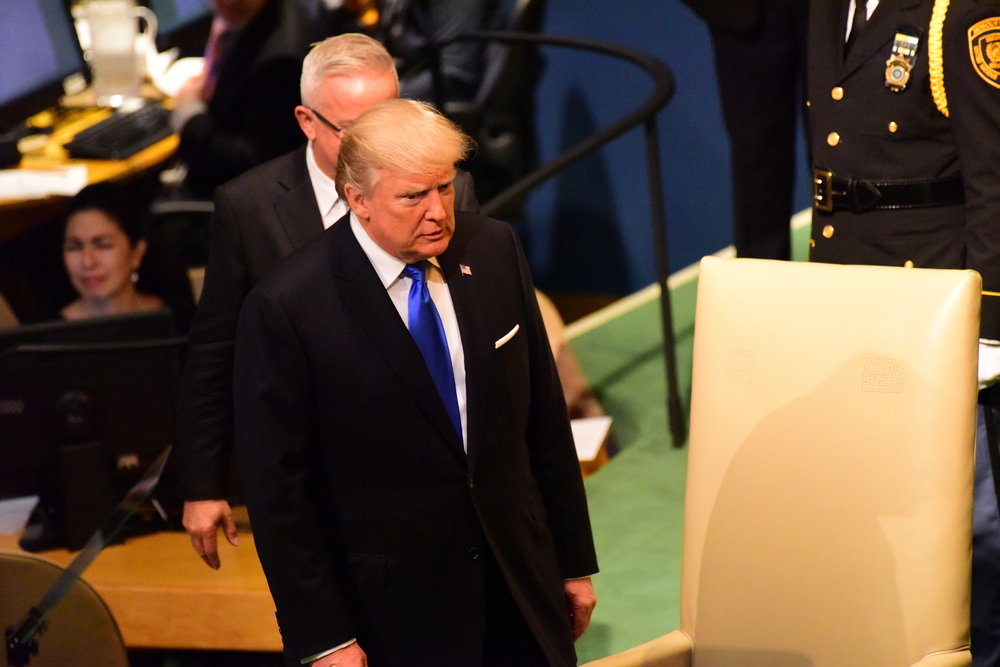
The handshake analysis arrived amid a wider and more contentious discussion about Trump’s alertness, one that the sources connect directly to the moment. In recent months, footage appearing to show Trump dozing off at various events has fueled speculation about his stamina, and some critics have begun applying a familiar label to him. The nickname “Sleepy Joe,” once deployed against former President Joe Biden during his single term, has been turned around by Trump’s opponents, an irony given that Biden and Trump are the only two US presidents to have held office past their 80th birthdays.
Prominent Democrat Ted Lieu contributed to the criticism on social media, listing occasions on which he claimed Trump had fallen asleep, including cabinet meetings, White House events, a Memorial Day ceremony, and a loud nighttime basketball game between the New York Knicks and the San Antonio Spurs. Even some who once worked for Trump have weighed in. Ty Cobb, who served as White House special counsel during Trump’s first term, told the Telegraph that the change since that period was dramatic, and offered a blunt assessment of what he believed he was witnessing in terms of the president’s sharpness.
These claims, however, are contested opinions rather than settled facts, and they are directly disputed by Trump’s own medical team. In a memo released at the end of May, the president’s physician, Dr. Sean Barbabella, stated that Trump remained in excellent health, demonstrating strong cardiac, pulmonary, neurological, and overall physical function. The memo, which followed Trump’s third visit to Walter Reed National Military Medical Center in 13 months, further noted that he was fully fit to carry out all the duties of the presidency. Fairness requires holding both of these accounts side by side, the critics’ interpretations on one hand and the official medical evaluation on the other, without treating either as the final word.
The Diplomatic Backdrop
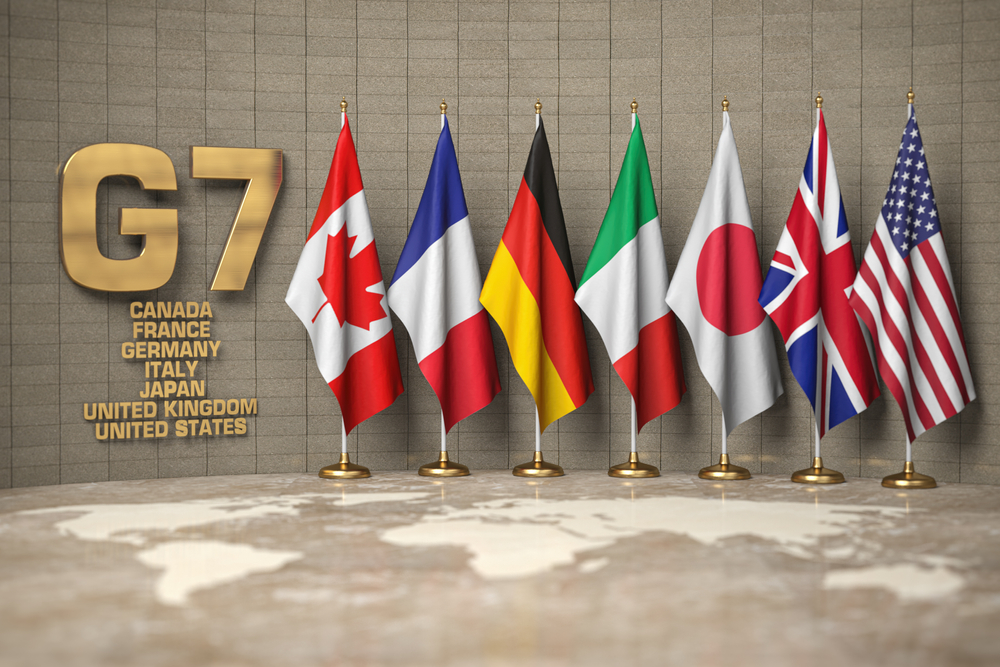
The handshake also landed at a delicate moment for relations between the United States and Europe. Commentators noted that the exchange came amid strained transatlantic ties, with questions emerging about how dependable an ally the United States is proving to be. Speculation has continued over geopolitical flashpoints as well, including whether the strategically important Strait of Hormuz will be reopened.
This context is worth keeping in proportion. There is no evidence that a single handshake reflects the state of US-France relations, and the diplomatic backdrop functions here as atmosphere rather than explanation. Still, the timing gave observers an additional lens through which to view the interaction, layering a moment of personal body language onto a broader period of uncertainty between longtime allies.
A Reading, Not A Verdict
For all the detailed interpretation, it is worth remembering what this analysis is and is not. Body language reading is inherently subjective, an exercise in informed interpretation rather than proof, and the conclusions drawn by Dudley, Brown, and Maroño represent their professional impressions rather than verifiable facts about what Trump was thinking or feeling. The White House was approached for comment on the matter.
What remains is the gap the experts kept returning to. Trump called Macron a very special friend, and his handshake, in the eyes of those who study such things, seemed to say something rather different. Whether the explanation lies in fatigue, in the genuine state of the relationship, or in nothing more than a single off moment caught on camera, the distance between the words and the gesture is what made people look twice. That tension, more than any firm conclusion, is what the moment ultimately leaves behind.
Abbie Maroño, body language, Body Language Expert, Brigitte Macron, dead fish handshake, Denise Dudley, diplomacy, Donald Trump, Emmanuel Macron, Evian-les-Bains, G7 Summit, handshake, political analysis, Traci Brown, transatlantic relations, Trump Health, Trump Macron, US-France relations, world leaders