
Your cart is currently empty!
A Hidden Immune System May Be Sitting Inside Your Skull
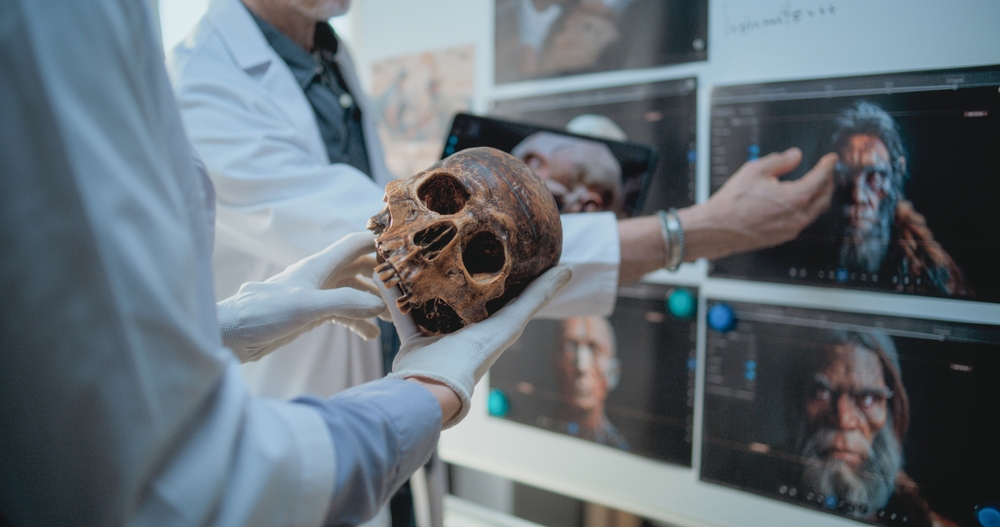
For decades, the skull was treated as little more than armor, a hard shell protecting the brain from the outside world. Now, scientists studying mice have discovered specialized immune structures hidden inside the skull’s bone marrow that could force medicine to see that familiar bone very differently.
Contents
show
The finding suggests the brain may have a nearby immune defense system receiving signals directly from the tissues around it. Researchers say the discovery could eventually reshape how scientists investigate brain cancer and other neurological conditions.
Tiny Channels Through The Skull Changed Everything
The discovery builds on research that has steadily challenged older ideas about the brain and the immune system. For much of the last century, the brain was described as largely immune privileged because the blood-brain barrier limits what can move between the bloodstream and brain tissue.
That understanding has changed significantly in recent years. Researchers discovered lymphatic vessels in the membranes surrounding the brain in 2015, and later identified tiny channels running through skull bone that allow immune cells to move between the marrow and tissues near the brain.
Scientists had already observed movement toward the brain, but the new research examined traffic traveling in the opposite direction. Jang Hyun Park, a postdoctoral research fellow in Jonathan Kipnis’s lab at Washington University School of Medicine in St. Louis, studied skull bone marrow from healthy mice and found something researchers did not expect.
Using fluorescent tracers, the team watched proteins from the brain move through these microscopic channels and settle in the skull’s marrow. Cerebrospinal fluid also appeared to travel through the pathways, suggesting the bone marrow was receiving information about what was happening inside the brain.
Researchers Found Unexpected Immune Structures
At the other end of those channels, the scientists found structures resembling germinal centers. These are specialized areas normally associated with lymph nodes, where B cells can be activated and develop antibody responses against specific targets.
Finding similar structures inside healthy skull bone marrow was unexpected. “We have never seen such structures in healthy bone marrow before,” Park said, adding that the discovery suggests “a complex brain requires its own specialized immune structures to defend it.”
The structures also contained a distinct population of follicular helper T cells, which help support B-cell immune responses. Kipnis said skull bone marrow is “far more than just a structural framework” and contains “previously unrecognized hubs for brain-specific immune responses.”
The idea is striking because these immune structures sit only millimeters from the brain. In the mice studied, the brain appeared to have a nearby immune outpost embedded within the bone surrounding it.
How The Brain May Send Its Signals

The researchers used fluorescent tracers to follow proteins and fluids as they moved through the skull. Their findings indicated that material associated with the brain could travel outward through tiny channels and reach the bone marrow.
That movement could allow nearby immune cells to receive early information about changes occurring inside the brain. The researchers’ work, published in Nature, opens new questions about how closely the nervous and immune systems may be connected.
Why Their Location Is So Important
One detail makes the finding especially interesting for medical research. The immune structures are located outside the blood-brain barrier, which has long made it difficult to deliver many treatments directly into brain tissue.
Scientists are now interested in whether influencing immune activity around the skull could someday provide another approach to treating brain-related diseases. That possibility remains speculative, particularly because the central experiments were conducted in mice.

When The Scientists Shut Them Down
The team wanted to determine whether these skull immune hubs actually influenced disease. To investigate that question, researchers studied mice with glioblastoma, an aggressive form of brain cancer.
The scientists used a drug to suppress the newly identified immune structures and then monitored the tumors. Without those hubs functioning normally, the tumors grew faster and the mice died sooner.
That result suggested the structures were doing more than simply existing near the brain. They appeared to contribute to the animals’ ability to mount an immune response against the cancer.
Glioblastoma remains one of the most difficult cancers to treat, with poor long-term survival rates. Any newly identified immune pathway connected to the disease is therefore likely to draw close scientific attention.
A Gel Under The Scalp Produced A Different Result

The researchers then tested the opposite approach by trying to stimulate the skull immune hubs. They developed a hydrogel containing three immune-boosting proteins: a CD40 agonist, IL-21, and interferon gamma.
The gel was placed beneath the scalp, directly above the skull bone. It did not enter the brain and was not delivered through a vein.
The immune response began in the skull structures identified by the researchers and then spread to nearby lymph nodes. Mice receiving the treatment rejected their tumors more effectively and survived longer than untreated animals.
The two experiments pointed in the same direction:
- Suppressing the immune hubs: Tumors grew faster and the mice died sooner.
- Stimulating the immune hubs: The animals mounted a stronger response against their tumors.
- Targeting the skull externally: The experimental gel did not need to cross directly into brain tissue.
These findings do not establish a treatment for people, but they provide scientists with a new biological system to investigate. The location of the structures may prove especially important because they sit outside one of medicine’s most difficult barriers.
The Human Evidence Is Still Limited

The excitement surrounding the discovery needs an important qualification: nearly all of the key experiments happened in mice. Scientists have detected follicular helper T cells in human skull bone marrow, giving researchers a reason to investigate whether similar structures might also exist in people.
That evidence does not prove that humans possess identical immune hubs. Researchers also do not yet know whether any comparable structures would behave the same way or influence disease in a similar manner.
No person has received the experimental hydrogel described in the study. There is no established human clinical trial, treatment timeline, or evidence showing that stimulating the scalp area can fight brain tumors in people.
Animal research can reveal important biological clues, but successful experiments in mice do not automatically become successful human treatments. Kipnis has also disclosed that he co-founded three biotechnology companies: Pranas Neuro, Rho Bio, and Argo Neurotech.
Why Alzheimer’s And Other Diseases Are Mentioned
Cancer is only one area where the findings could eventually have implications. Kipnis said understanding these nearby immune responders could influence research into neurological conditions that involve immune activity.
“Knowing that the brain relies on first responders in the surrounding skull for defense has the potential to change how we think about developing therapies for many neurological conditions, including Alzheimer’s disease, Parkinson’s disease, schizophrenia, long COVID and many others that have an immune component to them,” Kipnis said.
That statement should not be interpreted as evidence that the newly discovered structures can currently treat those conditions. Instead, the finding adds another possible piece to a growing scientific picture of how immune activity may interact with neurological disease.
Researchers have increasingly examined inflammation, immune signaling, and the tissues surrounding the brain when studying disorders once viewed mainly through the behavior of neurons. The skull structures identified in mice could provide another place for scientists to look.

The Skull May Be More Than Protective Armor
The strangest part of the discovery is its location. The skull is among the most familiar structures in human anatomy, yet researchers may have identified a specialized immune system hidden within bone that had remained unrecognized.
The microscopic channels also challenge the idea that the brain exists in complete isolation behind the blood-brain barrier. The new findings suggest there may be a direct system of communication between the brain’s surroundings and immune structures in the nearby skull.
Scientists now have several major questions to answer:
- Do identical immune structures exist in human skull bone marrow?
- How do they respond to infections and neurological diseases?
- Can they influence the growth of brain tumors?
- Could future treatments safely target them from outside the skull?
Those questions remain unanswered, but they show how much research this discovery could generate. A single unexpected finding inside ordinary bone has opened an entirely new area of investigation.
A New Way To Look At The Bone Around Our Brains
For generations, the skull has been understood primarily as a protective barrier. In these mice, however, it also appears to contain specialized immune structures that receive information connected to the brain and help organize a defense.
Suppressing those structures allowed tumors to grow faster, while stimulating them strengthened the animals’ response. Whether humans possess the same system remains unknown, and any medical application is still far in the future.
For now, scientists have uncovered something remarkable inside a part of the body most people rarely think about. The skull may still be the brain’s armor, but researchers have found evidence that, at least in mice, it could also be part of the defense force.