
Your cart is currently empty!
Scientists Find Old Style Lamps May Improve Vision
A cheap old-fashioned desk lamp may have done something surprising to people’s eyesight after just two weeks. The finding has reignited a heated debate about the LED lighting that now fills homes, offices, schools, and public spaces.
Contents
show
One scientist has compared the potential scale of the problem to asbestos. That claim goes much further than the latest study itself proves, but the experiment has raised questions researchers are still trying to answer.
Twenty-Two People Took Part in the Experiment
The experiment was remarkably simple. Researchers placed 60-watt tungsten desk lamps around the workspaces of 11 volunteers for two weeks, while another 11 continued using their normal lighting.
The study involved 22 adults aged between 23 and 65 and was published in Scientific Reports in January 2026. Participants made no changes to their diet or exercise routines and simply spent time under the additional warm lighting.
Researchers tested everyone’s colour contrast sensitivity before and after the experiment. The results suggested that the group exposed to the tungsten lamps experienced a measurable change.
The paper reported that “improvements in both tritan and protan were of the order of 25%.” These measurements relate to how well the eye distinguishes colours along blue-yellow and red-green axes.
The control group’s results did not show comparable changes. That difference is what has made the small study so intriguing.
The Changes Were Still There Weeks Later
Researchers continued testing participants after the supplemental lamps were removed. Four weeks later, the improvements were still present, and the gains remained measurable at six weeks.
According to the study’s abstract, the effect lasted for two months after the supplemental lighting was taken away. The researchers also wrote that they “did not find the end of the effect.”
That does not mean the changes would last indefinitely. The study simply did not continue long enough to determine exactly when they disappeared.
The finding remains unusual because the intervention lasted only two weeks. A familiar type of desk lamp appeared to produce changes that remained measurable long after it had been switched off.
Why Tungsten Light Is Different From LEDs
White light can look similar to the human eye while containing very different mixtures of wavelengths. That difference sits at the centre of the debate surrounding the latest research.
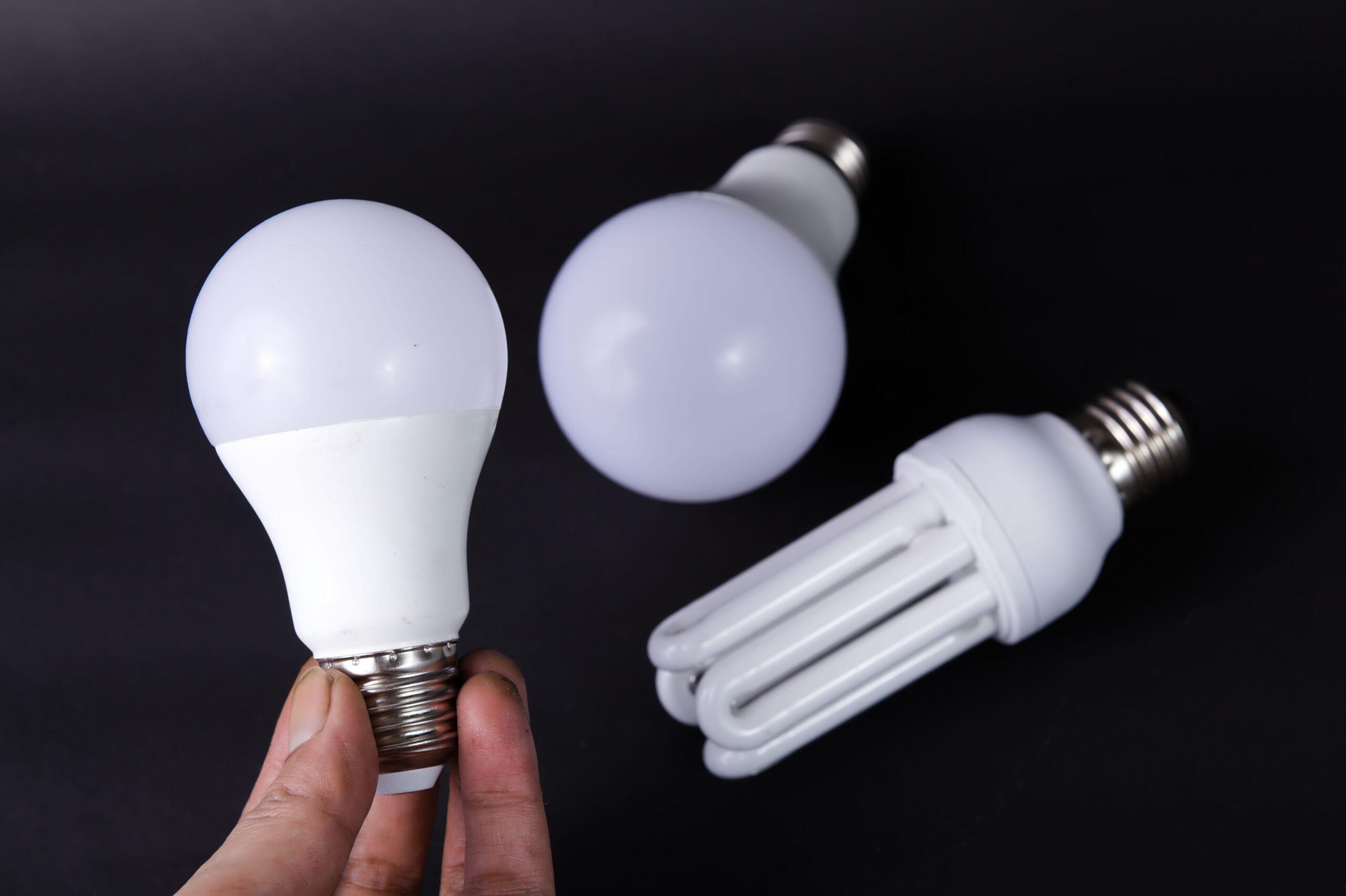
Traditional tungsten bulbs produce a broad spectrum of light that extends through visible red wavelengths and into near-infrared wavelengths beyond roughly 700 nanometres. Humans cannot see that infrared light, but researchers are investigating whether cells respond to it.
Many modern LEDs work differently and commonly use a blue emitter with coatings that help create white light. Compared with tungsten bulbs, many LEDs contain far less of the longer red and near-infrared wavelengths.
The Mitochondria Question
Neuroscientist Glen Jeffery has spent years studying whether different wavelengths of light can affect mitochondria. These structures produce much of the ATP that cells use for energy.
Previous laboratory and animal research has suggested that deep red and near-infrared wavelengths may influence mitochondrial activity. Researchers are still investigating how significant those effects are in humans and under everyday conditions.
Jeffery previously said: “Sunlight has a balance between red and blue, but we now live in a world where blue light is dominant because although we do not see it, LED lights are dominant in blue and have almost no red in them.”
The latest experiment did not directly measure mitochondrial activity in its participants. It measured colour contrast sensitivity, while the mitochondrial explanation remains a proposed mechanism supported partly by earlier research.
Why One Scientist Mentioned Asbestos
The most alarming statement associated with this debate did not appear in the January 2026 study. It came from Jeffery during an appearance on the Huberman Lab podcast in December 2025.
Speaking about lighting dominated by short wavelengths, he said: “This is an issue on the same level as asbestos. This is a public health issue, and it’s big.”
That comparison represents Jeffery’s assessment rather than an established scientific consensus. The paper itself uses considerably more cautious language and says LED lighting “clearly has the ability to undermine visual performance probably via reduced mitochondrial function.”
The word “probably” matters because it reflects uncertainty about the underlying mechanism. The researchers also wrote that widespread LED use “may represent an important issue in public health and clinical environments.”
No major regulator has classified ordinary LED lighting as an asbestos-level health hazard. The comparison should therefore be understood as a strong warning from one researcher rather than a settled conclusion.
What the Study Did Not Measure
The findings can easily be turned into a dramatic online claim, but the experiment had clear limitations. It measured colour vision performance in a small group and did not measure ATP production, mitochondrial output, metabolism, disease risk, or physical damage caused by LED exposure.
The researchers acknowledged the size of the experiment themselves. They wrote that “future studies would clearly benefit from inclusion of a larger number of subjects.”
The team also tried to reproduce the effect using infrared LEDs instead of tungsten lamps. According to the paper, “our attempts here have limited success.”
That result suggests the explanation may be more complicated than simply adding infrared light to an LED bulb. Light intensity, duration of exposure, and the broader spectrum could all play a role.
Previous Reviews Found No Proven Direct Harm
The debate over LED safety did not begin with this experiment. In 2018, the European Commission’s scientific committee assessed potential health risks associated with LED lighting.
The committee concluded that there was “no evidence of direct adverse health effects from LEDs in normal use by the general healthy population.” It also called for continued monitoring and further research.
That assessment has not been withdrawn. The latest study therefore adds a new finding to an ongoing scientific discussion rather than overturning everything previously known about LED safety.
A small experiment has identified an interesting effect from supplemental tungsten lighting. Larger and longer studies will be needed to determine whether the result can be repeated across broader populations.
Red Light Has Produced Other Human Results
Jeffery’s research has also explored long-wavelength red light outside the visual system. A 2024 study involving 30 healthy adults tested 670-nanometre red light before participants consumed a glucose drink.
The participants received 15 minutes of red light exposure 45 minutes before drinking the glucose solution. According to the study, the group receiving the light showed a 27.7% reduction in blood glucose afterwards and a 7.5% reduction in the peak spike.
That experiment was also small and requires further research. However, it adds another human result suggesting that long wavelengths can produce measurable biological changes under specific experimental conditions.

Why Modern Lighting Deserves More Research
The scale of human exposure is one reason researchers are paying attention. LEDs are now used in homes, workplaces, schools, hospitals, streetlights, televisions, computer monitors, and countless other technologies.
The move away from incandescent bulbs was largely driven by energy efficiency. Traditional bulbs release around 90% of their energy as heat rather than visible light, while LEDs require far less energy to provide illumination.
Scientists are now asking whether some wavelengths removed in the pursuit of efficiency may have biological effects that deserve closer study. The latest research does not prove that the shift to LEDs was a public health mistake, but it suggests that brightness and electricity use may not be the only factors worth considering.
What People Can Do Without Panicking
Nobody needs to remove every LED bulb after reading one small study. The current evidence does not support treating ordinary household lighting as an established health emergency.
People can, however, take a few simple steps while researchers continue investigating the issue:
- Spend time in daylight: Natural daylight contains a broad range of wavelengths that artificial indoor lighting may not fully reproduce.
- Open curtains during the day: More natural light can reduce dependence on artificial lighting when daylight is available.
- Consider warmer supplemental lighting: The researchers added tungsten lamps rather than replacing every existing light source.
- Avoid self-diagnosing: Lighting changes should never replace medical treatment for eye or metabolic conditions.
- Watch for larger studies: More participants and longer follow-up periods are needed before broad conclusions can be drawn.
For people with persistent vision problems, professional medical advice remains far more useful than experimenting with household bulbs. The science around light and biology is still developing, and the strongest claims currently go beyond the available evidence.
A Small Study Has Opened a Much Bigger Debate
For decades, the lighting conversation focused on brightness, cost, and energy efficiency. Human biology received far less attention as indoor environments shifted toward LEDs.
Twenty-two volunteers cannot settle a global public health debate, and the asbestos comparison remains far from scientific consensus. Yet the results offer researchers a clear reason to investigate a question that has received surprisingly little attention: what happens when the spectrum of light surrounding people changes almost everywhere they live and work?