
Your cart is currently empty!
Why So Many Americans Can Barely Remember Their Childhood, According to New Research

For many people, childhood feels like a photo album with half the pages missing. You might remember blowing out candles at a birthday party or opening gifts on Christmas morning, but everything in between seems to have disappeared. If you’ve ever wondered why your early years feel like a blur, you’re far from alone.
Contents
show
New survey findings suggest that fuzzy childhood memories are far more common than most people realize. While some Americans can recall vivid moments from their earliest years, many struggle to remember much at all, leaving psychologists with fascinating questions about how memory really works and why some experiences stay with us while others fade away.
Most Americans Remember Surprisingly Little From Their Earliest Years
A recent YouGov survey paints a striking picture of how Americans remember childhood. According to the poll, only 9% of adults say they remember “a lot” from when they were six years old. Even by the time people reach age 16, only 41% feel they remember that stage of life in detail, while 52% still describe their teenage memories as limited.
Those findings may sound surprising, but they fit with something psychologists have studied for decades. Most people experience what researchers call childhood amnesia, the natural inability to recall events from the earliest years of life.
The 2022 YouGov survey reached a similar conclusion. It found that only 16% of American adults believe they remember something from age two or younger.
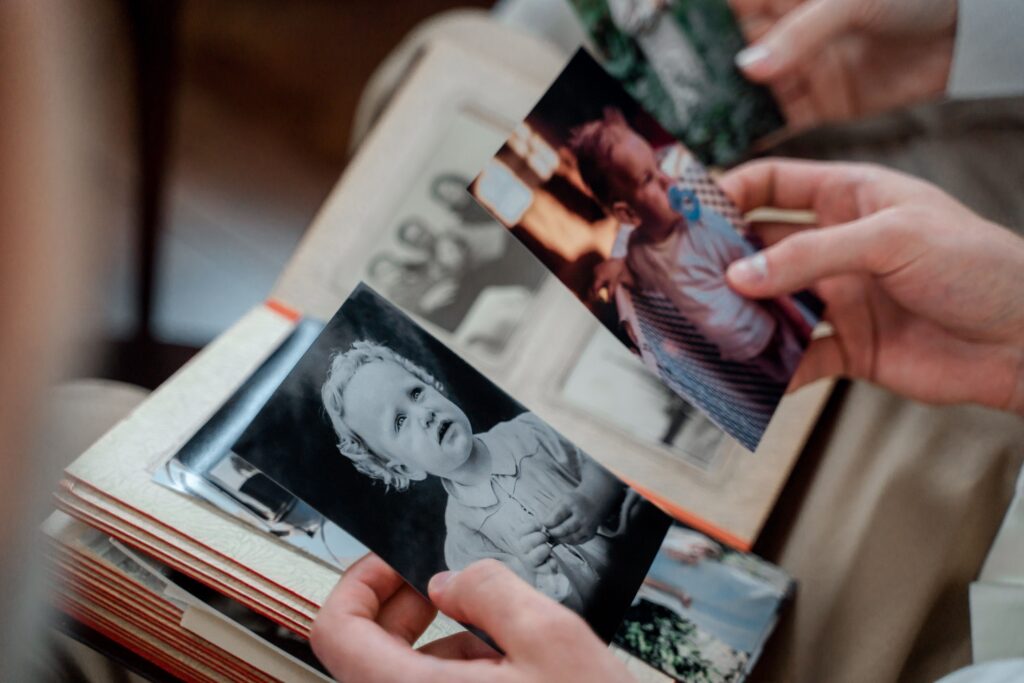
Most people’s earliest memory comes later, with 20% placing it at age three, 17% at age four, and 15% at age five. Only 14% said their earliest memory began at age six or older.
Interestingly, more than half of Americans, 56%, say they have one particular memory they consider their very first. Older adults were even more likely than younger people to identify a specific first memory, despite having lived much longer since childhood.
That raises an obvious question. Why do some memories survive for decades while countless others disappear completely?
Why Your Brain Doesn’t Hold Onto Every Childhood Memory

The answer begins with how the brain develops.
Young children are constantly absorbing information, but the systems responsible for organizing and storing long-term autobiographical memories are still under construction during the first few years of life. As a result, experiences may be emotionally meaningful in the moment without becoming permanent memories that can easily be recalled decades later.
Language also plays an important role.
As children grow, they become better at turning experiences into stories they can tell themselves and others. Before those storytelling abilities develop, many experiences remain difficult to preserve in a way that adults can later access.
The YouGov research also suggests another factor many people overlook. Memories are not always built entirely from personal experience.
Among Americans who say they have a first memory, 26% believe it is at least somewhat likely that what they remember has been influenced by photographs, home videos, or stories told by family members over the years. Older Americans tended to express greater confidence that their earliest memories truly belonged to them rather than being reconstructed from outside sources.
That finding reflects what psychologists have long understood about memory.
Memory does not function like a video recording stored in the brain. Every time someone recalls an event, they reconstruct it, blending together fragments of sensory details, emotions, later experiences, and information learned afterward. Over time, those reconstructions can become so familiar that distinguishing lived experience from family storytelling becomes increasingly difficult.
The Childhood Moments Americans Are Most Likely to Remember

Although many details disappear, certain types of experiences seem to leave a lasting impression.
When YouGov asked Americans about events that happened before they turned six, three categories stood out above all others.
- Holidays were remembered by 55% of respondents.
- Memories involving a family pet were also recalled by 55%.
- Games they played were remembered by 53%.
These moments have something important in common. They are emotionally engaging, repeated over time, and often shared with other people. Rather than remembering an ordinary Tuesday afternoon, people are much more likely to retain experiences tied to excitement, family traditions, or strong emotions.
Other commonly remembered childhood events included:
- Vacations (46%)
- Receiving a special gift (46%)
- Accidents or injuries (45%)
- The first day of school (44%)
- Trips to the doctor or dentist (43%)
Meanwhile, some milestones that parents often celebrate were barely remembered at all.
Only 8% of Americans said they remembered taking their first steps, while just 7% believed they remembered saying their first words. Those iconic family stories are far more likely to survive in photo albums than in personal memory.
Small Moments Often Leave the Biggest Impression

Numbers tell part of the story, but the newer YouGov research also invited participants to describe their earliest memories in their own words.
The answers reveal just how unpredictable memory can be.
One man in his 60s recalled sitting at the family dinner table, squeezing peas between his fingers while his mother gently discouraged him. What stayed with him was not a major life event but the unusual texture of the peas and his mother’s calm reaction.
A woman remembered taking an airplane flight when she was only two years old. She described the feeling of the plane lifting off, touching back down, and running freely through the cabin during an era when children were not expected to remain buckled into their seats.
For another participant, a Christmas morning at age five became unforgettable because of one gift.
He vividly remembered receiving Super Mario World. At first he hesitated because he had never played a video game before, but that single experience sparked a lifelong interest in gaming.
Not every lasting memory was joyful.
One respondent described hiding inside a circular clothing rack in a store when he was about three years old. When he stepped back out, his parents were nowhere in sight.
“I think fear stuck with me because it was such a shocking feeling compared to happiness or comfort,” he recalled.
These personal stories share a common thread.
The events themselves were not historically important. They were deeply personal. Whether driven by curiosity, excitement, surprise, or fear, strong emotions appear to give certain experiences a better chance of surviving while countless ordinary moments quietly disappear.
Some Memories Return Years Later, Sometimes With Difficult Consequences

Not every childhood memory stays permanently hidden.
According to the 2022 YouGov survey, 37% of Americans say they have remembered an event from early childhood that they had previously forgotten. For many people, these forgotten memories resurfaced unexpectedly, sometimes years or even decades after the original experience.
For a significant number of respondents, those returning memories were not pleasant.
Among people who said they had recovered a forgotten childhood memory, 41% reported that at least one involved a traumatic experience. Across the entire population, that amounts to about 15% of Americans saying they have recalled a traumatic childhood memory at some point in their lives.
The survey also found notable differences between men and women.
Although both groups were equally likely to report remembering previously forgotten events, women were considerably more likely to say those recovered memories involved trauma. Overall, 19% of women reported recalling a traumatic childhood memory, compared with 11% of men.
The findings also explored beliefs about memories that may still remain hidden.
Among all respondents, 38% believed it was at least somewhat likely they had repressed traumatic memories from early childhood. Women were more likely than men to think this was possible, and younger adults expressed this belief more often than older Americans.
Why Family Stories Can Shape What We Think We Remember

Memory is deeply personal, but it is also surprisingly social.
Many of the stories people believe they remember from childhood may have been reinforced over the years by conversations around the dinner table, old photographs, or home videos. The 2022 YouGov survey found that 68% of Americans said their parents or other family members often or sometimes reminisced about events from their early childhood. Only one in four said those conversations rarely or never happened.
Even so, most respondents remained confident in their own recollections. About one-third said they were very confident they could distinguish genuine memories from information learned later through photos or family stories. Another 39% said they were somewhat confident, while only 17% admitted they were not very or not at all confident in making that distinction.
Psychologists have long noted that memory is reconstructive rather than reproductive. Every time people recall an event, they rebuild it from pieces rather than replaying a perfect recording. That process allows new information to become woven into old memories, especially when the event happened decades earlier.
This helps explain why siblings can remember the same birthday party in completely different ways or why someone can feel certain they remember an event that actually comes from repeatedly seeing a family photograph.
Positive Memories Still Outnumber Negative Ones
Although many people struggle to remember much from childhood, those who do often look back fondly.
The newer YouGov survey found that 61% of Americans describe their childhood memories as mostly positive. Only 13% said their memories were predominantly negative, while the remainder described them as a mix of both or were unsure.
The survey also uncovered differences between groups of respondents.
Very liberal Americans were less likely than very conservative Americans to describe their childhoods positively. According to the survey, 52% of very liberal respondents viewed their childhood memories as mostly positive, compared with 69% of very conservative respondents. Meanwhile, 21% of very liberal respondents described their childhood memories as mostly negative, compared with 12% of very conservative participants. The survey reported these differences but did not speculate about why they exist.
Researchers generally caution against reading too much into those differences. People’s memories are influenced by personality, family relationships, emotional well-being, and countless life experiences that occur long after childhood itself.
What remains consistent is that emotionally meaningful experiences, whether joyful or painful, are the ones most likely to endure.

Some Patterns Continue Into the Teenage Years
The haziness of memory does not disappear as children grow older.
Even adolescence, a period many people assume they remember clearly, appears less vivid than expected.
According to the 2026 YouGov survey, only 41% of respondents said they remembered a great deal from age 16, while more than half still said they remembered only a little from those years.
The survey also found an unexpected association between memory and engagement with current events.
Americans who closely followed government and public affairs were nearly twice as likely to say they remembered a lot from age 16 compared with those who paid little attention to the news. Researchers did not offer an explanation for the relationship, and the survey was not designed to determine whether one factor influenced the other.
Rather than proving a cause, the findings simply suggest that memory may connect with broader differences in attention, curiosity, or cognitive engagement.
Why Forgetting May Be Part of a Healthy Brain
Forgetting often feels frustrating, especially when someone else remembers an event you cannot recall at all.
Yet neuroscientists generally see forgetting as an important feature of memory rather than a flaw.
Every day, the human brain processes an enormous amount of information. If every conversation, routine drive, or ordinary afternoon remained permanently accessible, recalling useful information could become far more difficult. Instead, the brain constantly filters experiences, strengthening memories that appear meaningful while allowing less significant details to fade.
Emotion plays a major role in that process.
Experiences involving excitement, fear, surprise, achievement, or strong relationships activate brain systems that help encode long-term memories. Ordinary routines, by contrast, often blend together because they lack distinctive emotional markers.
That helps explain why someone might vividly remember the excitement of opening presents on Christmas morning while having no recollection of dozens of ordinary mornings that came before or after.
The findings from both YouGov surveys fit neatly with this understanding. Holidays, beloved pets, vacations, games, accidents, and family traditions all carry emotional weight that makes them easier to preserve over time than everyday routines.
A Missing Childhood Doesn’t Mean Those Years Were Lost
Many people become concerned when they realize they can barely remember their earliest years.
The surveys suggest there is little reason to view that as unusual.
Most Americans cannot remember being toddlers. Many struggle to recall much from elementary school. Even the teenage years become blurrier than people often expect. Yet those forgotten experiences still helped shape personality, relationships, habits, and emotional development.
Memory is only one record of childhood. The lessons people learned, the connections they formed, and the experiences that influenced them continue to exist even when the specific details have faded.
The YouGov findings offer a reassuring perspective. Forgetting large portions of childhood is not an exception. It is the norm. What remains are the moments that carried enough emotional weight to stay with us, whether they involved a favorite family tradition, a beloved pet, an unforgettable Christmas morning, or a frightening few seconds when the world suddenly felt unfamiliar.
Those scattered memories may seem small on their own, but together they form the handful of moments that survive while the rest quietly slips away. For most Americans, that is simply how memory has always worked.why-most-americans-cant-remember-childhood-memories