
Your cart is currently empty!
A 7-Ton T. Rex Left Behind Something Scientists Had Never Seen Before
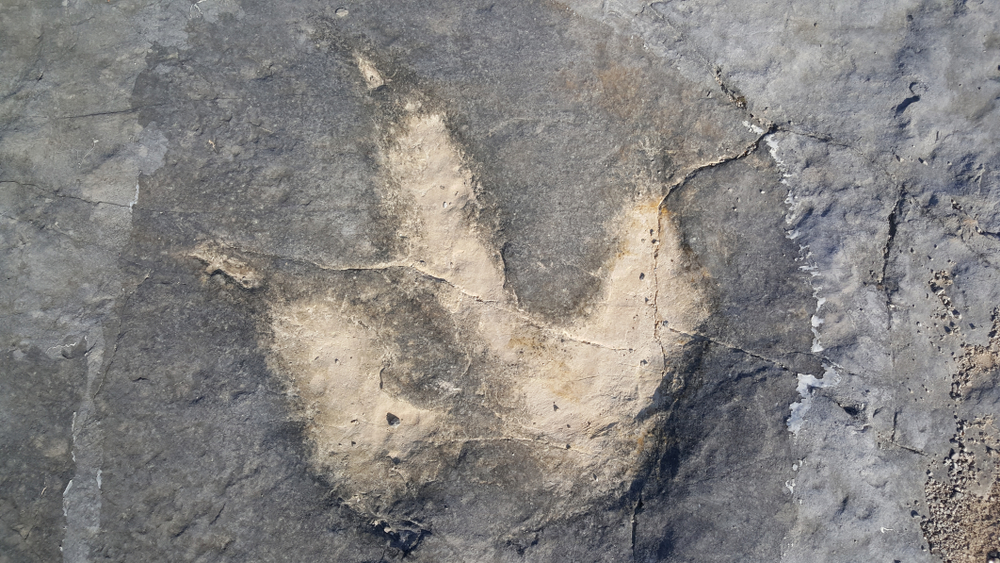
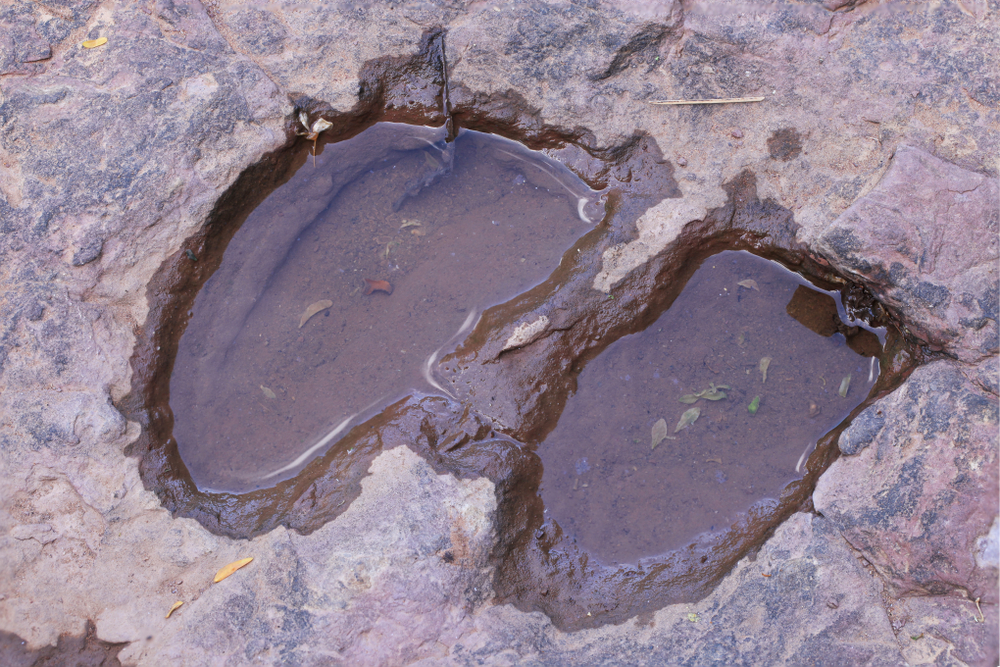
For more than a century, scientists have pieced together the life of Tyrannosaurus rex from bones, teeth and scattered fossil evidence. Now, researchers in North Dakota have uncovered something far more unusual: a trail that may show exactly how a full-grown T. rex moved across the landscape roughly 66.5 million years ago. The discovery began with two strange shapes pressed into a slab of mudstone near Marmarth, in the badlands of southwestern North Dakota. Each impression stretches roughly three feet from heel to claw, making the fossilized tracks enormous even by dinosaur standards. The slab itself is about the size of a coffee table, and what initially looked like weathered rock turned out to contain evidence of an animal that weighed more than seven tons.
Contents
show
The discovery was made in July 2025 by Kent Hups, a science teacher from Colorado who spends his summers volunteering as a research associate with the Denver Museum of Nature & Science. Hups was walking through the Hell Creek Formation, an area famous for fossils from the final chapter of the Cretaceous Period, when he noticed the unusual shapes. His first reaction was disbelief because erosion can create remarkably convincing patterns in exposed mudstone. But when researchers returned to the site and mapped the impressions, they discovered something that made the evidence much harder to dismiss: a sequence of giant three-toed tracks stretching more than 23 feet across the rock. It was not simply a footprint. It appeared to be a walk preserved in stone.
The Discovery Started With Two Strange Shapes
Hups found the tracks in an area where scientists have been studying dinosaur fossils for generations. The Hell Creek Formation is one of the best-known fossil-bearing rock units in North America, preserving evidence of the animals that lived shortly before the mass extinction that ended the Cretaceous. Even in such a well-studied landscape, however, researchers have to be extremely careful when identifying tracks because erosion can produce shapes that resemble footprints. A convincing outline alone is not enough. Scientists need to consider the shape of the toes, the proportions of the impression, the surrounding geology and which animals were actually capable of leaving such a mark.
“My first reaction was total disbelief,” Hups said. “I sat and looked at it for a period of time before I was convinced it was a track at all.” That hesitation proved useful because the discovery needed to survive much more scrutiny than a quick glance in the field. Tyler Lyson, senior curator of vertebrate paleontology at the Denver Museum of Nature & Science, explained why caution is necessary when dealing with exposed rock. “Rocks can weather into all different shapes and sizes, you know, some that look like Florida, some that look like Texas, some that look like T. rex footprints.” In this case, however, the surrounding evidence began to make the dinosaur interpretation increasingly difficult to ignore.
The researchers also had to consider another large dinosaur that lived in the same environment. Edmontosaurus, a duck-billed dinosaur, was large enough to leave substantial footprints, but its feet were built differently. The North Dakota impressions have long, slender toes arranged at a relatively narrow angle, while Edmontosaurus had broader, more blunt toes. The Hell Creek Formation is also exceptionally well documented, meaning scientists have a good understanding of which large animals occupied the region. Once the track shape, size and local fossil record were considered together, an adult T. rex became the strongest explanation for the prints.
Four Giant Prints Show A Dinosaur Walking
Researchers from the Denver Museum of Nature & Science and Liverpool John Moores University spent the following year documenting the site in detail. Their work revealed four footprints arranged in a clear left-right-left-right sequence that extends for more than 23 feet. Each print measures roughly three feet long and between two and two and a half feet wide, while the distance between successive impressions from the same foot is about 13 feet. Those measurements provide much more information than an isolated footprint because they allow researchers to examine stride length and movement across the ancient landscape.
The sequence also helped researchers estimate how quickly the animal was moving. Based on the stride length and the dimensions of the footprints, the team calculated a walking speed of approximately 3.5 to 4.5 miles per hour. That is comparable to a brisk human walking pace, except the creature producing the tracks was an enormous predator that may have weighed more than seven tons. The evidence does not indicate a sprint or a chase. Instead, the prints appear to show a massive T. rex moving steadily across a floodplain during the final part of the Cretaceous.
The distinction is important because a single footprint provides only a snapshot. It can show where an animal stood, but it cannot reveal much about what happened immediately before or after that moment. A sequence changes the picture by showing movement from one step to the next. Researchers can compare the spacing of the prints, their orientation and the way the animal’s weight appears to have been transferred as it moved. For an animal as famous as T. rex, that kind of evidence is surprisingly rare.
The key details give a sense of just how enormous the animal was:
- Four footprints: The published sequence contains alternating left and right impressions.
- Huge feet: Each footprint is roughly three feet long and up to two and a half feet wide.
- Long strides: One complete left-to-left stride covers approximately 13 feet.
- Walking pace: Researchers estimated a speed between 3.5 and 4.5 miles per hour.
T. Rex Bones Could Never Tell Researchers This
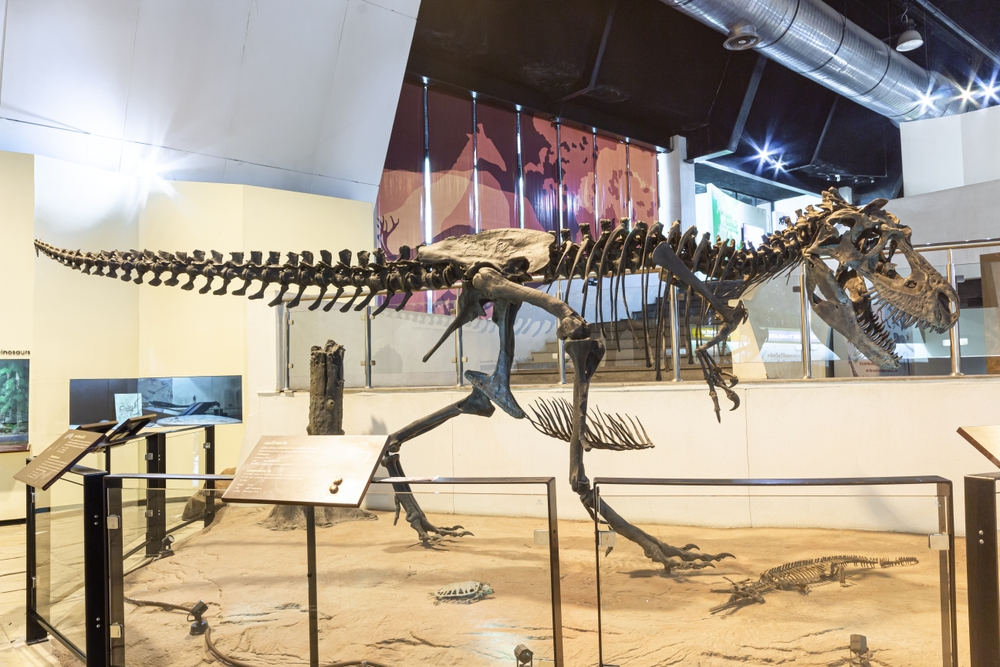
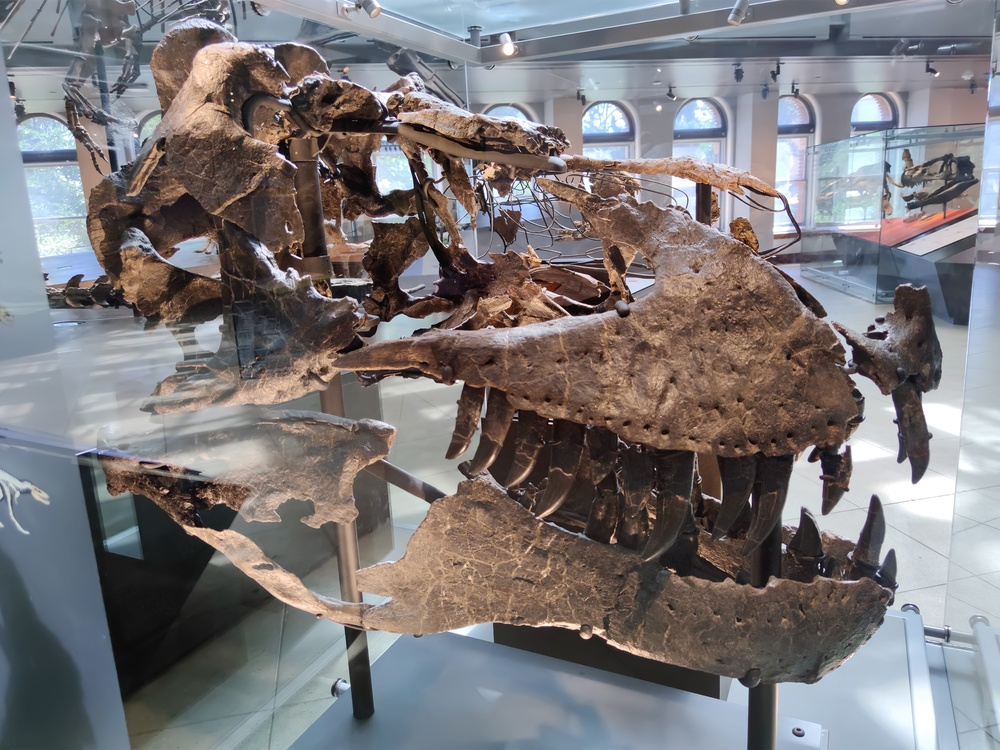
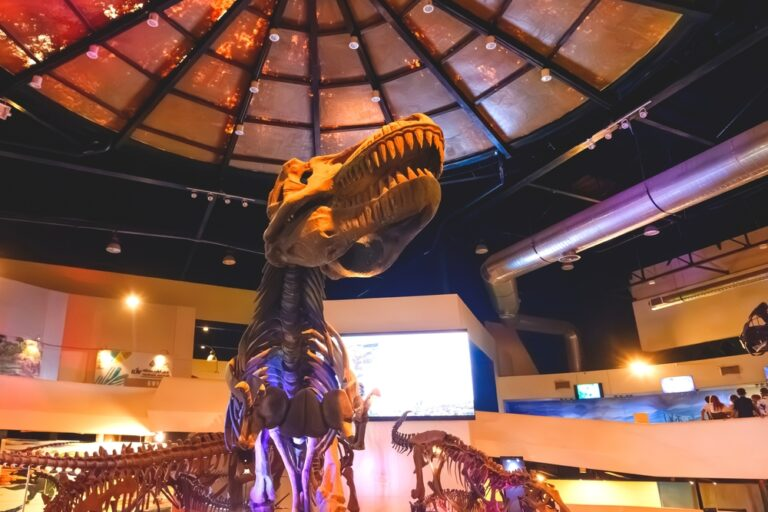
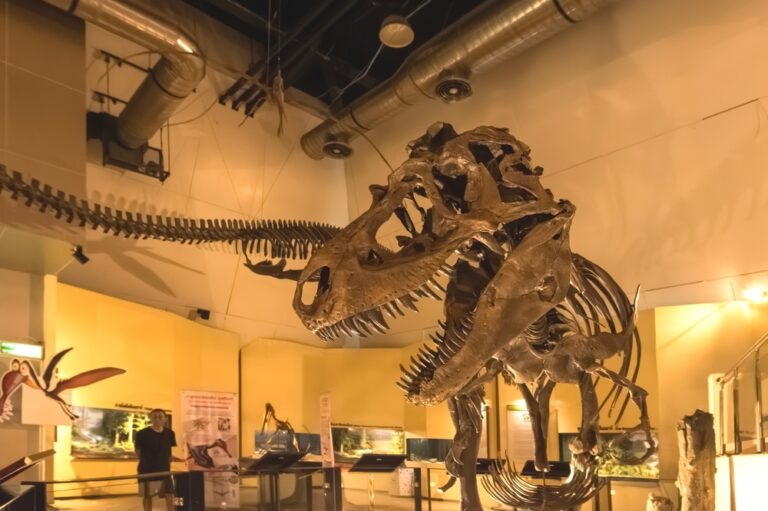
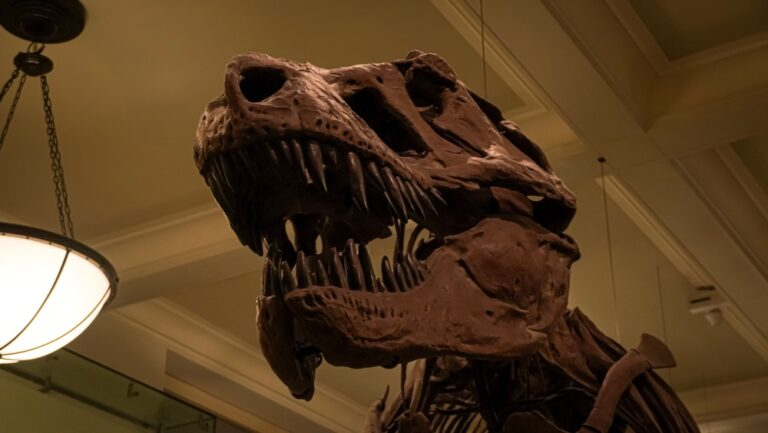
Scientists already know an extraordinary amount about T. rex anatomy because numerous fossils have preserved its skeleton, skull and teeth. Those remains can reveal how the animal was built, how large it became and how its body was adapted for life as one of the dominant predators of its ecosystem. What bones cannot easily preserve is the ordinary movement of an individual animal through its environment. A skeleton can show the machinery of the body, but a trackway can reveal that machinery in motion.
“Bones tell us an enormous amount about these animals, but footprints capture a moment of behavior,” Lyson said. “With a trackway, we can actually follow an animal as it moved across the landscape. That is incredibly rare for T. rex.” The North Dakota trackway therefore adds a different kind of evidence to the fossil record. Researchers are not simply looking at the remains of a dead animal. They are examining traces left while a living animal was moving through its environment.
That distinction is one reason the discovery has attracted so much attention from paleontologists. Isolated footprints attributed to adult T. rex had already been reported, including examples from New Mexico and Montana. What had been missing was a sequence that could be followed step by step. This discovery provides that sequence, allowing researchers to study a brief period of movement from an animal that lived tens of millions of years before humans appeared.
Anthony Romilio, a paleontologist at the University of Queensland who was not involved with the study, described what makes trackways so valuable. “Any trackway provides a record of real behaviour that their bones cannot: a few seconds of life, 66.5 million years ago.” In this case, those few seconds may show a full-grown T. rex doing something remarkably ordinary: walking across the ancient landscape without any obvious sign of pursuit or panic.
The Dinosaur Was Probably Just Going About Its Day
The tracks do not appear to preserve a dramatic hunting scene. There is no obvious evidence of a sudden acceleration, sharp turn or desperate escape, and the estimated speed is consistent with a steady walking pace. That may sound less spectacular than a fossil showing a predator chasing prey, but ordinary behavior can be just as valuable to researchers because it gives them a glimpse of what an animal did when nothing extraordinary was happening.
The animal appears to have been moving across a floodplain at a speed comparable to a brisk human walk. Its enormous size makes that image difficult to picture. A creature weighing more than seven tons could cover roughly 13 feet with each full stride, leaving impressions that were later buried, preserved and exposed again millions of years later. The trackway effectively freezes a tiny piece of an ordinary day during the final chapter of the dinosaur era.
That is one of the unusual strengths of trace fossils. Bones tell scientists what an animal was made of, while tracks can show what the animal was doing. Other trace fossils can preserve feeding marks, resting places or movement patterns, but a clear trackway offers a particularly direct record of locomotion. Researchers can measure the distance between steps and use those measurements to estimate speed and movement.
The North Dakota discovery therefore gives scientists something that a spectacular skeleton cannot provide on its own. It shows an individual animal moving through a real environment, leaving behind a sequence of physical marks that survived long enough for another group of scientists to find them millions of years later.
Scientists Reconstructed The Tracks From Thousands Of Miles Away
The footprints are heavily weathered, creating another challenge for researchers trying to extract as much information as possible from them. The team used high-resolution 3D surface scanning to record detailed digital models of individual footprints as well as the entire trackway. This approach allows scientists to preserve the shape of the tracks digitally and examine details that could become harder to see as natural weathering continues.
The digital models also made it possible for researchers in different countries to work with the same evidence without all needing to stand beside the fossil itself. Peter Falkingham, a professor of palaeobiology at Liverpool John Moores University who led the study, did not travel to North Dakota to examine the tracks in person. Instead, his colleagues captured the site digitally and transferred the information for analysis.
“The technology we’re able to apply in the digital age means my colleagues could scan the tracks in the field and then send the 3D information over to me to visualize on my computer and in VR,” Falkingham said. The result is a striking combination of ancient evidence and modern technology. A footprint made in wet sediment around 66.5 million years ago can now be examined virtually by researchers thousands of miles away.
That digital record could become increasingly useful as researchers continue studying the site. Physical fossils can weather, crack or become difficult to access, while detailed digital scans can be examined repeatedly. In a discovery where subtle differences in toe shape, depth and spacing can affect interpretation, preserving the evidence in three dimensions gives scientists another way to test their conclusions.
The Researchers Still Say “Likely” T. Rex
There is an important qualification in the scientific paper. Its title describes the discovery as “A large tridactyl trackway from the Upper Cretaceous Hell Creek Formation of North Dakota, likely attributable to an adult Tyrannosaurus rex.” The word “likely” reflects the nature of footprint evidence. No T. rex was found standing in the tracks, so researchers cannot provide the same direct anatomical confirmation that they could obtain from a skeleton with matching characteristics.
Instead, the identification is based on several pieces of evidence working together. The footprints are enormous, their toe arrangement fits a tyrannosaur better than the other large dinosaurs known from the area, and the Hell Creek Formation contains abundant T. rex remains. The prints are also heavily weathered, which introduces uncertainty into some of the measurements. That is why the walking speed is presented as a range rather than as a single precise number.
Lyson is confident about the identification. “So, there’s no doubt in my mind that it’s a trackway that belongs to a T. rex.” Thomas Holtz Jr., a vertebrate paleontologist at the University of Maryland who was not involved in the research, used more cautious language when describing the significance of the sequence. “The most important aspect is that this is perhaps the first definitive Tyrannosaurus rex trackway sequence.”
The distinction between isolated prints and a trackway is important. Earlier footprints attributed to adult T. rex had been reported from New Mexico and Montana, but those finds represented individual impressions. The North Dakota discovery adds something those fossils could not: a sequence showing repeated steps from the same animal.
Three More Prints Could Add To The Story
The discovery may already be significant, but the site has produced more evidence since the published study was completed. Researchers returned to the area this summer and located a fifth footprint that is not included in the published paper. Three of the footprints are also expected to be airlifted from the site and transported to the Denver Museum of Nature & Science for preparation and additional research, giving scientists the opportunity to preserve and study the physical specimens more closely.
For Hups, the discovery also carries a broader message about how easily important fossil evidence can remain hidden in plain sight. The strange shapes he first encountered did not immediately announce themselves as the tracks of one of the most famous predators in Earth’s history. They required careful observation, additional research and collaboration between specialists before their significance became clear.
“I hope that more people go out and look a little bit harder at those strange looking rocks and this leads to a better, more detailed understanding of what life looked like in the past,” Hups said. “It is the closest thing that we have to a time machine.”
For decades, T. rex has been reconstructed from bones and teeth. Now scientists have something different: a few enormous steps preserved in stone, showing that one of these animals was simply moving across ancient North Dakota. The skeleton tells us what T. rex was built to be. These tracks show what one actually did.
Sources:
- Denver Museum of Nature & Science. (2026, September 9). A 66.5-million-year-old trackway captures adult T. rex at walking pace. Phys.org. https://phys.org/news/2026-09-million-year-trackway-captures-adult.html
- Falkingham, P. L., Hups, K. M., Tamez-Galvan, E. M., Bercovici, A. D., & Lyson, T. R. (2026). A large tridactyl trackway from the Upper Cretaceous Hell Creek Formation of North Dakota, likely attributable to an adult Tyrannosaurus rex. Journal of Vertebrate Paleontology. https://doi.org/10.1080/02724634.2026.2706201
ancient history, cretaceous period, Denver Museum of Nature and Science, dinosaur footprints, dinosaur fossils, dinosaur research, dinosaur science, dinosaur tracks, dinosaurs, Fossil Discovery, fossil hunters, hell creek formation, North Dakota, paleontology, prehistoric animals, Science news, T. rex, Tyrannosaurus rex, viral science