
Your cart is currently empty!
This T. Rex Fossil Could Change How Scientists Picture The Dinosaur
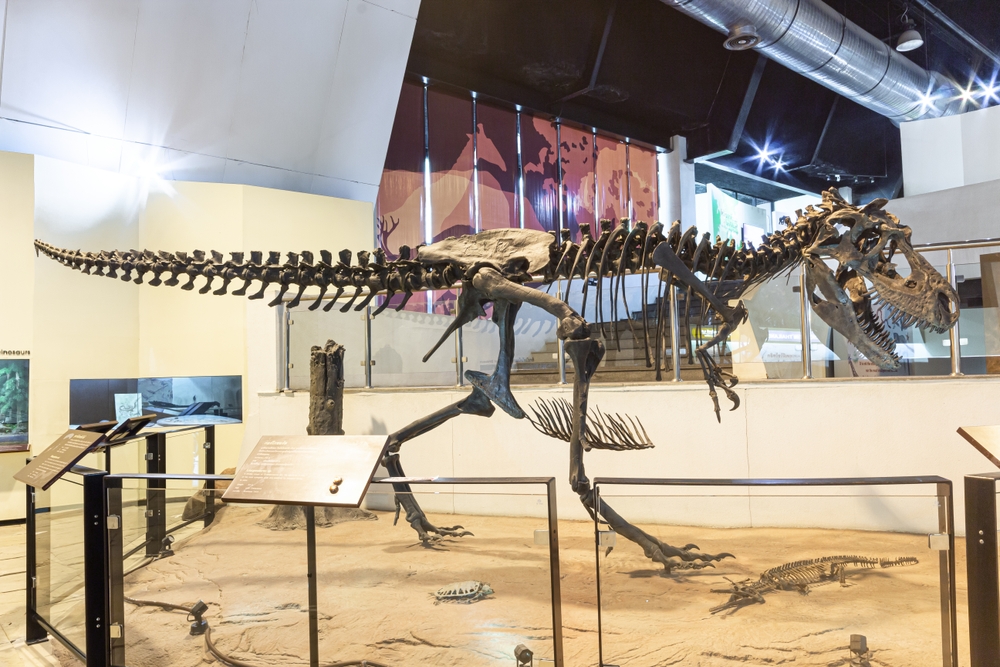
A Tyrannosaurus rex discovered on a Wyoming ranch decades ago has turned out to be far more unusual than researchers initially realized. Buried for around 67 million years, the specimen contains an exceptionally preserved section of the predator’s skeleton that could give scientists a much clearer picture of how the animal was built, how it died, and possibly even what its body looked like in life.
Contents
show
The fossil, nicknamed Rex Junior, is missing its skull and most of its tail, but what survived is astonishingly well preserved. Researchers found an entire right hand and forearm with every bone still in position, along with the dinosaur’s wishbone. Now, scientists are examining parts of the fossil that could reveal something even more surprising about the outside of T. rex, and one researcher has already offered a tantalizing clue: there are no scales.
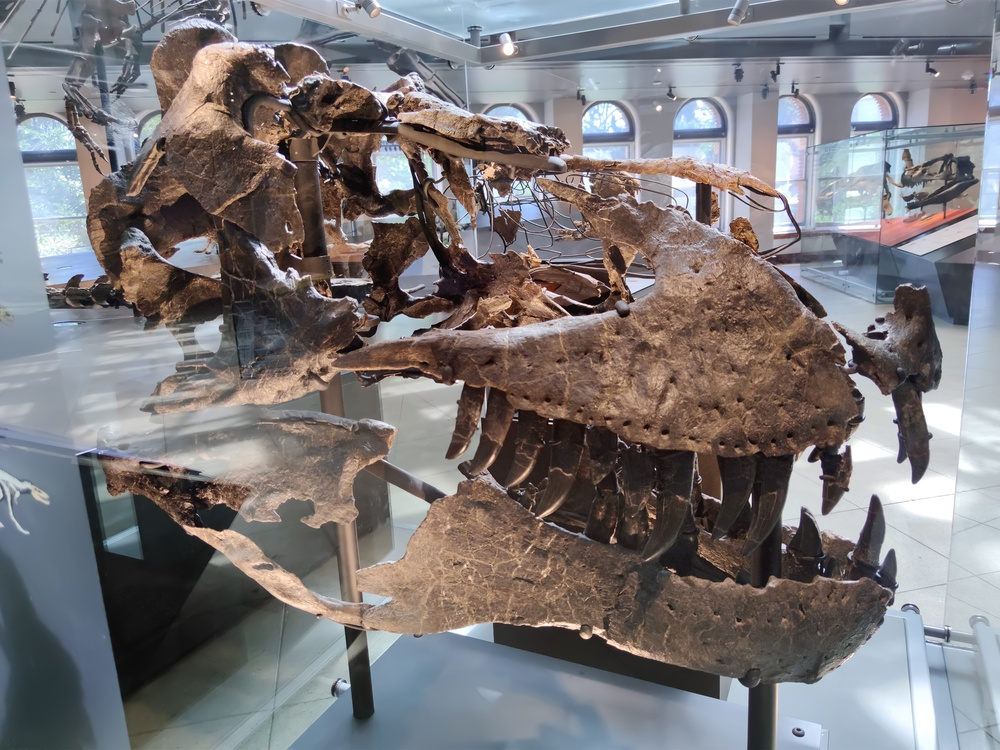
The Fossil Was Hiding An Extraordinary Secret
Rex Junior was discovered during the 1990s on the Zerbst Ranch near Newcastle, Wyoming. The dinosaur was eventually brought to the University of Chicago, where paleontologists began the painstaking process of removing the extremely hard rock surrounding the remains. The work took years because the bones were locked inside dense material that had to be carefully removed without damaging the fossil.
Paul Sereno, the paleontologist studying the specimen, said he knew early on that something unusual might be waiting inside the rock. What he did not realize was just how valuable the discovery would become after years of preparation and examination.
“I was told this might be an extraordinary specimen,” Sereno said. “I would ultimately realize two decades later how extraordinary it was.”
The skull and most of the tail had disappeared through erosion, leaving only part of the original skeleton. Yet the surviving bones were preserved in three dimensions and remained remarkably close to their original positions, giving researchers an unusual opportunity to study the dinosaur without relying as heavily on reconstruction.
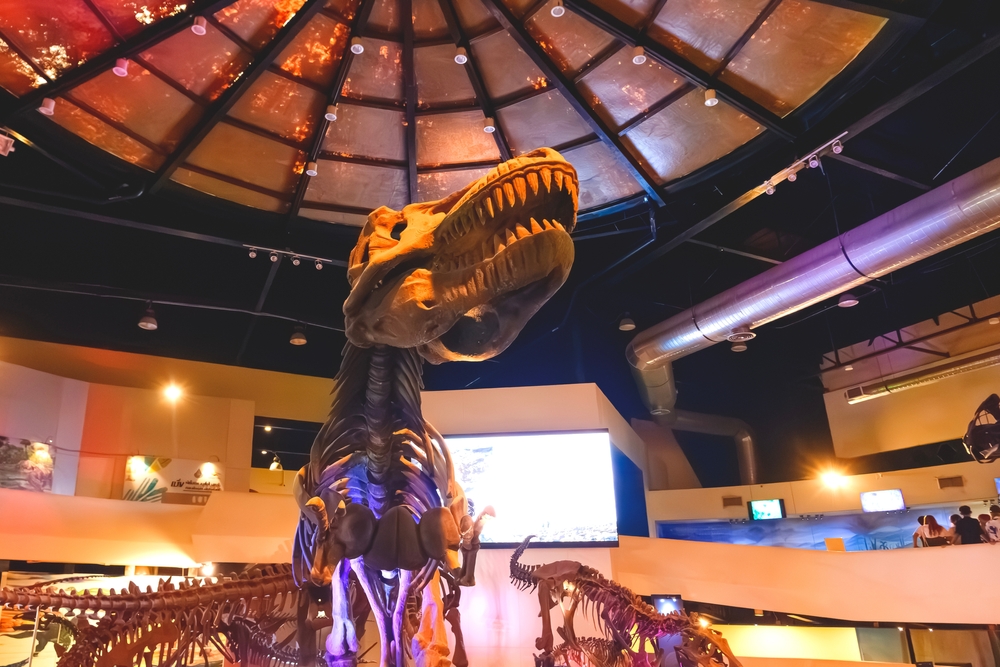
Scientists Found A T. Rex Arm Unlike Any Other
The most striking discovery was Rex Junior’s right arm. The entire limb remained articulated, with the bones connected in their natural arrangement from the shoulder through the forearm and into the claws. For an animal as famous for its enormous jaws as T. rex, the discovery provides an unusually detailed look at one of its least understood body parts.
“It was the only complete T. rex hand and forearm ever found,” Sereno said. “Every single bone, in place outside of the ribcage. I was totally shocked.”
That preservation could give scientists a much better understanding of how the animal’s famously small arms were structured. Instead of studying individual bones that have been separated from one another, researchers can examine the entire limb as a connected anatomical unit. The position of the bones also provides information that can be lost when a skeleton is scattered or damaged after death.
Rex Junior also preserved its wishbone in its original position. That detail helped researchers reconsider the shape of the dinosaur’s chest, with Sereno saying the anatomy indicated that T. rex had a slimmer chest than earlier reconstructions had suggested. The discovery even influenced changes to the way Sue, the famous T. rex skeleton displayed at Chicago’s Field Museum, was mounted.
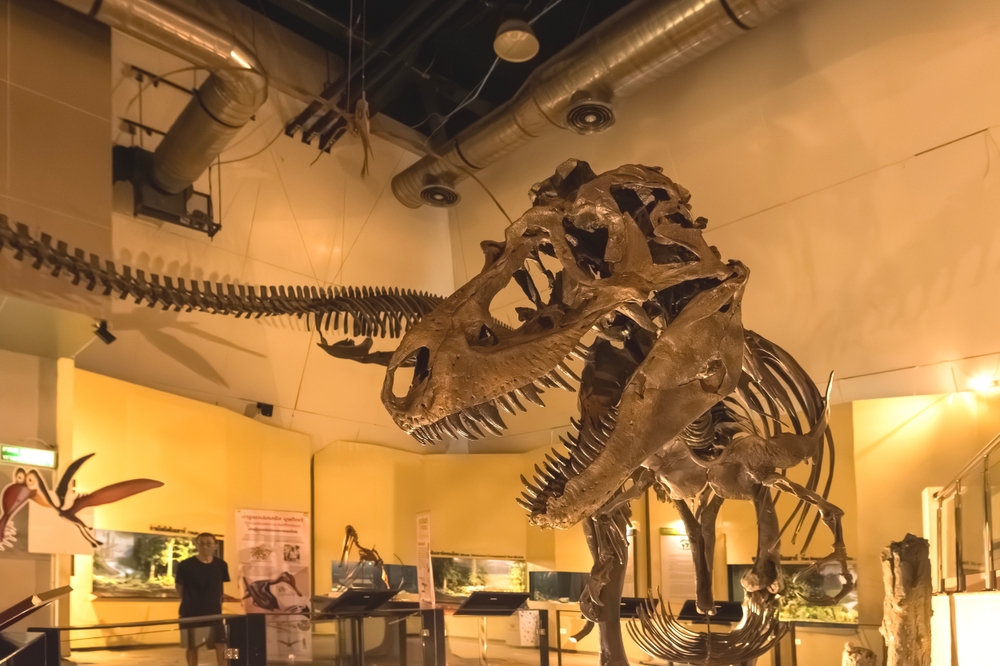
The Dinosaur May Have Been Buried Alive
The strange condition of Rex Junior has also led to a remarkable theory about the dinosaur’s final moments. Sereno believes the animal may have been buried alive during a flood, rather than dying somewhere else and later being carried into its final resting place.
That interpretation is based partly on the way the bones were preserved. The skeleton remained unusually intact and three-dimensional, with parts of the animal still appearing to be in lifelike positions. A sudden burial could help explain how so much of the skeleton survived without being scattered or heavily rearranged.
“I personally believe that it was buried alive in a flood,” Sereno said. “I don’t think it was a carcass. This looks like it was breathing when it was suddenly buried, like it didn’t have a chance to escape.”
The evidence does not establish the theory as fact, but it gives researchers another possibility to investigate as they study the fossil. If the dinosaur really was trapped and rapidly buried, Rex Junior could represent something close to a snapshot of a living T. rex at the moment disaster struck.
The Biggest Surprise Could Be Hidden Outside The Bones
The skeleton itself is already rare, but researchers are now investigating another part of Rex Junior that could prove even more revealing. Sereno said the team is examining areas that may contain information about the dinosaur’s integument, the scientific term for its outer covering.
Most dinosaur fossils give scientists far more information about bones than about the tissues and structures that covered those bones in life. That makes any potential evidence about the outside of a T. rex especially valuable, because it could help researchers understand how the animal actually appeared rather than simply how its skeleton was shaped.
“We have an extraordinary chance, with a mummy of the largest predator to grace the face of the earth, to understand more about its body position and, maybe, its integument,” Sereno said.
The researchers are keeping the details of those findings secret for now. Sereno did, however, reveal one detail that is almost guaranteed to fuel speculation about future T. rex reconstructions.
“I’m not going to let slip the secret, but I’ll say this: there are no scales,” he said.
What Rex Junior Could Tell Scientists
The importance of Rex Junior comes from the unusual combination of preservation and anatomical detail. Several aspects of the fossil could give researchers information that is difficult to obtain from more damaged or scattered dinosaur remains.
- The complete forelimb: The connected bones provide an unusually detailed look at the T. rex hand, forearm and claws.
- The wishbone: Its original position helped researchers reassess the shape of the dinosaur’s chest.
- The body position: Three-dimensional preservation could provide clues about how the animal was positioned when it was buried.
- The outer covering: Researchers are investigating areas that may preserve evidence about what covered the dinosaur’s body.
- The burial event: The fossil may contain clues about whether a sudden flood buried the animal while it was still alive.
Each piece of information adds another layer to the reconstruction of T. rex. Scientists already know a great deal about the predator from fossils found around the world, but exceptionally preserved specimens can challenge assumptions that have become familiar through decades of museum displays and illustrations.
That is particularly important with an animal like T. rex. Its image is so recognizable that people often forget how much of its appearance has been reconstructed from incomplete evidence. New discoveries can change the proportions, posture and external appearance assigned to the species.
Rex Junior has already contributed to one change by helping researchers reconsider the shape of the chest. If the ongoing work confirms useful evidence about its outer covering, the fossil could influence how scientists visualize the dinosaur for years to come.
T. Rex Reconstructions Could Change Again
The public image of T. rex has never been completely fixed. As new fossils have been discovered and studied, scientists have repeatedly adjusted their understanding of the animal’s posture, proportions, movement and physical appearance.
Rex Junior is another example of how a single fossil can challenge an established reconstruction. The dinosaur’s preserved wishbone and chest anatomy offered evidence that differed from some earlier depictions, while its intact forelimb provides a level of detail that researchers rarely get to examine.
The potential evidence about integument could be even more significant. If researchers can determine what was preserved around parts of the skeleton, they may be able to answer questions about whether particular areas of the animal’s body were covered by scales, feathers, skin or another structure.
For now, there is no complete picture. The researchers are still examining the specimen, and the most intriguing findings have not yet been publicly revealed. That leaves Rex Junior in an unusual position: a dinosaur discovered decades ago may still have some of its biggest secrets waiting to be uncovered.
Scientists Are Still Keeping The Biggest Detail Quiet
Sereno and his colleagues are continuing their work on Rex Junior and other dinosaur fossils recovered from the Zerbst Ranch. New research is expected in early 2027, when more information about the specimen could finally become available.
For a fossil that has already spent millions of years buried and decades in scientific collections, the timing is remarkable. Rex Junior survived erosion, geological pressure and the enormous passage of time before researchers began uncovering its bones one by one.
“Science works like a breadcrumb trail,” Sereno said. “It was there for a century, and the story is only now being understood.”
The next major revelation could change a simple question people have been asking for generations: what did T. rex actually look like when it walked across Wyoming? Rex Junior may finally have some of the evidence needed to answer it.