
Your cart is currently empty!
After 49 Years in Deep Space, Voyager 1 Goes Quiet on One More Front
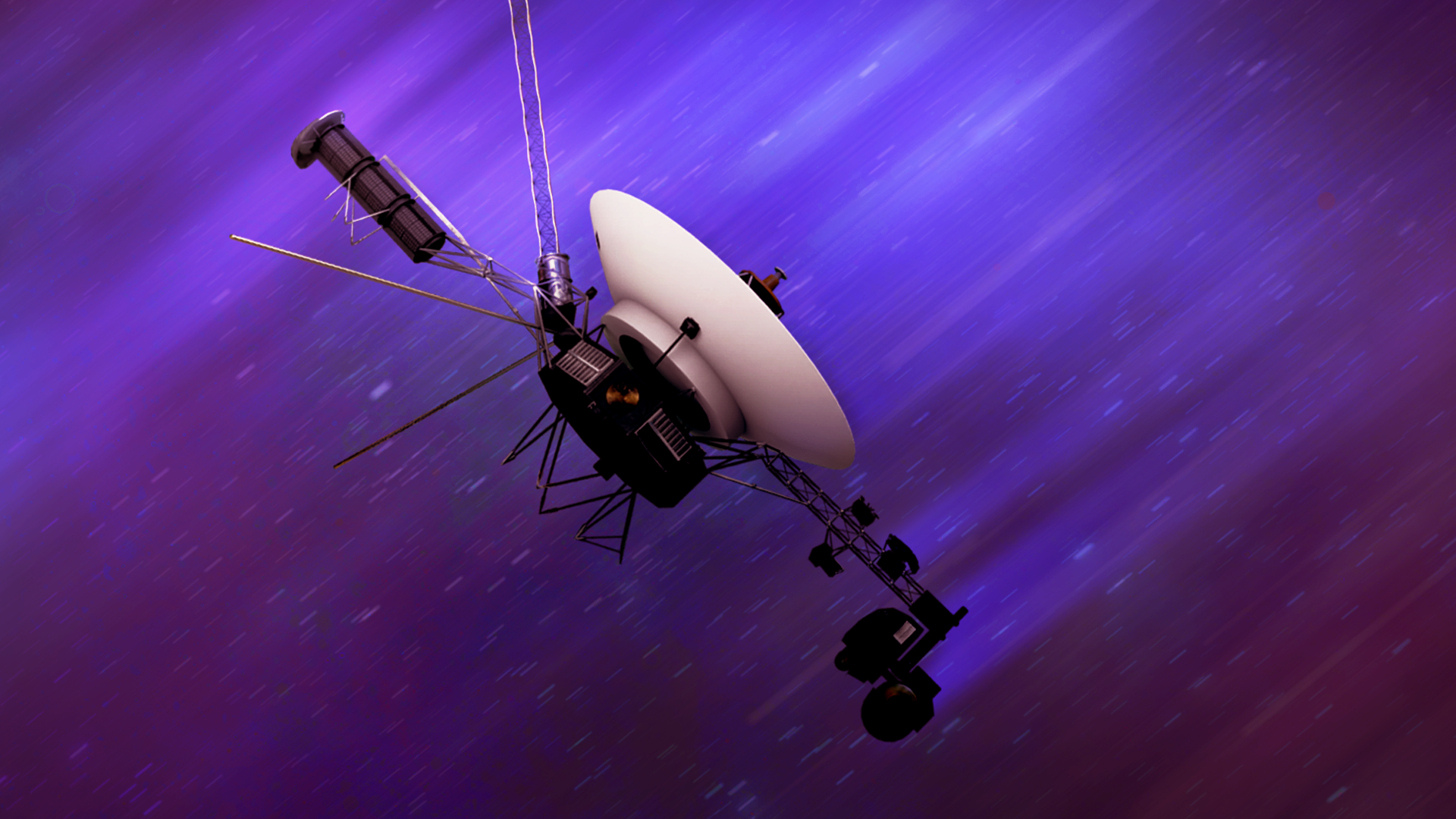
Somewhere past the edge of our solar system, a spacecraft the size of a small car hurtles through interstellar space at more than 51,000 miles per hour. Built in an era before personal computers, assembled by hand, and launched before most people alive today were born, Voyager 1 has kept going longer than almost anyone expected.
Contents
show
For nearly half a century, it has sent back data from places no human instrument had ever reached. Each passing year brought fresh engineering challenges as its power supply continued to dwindle. In April 2026, the team at NASA’s Jet Propulsion Laboratory faced one of the hardest calls in the mission’s long history.
On April 17, engineers sent a sequence of commands into the void. Given the distance involved, those commands took 23 hours to arrive. When they did, something that had been running without pause for nearly 49 years fell silent.
Nearly 49 Years of Listening
When Voyager 1 left Earth on September 5, 1977, it carried 10 science instruments into deep space. One of them, the Low-energy Charged Particles experiment, or LECP, got to work from launch and never stopped. For nearly half a century, it measured ions, electrons, and cosmic rays streaming in from our galaxy and beyond. Scientists used its data to map the structure of the interstellar medium, a sparse spread of particles and magnetic fields that fills the space between stars, and to identify pressure fronts and regions of varying particle density in the void beyond our heliosphere. It was a dataset with no substitute and no backup source.
No other spacecraft has traveled far enough from Earth to collect this kind of information. Only Voyager 1 and its twin, Voyager 2, have crossed the heliosphere’s outer boundary. Voyager 1 made that crossing in 2012, becoming the first human-made object to reach interstellar space. Voyager 2 followed in 2018.
For years, the LECP sent back data that could not be obtained any other way. After 49 years of operation, it has gone dark.
What the LECP Actually Did Out There
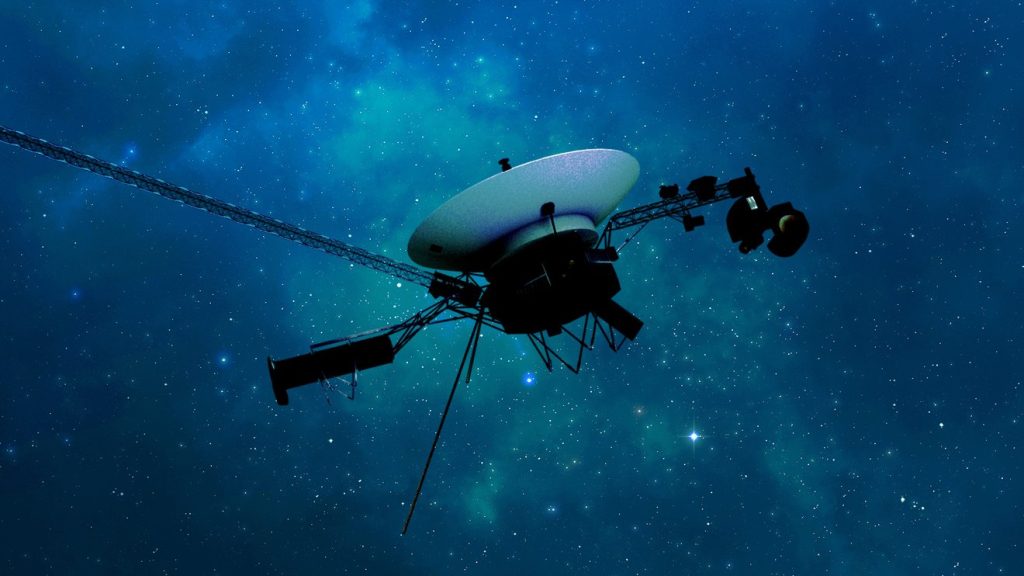
Voyager 1 runs on a radioisotope thermoelectric generator, a compact nuclear device that converts heat from decaying plutonium into electricity. When the probe launched, this system generated enough power to run all 10 science instruments with energy to spare. After nearly five decades, the math looks very different.
Both Voyager probes now lose roughly four watts of power per year. On a spacecraft where every watt counts, that rate of decline creates constant engineering pressure. Engineers have managed this slow fade for decades, switching off instruments and heaters one by one while keeping the spacecraft warm enough to prevent its fuel lines from freezing. Push too far in one direction, and the craft goes cold. Hold back too long, and an automatic undervoltage fault protection system could trigger a shutdown on its own, seizing control away from engineers at a distance where a single command takes 23 hours to arrive. Recovering from that scenario would be a lengthy, risky process.
On February 27, that balance became far harder to hold. During a routine roll maneuver, Voyager 1’s power levels dropped without warning. Engineers at JPL recognized what the drop meant. If power fell any lower, the automatic protection system would activate before the team could act. Rather than wait, they moved first.
“While shutting down a science instrument is not anybody’s preference, it is the best option available,” said Kareem Badaruddin, Voyager mission manager at JPL.
NASA Had a Shutdown Order Ready for Years
What followed was not improvised. Years ago, scientists and engineers at JPL sat down together and drew up a ranked plan for this exact scenario. They agreed on the order in which each instrument on both spacecraft would be shut down as power continued to fade, a priority list that weighed scientific value against power draw and was updated as conditions changed.
Of Voyager 1’s original 10 instruments, seven had already been turned off before April. Most recently, engineers shut down Voyager 1’s cosmic ray subsystem experiment in February 2025. For Voyager 1, the LECP was next on the list. Its counterpart on Voyager 2 had been switched off in March 2025, about 13 months earlier.
Even so, the shutdown was not total. A small motor on the LECP, one that spins the sensor in a full circle to scan in every direction, stayed on. It draws just 0.5 watts of power, and engineers kept it running for a specific reason. If they find enough extra power in the future, they want the option to bring the full instrument back online.
It is not a far-fetched hope. As recently as 2024, engineers managed to revive a set of Voyager 1’s thrusters that had been written off as inoperable for nearly two decades. On a mission defined by long odds and quiet perseverance, that kind of precedent carries real weight.
Two Instruments Left, Still Sending Data from Interstellar Space
With the LECP offline, Voyager 1 now operates two science instruments. One listens to plasma waves. One measures magnetic fields. Both continue to function and to transmit data from a part of the universe no other human-made object has ever visited.
“They are still working great, sending back data from a region of space no other human-made craft has ever explored,” Badaruddin said.
At more than 15.7 billion miles from Earth, Voyager 1 remains the farthest human-made object ever built, a record it has held since 1998 when it overtook NASA’s Pioneer 10 probe. Every day it travels farther. Every day, the signal takes a fraction longer to arrive. And every day, scientists on the ground are still receiving it.
NASA engineers believe that shutting down the LECP gives Voyager 1 about a year of additional operational runway. What the team does with that year may determine how far the mission ultimately goes.
NASA’s All-or-Nothing Power Fix, Coming This Summer
Behind the scenes at JPL, engineers have been working on a more ambitious fix. Named “the Big Bang,” the plan is designed to restructure the power budget of both spacecraft in a single coordinated move. Rather than switching off one instrument at a time, it calls for taking a group of powered devices offline at once, replacing some with lower-power alternatives, and reconfiguring how each spacecraft manages its remaining energy. Done right, the procedure could give both probes more time than any single instrument shutdown could buy.
Voyager 2 goes first. With more power to spare and a closer position to Earth, now 13.2 billion miles away and traveling at about 50,300 miles per hour, it makes for a safer test case. Engineers have scheduled the procedure for May and June 2026. If those tests succeed, the team will attempt the same fix on Voyager 1 no sooner than July. And if the Big Bang works, there is a real possibility the LECP could be switched back on, giving scientists another window into a dataset that cannot be recreated anywhere else.
From a 1977 Launchpad to the Edge of the Known Universe
Voyager 1 and Voyager 2 launched from what is now Cape Canaveral Space Force Station in Florida within weeks of each other in 1977. Voyager 2 lifted off first, on August 20. Voyager 1 followed on September 5. Despite launching second, Voyager 1 took a faster route through the outer solar system and overtook its twin by December of that year.
Both probes spent their first decade on a grand tour of the outer planets, swinging past Jupiter, Saturn, Uranus, and Neptune, and studying a combined 48 of those planets’ moons. By 1989, both spacecraft had finished their planetary surveys. NASA redirected them toward an interstellar mission that continues to this day, one with no fixed endpoint and no precedent in human history.
At its current pace, Voyager 1 is projected to reach a distance of exactly one light-day from Earth, approximately 16.1 billion miles, on November 15, 2026. NASA expects both probes to remain operational into the late 2020s and perhaps beyond, if the Big Bang plan delivers on its promise.
After nearly half a century of travel, the margin for error has narrowed to almost nothing. But the mission continues, two small spacecraft built with 1970s hardware, still whispering back to Earth from the far edge of everything.