
Your cart is currently empty!
Scientists Finally Recreate the Ancient Roman Cup That Changes Colour in the Light
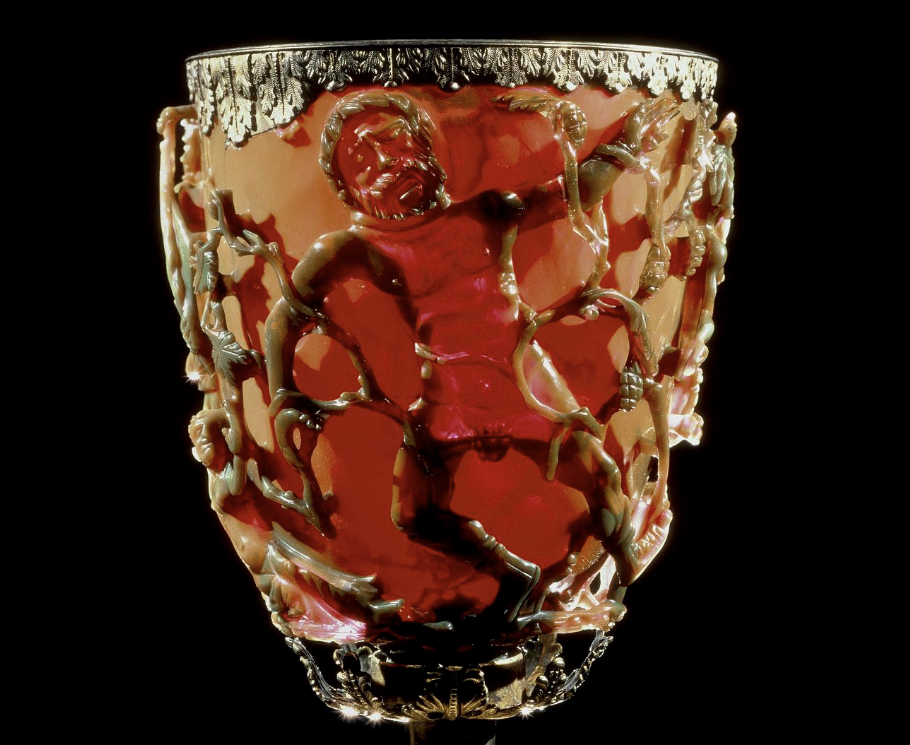
A glass cup made nearly 1,600 years ago can appear jade green under ordinary lighting before transforming into a deep ruby red when light shines through it. The extraordinary effect has baffled experts for generations, but scientists have now managed to recreate the optical trick using a carefully developed glass recipe.
Contents
show
Researchers at the University of Sheffield have successfully reproduced the distinctive colours of the famous Lycurgus Cup, offering new insight into the remarkable skills of ancient Roman glassmakers. The achievement also reveals how tiny particles of gold and silver can produce an effect that looks almost impossible to the naked eye.
The Roman Masterpiece That Appears To Change Colour
The Lycurgus Cup is one of the most unusual surviving examples of Roman glassmaking. Dating to the fourth century AD, the intricately decorated vessel is housed at the British Museum, where its extraordinary optical properties have attracted the attention of historians, archaeologists and scientists.
Depending on the position of the light source, the cup appears to change between two contrasting colours. When light reflects off its surface, the glass looks opaque jade green. When light passes through it from behind, the vessel takes on a rich ruby-red appearance.
The effect is particularly striking because the glass itself has not changed. Instead, its interaction with light creates the illusion that the entire object has transformed into a different colour.
The cup is also an exceptional work of art in its own right. Its surface features a detailed mythological scene carved into the glass, showing King Lycurgus struggling against vines associated with Dionysus, the Greek god of wine.
The craftsmanship is remarkably intricate, with figures carved in deep relief across the vessel. Its combination of artistic detail and unusual optical behaviour helped earn it recognition as one of the seven glass wonders of the world in 2022, following an assessment by an international panel of artists and conservators.
Despite centuries of fascination, reproducing the cup’s distinctive green and red shades has remained a significant challenge. Scientists have understood the broad principles behind the effect for some time, but producing glass that consistently recreates the original colours has proved far more difficult.
How A Sheffield Technician Recreated The Ancient Glass
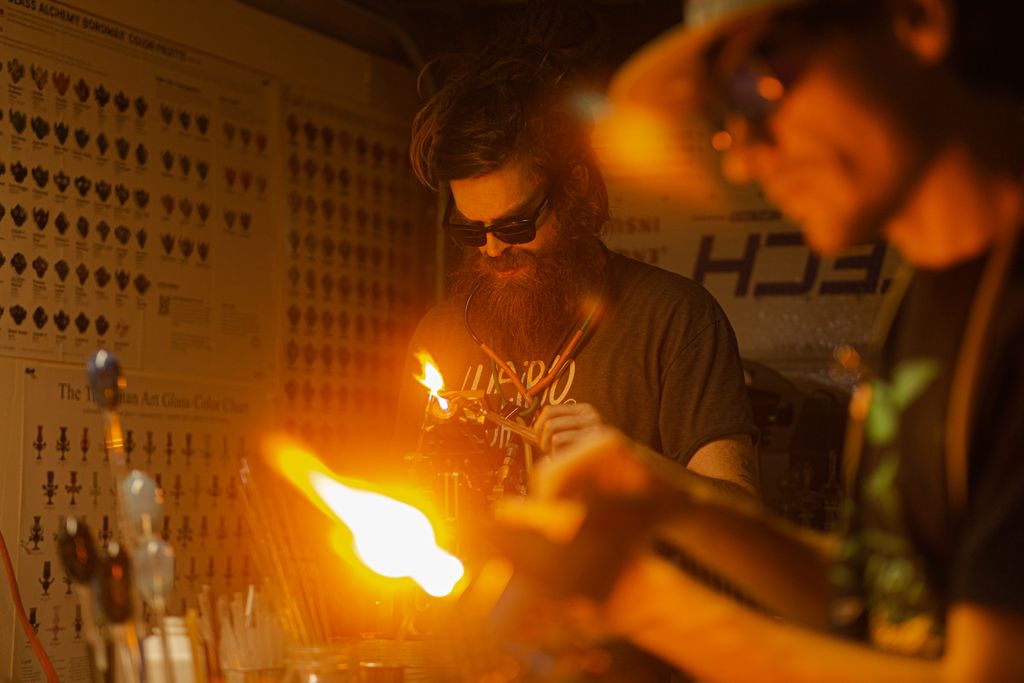
Dr Lisa Hollands, a technician at the University of Sheffield’s School of Chemical, Materials and Biological Engineering, led the experimental work alongside Professor Caroline Jackson, a leading expert on Roman glass.
The project began after Hollands was challenged by project manager Christina Metcalfe to recreate the effect for the university’s LightFest event in 2025. The task required more than simply mixing metals into molten glass. The researchers needed to reproduce the conditions that allowed microscopic particles to form and interact with light in a particular way.
Hollands brought more than 25 years of experience working with glass to the project. She also studied existing research on ancient glassmaking with Jackson before developing a base material intended to resemble the glass that Roman craftspeople might have used.
The next stage involved introducing small quantities of gold and silver into the material. The metals needed to form nanoparticles under suitable conditions as the molten glass cooled, creating the optical properties responsible for the colour-changing effect.
Hollands described the process as a labour of love, explaining that previous attempts had achieved limited success. She also acknowledged the irony of modern researchers struggling to reproduce something ancient artisans had already managed to create.
“If the Romans could have seen me experimenting, they’d probably laugh and ask: ‘Why does she not know how to make this?’” Hollands said.
Her experiments eventually produced glass that appeared opaque green in reflected light and red when illuminated from behind. The result closely reproduced the characteristic appearance of the historic cup.
The Tiny Gold And Silver Particles Behind The Effect
The secret behind the Lycurgus Cup lies in nanoparticles, microscopic structures that are far smaller than anything visible to the naked eye. In the recreated glass, particles containing gold and silver interact with incoming light, changing which colours are absorbed, transmitted or scattered.
Why The Glass Turns Ruby Red
Visible light contains a range of colours with different wavelengths. When light passes through the recreated glass, the embedded nanoparticles interact with those wavelengths according to their physical properties.
Hollands explained the basic principle by comparing white light with the colours visible in a rainbow. The nanoparticles are much smaller than the wavelengths of visible light, allowing them to influence the glass’s optical behaviour.
She said: “White light is made up of many different colours and you see this when there is a rainbow in the sky.”
When light shines through the glass, the gold and silver particles absorb much of the blue and green light, allowing more red and orange wavelengths to pass through. The transmitted light therefore gives the material its distinctive ruby-red appearance.
Why Reflected Light Makes It Look Green
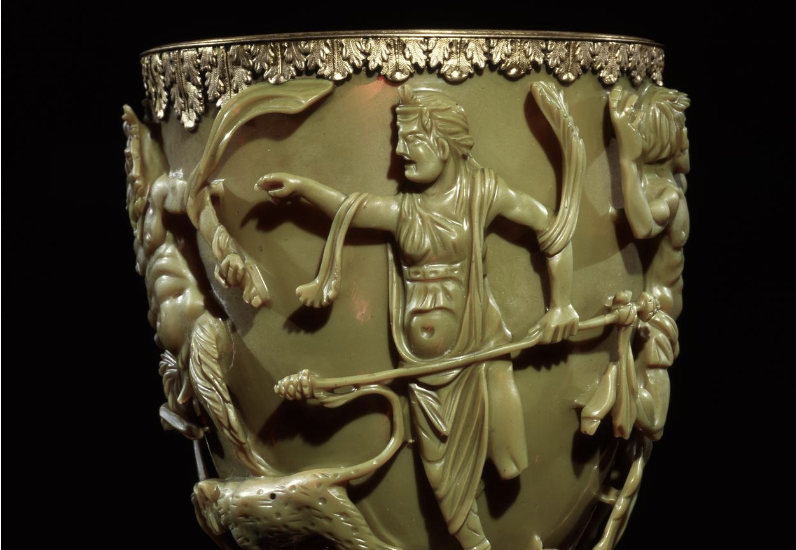
Image Credits – Website @TheBritishMuseum
The effect changes when light reflects off the surface rather than passing through the material. Under these conditions, the nanoparticles scatter light differently, producing the opaque green appearance associated with the Lycurgus Cup.
The glass appears to change colour because the light reaching the observer has been altered by the particles embedded within it. The material itself remains the same, even as its appearance shifts dramatically with the lighting.
The particles are thousands of times smaller than a grain of sand. Their size, shape and arrangement influence the wavelengths of light they interact with, meaning small differences in their formation can affect the final colours.
This is also why recreating the ancient glass has proved so challenging. Producing the right mixture is only part of the process; researchers must also control the conditions that determine how the microscopic structures develop.
Why Ancient Roman Glassmakers May Have Been Extremely Lucky
The Sheffield experiments have provided a closer look at the difficulties that ancient craftspeople may have faced when making the original cup. Although Roman glassmakers achieved an extraordinary result, they would not have had access to modern scientific explanations of nanoparticles or the equipment used to study them.
The colour-changing effect depends on several conditions during glass production. Temperature, oxygen levels, furnace characteristics and the position of the glass during heating can influence the formation of the particles responsible for its optical properties.
Hollands tested different furnace types and starting materials while trying to establish a reliable recipe. The experiments even included sugar, demonstrating how much trial and error was involved in finding the right conditions.
Ian Freestone, emeritus professor of archaeological materials at University College London, said earlier researchers had managed to reproduce similar colours during the 1960s. However, he explained that the Sheffield team’s work was more ambitious because it came closer to matching the precise colours of the ancient original.
“This is more ambitious and more precise,” Freestone said.
He also explained that the colour of the glass was sensitive to its position inside the furnace. Moving it to a different location could change the final result, suggesting that Roman glassmakers may have found the process difficult to control consistently.
Freestone said: “The fact that the colour is so sensitive to the position in the furnace suggests that it would have been very difficult for the Romans to control the colour.”
He added that the difficulty made the original cup’s appearance even more remarkable. In his view, the Roman craftspeople may have achieved the right conditions through a combination of skill, experimentation and fortunate circumstances.
“It makes me think that, with the Lycurgus glass, they hit the jackpot,” he said.
The Cup’s Colours May Have Held A Deeper Meaning
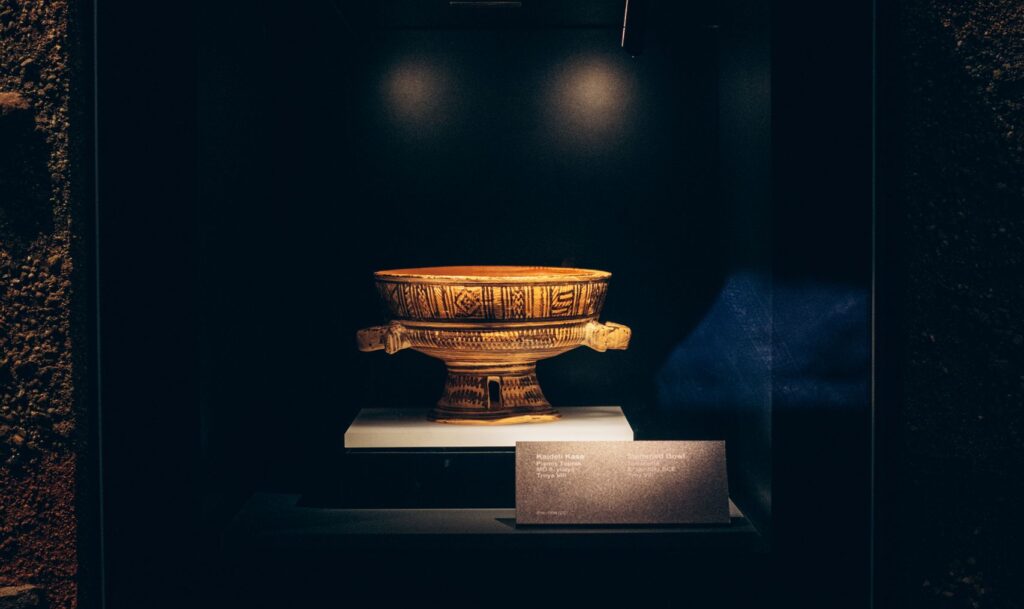
The Lycurgus Cup’s unusual colours may have been connected to the mythological story carved into its surface. Freestone suggested that the contrast between red and green could have symbolised the ripening of grapes, linking the vessel’s optical effect to its association with Dionysus.
The god was connected with wine and celebration, while the carved scene depicts vines ensnaring King Lycurgus. The combination has led to speculation that the cup may have been used during a drinking ceremony or another special occasion.
Freestone said: “The depicted scene has grape vines pulling Lycurgus into the underworld. So it could have been used in a drinking ceremony of some sort.”
The suggestion remains a theory rather than a confirmed explanation of the vessel’s original purpose. However, it offers a possible reason why the contrast between red and green might have appealed to the cup’s makers or owners.
A letter supposedly written by the Roman emperor Hadrian to his brother-in-law also describes unusual colour-changing cups. The letter refers to “parti-coloured cups that change colour” and expresses a wish for them to be used at banquets on feast days.
Although the historical account does not establish exactly how the Lycurgus Cup was used, it suggests that colour-changing glass vessels could have been valued for their unusual visual qualities. Such objects would have offered a striking display to anyone unfamiliar with the optical effect.
A Contemporary Sculpture Revives The Ancient Technique
The Sheffield project has also inspired a new glass sculpture designed to connect the ancient cup with contemporary art. The university commissioned Elliot Walker, a British glass artist who won the second season of Netflix’s Blown Away, to create a piece using Hollands’ recreated recipe.
Walker designed a composition combining the Lycurgus story with elements of the Farnese Atlas sculpture. In the new work, the globe traditionally associated with Atlas is replaced by a cup, allowing the recreated glass to become part of the sculpture’s central design.
The project was intended to honour the original artefact while demonstrating how the ancient technique could be brought into a modern artistic setting. Walker also saw the work as an opportunity to connect with the craftspeople who produced the historic vessel.
He said: “You can really get an idea of how the glass makers of the past would have adapted to this sort of glass; it’s like shaking their hands.”
The sculpture is scheduled to be unveiled at Sheffield’s Millennium Gallery during the University of Sheffield’s Festival of the Mind, running from November 6 to 15, 2026. It will then be placed on permanent display at the Turner Museum of Glass within the university.
Project manager Christina Metcalfe said the intention was to create something tangible that would help the public understand the possibilities of embedding nanoparticles into materials. The sculpture gives visitors an opportunity to see the optical effect in a contemporary work rather than relying solely on descriptions of the ancient object.
What The Discovery Could Mean For Modern Science
The recreated glass is primarily intended for decorative applications, but the research could also contribute to the development of advanced materials. The project is connected to work exploring how materials can harness light for technologies such as solar energy, quantum technologies and healthcare diagnostics.
Understanding how microscopic particles form inside glass can help researchers investigate ways to control its properties. The same broad interest in crystal formation also has applications in a very different field: the safe management of radioactive waste.
The university’s Immobilisation Science Laboratory studies how complex nuclear waste can be incorporated into glass wasteforms. This process helps contain waste within a stable material for long-term management.
Researchers need to understand how crystals form during glass production to maximise the amount of waste that can be safely immobilised. Knowledge gained from studying the conditions that produce different structures inside glass may therefore have value beyond the decorative effect that first attracted attention to the Lycurgus Cup.
The connection does not mean the ancient recipe itself is a solution for nuclear waste management. Instead, the project adds to scientific understanding of how materials behave when heated and cooled under different conditions.
That knowledge can inform further research into glass composition and the formation of microscopic structures, while the original cup continues to demonstrate the remarkable possibilities of the material.
An Ancient Achievement Finally Becomes Easier To Understand
The Lycurgus Cup has survived for centuries because of its craftsmanship, intricate decoration and unusual ability to transform under different lighting conditions. The Sheffield team’s work now provides a more precise way to recreate its colours and investigate the process that may have produced them.
The achievement also shows how much can be learned by examining objects made long before modern scientific instruments existed. Roman glassmakers may not have understood the microscopic processes responsible for the cup’s appearance, yet they created an object whose optical behaviour still challenges researchers today.
For Hollands and her colleagues, reproducing the effect has opened a window into an ancient manufacturing process that was once difficult to study directly. The resulting sculpture will bring that discovery to a wider audience, allowing visitors to witness the effect for themselves.
Nearly 1,600 years after the original cup was made, its defining trick no longer seems quite so mysterious. The real achievement lies in understanding how tiny particles of metal, carefully controlled heating and the behaviour of light combined to create one of the most extraordinary surviving objects of Roman craftsmanship.
Featured Image From Website @TheBritishMuseum