
Your cart is currently empty!
Archaeologists Found A Jade Stone Hidden Inside A 1,000-Year-Old Maya Tooth
A tiny piece of green stone has left archaeologists staring at a thousand-year-old tooth and asking a question that has no easy answer. The jadeite was carefully set into the chewing surface of a lower molar belonging to a young adult, but unlike the famous Maya dental decorations found in front teeth, this one was hidden where almost nobody could see it. The work was so precise that the stone sits flush with the enamel, making the ancient procedure look remarkably controlled.
Contents
show
The tooth now sits in Guatemala’s Popol Vuh Museum, carrying evidence of a procedure performed long before modern dentistry existed. Researchers know someone drilled into the living tooth, prepared a cavity and fitted the jade inside it. They also know the Maya had sophisticated methods for attaching decorative stones to teeth. What they cannot say with confidence is why someone would go to all that trouble for a stone hidden behind the cheek.
The Jade Was Placed In An Extremely Unusual Spot
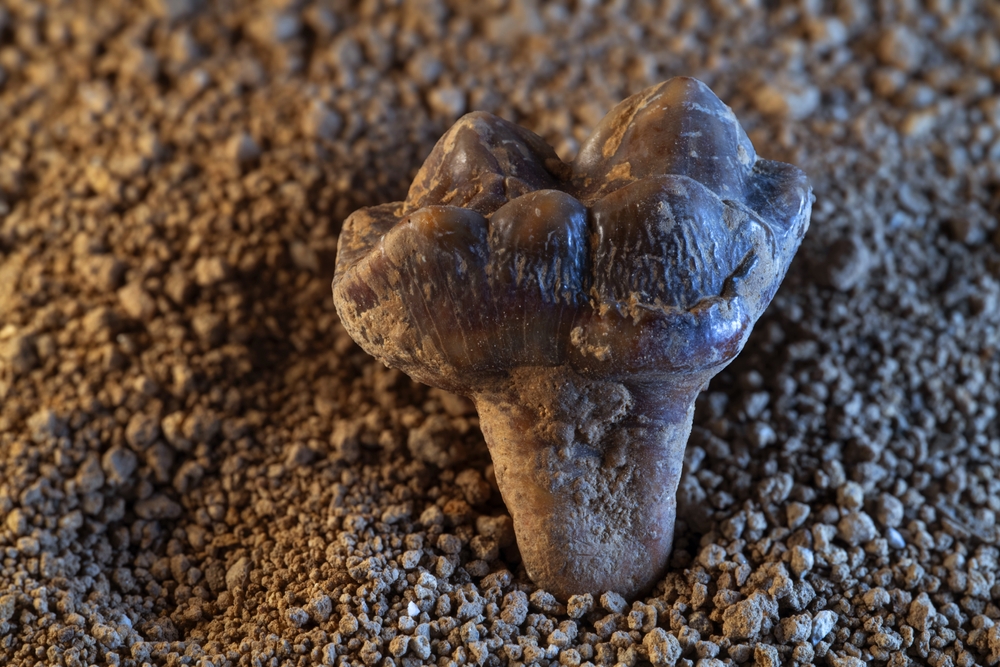
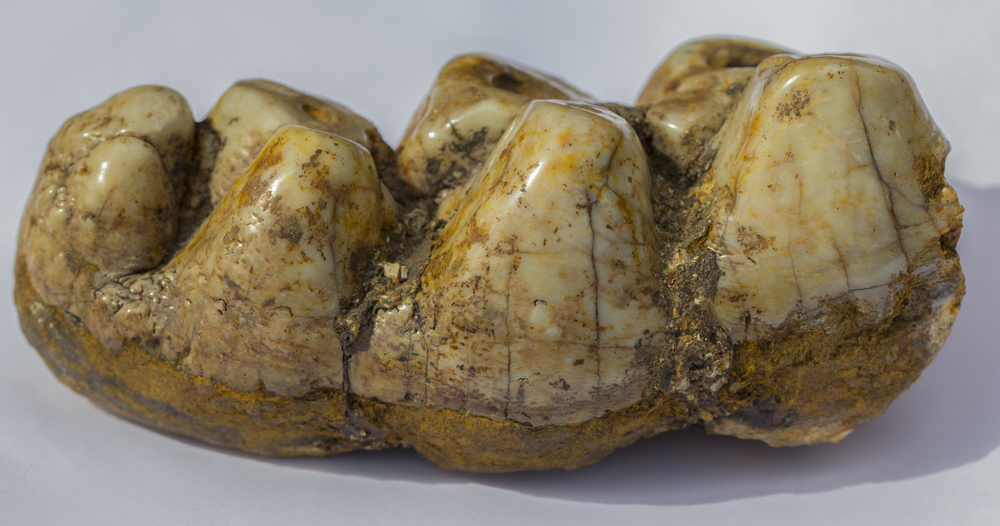
The tooth belonged to a person estimated to have been between 24 and 30 years old when the dental work was performed. It is a lower left molar, one of the back teeth responsible for grinding food, and the jadeite sits directly where the tooth’s four cusps meet. Whoever performed the procedure created a cavity specifically shaped to receive the stone, then positioned the jade so it remained level with the surrounding enamel.
That detail separates this discovery from the better-known examples of Maya dental modification. Archaeologists have recovered numerous teeth with stones inserted into them, particularly incisors and canines. Those teeth were highly visible, meaning a person could display a polished stone whenever they smiled or spoke. The newly studied molar was tucked much farther back in the mouth, making the decoration almost impossible to appreciate casually.
Elma Vega-Lizama, a dental anthropologist at the Autonomous University of Yucatán, examined the workmanship and described the cavity as “really good” and “clean.” Her assessment is striking because the person responsible for the procedure had none of the equipment associated with a modern dental clinic. The practitioner nevertheless managed to create a precise opening in a functioning tooth and fit a small gemstone into it.
The research team, led by Estuardo Mata-Castillo of Francisco Marroquín University in Guatemala, described the specimen as the first documented case of an occlusal incrustation in a posterior tooth among the ancient Maya. That does not prove this was the only example ever made. It does show just how unusual the placement is among the surviving archaeological evidence.
Maya Dental Modification Was Far More Common Than You Might Think
The strange molar makes more sense when placed alongside the broader history of Maya dental modification. Between roughly A.D. 250 and 900, people across parts of what are now Guatemala, Belize, Honduras and southern Mexico altered their teeth in ways that could be permanent. Some teeth were filed into particular shapes, while others were drilled and fitted with polished stones.
The practice was not limited to a single group of wealthy rulers. Modified teeth have been found among people of different sexes and social positions, although the amount of decoration could vary. Some individuals had several modified teeth, creating elaborate patterns that would have been immediately visible whenever they smiled. Jade was especially significant because of its cultural value and distinctive appearance.
Researchers have therefore spent decades considering social explanations for the practice. Dental modification may have communicated identity, appearance, age or social belonging. In some cases, the changes may have formed part of a transition into adulthood. For a person carrying an obvious stone in a front tooth, the modification could have functioned as a permanent feature of their appearance.
The molar complicates that familiar interpretation because it removes the most obvious visual purpose. A stone hidden behind the cheek is not much of a public display. That does not mean the jade had no social meaning, but it suggests that Maya dental practices may have served several purposes rather than following one simple rule.
Scientists Found Evidence The Tooth Was Drilled While Alive
One of the researchers’ first questions was whether the jade could have been inserted after the person’s death. That possibility would dramatically change the interpretation because a postmortem modification would tell researchers little about how Maya practitioners treated living patients. Advanced imaging provided evidence pointing in the other direction.
Cone beam computed tomography showed heavy dystrophic calcification inside the tooth’s pulp chamber. The pulp is the living interior of a tooth, and mineral deposits can develop when the tooth experiences stress or injury. Drilling into a functioning tooth can trigger this kind of response, giving researchers a biological trace of what happened during the person’s life.
The scan was especially valuable because researchers could examine the internal structure without cutting the museum specimen open. Instead of destroying part of the tooth to investigate it, they could use imaging to look beneath the enamel and examine the evidence left by the ancient procedure. The result supports a clear sequence: the tooth was modified while the person was alive, the jade was placed inside it, and the tooth continued functioning afterward.
That makes the procedure even more remarkable. Someone deliberately drilled into a working molar, created a carefully measured cavity and inserted a hard stone into it. The tooth responded to the trauma but remained functional, meaning the person apparently continued using that molar after the modification.
The Ancient Cement Holding The Stone May Be The Bigger Mystery
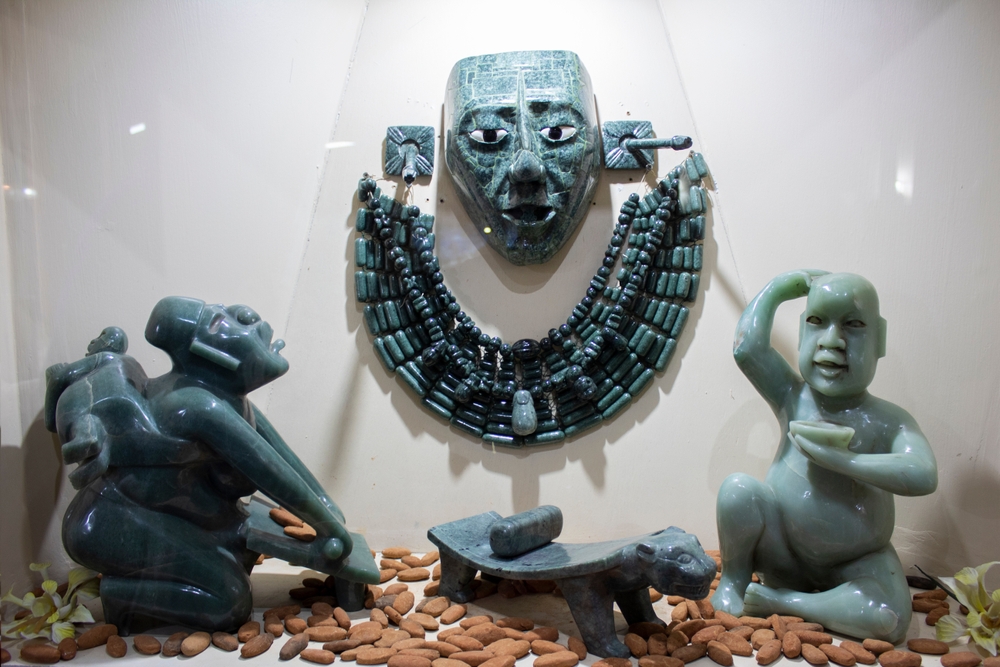
The jade attracts attention because it is easy to see, but the material that held these stones in place may reveal even more about Maya craftsmanship. Earlier research has examined ancient sealants from archaeological sites in Guatemala, Belize and Honduras and identified roughly 150 organic molecules associated with the materials used to secure dental inlays.
The mixtures included plant-derived substances such as pine tar and sclareolide, along with essential oils from plants in the mint family. Other analyses have identified phosphates, calcium, vegetable oils and sometimes bitumen. The recipes appear to have varied between locations, suggesting that practitioners were working with locally available materials rather than following one universal formula.
Some of the compounds identified in these ancient sealants have antibacterial or antifungal properties in laboratory testing. Certain plant oils can also have properties associated with reducing inflammation. That has led researchers to consider whether the substances may have offered useful effects inside the mouth, although the evidence does not prove that Maya practitioners deliberately selected them as medicines.
The primary purpose of the cement was obvious: keep the stone securely attached to the tooth. Any antimicrobial or other biological effect may have been a useful side effect rather than the reason the ingredients were chosen. Researchers have to be careful not to turn modern laboratory findings into claims about what ancient dental practitioners intended.
The Precision Of The Work Shows Serious Dental Skill
The Maya did not simply knock holes into teeth and wedge stones inside them. Microscopic studies of modified teeth have revealed rounded marks on drilled surfaces, which researchers associate with the use of small rotary tools. No specific tool has been recovered that can be definitively identified as the device responsible, so archaeologists have had to reconstruct the technique from the marks left behind.
The precision is particularly impressive because the cavity had to be deep enough to hold the stone without destroying the tooth. The inlay also had to be shaped correctly so it would sit securely and avoid interfering excessively with the tooth’s function. A poorly fitted stone could have caused serious problems for someone who still needed to chew with the tooth.
Orthodontist Marco Ramírez-Salomón, who has studied Maya dental modifications, has described some inlays as fitting so precisely that they can produce a clicking sound when placed into the prepared cavity. That level of accuracy suggests the practitioners had considerable experience with the procedure.
Many of the ancient stones have remained attached for centuries. They survived burial, excavation and chemical changes in the surrounding environment while remaining seated in their original teeth. That does not mean ancient dentistry was generally superior to modern treatment, but it does show that the people performing these procedures had developed specialized techniques capable of producing remarkably durable results.
Jade Inlays Were Even Found In Maya Children’s Teeth
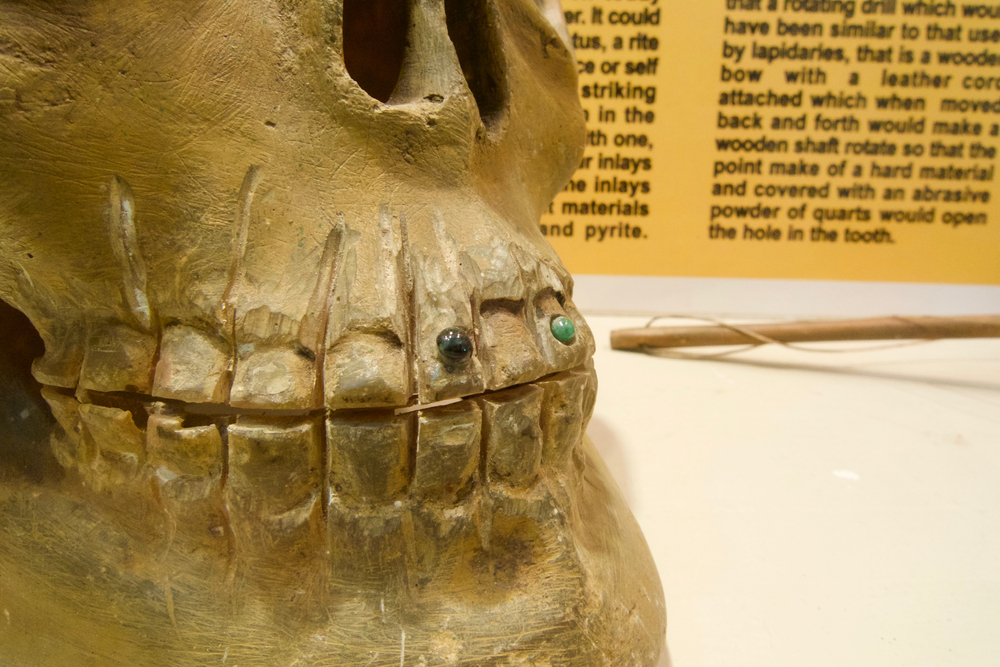
The unusual molar is also part of a larger shift in how researchers understand who received dental modifications. In 2025, researchers examining teeth from the same museum collection reported three permanent front teeth containing circular jade inlays. The roots of those teeth were still developing when the modifications were performed.
Two of the children were estimated to have been 8 or 9 years old. The third was around 9 or 10. Previously, the practice had been documented mainly among adults, making the children’s teeth important evidence that dental modification could begin considerably earlier than researchers once assumed.
One possible interpretation is that the procedure could have been associated with social maturity. Around this stage of childhood, Maya children may have begun taking on new responsibilities, including work. A permanent dental modification could therefore have marked a transition in a person’s social identity.
There is a major limitation, however. The teeth were donated to the museum and are archaeologically decontextualized, meaning researchers do not have the surrounding burial information or objects that might explain why those particular children received the modifications. The evidence shows what happened to their teeth, but it cannot reliably reveal the full reason behind the procedure.
The Hidden Molar Leaves One Major Question Unanswered
The temptation is to decide that the molar must have been modified for a practical reason, perhaps because the person had a painful or damaged tooth. That explanation is plausible, but the available evidence does not establish it. The researchers themselves acknowledge that interpretations remain speculative because the specimen lacks archaeological context.
The same caution applies to the ancient sealants. Finding compounds with antibacterial or antifungal properties today does not prove that Maya practitioners understood those properties or deliberately used the ingredients for medical reasons. The cement’s most obvious function was holding the inlay in place, and any additional effects may have been accidental or simply part of the material’s natural properties.
What the evidence does establish is already fascinating. A Maya practitioner had the ability to drill a living molar, create a precise cavity and fit a tiny piece of jadeite into it. The person survived the procedure well enough for the tooth to show evidence of continued biological activity afterward.
The unanswered question is why anyone would choose a hidden back tooth for such painstaking work. The stone could not easily be shown off, and the tooth does not provide enough archaeological context to reveal what the owner or practitioner intended. One unusual specimen cannot rewrite the entire history of Maya dentistry, but it can expose the limits of what researchers thought they already understood.
The jade has now spent roughly a thousand years exactly where someone placed it. The person who carried it is anonymous, but their dentist left behind something unexpectedly durable: a tiny piece of green stone that still fits the tooth.
ancient dental practices, ancient dentistry, ancient history, Ancient Maya, ancient medical practices, ancient teeth, Archaeological Discovery, archaeology, dental history, Guatemala archaeology, historical discoveries, jade inlay, jade tooth, jadeite, Maya artifacts, Maya civilization, Maya culture, Maya dentistry, Popol Vuh Museum