

A comedy performance has turned into a major online controversy after conservative comedian Arynne Wexler made a series of provocative jokes about New York City Mayor Zohran Mamdani and his wife, Rama Duwaji. The remarks, delivered during a high-profile fundraising roast, have prompted accusations of racism and Islamophobia, with critics questioning whether the comedian crossed a line.
A clip of the performance has reportedly attracted millions of views, bringing Wexler’s comments to a much wider audience. Even British broadcaster Piers Morgan has weighed in, describing the material with one particularly blunt word: “Disgusting.”
Arynne Wexler’s Political Roast Takes An Unexpected Direction
The controversy began at Commentary Magazine’s annual fundraising roast on November 8, 2026. The event was reportedly intended to target former Israeli Ambassador to the United States Ron Dermer, who also served as Israel’s Minister of Strategic Affairs. However, Wexler’s routine brought considerable attention to Mamdani, who became the subject of several jokes during her performance.
Standing behind a lectern, Wexler delivered a series of remarks about the New York mayor and his wife. The comedian appeared comfortable using provocative material, drawing laughter from some people attending the event. However, the footage would eventually reach millions of viewers who were not present in the room.
One of the first remarks that attracted attention involved Wexler referring to Mamdani as the “Grand Mufti of New York.” The religious reference immediately established the direction of her routine, which repeatedly brought the mayor’s Muslim identity into the punchlines.
She then turned toward Mamdani’s marriage, introducing references to Iranian political and religious figures. The jokes became increasingly personal as she brought his wife into the performance.
The resulting clip reportedly accumulated approximately 2.6 million views, turning a relatively contained comedy performance into a much larger political and cultural debate. What happened on stage became a subject of discussion far beyond the original audience.
The Khamenei Joke Quickly Became A Talking Point
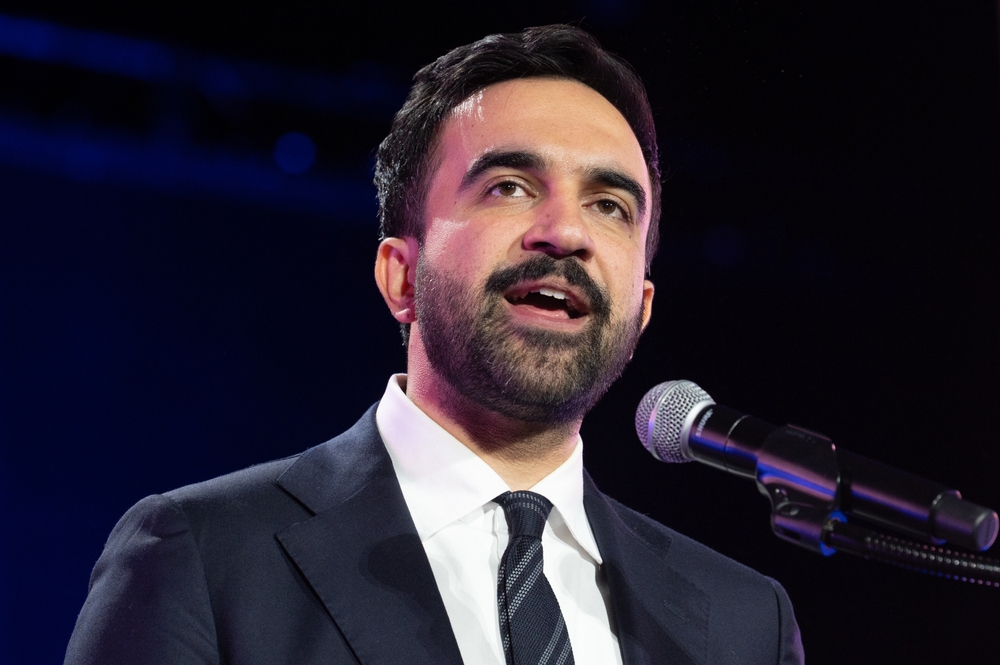
One of the most discussed moments involved Wexler’s reference to Ayatollah Ali Khamenei, Iran’s former Supreme Leader. She used his political speeches as the basis for a joke about Mamdani and Duwaji’s private relationship.
Wexler suggested that the couple kept things fresh by using “old speeches of Ayatollah Khamenei” as their foreplay. The remark was delivered as part of a broader attempt to mock Mamdani through references to his religious and cultural background.
The reference attracted criticism because it connected the mayor’s personal life with an Iranian political and religious figure. Critics argued that the joke relied on familiar stereotypes about Muslims and their supposed relationship with extremism.
The controversy also needs to be understood against the wider political climate surrounding Mamdani. His public positions and identity have attracted considerable attention since his rise in New York politics, making him a frequent subject of political commentary.
However, there is a distinction between questioning a politician’s political relationships and using religious references to make assumptions about his private life. Wexler’s critics believe her performance repeatedly crossed into the latter category.
The Khamenei reference was only one part of the routine, though. Her subsequent remarks about Mamdani’s marriage generated another wave of criticism, particularly because they involved his wife and an implication about her age.
The Joke About Rama Duwaji Added Fuel To The Controversy
Wexler continued by referencing how Mamdani and Duwaji first met. According to the supplied reporting, the couple connected through the dating application Hinge in 2021, when Mamdani had recently been elected to the New York State Assembly.
The comedian used that detail to introduce a joke about the mayor’s background. She told the audience, “It’s pretty interesting, given his background, I assumed he bought her.”
After allowing the remark to land, Wexler added, “When she was 12.”
The joke prompted laughter from people attending the event, but Wexler then continued with another remark about Duwaji’s age. Attempting to make clear that she was joking, she told the audience, “Guys, relax, I’m kidding. She was 13.”
The performance continued with another reference to the couple’s dating history. Wexler joked that they had actually met on JDate, adding that the letter J stood for “jihad.”
These remarks became particularly controversial because they combined a reference to child marriage with religious wordplay. Critics argued that the jokes reinforced negative assumptions about Muslim relationships and culture.
The reference to Duwaji’s age also raised questions about why the comedian had chosen to bring the mayor’s wife into the routine. Although Wexler presented the material as comedy, many viewers considered the implication offensive.
The fact that the couple reportedly met through a mainstream dating application made the joke even more recognisable to viewers familiar with their relationship.
Social Media Users Accuse The Comedian Of Racism

As the footage circulated, criticism began appearing across social media platforms. Several users accused Wexler of disguising racist comments as political humour, while others argued that the routine relied on anti-Muslim stereotypes.
One user responded to the circulating performance by writing, “Oh racism disguised as a joke.”
Another commenter offered an even more direct assessment, stating, “This is just straight up racism.”
The criticism focused heavily on the repeated references to Mamdani’s Muslim background. Rather than concentrating on his political decisions or public policies, viewers argued that Wexler had made his religion the central feature of the jokes.
Another reported reaction described the performance as “Unfunny bigoted bile that would be career ending if it wasn’t about a Muslim.”
A separate user criticised what they viewed as the repeated use of racist and Islamophobic stereotypes, describing the remarks as particularly unpleasant.
These reactions demonstrate the different ways audiences interpreted the performance. Some people may have regarded the material as deliberately provocative political satire, while others saw the references as an attack on an entire religious community.
The criticism also extended to the decision to involve Duwaji in the routine. Several viewers questioned why the comedian had targeted the mayor’s wife through a joke suggesting an underage marriage.
The volume of online criticism helped push the clip beyond the original event, turning Wexler’s performance into a widely discussed political controversy.
Piers Morgan Delivers A Blunt Response To The Viral Clip
Among the prominent figures who reacted to the controversy was British journalist and broadcaster Piers Morgan. After the video began circulating, Morgan shared the footage on X with a short caption expressing his reaction.
“Disgusting,” he wrote.
Although the response contained just one word, it quickly attracted attention from people already discussing Wexler’s routine. Hundreds of users reportedly agreed with his assessment in the replies.
Morgan’s involvement also helped bring the controversy to audiences outside the immediate American political conversation. As a broadcaster with an established international profile, his reaction added another recognisable voice to the criticism.
His response did not include an extended explanation of which individual jokes he objected to. Nevertheless, the caption made his position toward the performance clear.
The criticism from Morgan also demonstrated that objections were not limited to people directly involved in American political debates. The video had become a subject of wider discussion because of its references to religion, marriage and cultural identity.
There is also an important distinction between a public figure expressing an opinion about a comedy routine and establishing that every criticism of the performance is correct. Morgan’s reaction represents his assessment, while the wider debate continues to involve different interpretations of the material.
For Wexler, the attention has brought substantial exposure to her performance, although much of that attention has arrived alongside criticism.
Who Is Arynne Wexler And What Is Her Comedy Style?

mage Credits – Website @Arynne Wexler
Wexler is an American stand-up comedian and conservative political commentator who has developed an online following through political and cultural commentary.
Her official website describes her as a comedian and commentator who is “saying out loud what you’re too afraid to think.” It also presents her as bold and unapologetic, with a style built around discussing controversial subjects and challenging conventional viewpoints.
Her website describes her comedy as fast-talking and conversational. It also highlights her ability to approach serious cultural debates through humour.
Wexler’s professional background includes degrees from the Wharton School and the University of Pennsylvania. Before moving into comedy and commentary, she worked in finance and technology, including experience at Goldman Sachs and within Silicon Valley startups.
Her official website currently describes her as having performed more than 100 shows across over 10 cities. It also promotes her 2026-2027 comedy tour.
Her social media presence has played an important role in expanding her reach. The website lists approximately 280,000 followers on X, alongside substantial audiences on Instagram, YouTube and Facebook.
Her online identity is built around provocative commentary, which helps explain why the Mamdani performance attracted attention so quickly. However, the current controversy has also placed her approach to political humour under greater scrutiny.
The difference between deliberately controversial comedy and material that audiences consider discriminatory has become a central part of the discussion surrounding her routine.
Zohran Mamdani’s Political Rise Makes Him A High-Profile Target

Mamdani is now one of the most recognisable political figures in New York, having become the city’s 112th mayor on January 1, 2026. Before taking office, he represented the 36th New York State Assembly District, covering neighbourhoods in Queens.
His election marked several historic milestones. According to the Associated Press, Mamdani became New York City’s first Muslim mayor, its first South Asian mayor and its first Africa-born mayor.
At 34, he also became one of the youngest people to hold the position in generations.
His political rise has attracted considerable attention because of his democratic socialist platform and campaign promises. These included universal childcare, free bus service and measures aimed at addressing housing affordability.
His positions have also made him a prominent target for political opponents, particularly those who disagree with his economic agenda or his views on Israel and Palestine.
The political disagreements surrounding Mamdani have frequently extended beyond ordinary policy discussions. His religious identity has become another subject of attention, particularly in debates about his place in American political life.
That background provides useful context for understanding why Wexler’s remarks have generated such a strong response. The mayor is a public official whose political record can be examined and criticised, but the jokes focused heavily on personal and religious characteristics.
For many critics, that was the central problem with the performance. They argued that the comedian had plenty of political material available without relying on stereotypes associated with Islam.
Rama Duwaji Is An Accomplished Artist In Her Own Right
Although Wexler’s performance focused heavily on Mamdani, her jokes also brought considerable attention to his wife, Rama Duwaji.
Duwaji is an illustrator and visual artist of Syrian descent. She was born in Houston, Texas, before her family moved to Dubai when she was nine years old.
Her education took her between the United States and Qatar. She initially attended Virginia Commonwealth University School of the Arts in Qatar before transferring to the university’s Richmond campus to complete her degree.
She later earned a master’s degree in illustration as visual essay from the School of Visual Arts in New York.
Her professional work has appeared in several prominent publications, including The Cut, BBC, Vogue and The New Yorker.
Duwaji and Mamdani reportedly met through Hinge in 2021. Their relationship subsequently became a subject of public interest as Mamdani’s political career developed.
However, the comedian’s remarks brought Duwaji into a controversy that was largely centred on her husband’s political and religious identity.
The joke suggesting that Mamdani had purchased his wife as a child was particularly controversial because it introduced an implication about their relationship that had no basis in the reported account of how they met.
Wexler presented the remark as a joke and followed it with another age-related punchline. Critics, however, questioned why Duwaji’s age and personal relationship had become material for such a remark.
Her professional achievements also make clear that Duwaji has an independent public identity beyond her marriage to the New York mayor.
Where Does Political Satire End And Religious Stereotyping Begin?
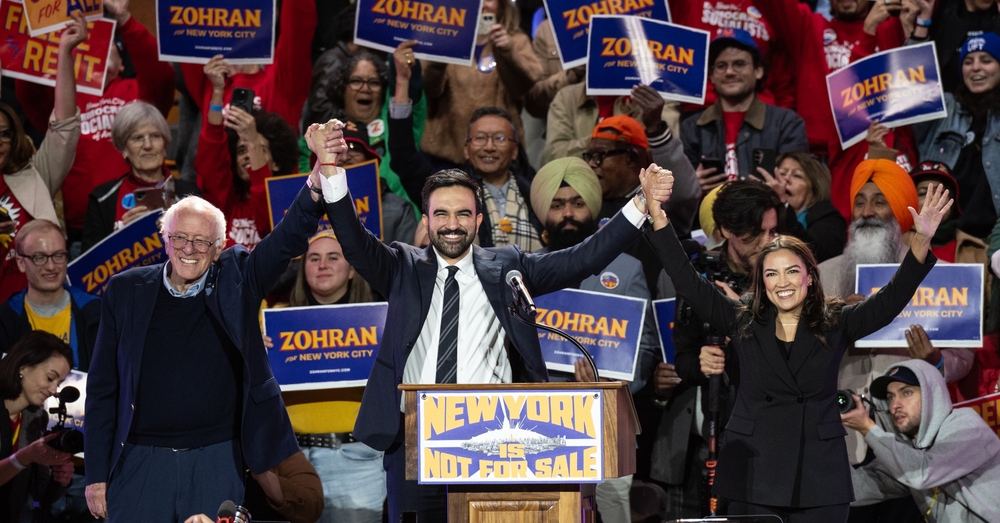
The controversy has reopened a familiar argument about the limits of political comedy. Stand-up performers regularly use politicians as subjects, often relying on exaggeration, uncomfortable observations and deliberately provocative punchlines.
A roast is particularly associated with this style of humour. The format gives performers room to make jokes that might seem unusually harsh in other settings, especially when the audience understands that the event is intended to involve insults.
However, the format does not prevent audiences from questioning the material or explaining why they find particular jokes offensive.
In Wexler’s case, much of the criticism concerns the repeated use of Mamdani’s Muslim identity as the basis for the punchlines. Critics argue that the references to Khamenei, jihad and child marriage collectively draw upon stereotypes about Islam and Muslim relationships.
The distinction between political criticism and religious stereotyping can be examined through several aspects of the performance:
- Criticism of political decisions: A mayor’s policies, campaign promises and public statements are legitimate subjects for political satire and scrutiny.
- References to religious identity: Jokes that associate an individual’s faith with extremism can reinforce assumptions about other people who share that religion.
- Comments about family relationships: Public figures’ spouses can attract attention, but jokes involving serious implications about their personal lives may invite additional scrutiny.
- The audience beyond the event: A joke delivered to a room of invited guests can reach millions online, exposing the material to people who interpret it differently.
The internet has changed the reach of political comedy considerably. Performances that once depended on the reactions of a live audience can now become viral clips, viewed repeatedly and discussed without the original context.
That does not mean comedians should avoid controversial subjects. It does mean that their material can be examined by audiences who do not share the assumptions or expectations of the room where it was performed.
The Viral Backlash Has Put The Performance Under A Wider Spotlight
The circulation of Wexler’s performance has created a much larger discussion than the comedian may have encountered during the original event.
The reported 2.6 million views demonstrate how quickly a controversial political clip can move beyond its original setting. Morgan’s reaction and the criticism from social media users have further increased attention around the remarks.
The controversy also highlights the different expectations audiences bring to political comedy. Some viewers expect comedians to challenge public figures without worrying about whether every joke will be considered acceptable. Others believe that humour involving minority identities deserves closer scrutiny, especially when it repeats stereotypes already present in wider political discussions.
There is also a difference between making a politician the target of a joke and using their family members as supporting material. Duwaji is a public figure in her own right through her artistic work, but the remarks about her age were connected to an implication about her marriage.
Wexler’s website presents her comedy as unapologetic commentary that challenges conventional thinking. Her latest performance has certainly attracted attention, although the response has also raised questions about the substance of the jokes.
As the video continues circulating, the central disagreement remains focused on whether the remarks were an example of provocative political satire or whether they relied too heavily on stereotypes about Muslims.
A roast may give comedians considerable freedom to insult powerful people, but the audience still gets to decide whether the material deserves laughter. In this case, millions of viewers have been given the opportunity to make that judgment, and many have made their objections clear.
Featured Image from Website @Arynne Wexler