
Your cart is currently empty!
Milwaukee Bus Driver Helps Homeless Rider Get Back on His Feet
Most people board a bus, find a seat, and disappear into the background.
Contents
show
For Milwaukee bus driver Natalie Barnes, one routine shift became unforgettable because she noticed something small that many others might have missed. A familiar passenger stepped onto her bus looking different than usual. He was quieter. More withdrawn. Something seemed off.
Hours later, a simple conversation would lead to food, shelter, friendship, and a second chance for a man who had nowhere else to turn.
The entire interaction was captured by security cameras, and the footage has since touched thousands of people who saw what happened when one person chose compassion over indifference.
A Familiar Face With Difficult News
Natalie Barnes had seen Richard before.
As a driver for the Milwaukee County Transit System, she regularly encountered many of the same passengers on her route. Richard was one of them. While they were not close friends, they had exchanged enough conversations over time for Barnes to recognize him immediately whenever he boarded her bus.
On a chilly evening in October, Richard climbed aboard once again.
At first, Barnes sensed something was wrong.
Richard was unusually quiet. His demeanor seemed heavier than normal. When the bus reached the end of the line and Barnes paused for a break, Richard approached her and shared the news he had been carrying.
“I am officially homeless now,” he told her.
The words stopped Barnes in her tracks.
According to surveillance footage from the bus, she immediately asked what had happened.
Richard explained that the home where he had been living had been condemned. Barnes remembered that the property had previously suffered a fire, and she asked if it was the same house.
Richard confirmed that it was.
Then he revealed another painful detail.
“I’ve been out on the streets for a week.”
For many people, that conversation might have ended with sympathy and little else. Barnes decided she could not simply move on.
A Cold Night And A Simple Offer
The timing made Richard’s situation even more troubling.
Temperatures had dropped, and Barnes knew spending another night outdoors could be dangerous, especially for an older man with limited options.
Her first instinct was straightforward.
She offered to buy him dinner.
Richard declined.
Many people facing hardship struggle to accept help, especially from strangers. Pride can be difficult to set aside even during desperate circumstances.
Rather than pushing the issue, Barnes looked for another way to help.
She told Richard he could stay on the bus with her while she worked.
Her shift still had hours remaining, and the heated bus would provide safety and warmth.
“Well, I’m on this bus till 2:44,” Barnes told him in footage later shared publicly. “You want to stay with me then?”
Richard agreed.
What followed was an extraordinary six-hour journey that transformed a routine city bus into a temporary refuge.
Six Hours Of Shelter On A Moving Bus
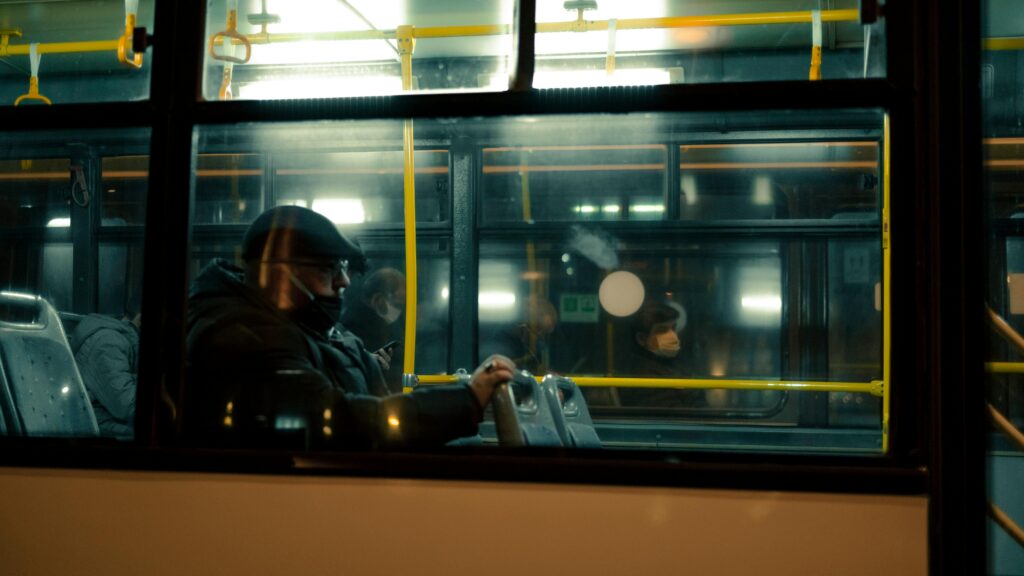
As Barnes continued her route across Milwaukee, passengers climbed aboard and exited at their destinations.
Meanwhile, Richard remained quietly seated.
Security footage showed him sitting peacefully as the bus traveled through the city. There was no dramatic scene. No grand gesture.
Just a man who had nowhere to go and a driver who refused to leave him out in the cold.
The simplicity of the moment is part of what makes the story so powerful.
Barnes did not have access to housing programs. She could not immediately solve homelessness. She did not possess unlimited resources.
What she did have was a warm seat and a willingness to care.
For six hours, that was enough.
Throughout the evening, Barnes continued checking on Richard. She spoke with him during breaks and looked for additional ways to help.
One conversation revealed just how determined she was to make sure he did not leave empty-handed.
She asked whether he needed anything from a store she planned to visit the next day.
It was a small question, but one that showed she was already thinking beyond the immediate crisis.
More Than A Meal
Eventually, Richard accepted Barnes’ offer of food.
Surveillance footage later showed the pair returning to the bus carrying bags that appeared to contain groceries and meals.
The moment prompted an emotional response from Richard.
“I don’t know what to say but to say thank you,” he told her.
Like many people receiving unexpected kindness, he immediately tried to repay the favor.
“I’ll get it back to you soon.”
Barnes quickly shut down the idea.
Her goal was never repayment.
Her goal was simply helping someone who needed it.
“I want to help you,” she assured him.
Those five words carried enormous weight.
For someone who had spent a week sleeping on the streets, uncertainty had likely become a constant companion. Knowing that another person genuinely cared offered something almost as valuable as food or shelter.
It offered dignity.
Stories about homelessness often focus on statistics, policies, or large-scale solutions. Those discussions matter, but individual experiences can sometimes reveal a different side of the crisis.
Many people experiencing homelessness describe feeling invisible.
Barnes did the opposite.
She saw Richard.

The Phone Call That Changed Everything
As the night continued, Barnes began thinking about what would happen after her shift ended.
Keeping Richard warm on the bus solved one problem.
It did not solve the next morning.
Or the next night.
Or the week after that.
Rather than accepting temporary relief as the final answer, Barnes started making calls.
During one of her breaks, she contacted a friend connected to Community Advocates, a local organization that helps people facing housing insecurity and other challenges.
The effort paid off.
The organization was able to secure temporary shelter for Richard and begin assisting him with longer-term housing options.
What started as a conversation on a city bus suddenly became the first step toward stability.
For Richard, the impact was immediate.
Instead of returning to the streets after Barnes completed her route, he now had somewhere safe to go.
Community Advocates later continued working with him, helping him move beyond temporary shelter and toward permanent housing.
That outcome changed the entire trajectory of his situation.
A single conversation had opened the door.
Why Natalie Could Not Walk Away

After the story gained attention, many people wondered what motivated Barnes to become so involved.
Her answer was simple.
She saw another human being in need.
Richard was not a stranger who appeared out of nowhere. He was someone she had encountered repeatedly during her time driving buses around Milwaukee.
Over months and years, regular riders often become familiar faces.
Barnes later explained that she viewed many passengers almost like extended family.
“Richard is a passenger that I’ve seen on several occasions,” she said. “We have several conversations and this is the first time he’s had an immediate need.”
She also admitted she could not imagine returning home to her own family knowing Richard would spend another freezing night outside.
“I couldn’t go home to my family knowing he had nowhere to go at night.”
Those words resonate because they highlight something increasingly rare in modern life.
Many people interact with hundreds of strangers every week without ever truly seeing them.
Barnes paid attention.
She noticed when something was wrong.
And she acted.
A Bigger Problem Facing Communities Everywhere
While Richard’s story has a hopeful ending, Barnes hoped the attention would also encourage people to think about the broader issue of homelessness.
Speaking after receiving recognition for her actions, she described what she regularly witnessed while driving through Milwaukee.
“The community really needs to help with the homeless people that are outside,” she said.
She explained that she often saw people searching through garbage bins for food.
Others lacked proper clothing despite harsh weather conditions.
According to Barnes, many simply had nowhere to go.
Her comments highlighted a reality that exists in cities across America.
Homelessness is often visible, yet easy to overlook.
People pass individuals sleeping on sidewalks, standing at intersections, or carrying their belongings from place to place every day.
The scale of the challenge can make it feel overwhelming.
Yet Barnes’ story demonstrates several ways ordinary people can make a difference:
- Treat people experiencing homelessness with dignity and respect.
- Offer practical help when possible, such as food, clothing, or information.
- Connect individuals with local organizations and support services.
- Pay attention when someone appears to be struggling.
- Remember that small acts of kindness can have lasting effects.
None of those actions require special training or extraordinary resources.
They begin with recognizing another person’s humanity.

A Friendship That Continued Long After The Bus Ride
For Barnes, helping Richard was never about public recognition.
In fact, the relationship continued long after the cameras stopped recording.
The two exchanged phone numbers and stayed in touch.
According to Barnes, they spoke regularly in the months that followed.
Their conversations often included Richard expressing gratitude for the support she provided during one of the lowest moments of his life.
“We talk every couple of days and he thanks me every time he talks to me for helping him,” Barnes said.
Then she shared the nickname he had given her.
“He calls me his little guardian angel.”
The phrase captured the emotional impact of that October night.
Richard boarded a bus expecting transportation.
Instead, he found compassion, friendship, and a path forward.
Barnes, meanwhile, gained a friend whose resilience left a lasting impression on her.
She later reported that Richard was progressing well and continuing to move in a positive direction.
Recognition For A Driver Who Went Beyond Her Job Description
The Milwaukee County Transit System eventually honored Barnes for her actions.
It was not the first time she had received praise for outstanding service.
According to the transit agency, Barnes had developed a reputation for helping people whenever possible.
She was known for carrying extra sandwiches during some shifts.
She had also earned previous commendations for going above and beyond for passengers.
County Executive Chris Abele praised her actions publicly.
“Natalie’s kindness, compassion, and respect for this man in need are what MCTS Excellence is all about,” he said.
Abele added that her actions demonstrated the importance of looking out for one another and working together to address homelessness.
The recognition was well deserved.
Yet the lasting impact was not the award itself.
It was the fact that one man who had spent a week on the streets was no longer facing that struggle alone.
One Quiet Conversation Changed Two Lives
Security cameras captured every stage of Richard’s journey that night.
They recorded the moment he admitted he was homeless.
They recorded Barnes offering him a place to stay warm.
They recorded shared meals, conversations, and the phone calls that eventually connected him with housing assistance.
What the cameras also captured was something harder to measure.
A choice.
Barnes could have driven her route and gone home.
Instead, she paid attention to a quiet passenger who needed help.
The difference between those two decisions changed the course of Richard’s life.
Some stories go viral because they are shocking. Others spread because they reveal something people desperately want to believe still exists.
On a cold night in Milwaukee, a bus driver reminded everyone that compassion does not always arrive with headlines or grand speeches. Sometimes it shows up in a driver’s seat, notices when someone is unusually quiet, and refuses to let them face hardship alone.