
Nvidia has built one of the most powerful businesses in the technology industry, but its future is suddenly facing an unexpected leadership crisis. The departure of co-founder Jensen Huang has placed longtime finance chief Colette Kress in charge while the company searches for someone capable of filling his shoes.
Kress has spent more than a decade working alongside Huang as Nvidia transformed into a dominant force in artificial intelligence. Now, the experienced executive must handle a leadership transition that could reshape the company’s future.
Who Is Colette Kress, Nvidia’s New Interim CEO?
Colette Kress is a longtime technology industry executive who joined Nvidia in September 2013. She became the company’s executive vice president and chief financial officer, positions that placed her at the center of its financial planning and investor relations.
Before joining Nvidia, Kress held senior financial positions at several major technology companies, including Texas Instruments, Microsoft and Cisco. Her career spans more than 30 years, giving her extensive experience with the financial challenges facing large technology businesses.
Kress graduated from the University of Arizona with a bachelor’s degree in finance. She later earned a Master of Business Administration from Southern Methodist University, building an academic foundation that helped prepare her for senior corporate responsibilities.
Her appointment comes after Nvidia announced that Jensen Huang had resigned as chief executive. According to the supplied reporting, the departure followed revelations involving an alleged extramarital relationship with a businesswoman whom US intelligence agencies reportedly suspected of having connections to Chinese espionage.
The circumstances surrounding Huang’s departure have placed additional pressure on Nvidia’s leadership. Kress must maintain confidence in the business while the board considers potential candidates for the permanent position.
How Kress Became One Of Nvidia’s Most Trusted Executives
Kress’s relationship with Nvidia began after an extensive recruitment process. Huang reportedly interviewed 22 candidates before selecting her to become the company’s chief financial officer in 2013.
Interestingly, her decision to join the company also involved encouragement from her family. At the time, her young sons were enthusiastic gamers and encouraged their mother to accept the position at Nvidia.
The early days of her employment also revealed the close professional relationship she would develop with Huang. During her first week, Kress reportedly asked him how long he expected her to remain in the role.
Huang later recalled the exchange during a podcast appearance, saying, “For as long as we shall live and death do us part.” The comment reflected the confidence he had placed in her from the beginning.
Over the following years, Kress became a familiar presence during Nvidia’s quarterly financial announcements. She regularly communicated the company’s performance to investors and explained its financial expectations during periods of rapid growth.
Her responsibilities also required her to understand the company’s wider business relationships. Nvidia operates across international markets and relies on an extensive network of manufacturing partners, suppliers and technology customers.
That experience gives Kress an advantage during the current transition. She already understands Nvidia’s financial structure and has spent years working alongside the executives responsible for its growth.
She Helped Nvidia Transform Into An AI Powerhouse
When Kress joined Nvidia in 2013, the company was considerably smaller than it is today. Its graphics processing units were widely associated with video games, although the technology was already finding applications beyond traditional gaming.
The company’s business expanded dramatically as researchers and technology companies began using graphics processors for artificial intelligence. These chips became essential for training increasingly sophisticated AI systems and operating the data centers supporting them.
Nvidia’s financial performance illustrates the scale of that transformation. According to the supplied figures, the company generated approximately $4.28 billion in revenue during 2013, its first year with Kress as CFO.
By its most recent fiscal year covered in the reporting, annual revenue had reached approximately $215.94 billion. That represents an increase of more than 50 times over the period.
The expansion also helped Nvidia become one of the world’s most valuable publicly traded companies. Its processors are now used by major technology businesses seeking the computing power required to develop and operate advanced AI systems.
Kress was responsible for communicating much of this growth to Wall Street. Her regular appearances on earnings calls helped investors understand the company’s financial results and expectations.
Investment analyst Josh Gilbert described her as someone who had “fronted every earnings call” alongside Huang. He also characterized her as a “familiar and trusted voice for the market at a time when it badly needs one.”
Those relationships could prove particularly useful now that Nvidia is dealing with an unexpected leadership change.
Her Financial Responsibilities Extended Beyond Revenue Growth

Kress’s work at Nvidia involved more than presenting impressive quarterly earnings figures. She also had to address difficult financial questions involving international trade, government policies and the company’s dependence on overseas markets.
One particularly complicated issue involved American restrictions on advanced semiconductor exports to China. These policies limited the ability of Nvidia to sell certain high-performance processors into an important market.
During a 2023 call with financial analysts, Kress explained that China accounted for approximately 20% to 25% of Nvidia’s data center revenue. Restrictions therefore created the possibility of significant lost business.
She also warned that the policies could strengthen Chinese competitors by encouraging domestic companies to develop alternatives to Nvidia’s products. That creates a longer-term competitive concern for a business that currently holds a powerful position in the AI chip market.
Her experience discussing these issues could become important as she takes over the company. Nvidia must maintain relationships with international manufacturers while dealing with changing regulations and geopolitical tensions.
The company’s manufacturing network includes major semiconductor partners such as Taiwan Semiconductor Manufacturing Company, SK Hynix and Samsung. Maintaining these relationships requires careful coordination across different countries and business interests.
Kress understands the financial implications of these relationships. However, the permanent chief executive will also need the technical knowledge and personal connections required to manage Nvidia’s wider industry partnerships.
Colette Kress Has Benefited From Nvidia’s Extraordinary Growth
Kress has also accumulated considerable personal wealth through her position at Nvidia. Her financial interests are closely connected to the company’s extraordinary rise in market value.
According to Nvidia’s annual report referenced in the supplied material, she owned approximately 4.44 million company shares. The holding was valued at around $772 million in the cited reporting, based on the share price at that time.
That makes her one of the company’s largest individual shareholders. Her stake also gives her a substantial financial interest in Nvidia’s future performance.
Huang remained the company’s largest individual shareholder, holding approximately 3.56% of its outstanding shares, according to the supplied reporting. His financial position reflected the enormous value created since Nvidia was founded in 1993.
Kress’s shareholding also illustrates how senior executives can benefit from long-term participation in a rapidly growing technology business. Her wealth increased alongside Nvidia’s expansion into the AI market.
However, her new responsibilities bring a different kind of financial pressure. Investors will be watching how the company performs during the transition and whether its leadership can maintain confidence in its long-term strategy.
Why Replacing Jensen Huang Will Be So Difficult
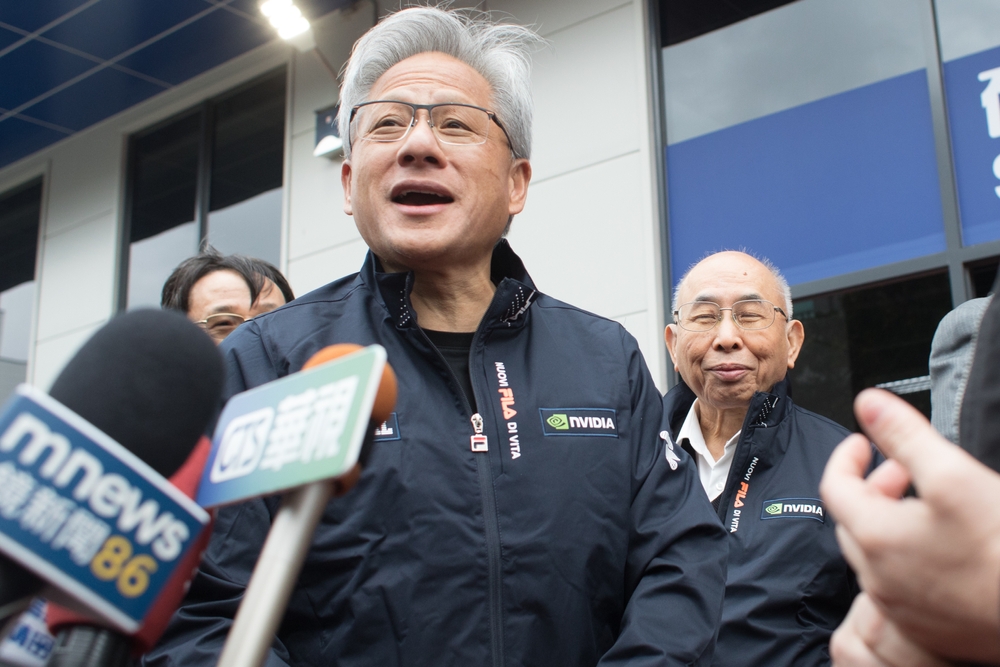
Nvidia’s leadership structure presents one of the biggest challenges facing Kress and the company’s board. Huang had an unusually direct management style, with a large number of senior executives reporting straight to him.
According to the supplied reporting, more than 60 executives were part of this structure. Many had worked with Huang for years and were closely connected to his approach to managing the company.
During a podcast appearance in January, Huang described his executive team as “60 people who could be world-class C.E.O.s for many other companies.”
That comment demonstrated the level of experience within Nvidia’s senior management. It also revealed how much responsibility Huang had concentrated around himself.
Kress will have to maintain coordination across this leadership team while the company works through the succession process. Even experienced executives may face uncertainty when a founder who has personally overseen major decisions suddenly leaves.
Another complication involves Huang’s family members, who have taken on executive responsibilities within Nvidia. The supplied reporting notes that they have risen through the company’s ranks, although they are considered relatively young and inexperienced as potential replacements.
Kress already understands how Nvidia operates, but the permanent CEO will need to command the confidence of employees, investors and external partners. That combination of financial understanding, technical knowledge and leadership experience will make the search particularly demanding.
Three Internal Candidates Could Emerge As Successors
Nvidia may initially prefer someone who already understands its business and corporate culture. Several internal figures have been mentioned as possible candidates, particularly if the board wants to preserve the company’s existing technological direction.
Chris Malachowsky Brings Founding Experience
Chris Malachowsky is one of Nvidia’s original founders, having established the company alongside Huang and Curtis Priem in 1993. His longstanding involvement gives him a level of institutional knowledge that few other executives can match.
He has played an important role in developing Nvidia’s computing technology. His experience could appeal to a board looking for someone who understands the company’s engineering foundations and its evolution into an AI leader.
Malachowsky also shares a historical connection with the business that could help maintain continuity during a difficult transition. However, the supplied reporting does not establish whether he is interested in taking over the chief executive position.
Ian Buck Could Protect Nvidia’s Technical Advantage
Another potential candidate is Ian Buck, who oversees Nvidia’s high-performance computing business. His work involves an important part of the company’s operations and its wider AI strategy.
Buck was among the early pioneers who helped popularize graphics processors beyond gaming applications. His technical background could make him attractive if Nvidia decides that its next CEO should have substantial engineering experience.
Investment strategist Charu Chanana of Saxo described the possible advantages and challenges of such an appointment. She said, “He could protect Nvidia’s technological edge, but his ability to manage the wider commercial relationships and geopolitical challenges would face scrutiny.”
That distinction could become central to the board’s decision. Running Nvidia requires an understanding of semiconductor technology alongside experience with international business relationships and government policy.
Tim Cook And Rene Haas Are Possible External Options
The board has also indicated that it will consider external candidates when selecting a permanent chief executive. That opens the door to experienced leaders from other major technology companies.
Two names mentioned in the supplied reporting are Tim Cook and Rene Haas. Both have significant experience in the technology sector, although their backgrounds differ considerably.
Donald Trump Suggested Tim Cook
US President Donald Trump publicly suggested that Apple executive Tim Cook could replace Huang. His comments appeared on Truth Social following news of the Nvidia leadership change.
Trump wrote, “NOW THAT Nvidia CEO JENSEN HUANG, who has done a fantastic job, has resigned, there is only one man to take his place – TIM COOK of Apple. A Legend replaces a Legend!”
Cook has extensive experience managing one of the world’s largest technology companies. His background in international manufacturing and supply chain management could be relevant to Nvidia’s operations.
Investment manager Jun Bei Liu also discussed Cook as a possible candidate. She noted his experience with global supply chains while questioning whether he would be willing to leave Apple, where he serves as chairman.
His appointment would also raise questions about how his management experience would translate into Nvidia’s highly specialized semiconductor business.
Rene Haas Brings Semiconductor Industry Experience
Rene Haas, chief executive of Arm Holdings, is another name mentioned by analysts. Arm is a British semiconductor design company whose technology is used across a wide range of electronic devices.
Haas has experience leading a publicly traded technology business. His semiconductor background could make him an appealing external candidate for Nvidia’s board.
However, the two companies operate under different business models. Nvidia develops and sells processors and computing platforms, while Arm primarily licenses semiconductor designs and related intellectual property.
Charu Chanana noted that Haas would bring relevant industry experience, although the differences between the companies could present challenges.
Investment manager Liu also emphasized the difficulty of finding someone who could replicate Huang’s combination of technical knowledge and industry relationships. She said, “The challenge is finding someone who can combine Jensen’s technical understanding, strategic vision and relationships across the global technology industry.”
Nvidia Faces A Difficult Test As Investors Watch Closely
The leadership transition has created uncertainty around a company that has enjoyed years of strong investor confidence. The supplied reporting describes an immediate market reaction following the announcement of Huang’s resignation.
Nvidia shares reportedly opened more than 13% lower, wiping more than half a trillion dollars from its market value. Several major investment firms also reconsidered their forecasts for the company.
Bernstein Research analyst Stacy Rasgon expressed concern about the situation in a note to investors. He wrote, “our gut tells us we probably haven’t fully probed the depths of what might be found here.”
Rasgon also reduced Bernstein’s price target for Nvidia and said, “We’ve had enough and prefer to watch from the sidelines.”
Those comments reflected concerns surrounding the leadership crisis and its possible consequences. Investors must now assess whether Nvidia can preserve its business relationships and maintain its position in the AI industry.
Ray Wang, chief executive of Constellation Research, argued that the situation was primarily a challenge for Nvidia rather than the wider AI industry. He pointed to the importance of Huang’s personal relationships in securing partnerships and investments.
That creates an additional challenge for Kress. She must demonstrate that the company’s business relationships can survive a leadership change without disrupting its commercial momentum.
What Happens During Colette Kress’s Interim Leadership?
Kress will continue serving as Nvidia’s chief financial officer while carrying out her interim chief executive responsibilities. The board has begun searching for a permanent replacement and is considering candidates from inside and outside the company.
Nvidia’s newly named board chairman Harvey C. Jones expressed confidence in the interim leadership arrangement. He said, “The board has full confidence in Colette and the leadership team.”
Jones also stated, “We expect the company’s operations, customer commitments and product roadmap to continue without interruption.”
Those assurances are particularly important for Nvidia’s customers. Major technology companies rely on its processors and computing platforms to support their AI investments, meaning uncertainty around leadership could create questions about future commitments.
Kress has already addressed employees directly. In an internal message, she said she believed “deeply in this company” and described its employees as “our greatest strength.”
She also announced a companywide meeting scheduled for November 18 to discuss the company’s future. The meeting offers an opportunity for employees to hear directly from the interim chief executive during a period of significant uncertainty.
Her immediate priorities will include maintaining business continuity and keeping the leadership team focused on Nvidia’s existing plans. The board will meanwhile need to determine which candidate can manage the company over the long term.
Kress has spent years helping Nvidia grow into a global technology powerhouse. Now she faces the challenge of proving that the business can remain strong even after the departure of the executive who built it.