
Your cart is currently empty!
Scientists Find 26 Genetic Clues Behind Fibromyalgia

For decades, people with fibromyalgia have faced a brutal question alongside the pain: if nothing shows up on a scan, how can anyone prove something is wrong? Now, the largest genetic study of fibromyalgia ever conducted has produced evidence pointing firmly toward biology, giving researchers a much clearer direction for understanding the condition.
Contents
show
The international study analyzed genetic data from more than 2.5 million people and identified 26 regions of the genome associated with fibromyalgia risk. The findings do not provide a diagnostic test or a new treatment, but they could reshape research into a condition that has often been misunderstood.
Researchers Analyzed More Than 2.5 Million People
An international research team combined genetic information from 11 health studies conducted across the United States, United Kingdom, Finland, Estonia, Denmark and Iceland. The final analysis included 54,629 people diagnosed with fibromyalgia alongside 2,509,126 people without the condition, making it the largest genetic investigation of fibromyalgia to date.
Michael Wainberg, a geneticist at the University of Toronto who worked on the research, said the enormous dataset strengthened the evidence behind the findings. “But now, I think it’s absolutely indisputable,” Wainberg said, referring to the biological basis of fibromyalgia.
Frances Williams, another researcher involved in the study, explained what the scale of the research revealed about the condition. “By studying the DNA of over 2 million individuals we can be confident that the findings are real and they suggest that fibromyalgia represents a problem in pain processing,” Williams said.
The study was published in Nature Medicine on July 28, 2026, putting the findings into the scientific literature for researchers around the world to examine and build upon.
Twenty-Six Genetic Regions Point Toward The Nervous System
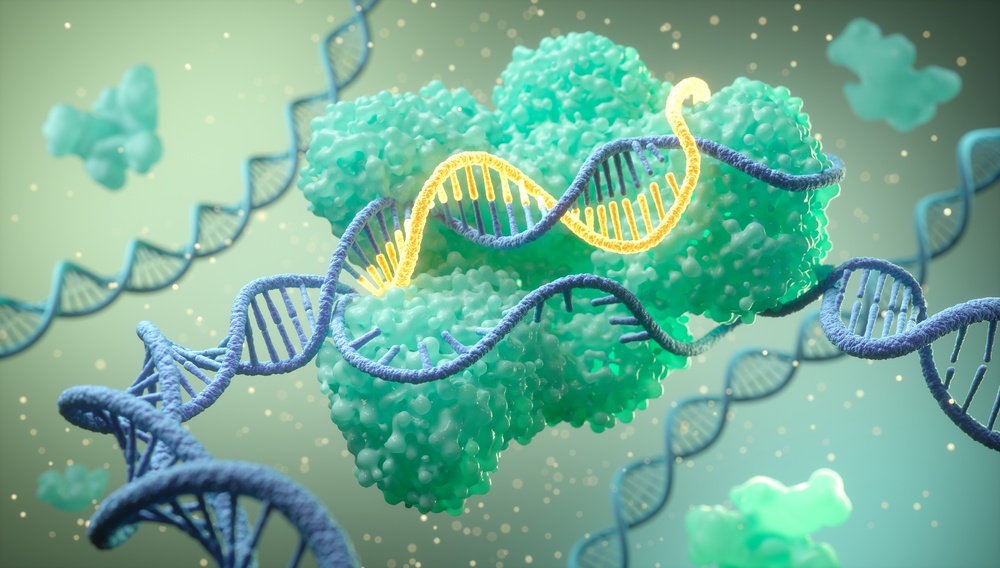
The researchers identified 26 regions of the genome associated with fibromyalgia risk, with roughly half located near genes involved in the nervous system. When the team examined which tissues showed the strongest genetic connections, the brain emerged as the most prominent location.
“Many of the risk factors we found point towards the nervous system rather than the immune system,” Wainberg said. The result gives researchers a stronger biological direction after years of investigating different explanations for the condition.
Fibromyalgia can involve widespread pain and other symptoms without producing obvious abnormalities on standard scans. That has made the condition particularly difficult to study, while the new findings give scientists specific genetic regions they can investigate in greater detail.
The Huntington’s Gene Produced An Unexpected Clue

The strongest individual genetic signal came from an unexpected location: the HTT gene, which is associated with Huntington’s disease. Researchers stressed that the fibromyalgia-related variant is not the mutation responsible for Huntington’s disease; it is a different genetic change involving the deletion of one amino acid.
People carrying that variant had about a 9% higher odds of a fibromyalgia diagnosis. That is a relatively small shift in risk, but the location of the signal gives researchers a specific biological pathway to examine.
“Finding any link at all to the ‘Huntington’s gene’ was completely unexpected and gives us a concrete lead into the biology at play in fibromyalgia,” Wainberg said. Researchers already have another reason to investigate this pathway because a receptor called GPR52 helps regulate HTT levels and is being studied as a potential drug target for Huntington’s disease.
That does not mean Huntington’s treatments will work for fibromyalgia. It does mean researchers have found a biological connection that can now be tested through further experiments.
Why Fibromyalgia Has Been So Difficult To Validate

The new research arrives after years in which many patients have struggled to convince doctors that their symptoms are real. Fibromyalgia does not have a straightforward blood test, and conventional scans may not reveal an obvious abnormality, leaving diagnosis heavily dependent on symptoms and clinical judgment.
Kristal Kent, a patient advocate with Veteran Voices for Fibromyalgia in Cleveland, described how unpredictable the condition can be. “One day, I can seem OK, and the next day I could be crashed out in a flare-up,” Kent told Science News.
Kevin Hackshaw, a rheumatologist at the University of Texas at Austin, said some patients who eventually reach him have already faced skepticism from previous doctors. He said more than half of his patients arrive after being told fibromyalgia was “a wastebasket term.”
Michael Wainberg explained how the lack of visible symptoms contributed to that skepticism. “Fibromyalgia does not have externally observable signs, and often presents in patients with psychiatric conditions. That contributed to a sense that fibromyalgia was merely a presentation of psychiatric problems, rather than a disease in its own right,” he said.
Gerard Limerick, a pain medicine doctor at Johns Hopkins, said disbelief among some physicians remains a problem. “There are still to this day physicians who don’t really believe it’s a real condition,” Limerick said.

The researchers also discovered genetic overlap between fibromyalgia and several conditions that frequently occur alongside chronic pain. The connections included major pain syndromes, post-traumatic stress disorder, irritable bowel syndrome, low back pain, polycystic ovary syndrome and, more modestly, autoimmune disorders.
Several of those connections could help explain why people with fibromyalgia can experience multiple seemingly unrelated health problems. The researchers now have a way to investigate whether some of these conditions share biological mechanisms rather than simply occurring together by chance.
The study found overlap with:
- Major pain syndromes: The connection supports research into shared mechanisms behind chronic pain conditions.
- Post-traumatic stress disorder: The genetic overlap adds another connection involving conditions associated with nervous-system processes.
- Irritable bowel syndrome: The relationship may help researchers investigate why the two conditions frequently occur together.
- Low back pain: Genetic similarities provide another avenue for studying chronic pain as a broader biological phenomenon.
- Polycystic ovary syndrome: The study identified a genetic connection with PCOS.
- Autoimmune disorders: The overlap was weaker, suggesting immune processes may not explain the central genetic pattern.
“We know that chronic pain syndromes cluster together in individuals and families and are genetically similar,” Williams said. “Targeting the shared mechanisms underlying them could potentially benefit a whole cluster of disorders.”
The research group has established a Chronic Pain Genomics Consortium to investigate these relationships further, beginning with pelvic pain.
Nearly 88% Of Diagnosed Cases Were Female

Another striking finding involved the difference between men and women diagnosed with fibromyalgia. Nearly 88% of the cases in the study were female, while clinical diagnosis is roughly three times more common among women than men.
Yet the researchers did not find a distinct genetic architecture that explained the difference. The same common genetic variants appeared in both sexes, leaving environmental factors and possible triggers as areas for further investigation.
The researchers suspect that genetic susceptibility may need to combine with another event or condition before fibromyalgia develops. An injury or arthritic condition could potentially act as a trigger, but the study does not establish which factors are responsible.
That question is now easier to investigate because researchers have genetic markers that can be compared with people’s medical histories and other characteristics.
The Findings Do Not Create A Genetic Test
Despite the size of the study, there is no genetic test for fibromyalgia based on these findings. The researchers identified statistical associations rather than a single gene that causes the condition, and the HTT variant itself changes risk by only around 9%.
Most people carrying the variant will never develop fibromyalgia, while the condition appears to involve additional genetic and non-genetic factors. The researchers also noted that most participants were of European descent, which limits how confidently the findings can be generalized to other populations.
Gerard Limerick compared the genetic markers to a clue rather than a precise diagnosis. “Think about the genetic variants like a plume of smoke drifting up somewhere in your neighborhood. It tells firefighters where to look but doesn’t give an exact location,” Limerick said.
That distinction is crucial because the study identifies promising places for researchers to investigate without claiming that those genetic regions fully explain why an individual develops fibromyalgia.
Researchers Now Have A Clearer Place To Look
The immediate reality for patients remains largely unchanged. The study does not deliver a new medication, eliminate flare-ups or provide doctors with a simple test that can confirm fibromyalgia.
What it does provide is a much stronger biological foundation for future research, with 26 genetic regions offering specific targets for investigation. The nervous system and brain now appear especially important, while the unexpected HTT connection gives scientists another pathway to examine.
For patients who have spent years describing pain that other people cannot see, the evidence could also change the conversation in the doctor’s office. The research does not prove every symptom has a single genetic explanation, but it makes it considerably harder to dismiss fibromyalgia as something without a biological basis.
The next challenge is finding out what those genetic signals actually do. That work could eventually reveal why certain people develop chronic pain, what triggers it and whether treatments aimed at shared pain pathways could help more than one condition.