
Your cart is currently empty!
Why Anxiety Bags Are Becoming Essential for Gen Z Mental Health
It often begins quietly. A racing heartbeat. A sudden wave of heat. Thoughts that spiral faster than they can be caught or slowed down. For many young people today, these moments are not rare interruptions but a regular part of life.
Contents
show
For 22-year-old Hannah Fowles from Utah, one such moment became a turning point. After a long and exhausting day at work, she felt panic rising in a way she could not control. Her usual coping methods failed her. Breathing exercises did not work. Resting in a quiet room did not help. The feeling only intensified.
Then she remembered something sitting nearby. A small bag she had recently put together with her therapist. Inside were tools designed specifically for moments like this.
Within ten minutes of using it, her body began to calm. The panic that had felt overwhelming started to loosen its grip. For Fowles, that small bag changed everything.
Across the world, thousands of young people are now turning to similar solutions. What began as a niche idea circulating on social media has grown into a widespread coping strategy. These so-called anxiety bags are becoming a defining symbol of how Gen Z is learning to manage mental health in real time.
To understand why anxiety bags are gaining traction, it helps to look at the broader landscape Gen Z is living in. Studies consistently show that this generation is experiencing higher levels of stress and anxiety than those before them.
A survey of young adults in the United States found that 61 percent of people aged 18 to 26 have been diagnosed with an anxiety condition. Nearly half report experiencing panic attacks at least once a month. In India, the picture is equally concerning. Research by ICICI Lombard revealed that 77 percent of respondents show symptoms of stress, with a significant portion of young people struggling to cope with daily pressures.
These numbers reflect more than individual struggles. They point to a larger cultural and social environment that places constant demands on young people. From academic expectations and workplace pressures to financial uncertainty and global instability, stress has become deeply embedded in everyday life.
Social media adds another layer. While it offers connection and entertainment, it also exposes users to constant comparison, unrealistic standards, and a steady stream of global news. This combination can make it difficult to switch off or find moments of calm.
Mental health platforms have also reported a sharp increase in young people seeking therapy. Mind Peers noted that nearly 85 percent of individuals seeking help are under the age of 35. The demand for support is rising rapidly, and traditional coping mechanisms are not always enough in urgent moments.
When Traditional Coping Methods Fall Short
Therapy, medication, and mindfulness techniques remain important tools for managing anxiety. However, experts point out that these approaches do not always work in the middle of a panic episode.
Dr. Kyra Bobinet, a physician and behavioral neuroscientist, explains that when the brain is overwhelmed by stress, it becomes harder to remember or apply learned coping strategies. In highly stimulating environments, the mind can feel flooded with triggers, leaving little room for deliberate thought.
This is where anxiety bags come in. They provide immediate, physical tools that can be accessed without needing to think too much. Instead of relying solely on mental techniques, these kits engage the body and senses directly.
Clinical psychologist Dr. Jenny Martin notes that these tools help shift attention away from spiraling thoughts and back into the present moment. By focusing on physical sensations, the brain is given a chance to interrupt the cycle of anxiety.
This approach does not solve the root cause of anxiety, but it can be highly effective in managing acute episodes. For many young people, that immediate relief can make a significant difference.
What Goes Inside an Anxiety Bag
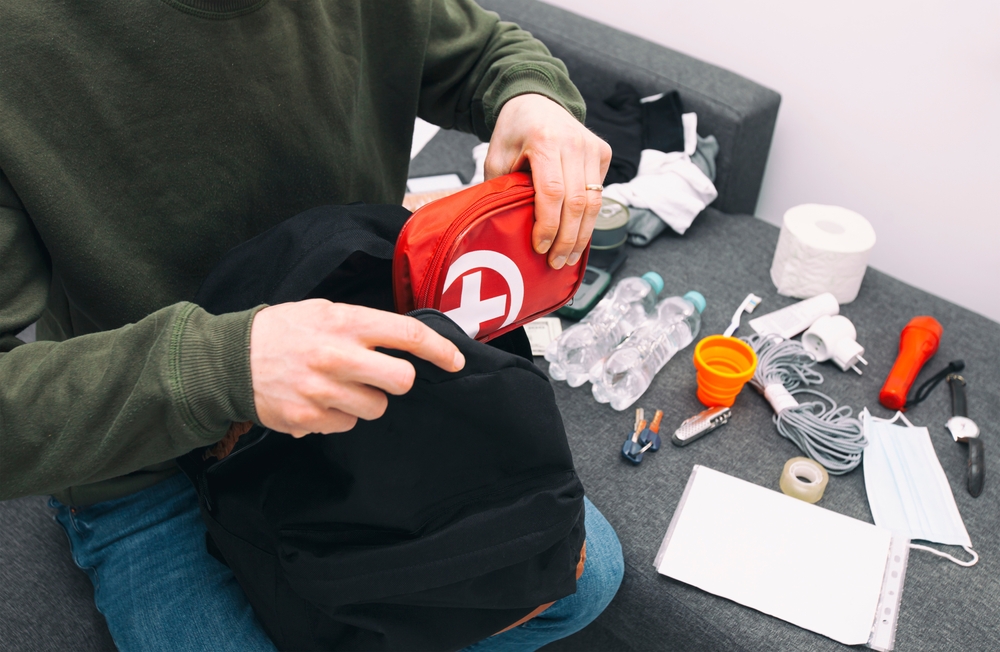
There is no single formula for an anxiety bag. Each one is personalized based on individual triggers and preferences. However, many share common elements that target the five senses.
Some items focus on touch. Fidget toys, textured rings, and stress balls provide a physical outlet for nervous energy. Others focus on temperature. Cold packs and cooling patches can help regulate the body during moments of overheating or panic.
Scent and taste also play a role. Lavender essential oil is often used for its calming properties, while sour candies or mint gum can create a sharp sensory experience that redirects attention. These strong sensations help break the loop of anxious thinking.
Sound is another important factor. Noise-canceling headphones or calming music can reduce overstimulation, especially in crowded or noisy environments. Visual and mental tools such as notebooks, affirmation cards, or guided breathing instructions can also help bring structure to overwhelming thoughts.
Medication is sometimes included, depending on individual needs and medical advice. The key idea is not the specific items themselves, but the ability to access them quickly when anxiety begins to rise.
Real Stories Behind the Trend
Behind the growing popularity of anxiety bags are personal stories that highlight their impact. For Stefany Staples, a 24-year-old from Atlanta, anxiety became a serious issue in 2024. She experienced physical symptoms so intense that they led to multiple hospital visits.
Initially, she misunderstood anxiety as simple overthinking. Over time, she realized it involved a wide range of physical and emotional symptoms, including heart palpitations and overwhelming fear.
When medication did not provide enough relief on its own, she turned to online communities for advice. Inspired by what she found, she created her own anxiety bag. It included items like lavender oil and sour candy, both chosen for their ability to ground her in the moment.
For Staples, the effect was noticeable. The tools helped interrupt the anxious cycle and allowed her to regain control during stressful situations.
Carrie Berk, a 23-year-old from New York, had a similar experience. She began dealing with anxiety and obsessive compulsive symptoms during the COVID-19 pandemic. One of the most effective tools in her bag turned out to be something simple: a notebook and pen.
Writing down her thoughts helped her organize what felt chaotic. Over time, this practice became an essential part of her coping strategy. She described the anxiety bag as a kind of personal toolkit, one that keeps everything she needs within reach when she feels overwhelmed.
For many users, the benefit is not just in the items themselves but in the sense of preparedness they provide. Knowing that help is readily available can reduce the fear of anxiety itself.
Why Gen Z is Embracing This Approach
The rise of anxiety bags reflects a broader shift in how younger generations approach mental health. Unlike previous generations, Gen Z is more open about discussing mental health challenges and seeking solutions.
There is also a growing emphasis on proactive self care. Instead of waiting for problems to escalate, many young people are looking for ways to manage stress before it becomes unmanageable.
Anxiety bags fit into this mindset. They are practical, accessible, and customizable. They do not require expensive resources or complicated routines. At the same time, they offer a sense of control in situations that often feel uncontrollable.
In India and elsewhere, the pressures facing young people continue to evolve. Academic competition, uncertain job markets, and the influence of digital culture all contribute to rising stress levels. Anxiety bags are one example of how individuals are adapting to these challenges in creative ways.
There is also a social aspect to the trend. Platforms like TikTok have played a major role in spreading awareness. Users share their own versions of anxiety bags, offering ideas and encouragement to others. This sense of community can make people feel less alone in their struggles.
The Science Behind Sensory Grounding
Experts emphasize that the effectiveness of anxiety bags lies in how they engage the senses. When the body enters a state of panic, it activates the fight or flight response. This can lead to symptoms like rapid heartbeat, sweating, and shortness of breath.
Sensory tools help counteract this response by redirecting attention. Holding something cold, tasting something strong, or focusing on a repetitive motion can interrupt the body’s stress signals. This process is often referred to as grounding.
Dr. MaryEllen Eller explains that understanding the source of anxiety is important in choosing the right tools. For example, someone who feels overwhelmed by noise may benefit from reducing sensory input, while someone experiencing racing thoughts may need more engaging sensations to break the cycle.
The goal is to create a set of tools that work together to bring the mind and body back into balance. Over time, the brain can begin to associate these tools with feelings of safety and calm.
A Helpful Tool, Not a Permanent Solution
While anxiety bags are gaining popularity, experts caution that they are not a complete solution. They are most effective when used alongside other forms of support, such as therapy or long term coping strategies.
Dr. Vinay Saranga notes that the goal over time should be to reduce reliance on the bag. As individuals build stronger coping skills, they may find they need fewer tools or can manage anxiety without them altogether.
Some users have already started moving in this direction. Cassie Rodgers, a 27-year-old from Oregon, initially carried a larger kit but has gradually reduced it to just a couple of essential items. Even so, she says that having those items nearby gives her confidence.
This balance highlights an important aspect of the trend. Anxiety bags are not about dependency. They are about empowerment during moments when control feels out of reach.
What This Trend Reveals About Mental Health Today
The popularity of anxiety bags says something deeper about the current state of mental health. It reflects a generation that is actively searching for ways to cope with unprecedented levels of stress.
It also shows a shift toward practical, everyday solutions. Instead of relying solely on abstract advice, young people are turning to tangible tools that can be used in real situations.
There is also a sense of compassion embedded in this trend. Many users share their experiences openly, encouraging others to seek help and experiment with what works for them. This openness helps reduce stigma and creates space for honest conversations about mental health.
At the same time, the trend highlights the need for broader support systems. While individual strategies are important, they cannot replace structural changes that address the root causes of stress, such as economic instability, academic pressure, and social inequality.
A Small Bag With a Larger Meaning
At first glance, an anxiety bag might seem like a simple collection of everyday items. A piece of candy, a small fan, a notebook. But for those who rely on them, these objects carry a much deeper significance.
They represent preparation in the face of uncertainty. They offer comfort during moments of distress. Most importantly, they provide a sense of agency when anxiety threatens to take over.
For Hannah Fowles and many others, the impact is clear. What started as a small experiment has become a reliable tool for navigating difficult moments.
The rise of anxiety bags does not mean that anxiety itself is disappearing. If anything, it highlights how widespread the issue has become. But it also shows that young people are finding ways to respond, adapting to their circumstances with creativity and resilience.
In a world that often feels overwhelming, sometimes the most powerful solutions are the simplest ones. A small bag, thoughtfully packed, can make the difference between feeling lost in panic and finding a way back to calm.