
Your cart is currently empty!
Scientists Catch Grumpy Cat of the Himalayas on Camera for the First Time
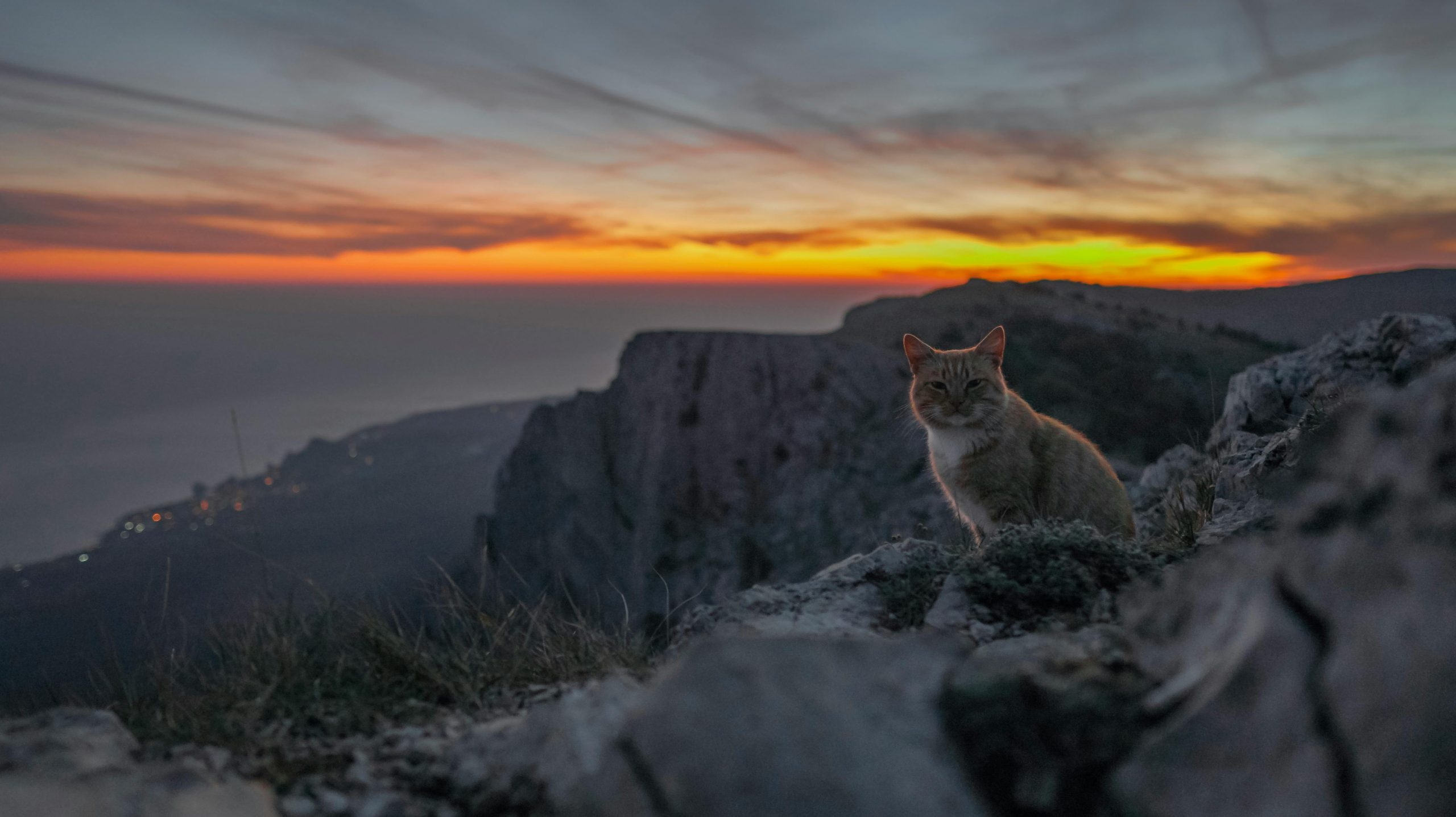
High in the rarefied air of the eastern Himalayas, where the clouds hang low and the wind howls across desolate ridges, a small camera blinked to life and captured something no one had ever seen in India before. In that moment, at nearly 16,400 feet above sea level, the icy wilderness revealed one of its most secretive residents: a Pallas’s cat, also known as the “grumpy cat of the mountains.” It’s a creature so elusive, so rarely seen, that many wildlife experts doubted they’d ever catch one on film in this part of the world. But this time, science met serendipity. The cat’s round face, heavy fur, and seemingly unimpressed expression have now become a symbol of both the mystery and the resilience of the Himalayan wild.
Contents
show
This image came from one of the most ambitious high-altitude wildlife surveys ever attempted, not from a chance sighting. Between July and September 2024, researchers from WWF-India, in partnership with the Arunachal Pradesh Forest Department, braved the thin air and brutal cold to install 136 camera traps across 83 remote sites in the Tawang and West Kameng districts of Arunachal Pradesh. For months, those cameras silently observed a world few humans ever witness. What they found changed the story of Himalayan wildlife forever. The Pallas’s cat, once thought to belong solely to the steppes of Central Asia was living quietly among the rocks and snowfields of India. And it wasn’t alone.
A Feline Enigma Hidden Among the Clouds
To understand why this discovery matters, one must first know the cat itself. The Pallas’s cat, or Otocolobus manul, looks like it’s perpetually irritated by the state of the world. With its flat face, low-set ears, and dense coat, it resembles an exaggerated caricature of a domestic pet one sculpted by evolution to survive an environment most creatures would flee. Unlike snow leopards or tigers, which have long captivated conservationists and photographers, the Pallas’s cat has remained shrouded in mystery. Its preferred domain is the high, cold steppe places where oxygen is scarce and human footprints are almost nonexistent.
This cat’s evolutionary story stretches back millions of years. It diverged from the leopard lineage around 5.2 million years ago, making it one of the oldest surviving wildcat species on the planet.
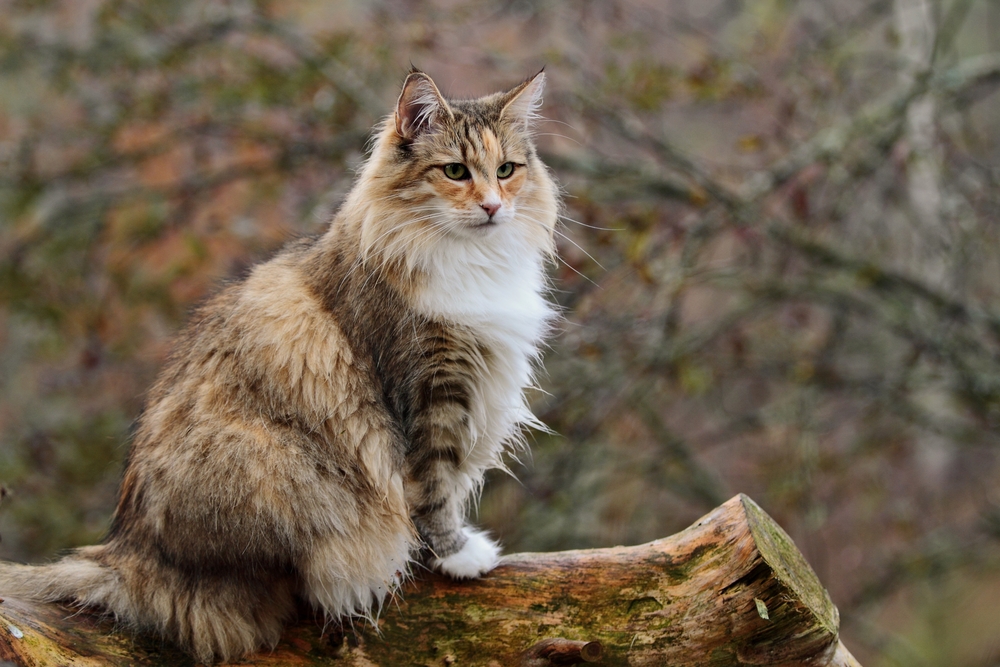
That means when early humans were just figuring out how to control fire, the ancestors of this little feline were already prowling across Asia’s vast mountain ranges. Its thick, silvery-gray fur acts as a perfect camouflage against rocky slopes, while its bushy tail doubles as both a heater and a blanket. To endure the frigid ground, it even stands on its own tail to keep its paws warm, a neat evolutionary trick that seems both comical and ingenious.
When the WWF-India team retrieved their camera data and first saw the unmistakable shape of this grumpy-faced cat, they realized they were looking at history. “The discovery of Pallas’s cat in Arunachal Pradesh at nearly 5,000 meters is a powerful reminder of how little we still know about life in the high Himalayas,” said Dr. Rishi Kumar Sharma, head of science and conservation at WWF India’s Himalayas Program. For scientists, this discovery confirmed that the eastern Himalayas still hold wildlife mysteries that can reshape what we know.
Where Snow Leopards Roam And Pallas’s Cat Joins Them
Perhaps even more astonishing than the Pallas’s cat’s debut was the sheer abundance of other predators recorded during the same expedition. Those 136 camera traps documented six species of wildcats, a record-breaking haul that includes snow leopards, common leopards, clouded leopards, leopard cats, marbled cats, and now the elusive Pallas’s cat. In a landscape that often appears barren to human eyes, life thrived in hidden abundance. These species weren’t scattered randomly. They occupied overlapping territories, each finely adapted to the altitude, temperature, and prey available in that narrow ecological niche.
Among the most startling findings were altitude records that defied previous scientific assumptions. A common leopard was filmed prowling at 15,090 feet, a clouded leopard at 15,255 feet, and a marbled cat at 14,190 feet, all higher than ever recorded in India. Even birds and small mammals joined in the record-breaking trend: a Himalayan wood owl at 13,760 feet and a grey-headed flying squirrel at 14,790 feet. It’s as though every species was quietly testing the upper limits of survival, reminding humanity how flexible nature can be when it needs to adapt.
In one rare sequence, cameras even captured a snow leopard and a common leopard scent-marking the same spot, a behavior almost never documented before. To ecologists, this suggested an unexpected harmony, a subtle negotiation of territory that allows multiple apex predators to coexist in an area of scarce resources. The Himalayas feel rugged on the surface, yet the landscape treats every creature on equal terms.
A Partnership Between People and Wilderness

For all the drama of the discovery, it’s easy to forget that none of this could have happened without human hands or, more precisely, human hearts. The survey was part of WWF-India’s project Reviving Trans-Himalayan Rangelands – A Community-led Vision for People and Nature, funded by the UK government through the Darwin Initiative. Scientists and local herders worked side by side, hauling camera equipment across treacherous slopes where each breath is a labor. In these villages, the Brokpa herding communities have lived for centuries, guiding yaks and sheep through the same valleys now known to harbor the Pallas’s cat.
The Brokpa people’s deep knowledge of the landscape proved indispensable. They know the migration routes, the snow patterns, and the quiet signs of life that outsiders would miss. Their cooperation turned what might have been a brief expedition into a true collaboration between traditional wisdom and modern science. As WWF project officer Taku Sai noted, “The findings of this survey are remarkable, and the discovery of multiple wild cats at such extreme elevations opens exciting new opportunities for ecological research and conservation.”
But it also opens deeper philosophical questions about coexistence. The same camera traps that captured wildcats also photographed herders and their livestock. In those frozen frames, humans and animals appeared as cohabitants rather than competitors, a reminder that conservation is not about keeping people out of nature but about finding ways for both to thrive. It’s a delicate balance, one that has endured in these mountains for generations.
The Fragile Power of an Ancient Ecosystem

The eastern Himalayas are often called the “third pole” a region whose glaciers feed the great rivers of Asia and sustain over a billion people downstream. Yet this crucial ecosystem is also one of the most fragile on Earth. Rising temperatures, shrinking snowlines, and shifting vegetation zones are slowly pushing wildlife higher, compressing the habitable space available to species like the Pallas’s cat and snow leopard. Each new altitude record from a wildcat or bird is exciting because it shows how well wildlife can adapt, while also reminding scientists that ecosystems are under strain.
Still, there’s a quiet resilience here that’s hard not to admire. The very existence of a predator as specialized as the Pallas’s cat at such elevation speaks to the richness of these rangelands. These are not barren wastelands of ice and rock but intricate webs of life pika burrows hidden under stones, mountain weasels darting through frost, and the eternal patience of a cat waiting for dusk to strike. Even the oxygen-starved slopes hum with stories, if one listens closely enough.
Conservationists see this discovery as a rallying cry. It underscores the importance of protecting high-altitude habitats not merely for their charismatic megafauna but for the entire ecological orchestra playing unseen beneath the snow. As Dr. Sharma observed, “That a landscape can support snow leopards, clouded leopards, marbled cats, and now Pallas’s cat alongside vibrant pastoral traditions speaks to its extraordinary richness and resilience.” The sighting reinforces a simple truth: the Himalayas remain full of life.
What the Discovery Means for the Future

Every photograph tells a story, but this one tells several. For WWF India and the Arunachal Pradesh Forest Department, the image of the Pallas’s cat is more than scientific proof, it’s an emblem of hope. It validates years of patient effort, dangerous treks, and an unwavering belief that there was still something left to discover. For the people of the Himalayas, the landscape represents both home and heritage, carrying species and traditions that have endured for generations.
The Pallas’s cat itself, despite its comical nickname and grumpy visage, symbolizes endurance. In a world where so much wildlife is slipping into extinction, here’s a species expanding its known range, adapting, thriving quietly in the shadows. Its rediscovery in new terrain challenges our assumptions about where life can flourish. If a cat can live and hunt at five thousand meters, perhaps resilience is built into nature more deeply than we think.
But perhaps the most profound takeaway is what this discovery says about curiosity. Science often moves forward not with fanfare but with persistence, people trudging through snow, setting up small machines, waiting months for a flash of movement in the dark. The Himalayas, with all their grandeur, still have secrets left to share. The question is whether we will continue listening.
A Gentle Lesson from the Grumpy Cat of the Mountains
In the end, the Pallas’s cat is both an enigma and a teacher. It teaches patience because it can vanish for years before being seen again. It teaches humility because its existence defies our maps and expectations. And it teaches balance because its survival depends on ecosystems that humans can easily disrupt but also help preserve. Its round, scowling face peering through the Himalayan mist becomes a reminder of our responsibility to protect what we still struggle to understand.
When WWF India’s cameras captured that first shot, the image served as both documentation and a reminder. A reminder that even in the most remote corners of the Earth, life persists, adapts, and sometimes stares back at us with unamused eyes as if to say: you’re only just beginning to notice.
And perhaps that’s the most inspiring truth of all that discovery is not about finding what’s new, but about remembering what’s been there all along, waiting patiently for us to look up from the noise and finally see it.