
Your cart is currently empty!
History Teacher Says Students Are Finally Asking For Harder Classes

What happens when a teacher removes the apps, badges and constant digital stimulation that have become part of modern classrooms? In one Alabama history classroom, the answer has been striking. Jonathan Buchwalter says students are actually going to counselors and asking to be placed in his class, even though his lessons are built around paper, difficult material and the expectation that teenagers can handle work that does not always feel entertaining.
Contents
show
Buchwalter, an eleventh-grade history teacher at Tuscaloosa County High School, believes the unusual demand comes from one simple difference: he treats his students like adults. His classroom does not rely on points, badges or a stream of short-form digital content to keep students interested. Instead, students are expected to read, think, write, struggle with complicated ideas and finish the work. Now, his approach has sparked a much bigger debate over whether schools have spent too much time making education feel like a game.

Students Are Asking To Get Into The Class
Buchwalter is quick to reject the idea that students are asking for his class because he considers himself an exceptional teacher. According to him, the reason students repeatedly approach counselors is much simpler. They know his classroom comes with higher expectations, but they also know those expectations are based on the belief that they are capable of meeting them. “The reason that I’ve got a line of students every year that go to the counselors and beg them to be put in my history class isn’t because I’m the best teacher ever,” Buchwalter said. “It’s because I treat them like adults and they know that.”
That approach means students are not constantly given an easier version of difficult work. They have to sit with complicated historical material and work through problems without every assignment being broken into tiny steps designed to guarantee that they succeed immediately. There are no digital rewards waiting at the end of every task, and there is no expectation that every lesson has to compete with the entertainment students encounter on their phones after school.
For teenagers who have spent years surrounded by fast-moving digital content, that environment can feel very different. Buchwalter’s argument is that the difference may be exactly what makes the classroom appealing to some students. Instead of being treated as children who need every difficult task made more attractive, they are given responsibility and trusted to deal with material that requires patience.
That does not mean every student automatically loves the experience. Buchwalter says many students struggle during the first few weeks because they have become accustomed to shorter material and more structured support. The important part, in his view, is what happens after that adjustment period. Some students discover that they can handle the work, and the classroom becomes a place where difficult material is expected rather than avoided.
The Teacher Has A Problem With Gamified Learning
Buchwalter has a specific name for the educational trend he believes has gone too far: gamification. He argues that schools have gradually shifted away from teaching the academic skills required for deep thinking and toward creating classroom experiences that resemble the digital environments students already know. “There has been this odd shift away from the academic skills that make someone a critical thinker and toward short-form content in the classroom,” he said.
He points to several changes that have become increasingly common in classrooms, including shorter articles, more scaffolding and additional digital tools designed to guide students through complex assignments. None of those tools is automatically harmful, but Buchwalter believes they can become counterproductive when students rarely have to struggle independently with difficult material.
His criticism also goes beyond individual teachers. He connects the shift to broader pressures facing schools, including limited resources, standardized testing and concerns about student engagement. When schools are judged by measurable outcomes and teachers are constantly looking for ways to keep students participating, making lessons more entertaining can seem like an obvious solution.
The problem, according to Buchwalter, is that engagement and learning are not necessarily the same thing. A student can be highly engaged with an activity without developing the ability to think independently or transfer what they learned into a different situation. His classroom is built around the opposite assumption: students can tolerate difficulty, and they may become more capable by being expected to work through it.

Sixteen-Year-Olds Are Not Being Given The Easy Option
The transition is not always smooth. Buchwalter says many of his students arrive having spent years in classrooms where learning has become increasingly short, interactive and heavily supported. His approach removes much of that structure, which can make the first few weeks uncomfortable for students who are used to receiving constant assistance.
“Most of my kids are sixteen or seventeen. They’ve been sort of indoctrinated into the gamefication of learning,” he said. “And so those first few weeks of my class are really tough for a lot of my students. Because they’re used to the short form [of] everything and games, and I’m not giving them that.”
Buchwalter does not interpret that initial difficulty as proof that teenagers have lost the ability to concentrate. Instead, he believes they have been trained to expect a particular kind of classroom experience. When that experience disappears, students initially struggle because they have to rebuild habits that require more patience and independent effort.
“The mythos built around it is that the kids can’t focus on the harder stuff, the more challenging stuff,” he said. His position is that the ability is still there, but students need opportunities to use it. In his classroom, the expectation comes first and the adjustment follows.
That distinction is important because there is a major difference between a student finding something difficult and a student being incapable of doing it. Buchwalter’s experience suggests that some teenagers may perform differently when the classroom stops trying to make every assignment immediately comfortable.

Research Does Not Give Gamification A Simple Pass
The research surrounding gamification gives Buchwalter some support, but it does not establish that educational games or digital tools are inherently damaging. A 2024 systematic review examined 90 gamification interventions and found that gamification could improve motivation, self-efficacy and students’ confidence when facing academic challenges. The researchers, however, also made a distinction that is central to the argument surrounding Buchwalter’s classroom.
“Motivation is not synonymous with academic success,” the review stated, adding that being motivated was not necessarily a predictor of academic achievement. The researchers found improvements in students’ awareness of their own learning, while also reporting that there were no substantial variations in some learning outcomes.
Another finding is particularly relevant to Buchwalter’s criticism. The review reported that students could successfully solve challenges and problems presented inside a game while struggling to apply the knowledge and skills they gained in other contexts. In simple terms, succeeding inside the activity did not always mean students could take what they learned and use it somewhere else.
That does not mean gamification has no value. It means the method has limitations, and its success depends on what students are being asked to learn and how the activity is designed. A game can make a student more willing to participate, but participation alone does not guarantee that the student has developed deeper understanding.

That distinction makes Buchwalter’s classroom more interesting than a simple argument against technology. His complaint is really about what happens when engagement becomes the main measure of whether an educational approach is working. The question is whether students are learning something they can carry beyond the classroom, rather than simply completing the activity placed in front of them.
Alabama Changed The Classroom With One Major Rule
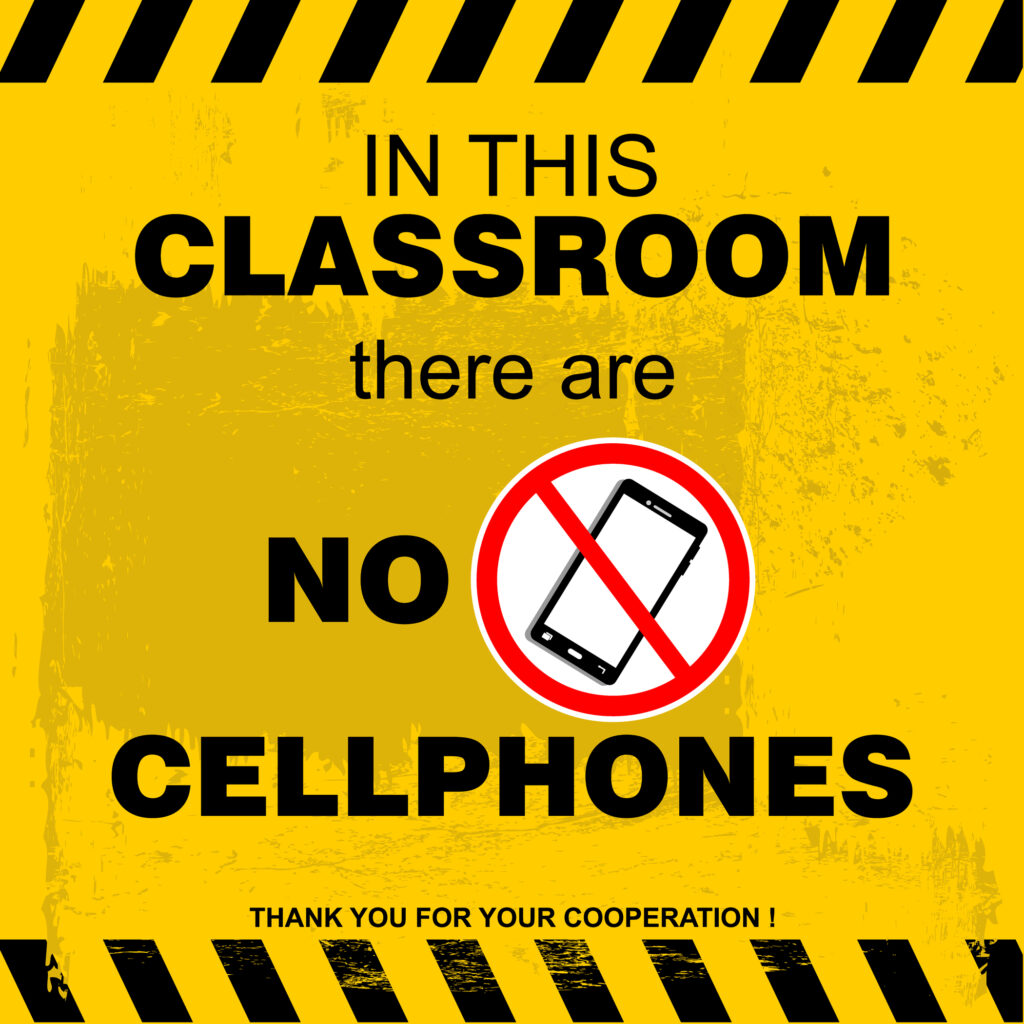
Another major factor entered the picture in 2025 when Alabama introduced statewide restrictions on student devices during the school day. Governor Kay Ivey signed legislation requiring public schools to keep phones, smartwatches and earbuds turned off and out of sight. The rule took effect during the 2025-26 school year and changed the environment in classrooms across the state.
For Buchwalter, the change addressed a problem he had been fighting for years. He said phones consumed a significant amount of his attention because managing the devices also meant dealing with behaviors created by them. “Half of your energy was managing phones or managing phone created behaviors,” he said.
The teacher also described situations where students became confrontational after being asked to put their phones away. He said enforcing the previous policy had become “absolutely exhausting,” turning part of his job into a constant battle over whether students would keep their devices out of sight.
That change matters when looking at what happened next in his classroom. Buchwalter had been critical of gamified education for some time, but the statewide phone restrictions removed one of the most immediate sources of distraction at exactly the same time that his classroom began showing stronger engagement.
Then He Reported A Remarkable Change
On the first day under the new restrictions, Buchwalter recorded himself describing what he had witnessed. According to him, every student in his classroom took notes, completed the assignment, asked for help when they became stuck and turned in their work. Once the work was finished, the students talked with each other rather than immediately turning to their phones.
“Today, all of my students, 100% of them, took notes in my class, did their assignment, asked for help when they got stuck and turned it in, and then when they were done, they talked to each other,” Buchwalter said.
He had spent years dealing with distractions and classroom management problems, which made the sudden change feel almost unbelievable to him. “I have been pulling my hair out for like, eight years. Has it been this easy of a solution the whole time?”
The video attracted nearly two million views after it was posted in August 2025. Buchwalter later said he was seeing another change when he began grading tests. He reported that students were asking stronger questions, giving better answers and turning assignments in on time.
“I’m grading my first test right now, and academic performance is immediately higher. It is noticeably better,” he said. Those observations are significant, but they still represent what happened in one classroom over a relatively short period rather than proof that the same intervention will produce identical results everywhere.
The Phone Ban Could Be Doing More Work Than The Apps
There is a major complication in the story that is easy to miss when the classroom becomes a viral example. Two things changed around the same period. The phones disappeared from the classroom, but Buchwalter’s broader approach to teaching remained the same. That makes it difficult to determine exactly which factor produced the improvement he observed.
The phone restrictions alone could explain much of the change. Students who are no longer checking messages, watching videos or switching between apps have more time to listen, take notes and complete assignments. The fact that students immediately began talking to one another after finishing their work also suggests the devices themselves may have been a major source of distraction.
The wider research does not provide a clean answer either. A 2025 systematic review covering 124 studies found an association between gamification, critical thinking and academic performance, while also noting that its effectiveness varied according to the task, the population being studied and the cultural setting.
That means there is not enough evidence to conclude that gamification itself caused the problems Buchwalter describes. His classroom offers an interesting case study, but it cannot separate the effects of removing phones from the effects of removing game-like educational tools. Both questions deserve to be considered separately.
The Viral Story Has A Bigger Limitation
There is another reason to be careful about turning Buchwalter’s experience into a universal lesson about education. Students who actively ask to join a particular teacher’s classroom are not necessarily representative of every student in a school. They have already shown some level of interest in the environment Buchwalter provides.
Jacob Carr, who writes about classroom practice, argued that this distinction matters when interpreting the story. “There’s a real signal in Buchwalter’s story. His students do adapt,” Carr wrote. “A self-selected group that thrives in a specific environment is not a model for systemic change.”
That does not make Buchwalter’s observations meaningless. It simply puts them in the right category. His experience shows that at least some teenagers can adapt to demanding classroom conditions and may respond positively when teachers raise expectations rather than constantly trying to make assignments more entertaining.
Similar reports from other classrooms have also described improvements after screens were removed, but individual examples cannot establish that the same approach will work everywhere. Schools have different students, teachers, resources and expectations, and those differences can change the outcome.
The most useful part of Buchwalter’s story may therefore be the question it raises rather than the conclusion it provides. How much support helps students learn, and when does support become a substitute for developing the ability to work independently?
Maybe Schoolwork Is Allowed To Be Boring
Buchwalter’s position ultimately comes down to a straightforward idea: students do not need every part of education to be entertaining. He believes schools can prepare teenagers for adulthood by allowing them to encounter difficult material without immediately transforming it into a game.
“We don’t prepare our kids well for the adult world when we say, ‘everything has to be fun’,” he said. “The kids need to take education seriously, even if it’s boring.”
His favorite result was not necessarily the reported improvement in test performance. It was what happened once students finished their work. Without phones occupying their attention, students began talking with each other, something he had apparently noticed becoming less common in his classroom.
“One of my favorite parts is when they’re finished with their classwork, or they’re in the lunchroom, they talk to each other,” he said. “It was like, ‘oh my God, this is how it’s supposed to be.’”
Buchwalter has not proved that gamification is destroying education, and the available research does not support such a sweeping conclusion. What his classroom has shown is more specific: when distractions are reduced and teenagers are trusted with difficult work, some of them are willing to rise to the challenge.
The question now is whether educators can find the right balance between making learning accessible and allowing students to struggle enough to discover what they can actually do.