
Your cart is currently empty!
Inside the Grizzly Bear Attack That Changed Two College Wrestlers Forever
In a media landscape that often rewards spectacle, the most affecting survival stories are usually the ones that resist easy dramatization. The account of Northwest College wrestlers Brady Lowry and Kendell Cummings belongs in that category: extraordinary not because it invites embellishment, but because the facts are already almost difficult to believe.
Contents
show
In October 2022, the two teammates were shed hunting in Wyoming wilderness near Yellowstone when they encountered a grizzly bear. What followed was not merely a story of injury and escape. It was also a story about instinct, composure under extreme pressure, and a friendship that, in a matter of seconds, became a matter of life and death.
The reported account of the attack, and of the weeks that followed, preserves something essential that often gets lost in survival coverage: dignity. That matters here because the most lasting meaning of the event may not be the violence itself, but the clarity it brought to the bond between the two men.
A Routine Day Turned Catastrophic in Seconds
Lowry and Cummings had gone out with teammates Gus Harrison and Orrin Jackson to look for antlers along the Bobcat-Houlihan Trail area. It was familiar terrain for young men who enjoyed the outdoors, and the trip had the ordinary energy of teammates spending time together away from practice.
That normalcy is part of what makes the turn so jarring. Lowry reportedly spotted fresh bear droppings and tried to warn Cummings. Before he could finish, the bear charged. The attack began with startling speed, and it immediately overwhelmed any illusion that athletic training or toughness could somehow level the terms of the encounter.
What makes the account especially effective is that it does not pretend this was a contest between man and nature in any romantic sense. It was an ambush by a powerful wild animal at close range. Lowry was badly injured almost at once, and Cummings was forced into a split-second decision: flee for help, or intervene.
That is the hinge of the story. In coverage of athletes, courage is often flattened into cliché. Here, it had a very literal form. Cummings first shouted, threw objects, and tried to redirect the bear’s attention. When that failed, he physically leapt onto the bear in an attempt to pull it off his friend.
One of the starkest lines in the account comes when Cummings says, “I couldn’t even get her to budge.” The quote is brief, but it captures both the scale of the animal and the futility he was confronting in real time.
Why Grizzly Encounters Remain So Rare — and So Dangerous
Part of the story’s power is that it unfolded in a place where grizzlies are present, but attacks on people remain statistically uncommon. That tension can be difficult to communicate responsibly. Rare does not mean impossible, and low risk does not mean low consequence.
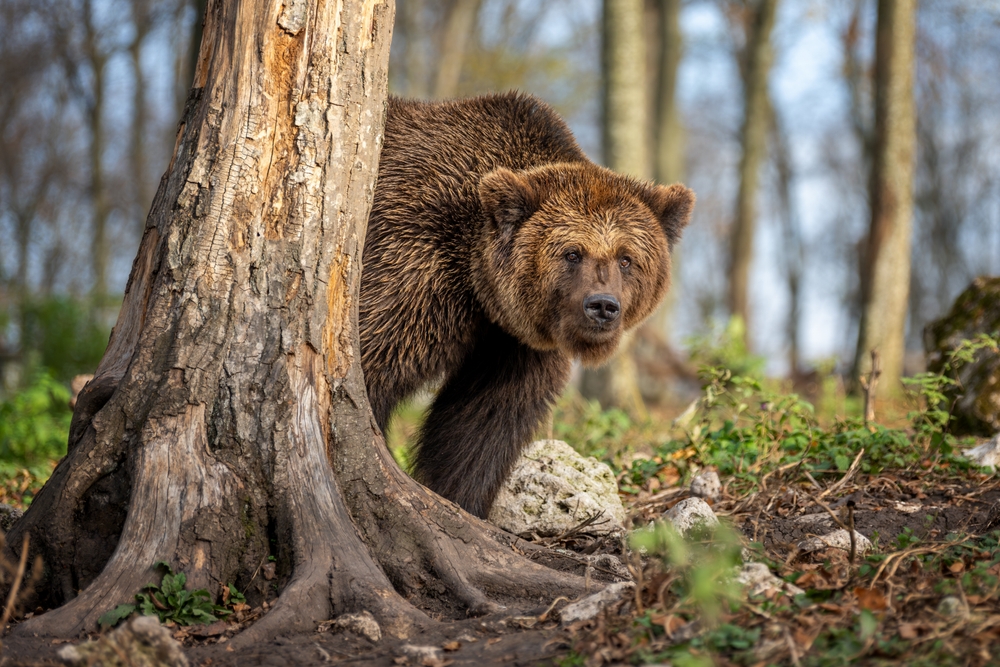
Yellowstone National Park’s own educational materials have long emphasized that grizzly-inflicted injuries are unusual in relation to total visitation. A National Park Service Yellowstone publication notes that from 1980 to 2015, the park recorded more than 118 million visits, with the odds of a grizzly bear injury estimated at roughly 1 in 2.7 million visits. That same source also makes an important distinction: the risk is considerably higher for people traveling in backcountry settings than for visitors who remain in developed areas.
Research in Ursus similarly found that most serious bear-inflicted human injuries in Yellowstone occurred in backcountry circumstances, often when hikers encountered bears at close range. The paper reported that backcountry injuries were more likely to be severe and that surprise encounters were a recurring factor.
These do not reduce what happened to Lowry and Cummings into a data point, but they do provide a necessary perspective. The attack was highly unusual. It was also entirely legible within what wildlife experts know about defensive grizzly behavior, especially in habitats where a female may be guarding cubs.
What Makes the Story Resonant Is Not Only Survival, but Restraint
There is a temptation in stories like this to build the narrative around domination: who fought harder, who won, who proved the stronger force. What stands out in the reporting, however, is the absence of that framing from the wrestlers themselves.
Lowry does not cast the bear as a villain in any simplistic sense. Reflecting on the fact that they had entered the animal’s space, he says, “We were in its house.” It is a strikingly measured response from someone who had every emotional reason to speak differently.
That restraint matters. It pushes the story away from macho mythology and toward something more grounded: coexistence with wildlife always carries limits, and people entering bear country are not stepping into a neutral setting. They are moving through an ecosystem with its own rules.
This is also where the piece gains emotional maturity. The wrestlers’ account is not simply about bravery under pressure. It is also about accepting that survival did not come from overpowering the wilderness. It came from improvisation, luck, teamwork, and the fact that both men continued to make decisions under immense trauma.
Friendship Is the Emotional Center of the Story
The bear attack is the event that made headlines. The friendship is what makes the story endure.
The story also makes clear how quickly wrestling can create intimacy between teammates. That detail is not ornamental. Wrestling is a sport built on repetition, bodily risk, trust, and mutual endurance. In that context, friendship is not always announced in sentimental language. It is often expressed through presence, discipline, and what a person does when circumstances turn unforgiving.
That broader context is worth taking seriously. The American Perspectives Survey found that Americans report fewer close friendships than in previous decades. Among the most discussed findings: the share of Americans reporting no close friends increased from 3% in 1990 to 12% in 2021. For men, the erosion of close social ties was especially pronounced.

That survey does not explain this story, but it does illuminate why readers respond to it so strongly. At a time when friendship is often treated as secondary to career, romance, or family, this account restored it to full significance. Cummings did not act like a symbolic friend. He acted like an actual one.
And later, when the men tried to rebuild some sense of normalcy, the phrase that stayed with them was simple: “Move forward.” The line functions almost like a private ethic. It is not a denial of trauma. It is a way of living with it.
Recovery, Resilience, and the Meaning Beyond Survival
One of the most compelling aspects of the story is that it continues beyond the attack itself. Many survival stories end at the helicopter, the hospital, or the declaration that everyone lived. This one does not, which is precisely why it leaves a deeper impression.
Lowry returned to competition and eventually earned All-American honors at the NJCAA tournament, a result that would have seemed improbable only months earlier. Cummings, meanwhile, continued healing from extensive injuries that included facial damage severe enough to require reconstructive work. Their recoveries were not identical, and the story does not force them into one tidy arc.
That unevenness feels true to life. Healing is rarely symmetrical, especially after violent events. What gave the aftermath coherence was not the fantasy of returning unchanged. It was the decision to continue in relation to each other, whether in the wrestling room, in conversation, or by venturing outdoors again with more caution and more awareness.
There is also something quietly moving in the way the story redefines heroism. In celebrity culture and sports culture alike, heroism is often attached to victory, image, or singular achievement. Here, it looks different. It looks like carrying your friend off a trail. It looks like staying composed in a hospital room. It looks like returning to a difficult place, not to conquer it, but to make peace with the fact that it still exists.
Most people will never face a grizzly bear. But many will eventually face a moment that reveals the quality of the people around them, or the quality of their own response when someone else is in danger. In that sense, the story extends far beyond wilderness survival.
A Survival Story With an Unusually Human Afterimage
The most memorable image in this account may not be the attack itself. It may be the aftermath: two young men, both injured, both alive, trying to absorb what had happened and what it meant.
That is where the story rises above mere shock value. It becomes a meditation on loyalty, restraint, and the kind of friendship that does not need grand language to announce its seriousness. In a culture saturated with performance, that kind of sincerity can feel rare.

Lowry and Cummings survived something statistically unusual and physically devastating. But the reason their story continues to travel is not only because they lived. It is because the event revealed, in stark and unforgettable form, what it means to show up for another person when the cost is no longer abstract.