
Your cart is currently empty!
Psychologist Says the Male Loneliness Epidemic May Be Rooted in Emotional Intelligence

Think about your phone for a second. Hundreds of contacts, probably. Group chats you haven’t opened in months. Now ask yourself honestly: is there one person in there you’d actually call at 2 a.m. if something in your life fell apart? For a lot of men, the answer is no — and that, in a nutshell, is what people mean when they talk about the “male loneliness epidemic.”
Contents
show
Everyone’s got a theory for why this is happening. Dating apps get blamed. So does remote work, and the slow disappearance of stuff like bowling leagues, where guys used to just show up and hang out without it being a whole thing. But Dr. JJ Kelly, a psychologist who calls herself the “punk-rock psychologist,” thinks the real cause is simpler than any of that — and she’s not backing down from it, even though it’s not the most popular thing to say. It might also be the most hopeful thing anyone’s said to lonely men in years.
The Diagnosis Nobody Wanted to Hear

Kelly’s theory, in her own words: the “male loneliness epidemic might actually be a result of low emotional intelligence.”
Before anyone slams the laptop shut, she’s quick to aim the blame away from men themselves. The problem, she told Vice, is the system that raised them, one that handed boys a single acceptable feeling and shamed the rest out of them.
“Society has told men that the only emotion they’re allowed to validate is anger. Everything else, especially loneliness, gets coded as weakness,” she explained. “And everybody finds ‘shame’ uncomfortable. So now you’ve got men who are being shamed for their loneliness and running away from it.”
Shamed for the wound, then shamed again for feeling it. Generations of men grew up inside that maze, and it has no marked exit.
The Friendship Recession, by the Numbers
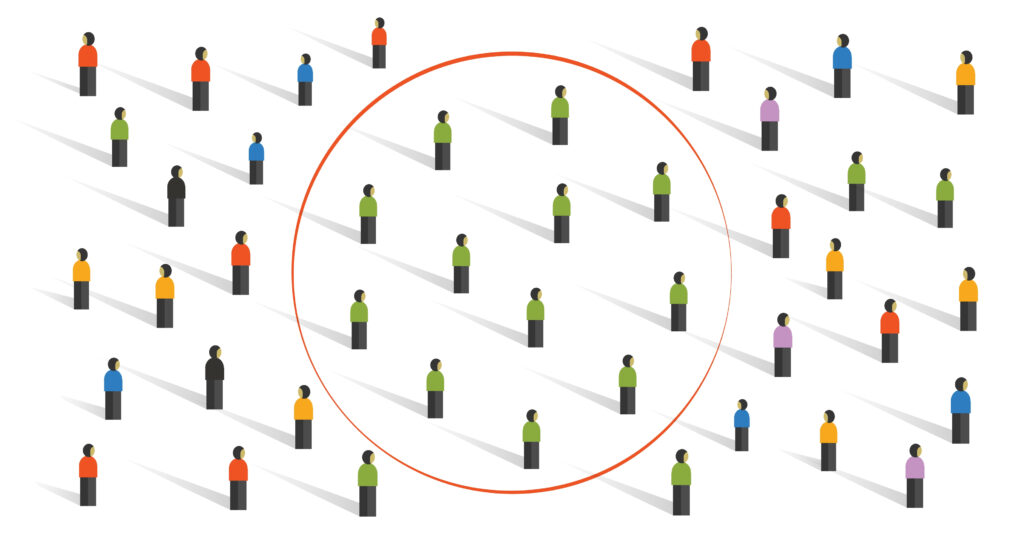
The loneliness itself is real, and it is measurable. In 1990, more than half of American men, 55 percent, said they had six or more close friends. By 2021, that figure had fallen to 27 percent.
Over the same three decades, the share of men with no close friends at all jumped from 3 percent to 15 percent, a fivefold increase researchers at the Survey Center on American Life call a “friendship recession.” For unmarried men without a partner, it’s one in five.
When life gets heavy, the gap widens. In the center’s May 2021 survey of 2,019 adults, 41 percent of women said a friend had given them emotional support in the past week. For men, it was 21 percent.
Half as many men, in the hardest weeks of their lives, with a hand on their shoulder.
The Twist Hiding in the Data
Here’s the twist the headlines usually skip: by the raw numbers, men may not be lonelier than women at all.
The American Institute for Boys and Men reviewed the data in August 2025 and found that a Census Bureau survey of about 6,700 adults “shows no gap” between men’s and women’s self-reported loneliness. Among American 8th and 10th graders, 25 percent of boys said they often felt lonely. For girls, it was 44 percent.
So the epidemic has a stranger shape than its name suggests. The feeling lands on everyone. What differs is what men do with it, and the data suggests the answer is often nothing. Men draw on friends for emotional support about half as often, and married men are more likely than married women to bring every personal problem to a spouse first.
Kelly has watched that pattern from the therapist’s chair. “Here’s the gap I see over and over with men: they won’t name loneliness at all,” she said. “They’re embarrassed by it. And if you can’t name the problem, you can’t solve it.”
What Isolation Does to the Body

Unnamed does not mean harmless. Loneliness may be invisible to everyone else, but that does not make its effects any less real. Health experts have increasingly warned that prolonged social isolation can leave deep marks on both the mind and the body, especially when people suffer in silence without reaching out for support.
The World Health Organization’s Commission on Social Connection reported in June 2025 that 1 in 6 people worldwide is affected by loneliness, making it one of the most widespread public health concerns of the modern era. The same report estimated that loneliness is linked to around 100 deaths every hour, adding up to more than 871,000 lives lost each year. Those figures highlight that loneliness is far more than a passing emotion. It is a condition with measurable and potentially life-threatening consequences.
The report also connects chronic social disconnection to a wide range of serious health problems that extend well beyond mental well-being. People experiencing persistent loneliness face a greater risk of developing heart disease, stroke, diabetes, cognitive decline, and other long-term illnesses that can shorten both quality of life and life expectancy. Researchers also found that lonely individuals are twice as likely to develop depression, creating a cycle in which emotional isolation worsens mental health, while declining mental health makes it even harder to reconnect with others. Over time, that cycle can become increasingly difficult to break without meaningful social support or professional help.
Perhaps the most troubling part of the research is that these risks are not limited to any single group of people. They affect men and women, young adults and older generations, and people living in countries across the world. Loneliness does not always look dramatic or obvious, either. Many people continue working, socializing occasionally, and carrying out their daily routines while quietly feeling disconnected inside. That hidden form of loneliness is the one that concerns clinicians most because it often goes unnoticed for months or even years. When no one knows a person is struggling, and the person feels unable to say it out loud, the emotional burden can continue growing long before anyone realizes help is needed.
Kelly Says Men Can Actually Learn Their Way Out Of Loneliness

Kelly’s blunt diagnosis starts to sound a lot more hopeful when you look at what she is actually saying. She argues that emotional intelligence is not something men either have or don’t have. It can be learned, practiced, and strengthened over time, even for men who spent most of their lives avoiding difficult conversations or pushing uncomfortable feelings aside. In her view, emotional awareness is a skill that can grow with repetition, patience, and a willingness to pay attention to what is happening beneath the surface.
She compares it to any other skill people develop throughout their lives. Nobody expects to pick up an instrument, learn another language, or build physical strength without practice, mistakes, and time. Kelly believes emotional awareness works much the same way. A man who was never taught how to recognize loneliness, sadness, fear, or vulnerability can still learn how to identify those feelings and communicate them later in life. That means a difficult childhood or years of emotional silence do not have to dictate what happens next.
“That’s not an attack at all. It’s an invitation,” Kelly said. “Because the key to healing loneliness is learning to connect. And learning to connect starts with learning to listen.”
That can begin with something surprisingly ordinary. A man can ask a friend a genuine question and actually stay for the answer instead of immediately changing the subject or turning the conversation into a joke. He can check in with someone he has not spoken to for months, admit that life has been difficult, or simply say that he has been feeling isolated. None of those actions requires a dramatic personality change, but each one creates an opening for a more honest relationship.
For a man who has spent years keeping everything bottled up, even saying “I’ve been feeling lonely lately” can feel like a huge step. The words may feel uncomfortable at first, particularly if he has spent decades believing that admitting loneliness makes him look weak. But acknowledging the feeling gives another person a chance to respond, and that can be the beginning of a connection that was missing before.
The Problem May Start Long Before Adulthood
Kelly’s theory points toward something many men may have been carrying since childhood. Boys can grow up learning that certain emotions are acceptable while others should be hidden, ignored, or pushed aside. Anger may be tolerated because it looks strong, while sadness, fear, affection, and loneliness can be treated as signs that something is wrong. Over time, those lessons can shape how a man handles relationships long after he has left childhood behind.
That can leave adult men with plenty of people around them but very few relationships where they feel comfortable being vulnerable. A man might have coworkers, teammates, old classmates, family members, and hundreds of people saved in his phone, yet still have nobody he would call when something goes badly wrong. The problem is not necessarily a lack of people. It can be the absence of relationships where emotional honesty feels safe.
The result is a pattern that can become difficult to break:
- Feelings stay hidden: Loneliness gets pushed aside instead of being acknowledged, which can make the feeling harder to understand or explain later.
- Friends stay at a distance: Conversations can remain focused on work, sports, hobbies, entertainment, or everyday problems without reaching the emotional issues underneath.
- Problems get bottled up: Men may wait until a situation becomes overwhelming before telling anyone what they are dealing with, leaving friends unaware that support is needed.
- Isolation becomes normal: After years of keeping emotional distance, reaching out can start to feel strange, embarrassing, or even impossible.
Kelly’s argument is that these patterns are learned. That also means they can change. A man does not have to erase his personality or suddenly become comfortable discussing every private thought with everyone around him. He can start by recognizing what he feels, finding one person he trusts, and allowing the relationship to become a little more honest.
One Conversation Can Break The Pattern

Here’s the hard part, though: real connection takes actual effort. You can keep a friendship alive for years on jokes, shared hobbies, and the occasional “hey, what’s up” text — but none of that gets you closer unless someone’s willing to go further. At some point, somebody has to ask more than “how’s work?” and actually mean it.
That’s basically Kelly’s whole point about listening. When a friend says something hard, the instinct is to crack a joke, offer a quick fix, or steer the conversation somewhere safer. She’s saying: don’t. Just stay there. And be willing to open up yourself instead of only asking the other guy to.
If you’ve never really done this before, the first try is probably going to feel awkward. There might be long pauses. You might not know what to say. That’s normal — it doesn’t mean you’re doing it wrong. It just means you’re doing something you were never taught how to do.
And that’s really the hopeful part in all this. If connecting with people is a skill — and Kelly thinks it is — then nobody’s stuck. You don’t have to have grown up knowing how to do this. You can be bad at it now and better at it later. You just have to actually try.