
Your cart is currently empty!
New Shroud of Turin Breakthrough Strengthens Case for Jesus’ Resurrection
For centuries, artists have painted it. Theologians have debated it. Historians have puzzled over it. What did the crown of thorns actually look like when Roman soldiers jammed it onto Jesus’ head hours before his death?
Contents
show
New forensic evidence may have finally solved one of Christianity’s oldest mysteries. Blood patterns on a 14-foot linen cloth tell a story that challenges popular assumptions about how Jesus suffered during his final hours.
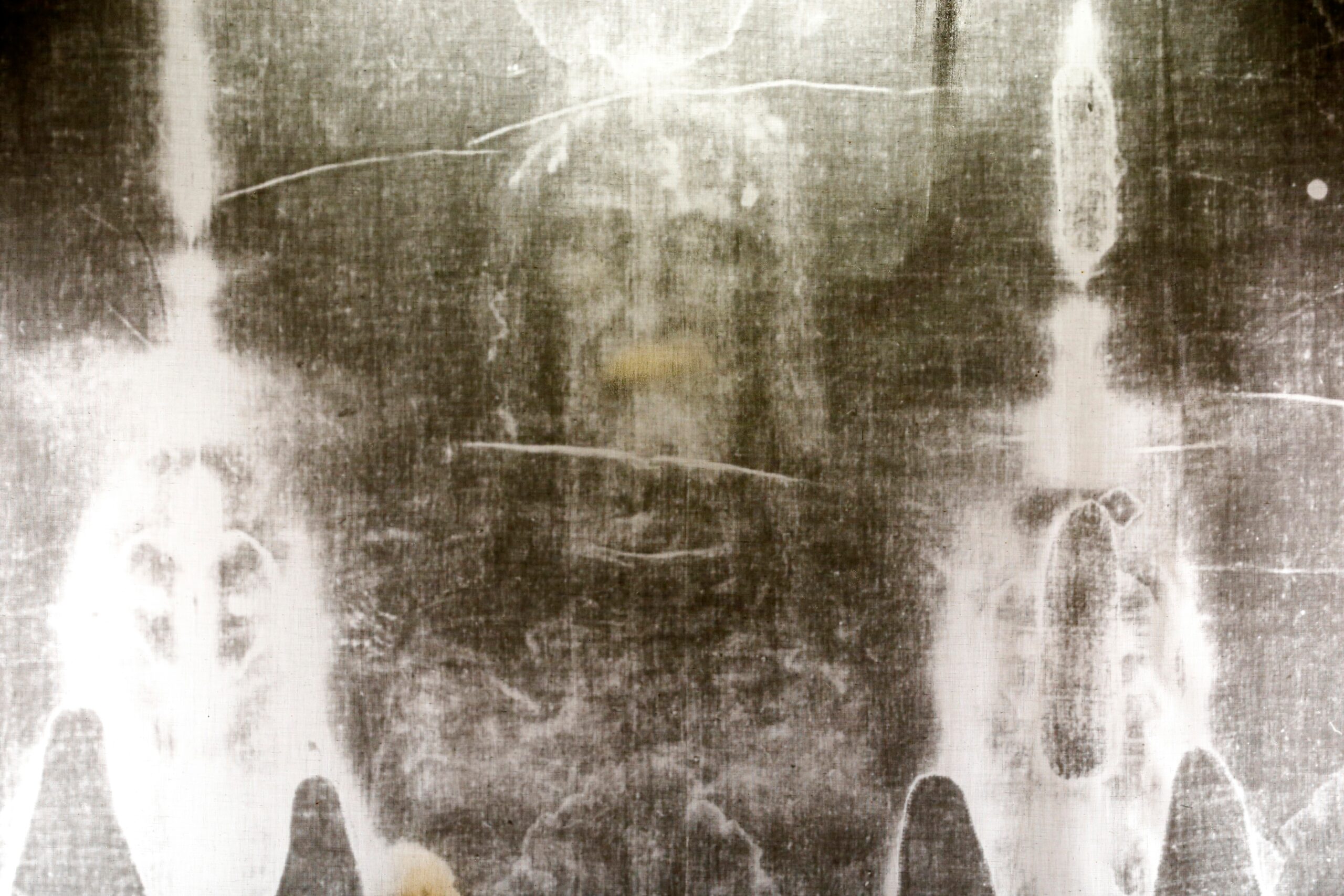
A biological systems analyst named Otangelo Grasso examined the Shroud of Turin with artificial intelligence and found something that changes our understanding of biblical torture. Wounds cluster in specific places. Blood flows in particular directions. Gaps appear where you wouldn’t expect them.
Every mark tells a story. Every stain reveals a secret. And together, they point to a design far different from what millions imagine when they picture Christ’s passion.
Centuries of Debate About a Cruel Crown
Medieval scholars split into two camps long ago. Some believed Roman soldiers fashioned a simple wreath that circled the top of Jesus’ head like a mocking royal crown. Others insisted they created a full cap or helmet of thorns that covered his entire scalp, inflicting maximum pain.
Artists chose sides through their brushstrokes. Renaissance painters often depicted a delicate circlet. Medieval illustrators preferred the brutal helmet. Each generation added its own interpretation to the visual record.
Biblical accounts leave physical details frustratingly vague. Matthew, Mark, Luke, and John mention the crown but offer no blueprint. “They twisted together a crown of thorns and set it on his head,” reads one Gospel passage. Nothing about diameter, coverage, or construction method appears in the text.
Religious and historical importance make settling this question more than academic curiosity. Understanding how Jesus suffered helps believers connect with the crucifixion story. For historians, accurate details about Roman execution methods illuminate ancient practices.
Blood Tells a Story About Thorn Placement

Grasso, who describes himself as a Young Earth Creationist and Intelligent Design proponent, applied forensic science to religious archaeology. He used AI to map bloodstain distribution across the Shroud of Turin, the cloth many believe wrapped Jesus after his death.
His methodology combined geometric analysis, wound pattern recognition, and cloth contact mapping. Machine learning algorithms identified where blood pooled, where thorns punctured skin, and where fabric touched the body.
Results pointed in one clear direction. Blood concentrates heavily at the hairline, temples, and back of the head. Puncture wounds ring the perimeter of the skull in a band pattern. But here’s what matters most: no blood appears at the vertex, the crown of the skull, where a cap would press down.
“Shroud head stain mapping, a clean vertex bridge amid otherwise active head/face transfer potential, experimental inward spine mechanics, posture-driven posterior elevation, and the build time/manipulation differential together provide support for a circlet over a cap,” Grasso wrote in his study.
Blood reactivation through hair wicking explains how stains spread after death. When handlers moved the body, dried blood transferred through hair strands onto different areas. Yet even accounting for this post-mortem spreading, the top of the head remains clean.
Geometric analysis of cloth draping patterns confirmed what bloodstains suggested. A circlet fits all the evidence. A helmet requires explanations that strain credibility.
Why a Cap Would Leave Different Marks
Supporters of the helmet theory point to more than 50 puncture wounds scattered across the scalp, forehead, and nape. They argue a simple headband couldn’t produce such widespread injury.
Grasso challenged that reasoning. His experimental reconstructions showed a circlet with inward-pointing thorns creates extensive damage when pressed down. Single thorns can enter, exit, and re-enter the scalp multiple times as the ring compresses against skull contours.
A cap should leave different evidence. Blood would transfer across the bridge of the skull during burial handling. Hair containment alone couldn’t explain the clean vertex. Forensic studies show scalp wounds bleed freely, and post-mortem blood stays mobile enough to stain fabric.
“A helmet-like dome implies frequent superior scalp lesions; with other head wounds still transferring at burial, one would expect traces across the bridge,” Grasso explained. “Their absence pushes the solution toward a low seated circlet or shallow capiform wreath.”
Helmet construction presents another problem. Creating a sturdy dome of thorns demands complex weaving. Multiple layers must interlock. Branches need careful arrangement to maintain structural integrity. Experimental attempts required more than two hours of skilled work.
Roman soldiers mocking a prisoner wouldn’t invest that kind of time and craftsmanship. They wanted a quick, cruel joke, not an engineering project.
Building a Crown Takes Time and Skill
Construction complexity becomes a deciding factor when comparing designs. A circlet requires one structural join and relies on natural hoop stability. Bend a thorny branch into a ring, secure the ends, and you have a functional torture device ready in minutes.
Wreath assembly uses basic mechanics. Branches flex into circles easily. Thorns already point in useful directions. Soldiers could grab local vegetation and create the crown without specialized knowledge.
Helmet fabrication demands different skills. Builders must weave multiple branches into a lattice. Each intersection needs to be secured. Structural stability requires planning. Weight distribution matters. A poorly built cap would collapse or slide off.
Historical context supports the simpler option. Roman soldiers executed prisoners regularly and efficiently. They improvised tools of humiliation without wasting effort. Speed mattered more than sophistication in their mockery.
Ancient Words Point to Wreath, Not Helmet
Greek terminology in early Christian texts offers linguistic clues. Writers used “stephanos” to describe the crown, a word denoting a plaited wreath or victor’s laurel. They paired it with “pleko,” meaning to weave or braid circularly.
Royal crowns in Roman culture took the form of circlets, not caps. Emperors and kings wore metal bands around their heads, not helmets. Soldiers parodying Jesus as “King of the Jews” would naturally mimic that recognizable symbol.
A wreath mocks royalty. A helmet inflicts suffering without symbolic meaning. Roman execution psychology favored public humiliation alongside pain. Making Jesus wear a twisted imitation of imperial regalia served both purposes perfectly.
Art historians note that medieval depictions of the thorny helmet emerged later, possibly from biblical mistranslations or artistic elaboration. Earlier Christian imagery shows simpler circlet designs more consistent with historical evidence.
Two Relics Tell Same Story

Another study supports Grasso’s findings. Measuring 33 inches by 20 inches, the Sudarium of Oviedo in Spain supposedly covered Jesus’ face immediately after death. Blood patterns on that fabric match the Shroud’s evidence.
Both relics show a narrow band of wounds circling the head. Both lack stains at the skull crown. Both display blood flow patterns consistent with a ring pressing into scalp tissue at the temples and hairline.
Geometric compatibility between artifacts strengthens the circlet case. Two independent cloths from different times and places tell the same anatomical story. Coincidence seems unlikely. Corroboration seems probable.
Researchers who examined both fabrics note matching blood types and wound angles. If forgeries, the counterfeiters achieved remarkable consistency across separate medieval locations.
Shroud of Turin Carries Controversial Past

Authenticity debates shadow any Shroud research. Carbon dating in 1988 placed fabric origins between 1260 and 1390, suggesting medieval manufacture rather than first-century Palestine. Three separate laboratories reached the same conclusion.
Yet questions persist about sampling methods. Critics argue the tested section came from a repaired edge, not original cloth. Chemical analysis found differences between the sample area and the main fabric.
A 2022 study using wide-angle X-ray scattering suggested older origins around 55 to 74 AD. Researchers cautioned they needed more evidence before confirming their findings.
Documentary history begins in 1354, France, when knight Geoffroi de Charnay owned the cloth. When displayed in 1389, the Bishop of Troyes denounced it as painted fraud. Early papal responses remained cautious, neither endorsing nor condemning outright.
Despite controversies, millions of believers accept the Shroud as genuine. Scientific analysis continues to determine whether or not authenticity is proven. Even as a medieval artifact, the cloth preserves anatomical details worth studying.
Questions Remain Despite New Evidence

Grasso acknowledges his conclusions aren’t absolute. A cap design remains possible under specific conditions. If the vertex wounds are clotted before other head injuries, the top of the skull could stay clean. If hair completely absorbed and contained blood at the crown, no fabric transfer would occur.
Both explanations work theoretically. Both demand assumptions beyond what evidence requires. Circlets explain observations with fewer auxiliary theories.
Grasso’s study awaits peer review. Other researchers must examine his methodology, verify his AI models, and test his geometric analyses. Scientific consensus builds slowly through repeated validation.
Skeptics will challenge his religious perspective. Supporters will embrace his conclusions too eagerly. Neither reaction serves historical truth well. Evidence deserves evaluation independent of belief systems.
What This Means for History and Faith
Modern forensic science illuminates ancient religious texts in ways previous generations couldn’t imagine. AI reconstructions, blood pattern analysis, and geometric modeling bring new precision to old questions.
Believers gain a clearer picture of how Jesus suffered. Artists and filmmakers can depict the passion more accurately. Historians understand Roman execution methods better. Archaeologists have new tools for examining religious artifacts.
“From the front, the crown sits below the apex and compresses the hair at the brow and temples; inward angled thorns enter tangentially and create vertical rivulets that follow skin furrows and, at the temples, the course of trigeminal branches, echoing the Shroud’s forehead/nasion clots,” Grasso wrote in technical detail that bridges faith and forensics.
Whether or not the Shroud proves authentic, the methods developed for analyzing it advance archaeological science. Techniques refined on religious relics apply to secular artifacts. Technology serves understanding regardless of spiritual conclusions.
A circlet of thorns pressed into Jesus’ head during his final hours. Blood ran down his face from punctures at the hairline and temples. Roman soldiers accomplished their mockery with a simple, cruel wreath that took minutes to make and hours to kill.
After two thousand years, artificial intelligence and forensic analysis reveal the shape of suffering. Science doesn’t diminish faith. Evidence doesn’t erase mystery. Sometimes, knowing the details makes the story more powerful, not less.