
Your cart is currently empty!
New Testament Scholar Claims Ten Archaeological Finds Verify the Jesus of the Bible
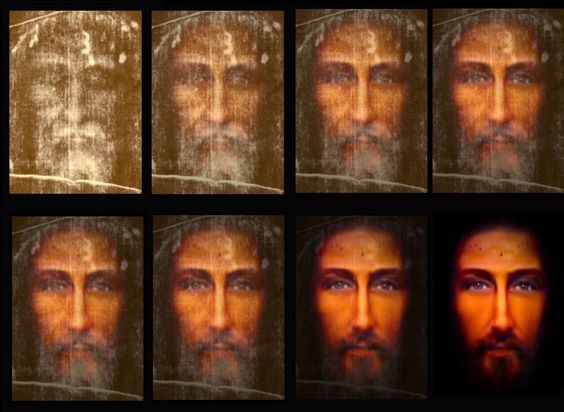
Dr. Jeremiah Johnston’s new bestseller examines ten archaeological finds, from the Shroud of Turin to the Dead Sea Scrolls, that he argues corroborate the biblical account
Contents
show
For two thousand years, the question has hovered over Western civilization like a shadow that refuses to lift. Did the man at the center of the world’s largest religion actually walk the hills of Galilee, heal the sick in Capernaum, and die on a Roman cross outside Jerusalem? Or does the story rest entirely on faith, with scripture as its only witness?
A new book climbing the bestseller charts argues the answer lies buried in the dirt, etched into stone, preserved in ancient linen, and scattered across museums from Rome to Jerusalem. According to its author, a New Testament scholar who spent four years chasing evidence across three continents, ten specific artifacts tell a story that the historical record cannot easily dismiss. One of those artifacts, he says, may even capture the exact instant a dead man came back to life.
A Bestseller Built on Biblical Archaeology
Dr. Jeremiah Johnston’s new book, “The Jesus Discoveries: 10 Historic Finds That Bring Us Face-to-Face with Jesus,” has climbed rapidly up the bestseller charts since its release. Last week it reached No. 2 on Amazon Charts’ nonfiction list, and it currently sits at No. 3 on the New York Times Bestsellers List.
Johnston, a pastor and president of the Christian Thinkers Society, has promoted the book across a string of popular podcasts. His appearance on the Shawn Ryan Show alone has drawn more than one million views, fueling conversation about the archaeological case for Christianity well beyond Christian audiences.
Four Years on the Road
Writing the book took Johnston around the globe. He spent four years consulting directly with scientists, archaeologists, and museum curators who have studied the artifacts firsthand. His goal, he told Fox News Digital, was to move past secondhand accounts and speak with the people handling the physical evidence.
His central argument cuts against the assumption that belief in Jesus requires a leap of faith divorced from physical proof. Regardless of where a reader lands spiritually, Johnston contends, the archaeological record deserves attention on its own terms.
Sixty-Five Facts Before You Open the Bible

In his conversation with Fox News Digital, Johnston made a striking claim about what researchers can establish without scripture reference.
“It turns out that we can learn 65 facts about the birth, the life, the ministry, the miracles and, of course, the death, burial, and resurrection of Jesus… before we ever open the Bible. And no other religious figure on planet Earth has ever been this well evidenced,” he said.
Whether scholars across the board accept all 65 claims is another matter. But Johnston’s thesis frames the book’s approach, which treats archaeology and history as the starting point rather than the afterthought.
The Shroud of Turin, Front and Center
No artifact in the book draws more attention than the Shroud of Turin. A length of linen bearing the image of a crucified man has divided researchers for decades. Some consider it the actual burial cloth of Christ. Others view it as a medieval forgery produced in the 13th century.
What sets it apart from other first-century burial cloths, Johnston says, is the image itself. Both the front and back of a brutalized body appear on the fabric, and when viewed as a photographic negative, the image reads as a positive.
“The fascinating thing about the shroud of Turin is it has an image of a brutalized, tormented, crucified man on the front and back that when you see it in the photo negative, you’re actually seeing it in a photo positive and it takes your breath away,” Johnston said.
What the Blood and Wounds Reveal

Johnston walks readers through the forensic details with the precision of a medical examiner. Red blood cells on the cloth have broken down into bilirubin, a sign of severe physical torment. Levels of ferritin and creatinine run high, again consistent with trauma.
A wound pierces the left side of the figure, passing between the fifth and sixth ribs. Perhaps most telling for Johnston, the piercings run through the wrists and ankles rather than the palms and feet. Centuries of Christian art have depicted the crucifixion with nails through the hands, yet Roman executioners would have driven spikes through the wrists to support the body’s weight. The shroud reflects the Roman method, not the artistic convention.
Pollen, Microns, and Anatomical Accuracy
Beyond the wounds, Johnston points to physical properties that have puzzled researchers for years. Pollen samples taken from the cloth match the flora native to the Jerusalem area. The image itself measures only 0.2 microns in depth, roughly one-fifth the thickness of a human hair.
“The image is only 0.2 microns thin. You realize that’s one-fifth of the thickness of a piece of our hair?” Johnston said. “That’s how superficial the image on the shroud is.”
No one, he says, has managed to reproduce the shroud’s anatomical accuracy, lack of pigment, and three-dimensional qualities using any known method from any period.
The Physicist Who Tried to Recreate It
One of the more striking figures in the book is Paolo di Lazzaro, a senior researcher at the ENEA Research Center in Rome. Johnston spoke with di Lazzaro, who spent five years attempting to reproduce the shroud’s image in a laboratory setting.
His conclusion, according to Johnston, was that generating such an image would require a burst of 34,000 billion watts of radiant energy delivered in one-40 billionth of a second. No technology available at any point in human history could produce that kind of output.
For Johnston, the implication points beyond natural explanation. “That’s why I say the Shroud of Turin is not a death cloth; it is a resurrection cloth. That is the moment when Jesus’ physical body came back to life,” he claimed.
Rethinking the 1988 Carbon Dating
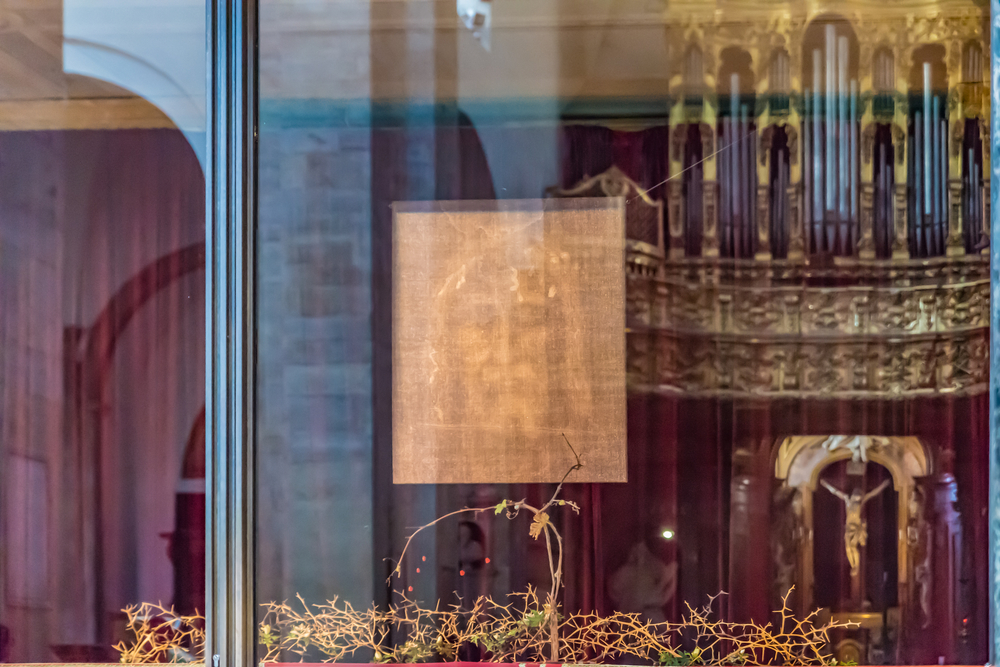
Skeptics have long cited the 1988 carbon dating of the shroud, which placed its origin between 1260 and 1390 AD, roughly the same period when Renaissance forgers were active. Johnston takes the challenge head-on.
Recent peer-reviewed studies, he argues, have discredited the 1988 result by identifying the tested sample as a contaminated patch rather than the original cloth. Newer analysis using Wide-Angle X-ray Scattering, or WAXS, has placed the linen in the first century.
Supporting evidence comes from outside the shroud itself. A seventh-century solidus minted under Emperor Justinian II bears an image of Jesus strikingly similar to the face on the shroud. If the cloth dates to the medieval period, Johnston asks, how did a 13th-century forger produce an image that matched a coin struck six centuries earlier?
The Jesus Cup and a Reputation That Traveled
Moving beyond the shroud, Johnston examines an artifact dubbed the “Jesus Cup,” dated to 50 AD. Inscribed in Greek, the cup describes Jesus using a phrase that translates roughly as enchanter or magician.
For Johnston, the inscription carries enormous weight. Within roughly two decades of the crucifixion, Jesus’s reputation as a healer had spread far enough across the Roman Empire to be etched onto a drinking vessel. Even critics who doubted his divine status evidently knew his name and associated him with miraculous works.
Other Artifacts Featured in the Book

Beyond the shroud and the cup, the book examines several other finds that have shaped biblical archaeology in recent decades. Among them are the James Ossuary, a limestone burial box inscribed with a reference to James as the brother of Jesus, and the Magdalen Papyrus, a fragment of the Gospel of Matthew. Johnston also discusses findings confirming the historical existence of Pontius Pilate, the Roman governor who ordered Jesus’s execution.
Each artifact, in his telling, adds another piece to a picture the biblical writers sketched two thousand years ago.
Why Johnston Says Skepticism Helps Faith
View this post on Instagram
Johnston argues that the earliest Christians were themselves evidence-driven. Something happened in the weeks after the crucifixion that convinced the apostles their teacher had returned alive.
“Not a shred of the New Testament would have been written” if Jesus’ apostles had not had an evidence-based belief that they saw him alive after he died, he said. His closing message invites skepticism rather than retreating from it.
“We should be skeptical of anything we commit our lives to,” he said. “The beautiful thing is, the deeper you go with your questions into Christianity, the more rock-solid our faith becomes.”
For readers across the religious spectrum, his book offers a chance to examine the physical record on its own terms. Whether the evidence convinces or merely intrigues, Johnston is betting that hard questions, pursued honestly, lead somewhere worth going.
Archaeological Discoveries, Bestseller books 2026, Biblical Archaeology, Christian apologetics, Christian books, Dead Sea Scrolls, ENEA Research Center, faith and science, historical Jesus, James Ossuary, Jeremiah Johnston, Jesus Cup, Magdalen Papyrus, New Testament scholarship, Paolo di Lazzaro, Pontius Pilate, religious history, Resurrection evidence, Shroud of Turin, The Jesus Discoveries