
Your cart is currently empty!
Scientists Found Biological Traces Of Parental Trauma In Children

The babies were too young to understand what happened in New York on September 11, 2001. Yet researchers found that their bodies appeared to carry traces of what their mothers had experienced.
Contents
show
The clue was not in their memories or behavior. It was in their saliva, their stress hormones, and eventually in the way scientists began examining the biological systems that regulate genes.
For years, Rachel Yehuda and other researchers have studied whether severe trauma experienced by parents can leave biological traces in their children. The findings are striking, but they come with a major scientific caveat: researchers have not established that trauma is passed down through epigenetic changes in humans.
That distinction matters. The evidence suggests something unusual may be happening, but the mechanism remains one of the most debated questions in the field.
The Babies Born After September 11 Gave Researchers A Clue
In the months following the September 11 attacks, researchers were already studying pregnant women who had been near the World Trade Center when the towers fell.
Yehuda’s team followed 187 women during their pregnancies and afterward. Some developed post-traumatic stress disorder, while others did not.
Then the babies started arriving.
The researchers noticed a pattern in birth weight. Infants born to women who had experienced the attacks and later developed PTSD tended to be smaller than average.
Birth weight alone could not explain what was happening. Too many factors can affect how much a newborn weighs.
But the researchers had another opportunity to investigate.
They could examine the babies’ stress systems.
The Stress Hormone Was The Unexpected Clue

Cortisol is one of the hormones involved in the body’s response to stress. It helps the body prepare to deal with a perceived threat.
During the first year of life, researchers measured cortisol in the saliva of babies whose mothers had been exposed to the September 11 attacks.
The results raised eyebrows.
Babies whose mothers had developed PTSD had markedly lower cortisol levels than babies whose mothers had not developed PTSD. Their mothers also showed lower cortisol levels.
The timing of the trauma appeared to matter too.
The effect was strongest among babies whose mothers had been in their third trimester on September 11.
The original 2005 analysis involved only 38 mother-infant pairs. That makes it a small study, and the researchers treated the finding as an early signal rather than proof of a universal rule.
Still, the result opened a much larger question.
Could a parent’s traumatic experience affect a child’s biology before that child was old enough to understand what trauma even was?
Trauma Can Reach A Child In More Than One Way

There is an obvious explanation for some of the effects seen in children of traumatized parents.
A parent who develops PTSD may behave differently. Their sleep, mood, relationships, reactions to danger and responses to stress can all change.
A child grows up inside that environment.
Over time, children can learn how their parents respond to the world. They can absorb patterns of fear, vigilance and anxiety through ordinary family life.
But pregnancy introduces another pathway.
A developing fetus shares its mother’s biological environment. Hormones, nutrients and other signals cross between mother and fetus through the placenta.
That means severe stress during pregnancy raises a different scientific question.
Could the mother’s biological response to trauma affect the developing baby’s stress system?
Rachel Yehuda has argued that researchers need to consider several possible pathways. Writing about the subject in Scientific American, she said that “adverse experiences may influence the next generation through multiple pathways.”
Those pathways include the environment a child grows up in, conditions during pregnancy, and potentially biological changes involving eggs or sperm.
That last possibility is where the debate becomes much more complicated.
Epigenetics Could Explain The Biological Connection

The word “epigenetics” is often used to describe this research, but it is easy to misunderstand what scientists mean.
Epigenetics does not mean that trauma changes the letters of a person’s DNA.
Instead, researchers are examining chemical and molecular processes that influence how genes are activated or regulated.
One of the best-studied mechanisms involves DNA methylation.
Think of genes as instructions. Epigenetic processes can influence how strongly some of those instructions are read without changing the underlying DNA sequence.
That distinction is crucial because researchers are not claiming that a traumatic experience simply rewrites a child’s genetic code.
They are investigating whether stress can alter biological regulation in ways that may persist.
Yehuda and colleague Amy Lehrner described DNA methylation as “the best characterized in the mammalian genome” in their review of the subject.
The question is whether those biological marks can somehow survive from a parent’s traumatic experience into the next generation.
Scientists have evidence that environmental experiences can affect epigenetic processes.
The harder question is whether those changes caused by trauma can reliably be transmitted through human reproduction.
That remains unresolved.
The Placenta May Be One Of The Missing Pieces
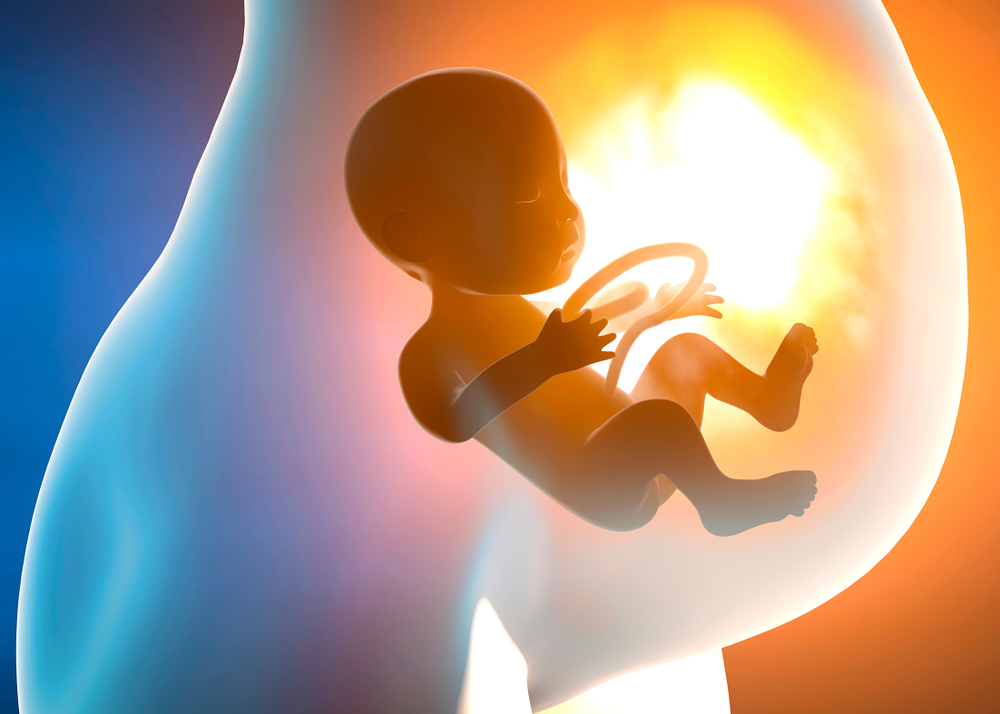
Researchers have focused on genes involved in the body’s stress-response system.
Among them are NR3C1 and FKBP5, which play roles in regulating how the body responds to cortisol.
Another important piece is an enzyme known as 11beta-HSD2.
It is found in the placenta and helps regulate how much cortisol from the mother reaches the fetus.
The basic idea is straightforward.
A mother experiences severe stress. Her body responds through its stress system. During pregnancy, that biological environment surrounds the developing fetus.
If the systems controlling exposure to stress hormones are altered, the fetus could potentially receive different signals during development.
Researchers have found associations involving epigenetic changes and stress-related biological systems.
But an association does not establish the entire chain of cause and effect.
Scientists are still working to determine which changes cause which outcomes, how long those changes persist, and whether they have meaningful consequences later in life.
That is why researchers use cautious language when discussing the findings.
There is evidence of a relationship.
There is not yet proof of a simple biological pipeline from parental trauma to a child’s future mental health.
The Holocaust Survivor Research Added Another Layer
The September 11 research was not an isolated investigation.
Researchers have also studied children of Holocaust survivors, looking for differences in stress-related biology.
Some studies have reported lower cortisol levels and altered stress responses among descendants of survivors.
The findings are intriguing because the children themselves did not experience the original trauma.
But there is another problem.
A family history of extreme trauma can affect much more than biology.
It can shape parenting, family communication, socioeconomic circumstances and the stories children hear throughout their lives.
A child may grow up knowing that a parent survived a concentration camp. That knowledge can influence their understanding of danger, safety and the world.
Those environmental effects make human studies especially difficult to interpret.
Researchers therefore continue to debate how much of the observed pattern comes from biological inheritance and how much comes from the environment in which children grow up.
A Study Of War Survivors Raised An Even Darker Question

Another report examined the children of women who had been subjected to sexual slavery by the Japanese military during World War II.
The 2019 medical journal report described offspring experiencing conditions including depression, panic attacks, self-blame and suicidal thoughts.
The study is emotionally difficult to read because the children were not present for the original events.
Yet the researchers were careful to discuss both inherited and non-inherited explanations.
The authors wrote that “inherited and non-inherited effects may be commonly associated with epigenetic modifications.”
That wording matters.
The study did not establish that traumatic experiences had been biologically inherited through epigenetic mechanisms.
It identified an association and raised a question that requires much stronger evidence to answer.
This is one of the central challenges of the entire field.
The more devastating the original trauma, the more likely it is that survivors and their families experienced many overlapping consequences.
Separating biology from history is extraordinarily difficult.
Some Scientists Think The Evidence Goes Too Far

Not every scientist studying genetics and behavior is convinced by the idea of inherited trauma.
Some researchers have argued that the human evidence remains too weak to support claims that traumatic experiences are passed biologically between generations.
Neuroscientist Kevin Mitchell of Trinity College Dublin described the evidence as “completely unconvincing” in comments to MEL Magazine.
John Greally of Albert Einstein College of Medicine characterized inherited epigenetics in humans as “attractive but poorly-founded.”
Oliver Rando, a researcher who studies sperm at the University of Massachusetts, went even further, saying, “There’s nothing there to discuss at all.”
Those criticisms do not mean the underlying research is worthless.
They point to a basic problem with extraordinary biological claims: the evidence needs to be strong enough to rule out simpler explanations.
Researchers need larger human studies, better controls and methods capable of separating inherited biological effects from the environment.
And the field has to be especially careful with epigenetics because the subject has become popular far faster than many of the underlying findings have been settled.
Animal Studies Offer A Glimpse Of Something Hopeful
Some of the most encouraging findings have come from experiments in animals.
Researchers have found evidence that environmental enrichment can reverse some biological effects associated with inherited stress.
That does not prove the same thing happens in humans.
It does, however, raise an important possibility.
If environmental conditions can influence epigenetic patterns, then biological systems affected by severe stress may not be permanently fixed.
Yehuda and Lehrner wrote that “changes to the epigenome might reset when environmental insults are no longer present.”
The wording is cautious.
“Might” is doing a lot of work in that sentence.
There is no evidence that a supportive environment can simply erase trauma from a person’s biology.
There is also no basis for telling families affected by trauma that they can reverse inherited changes through a particular lifestyle.
But the research does challenge the idea that biological consequences of trauma must remain frozen forever.
The Children Of September 11 Are Adults Now
The babies examined after the attacks are no longer babies.
They grew up through childhood, adolescence and adulthood while the science around their earliest biological signals continued to evolve.
Their lives cannot be reduced to cortisol measurements.
They experienced schools, friendships, families, relationships, ordinary joys and ordinary difficulties.
Some may have experienced mental health challenges. Others may not.
The original researchers never had a crystal ball showing how those early biological differences would shape each person’s life.
That is another reason the September 11 findings should be treated carefully.
The study captured a biological snapshot.
It did not determine an individual’s future.
A cortisol measurement cannot tell researchers who a child will become.
A Biological Trace Is Not A Life Sentence
The most useful takeaway from this research may be the part that receives the least attention.
A biological difference is not a prediction of someone’s destiny.
The September 11 research found patterns in groups of people. It did not reveal a predetermined future for every child born to a traumatized parent.
Human development is shaped by experience long after birth.
Relationships change. Environments change. Stress changes. People learn new ways of responding to the world.
That makes the science far more complicated than the viral claim that “trauma is inherited.”
Researchers have found evidence worth investigating. They have not yet solved the mystery.
And for families living with the consequences of trauma, that distinction leaves room for something important: biology can record experience, but a biological trace does not have to define a person’s life.