
Your cart is currently empty!
People Born in This Era Remember What Life Was Like Before the Internet Took Over
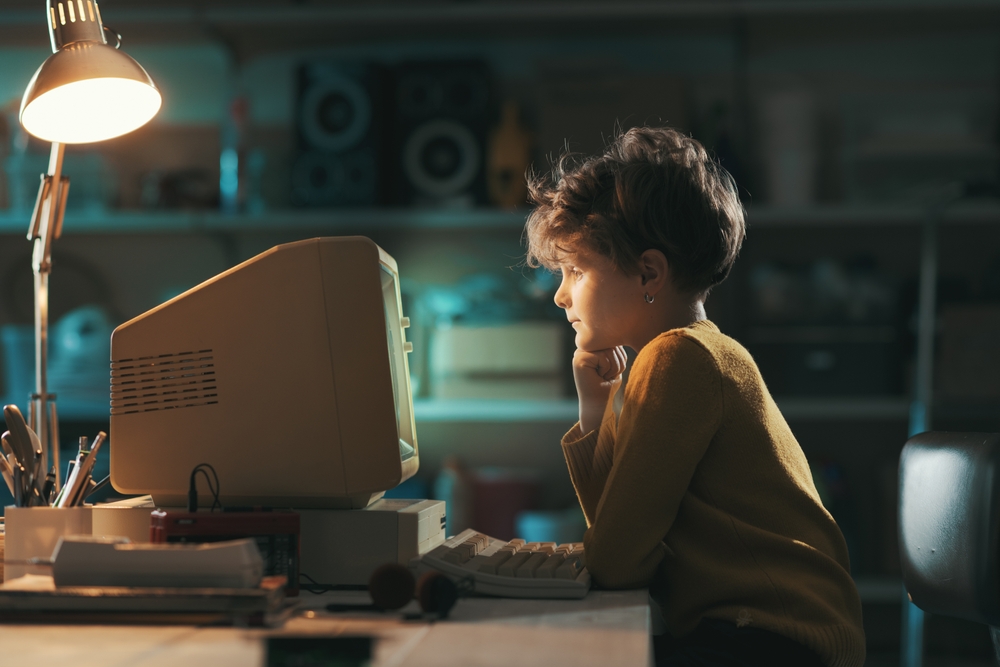
If you were born in the 1990s, there is a good chance your childhood included something younger generations may struggle to imagine: waiting for your turn to use the family computer. One machine could serve an entire household, and getting online often meant occupying the desk, tying up the phone line, and hoping nobody needed you to get off.
Contents
show
That strange overlap created a generation that experienced childhood on both sides of the internet revolution. They remember a time when being unreachable was normal, then watched phones, social media, and constant connectivity become part of everyday life while they were still growing up.
When Getting Online Was A Family Event
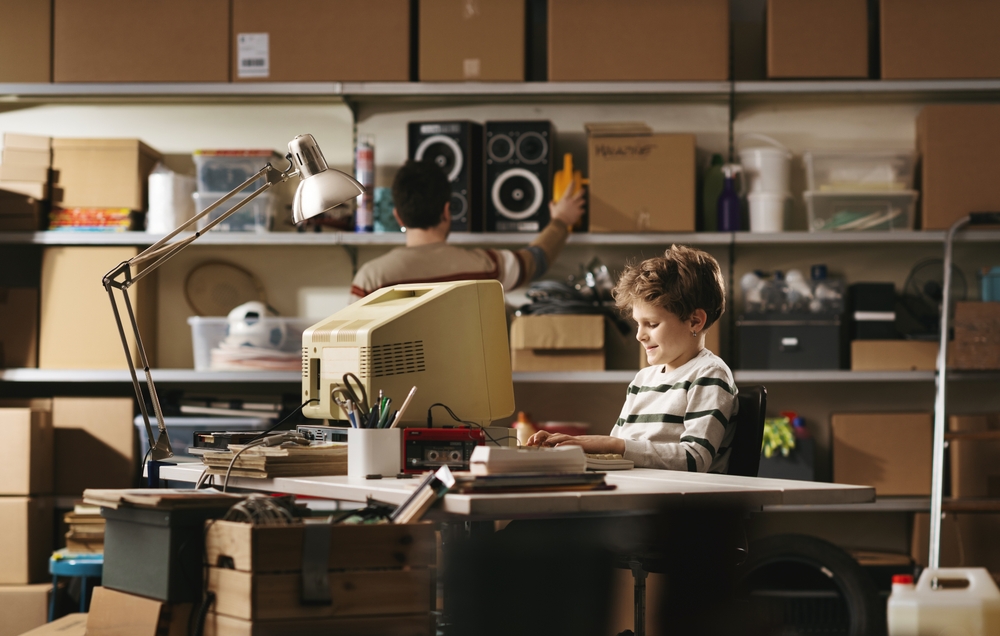
For children growing up in the 1990s and early 2000s, using the internet could feel like an organized household activity. A slow dial-up connection might take several minutes to load a page, while the unmistakable sound of the modem announced to everyone nearby that somebody was going online. Children could find themselves waiting behind siblings or parents for their turn.
The WEB CHILD project, which examines childhood experiences in the United States, Denmark and South Korea, describes children connecting through slow dial-up modems and waiting for images to load. For some children, home access was not even an option. They used computers at libraries, schools, computer rooms or internet cafes instead.
That one family computer also created a form of supervision that required no tracking apps. The machine was often placed somewhere visible, meaning parents could see what children were doing simply by walking through the room. There was no need to wonder whether a child had disappeared into a private online world for hours.
The rules were basic but unavoidable: take your turn, finish what you need to do, and get out of the chair. For children who grew up with several connected devices in every room, that kind of negotiation may sound almost prehistoric.

The Internet Arrived While They Were Still Kids
The biggest reason this childhood feels so unusual is the speed of the transition. In December 1998, 42% of American households owned a computer, while 26.2% had internet access. By August 2000, 51% of households had a computer and 41.5% had internet access.
For a child born in 1992, those numbers describe a completely different childhood within only a few years. They could begin school in a home where internet access was uncommon, then reach the later years of elementary school as computers became a normal part of American households.
That change was happening while children were learning basic skills, making friends and developing their sense of independence. The technology around them kept changing before they had even reached adulthood.
There was also a major difference between simply having a computer and having the internet. A child could spend hours playing an offline game, writing a school assignment or exploring software without being connected to everyone else. The screen was there, but the outside world was not necessarily coming through it.

Then Everything Went Online
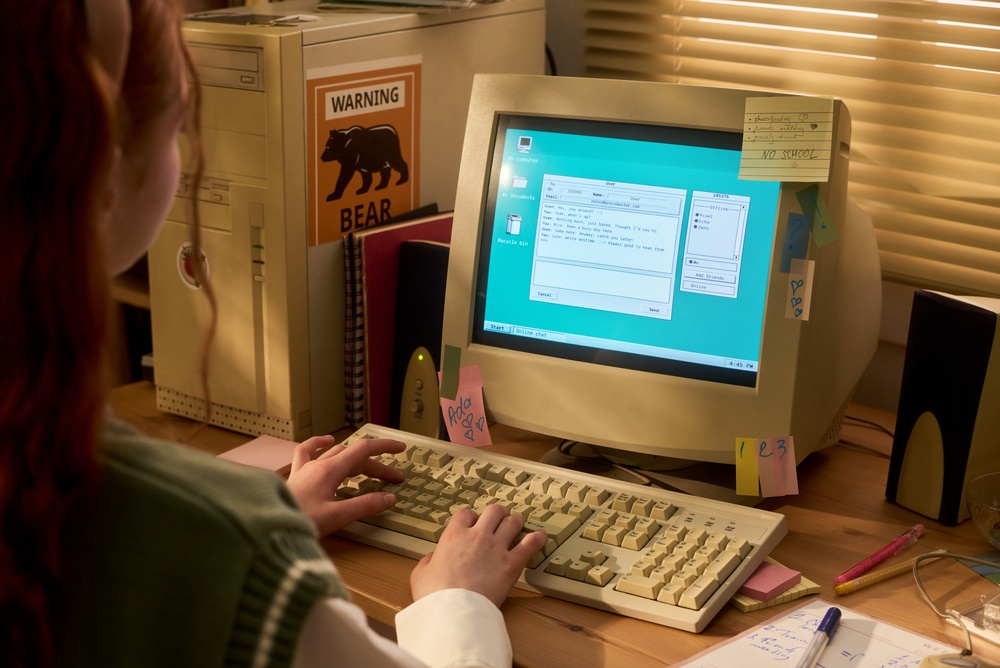
The next phase arrived quickly. AOL Instant Messenger launched in 1997, giving young people a new way to communicate from their computers. Myspace arrived in 2003, followed by YouTube in 2005.
For people born during the 1990s, the internet therefore changed meaning several times. It began as a place you deliberately sat down to visit, then became somewhere you went to socialize, watch videos and maintain relationships.
The smartphone accelerated that shift. The iPhone launched in 2007, when the oldest members of Generation Z were 10 years old. A child who had spent their early years waiting for a family computer could suddenly watch the internet move into their pocket.
That produced a particularly strange experience. The same person could remember dial-up internet, physical CDs and landline phones while also becoming an early adopter of smartphones and social media. Childhood and adolescence became a front-row seat to one of the biggest technological shifts of modern life.
The “Rarest Childhood” Claim Needs A Closer Look
There is one problem with the viral claim surrounding people born between 1992 and 2003: there is no single study that officially identifies those birth years as having the “rarest childhood.”
Instead, the period overlaps with the much less precise idea of the “Zillennial,” a label sometimes used for people born around the transition between Millennials and Generation Z. Researchers and writers have placed the boundaries differently, which makes any exact birth-year cutoff difficult to defend.
One commonly used framework places Millennials through 1996 and Generation Z beginning in 1997. Under that definition, someone born in 1992 and someone born in 2003 technically belong to different generations, even though both could have experienced parts of the same technological transition.
The distinction becomes even messier when individual households are considered. A child’s experience depended heavily on income, location, school access and whether their family could afford a computer and internet connection. Two children born in the same year could have had completely different relationships with technology.
The Generation Labels Are Far From Perfect
Generational categories can be useful shorthand, but they are not precise descriptions of every person’s childhood. Hundreds of social scientists have criticized the practice of assigning fixed characteristics to people based primarily on their birth years.
In 2021, sociologist Philip Cohen and around 150 other social scientists signed an open letter calling on Pew to stop using generational labels, arguing that fixed generational categories could promote pseudoscience and interfere with social science research.
Pew later changed how it approached the subject. In 2023, its social trends research director Kim Parker said the organization would use generational analysis when it genuinely added value, rather than treating the categories as the default framework for research.
That makes the “rarest childhood” description better understood as a viral way of describing a genuine cultural experience rather than the conclusion of a formal study. The technology shift itself is measurable. The claim that one particular group had the rarest childhood is much harder to prove.
Not Everyone Experienced The Digital Shift Equally
The nostalgic version of this story can easily leave out an important detail: not every child suddenly received a computer and internet connection.
The WEB CHILD comparison found that the web reached roughly 75% of the United States, Denmark and South Korea within its first decade, while also noting that the effects on children varied widely. Some children had regular access, while others barely encountered the internet during those early years.
Money played a major role. So did geography and access to schools, libraries and other public computers. A child whose family could not afford a computer in 2000 could experience the decade very differently from a child with a computer in their bedroom.
That means the most accurate version of this story is less about a perfectly defined birth cohort and more about a period of rapid technological change. Some children watched the internet arrive from the sidelines. Others grew up with it becoming increasingly central to school, friendships and entertainment.
They Remember When Being Unreachable Was Normal
The most interesting part of this childhood may have little to do with old computers. It is the experience of living through a time when communication had natural stopping points.
Friends could leave the house and become impossible to contact. A phone could stay on the kitchen wall. A computer could be switched off. A weekend could pass without anyone expecting photographs, updates or instant replies.
That separation created boredom, but it also created boundaries. Children could spend an afternoon outside without documenting it, and a family dinner could happen without notifications constantly interrupting the room.
For people who experienced both versions of daily life, the contrast can be unusually clear. They remember the inconvenience of being offline, but they also remember what it felt like when being offline was simply ordinary.
A Childhood Split Between Two Eras
The defining feature of people born around this transition is therefore not a specific website or piece of hardware. It is that they can remember life before constant connectivity and life after it.
They watched the family computer become the personal computer, the personal computer become the smartphone, and the smartphone become the place where much of everyday life now happens.
That perspective is becoming increasingly difficult to reproduce. Children growing up today are entering a world where internet access is already woven into school, entertainment, communication and daily routines.
For the people who remember waiting for the modem to connect, the strangest part may be realizing that the waiting itself has become history.
The family computer is gone. The phone line is free. And somewhere, someone who remembers arguing over whose turn it was is probably still leaving their phone in another room for a few minutes of peace.