
Your cart is currently empty!
Scientists Are Discovering Why A Simple Human Touch Can Have Such A Powerful Effect On Your Body
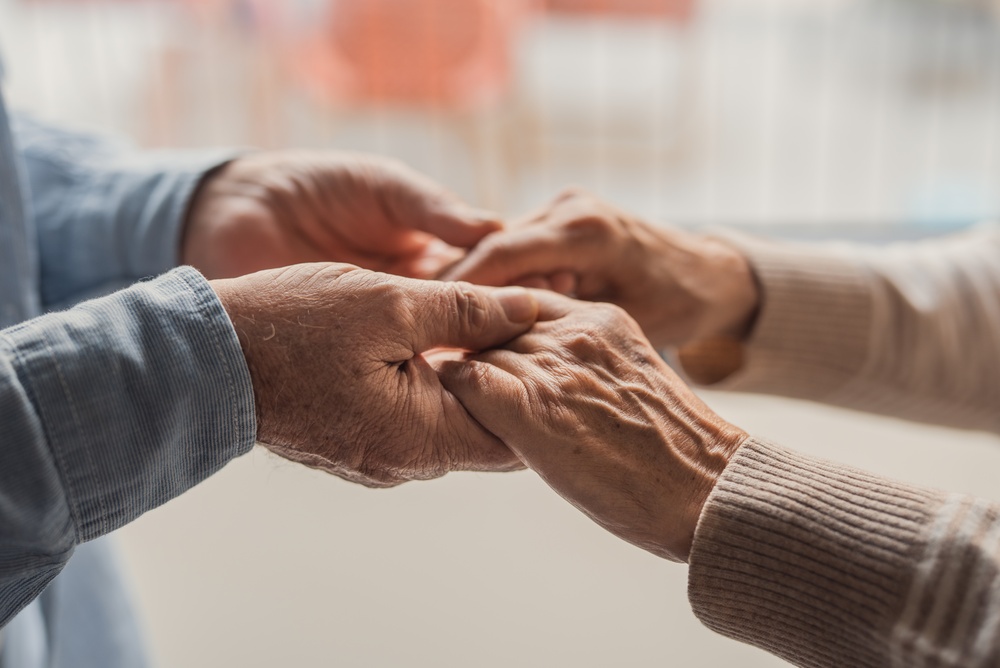
We tend to view a quick hug, a passing high-five, or a reassuring hand on the shoulder as simple social pleasantries. Yet when those casual moments of physical contact temporarily disappeared from daily life, researchers observed unexpected shifts in how people of all ages functioned. This widespread absence sparked a new wave of neurological research that is fundamentally changing how the medical community understands human connection.
Contents
show
What we have long assumed was just a matter of psychological comfort is turning out to be deeply wired into our physical biology, prompting scientists to investigate what actually happens inside the nervous system when one of our oldest evolutionary needs is taken away.
Lockdowns Exposed A Problem Scientists Had Underestimated

For years, studies of touch deprivation focused largely on isolated older adults. The pandemic widened that picture. Researchers began looking at people of all ages, including young people who would normally be considered socially active and less vulnerable to prolonged isolation. Dr. Katalin Gothard, a professor of physiology and neurology at the University of Arizona, believes the importance of physical closeness during childhood and adolescence has often been underestimated. “Those deprived of these experiences appear to have paid a long-term price,” she said, pointing to the role that everyday physical interactions can play in building social bonds.
Gothard has observed differences among university students who experienced some degree of normal teenage socializing before the pandemic and those who spent a substantial part of their formative years in lockdown. She said the differences can extend beyond academic performance. Some isolated students appear less inclined to work collaboratively, less likely to form friendships through shared activities and less likely to engage in small but meaningful gestures such as a reassuring pat on the back or a celebratory high-five. Those moments may seem insignificant when viewed individually, but researchers increasingly believe they form part of the social fabric that helps people feel secure around one another.
The concern is not that every person needs the same amount of physical affection. People have different boundaries, preferences and experiences with touch. The larger question is what happens when someone wants physical connection but goes without it for an extended period. Researchers have developed tools to measure touch deprivation, and higher levels of deprivation have been associated with anxiety and depression. The growing body of research suggests that for many people, wanted physical contact may function as one part of a much broader system of emotional and social support.
Humans May Be Far More Dependent On Touch Than We Think

Human beings developed as an intensely social species. Anthropologists believe Homo sapiens became successful through cooperation, caregiving, shared labor and collective problem-solving, rather than through individual strength alone. James Coan, an associate professor of clinical psychology at the University of Virginia, argues that touch played an important role in this history. “Touch matters a lot because it’s one of the simplest and most efficient ways of signalling that social support is available,” he said. Physical contact can communicate safety without requiring an explanation, which may help explain why people instinctively reach for another person’s hand during frightening or painful experiences.
The brain and body developed in environments where other people were physically present. When expected social contact disappears, the body can respond with stress. Coan said touch can communicate both safety and emotional regulation, making it an important part of how people manage their social lives. This does not mean every hug has a dramatic biological effect, but research has repeatedly found that affectionate and consensual touch can influence the way people experience stress, pain and emotional discomfort.
Scientists have also found evidence that touch can help buffer physical and emotional pain. That may explain some of the most familiar human reactions to distress. People hold hands when receiving difficult news, comfort children with physical reassurance and reach for loved ones during medical procedures. Psychologists have even explored whether a brief, appropriate touch can influence social behavior in everyday settings. The message carried by physical contact can sometimes be immediate: another person is present, aware and available to offer support.
Your Skin Sends Powerful Signals To The Brain
The biology behind pleasant touch is more complicated than simply feeling good. When a baby receives a gentle stroke or hug, specialized nerves in the skin known as C-tactile fibers can send signals toward the brain. Research suggests these pathways are particularly responsive to gentle, affectionate forms of contact. Similar systems may also be involved when adults experience consensual physical touch, helping explain why the sensation can influence feelings of comfort and safety.
Activation of these pathways has been linked with oxytocin, a hormone involved in bonding and social connection. Oxytocin has been associated with relaxation, affection and reduced stress responses, while affectionate touch has also been linked with lower heart rate and changes in cortisol, a hormone involved in the body’s stress response. Scientists are still working to understand exactly how these processes interact, but the evidence points toward a close relationship between physical contact, the nervous system and emotional wellbeing.
Research has also explored the connection between touch and heart-rate variability, which measures the natural variation in timing between heartbeats. Higher heart-rate variability is often associated with greater resilience to stress. One explanation being investigated involves the vagus nerve, which connects the brain with major organ systems throughout the body. Pleasant touch may influence the nervous system in ways that help the body move away from a heightened state of vigilance and toward a calmer state.
One Brain Response Left A Researcher Stunned

Gothard has spent decades studying the brain, including the way the amygdala processes emotional and social information. During research involving monkeys undergoing grooming, she observed something that stood out from almost everything she had seen during her career. The animals relaxed, closed their eyes and appeared to enter a deeply calm state while being groomed. At the same time, patterns of neural responsiveness in the amygdala changed dramatically.
“The monkeys relaxed, closed their eyes and sank into a state of bliss,” Gothard recalled. She described the effect as extraordinary because the amygdala normally remains highly responsive to events happening outside and inside the body. During grooming, much of that heightened responsiveness appeared to diminish. The animals seemed to disengage from their surroundings as the calming experience continued.
“In over 30 years, I’ve never seen a single stimulus capable of so profoundly dampening neural responsiveness in the amygdala,” Gothard said. “It appeared that the animals effectively disengaged from the outside world.” The observation was powerful enough to make her consider whether carefully designed touch interventions could eventually support people dealing with conditions involving heightened vigilance, including anxiety and PTSD. Research in this area remains ongoing, and touch should not be viewed as a replacement for established mental health care.
Why Touch Can Never Be Forced

The growing interest in touch research comes with an important warning: nobody is entitled to another person’s physical space. Gothard has emphasized that touch does not affect everyone in the same way. Responses are shaped by personal history and life experience, and people who have experienced trauma or abuse may react to physical contact very differently from those who associate touch with safety and affection.
“For some people, touch is like an acquired taste; it becomes acceptable and even enjoyable over time, while others would rather have a bucket of cold water poured over their head than accept a hug,” Gothard said. The comment captures one of the central challenges facing researchers. Scientists may be able to identify general patterns in how pleasant touch affects the nervous system, but individual responses remain highly personal.
Consent and trust therefore sit at the center of any discussion about the possible benefits of touch. A supportive hand held willingly can be comforting. An unwanted hand can trigger the opposite reaction. The science does not suggest that people should touch more strangers or ignore personal boundaries. It suggests that safe and welcomed physical contact within trusted relationships may be an important source of support for many people.
Dr. Julian Packheiser, a researcher in social neuroscience at Ruhr-University Bochum, described touch deprivation as having similarities to loneliness. “If touch is wanted but not received, we have a state similar to loneliness where social contact needs are not met,” he said. For people who want physical closeness but spend years without it, that unmet need may become another form of social disconnection.
Scientists Are Searching For Alternatives To Human Contact
For people living alone or experiencing prolonged isolation, researchers are exploring whether other experiences can reproduce some of the calming sensations associated with human touch. The results are still being investigated, but several approaches have attracted attention. Even imagining supportive contact from a trusted person has been studied for its potential effects on stress responses and activity in the amygdala.
Weighted blankets have also been examined because deep pressure may create calming sensations for some people. Stroking a pet can provide sensory comfort alongside companionship, while self-hugging has been proposed as another possible way to create a feeling of physical containment during moments of isolation. None of these experiences completely replaces a close human relationship, but they may offer some degree of comfort when physical contact with others is unavailable.
Supportive touch is also being studied in medical and care settings. Research has examined whether handholding and other appropriate forms of physical reassurance can help distressed patients feel calmer. Some findings have linked touch from caregivers with improved sleep, lower blood pressure and reduced pain, although results can vary depending on the setting and individual patient.
Patricia Thomas, an associate professor of sociology at Purdue University, described affectionate touch as one form of social support that may help reduce the impact of stress on health. “I think of affectionate touch as a type of social support, which can reduce the impact of stress on health,” she said. Her work connects with broader research showing that supportive relationships are associated with better health and longevity, although no single factor can fully explain why some relationships have such powerful effects.
Our First and Last Language

Touch anchors us from our first moments to our last. Skin-to-skin contact is widely recognized as a critical tool for regulating a newborn’s nervous system, serving as our earliest form of communication. But it remains just as essential at the end of life, long after other ways of connecting fade. “Touch is the last sense that leaves us,” Dr. Gothard noted. “The brain may no longer process what we hear and what we see, but the skin still transmits signals of presence and love.”
Whether it involves holding the hand of a dying patient, a woman in labor, or a child in a dentist’s chair, the gesture serves the exact same biological and emotional purpose. It communicates safety without requiring a single word.
While researchers continue to map exactly how the nervous system translates physical closeness into calm, the fundamental takeaway is already clear. We live in an era where we can instantly message anyone across the globe, yet the most effective form of human reassurance remains impossible to send through a screen: the quiet certainty of someone safe sitting right beside you.