
Your cart is currently empty!
Scientists created an adhesive that seals wounds in seconds, ending the need for stitches
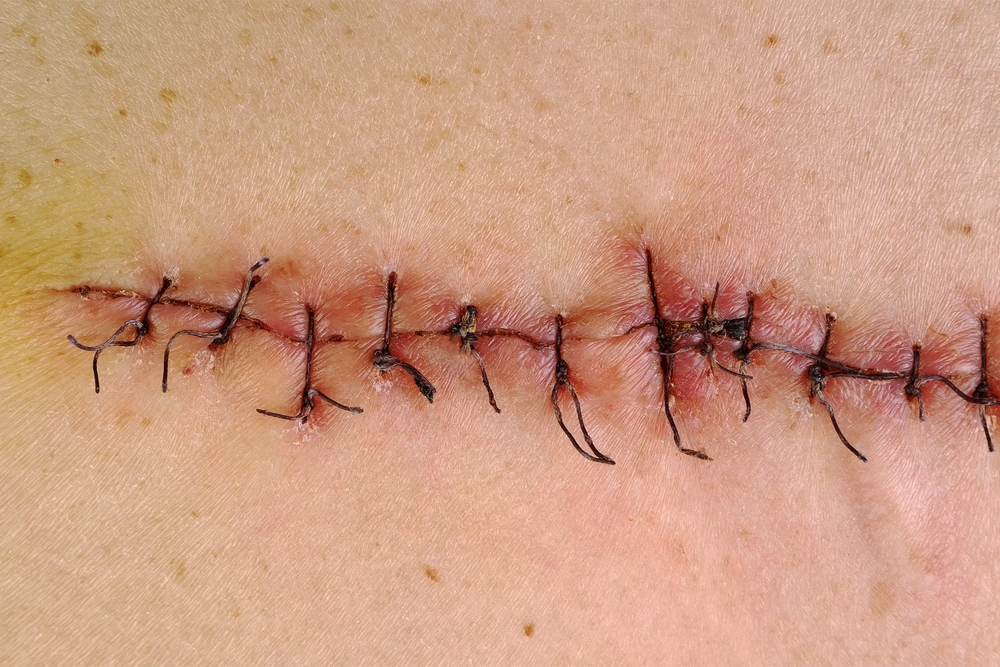
A serious injury can leave doctors with very little time to act, particularly when a patient suffers damage to an internal organ or a wound that is difficult to reach. In many cases, surgeons must rely on stitches, staples, or complicated procedures to close the injury and prevent further damage. But scientists have been developing an unusual alternative that could change how some of these emergencies are handled. It involves a specially engineered adhesive that can seal certain wounds in approximately 60 seconds.
Contents
show
The material, known as MeTro, is an elastic surgical glue designed to bond directly with biological tissue while allowing it to move naturally. Researchers have successfully tested the gel on animal models, including pig lungs and rodent arteries, with results suggesting it could eventually help treat injuries that are particularly difficult to repair. Human trials had not yet begun at the time of the research report, but the team believes the technology could have significant applications in emergency medicine and hospital surgery.
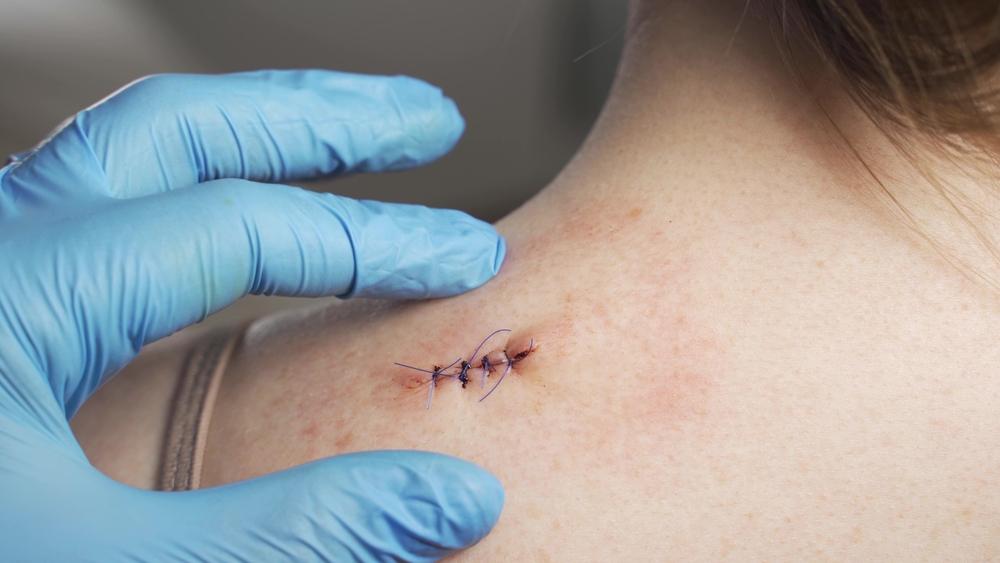
Scientists Have Developed a Glue That Could Seal Wounds in 60 Seconds
Traditional wound closure methods have saved countless lives, but they can present challenges when doctors need to repair delicate tissue or organs that constantly move. Stitches and staples physically bring damaged tissue together, yet certain injuries require additional precision and flexibility. This is particularly true when treating internal wounds, where applying conventional materials can be difficult and time-consuming. Researchers have therefore been investigating medical adhesives that can attach directly to damaged tissue and create a secure seal without requiring the same approach used in traditional wound closure.
Their development, called methacryloyl-substituted tropoelastin, or MeTro, is a hybrid elastic protein that can be applied directly to an injury. Once it comes into contact with the tissue, the material forms a gel-like substance that fills gaps and follows the shape of the damaged area. The researchers report that the adhesive can seal certain wounds in around 60 seconds, potentially offering a faster approach when medical teams need to control serious injuries. Its ability to stretch alongside the surrounding tissue is another important feature, particularly when the affected area is constantly moving.
Nasim Annabi from Northeastern University explained how the material behaves when applied to a wound. “The beauty of the MeTro formulation is that, as soon as it comes in contact with tissue surfaces, it solidifies into a gel-like phase without running away,” she said. This property helps keep the adhesive where it needs to be instead of allowing it to spread away from the injury. The research team believes this could make the material especially useful for complicated wounds that are difficult to close using conventional methods.
How The Experimental Surgical Glue Works
The technology behind MeTro is based on tropoelastin, a protein associated with the elasticity of human tissue. Scientists modified the protein to create an adhesive that can stretch while maintaining a strong connection with the surface of a wound. This combination is particularly important because the human body is constantly moving. Skin stretches when people move, blood vessels expand as blood flows through them, and the lungs repeatedly inflate and deflate during breathing. A rigid material could struggle to remain attached under these conditions, making elasticity an important feature of the experimental glue.

The Gel Changes Form When It Touches Tissue
MeTro begins as a material that can be applied directly to the damaged area, where it fills spaces and conforms to the shape of the injury. Its ability to form a gel-like seal helps it remain in place, even when doctors are working with irregular wound surfaces. Anthony Weiss from the University of Sydney described what happens when the material is applied: “When you watch MeTro, you can see it act like a liquid, filling the gaps and conforming to the shape of the wound.” This behavior could make it easier to cover injuries that would otherwise require more complicated repair techniques.
Ultraviolet Light Helps Secure The Adhesive
After the material has been positioned, researchers use ultraviolet light to strengthen the seal through a process known as light-mediated crosslinking. This treatment helps the adhesive form a stable bond with the underlying tissue, allowing medical professionals to control where the material is placed. The researchers explained that the additional treatment helps the sealant tightly bond and interlock with structures on the tissue surface. Combining direct application with light-based curing gives the material its ability to create a flexible but secure seal.
Lung Injuries Could Be One Of Its Most Important Applications
The lungs are among the organs that could benefit from a flexible surgical adhesive because they move constantly throughout the day. Every breath causes lung tissue to expand and contract, placing repeated stress on anything attached to its surface. Repairing damage in this environment can be challenging because a material must remain securely attached while accommodating those movements. A seal that breaks away could leave the original injury exposed, potentially creating further complications for the patient.
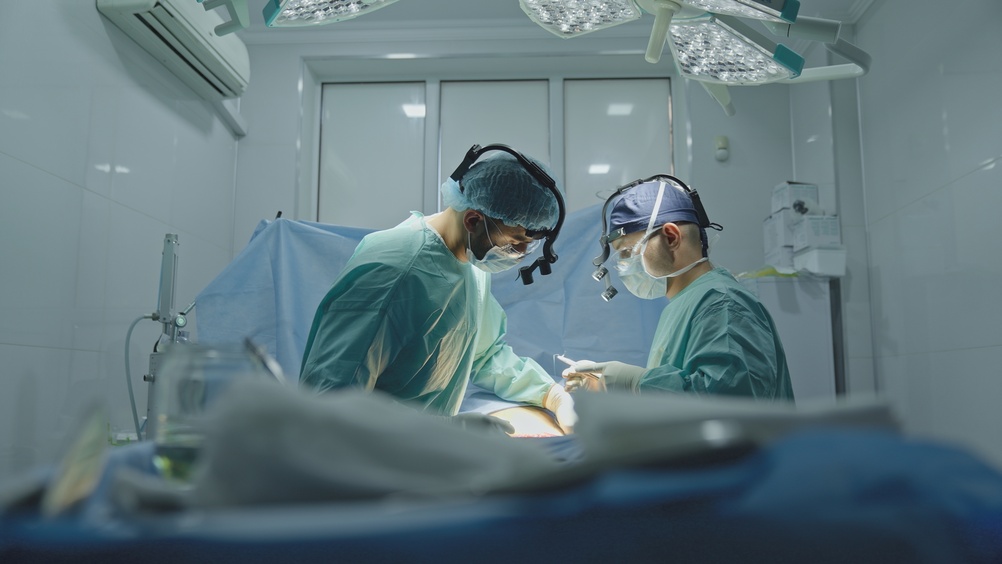
MeTro was developed with these challenges in mind. Its elastic properties allow it to move alongside the surrounding tissue rather than behaving like a rigid patch. Researchers have tested the material on pig lungs, as well as rodent lungs and arteries, reporting successful results in their experimental work. These findings suggest the gel could eventually offer another approach to treating certain internal injuries, particularly those involving delicate organs where traditional wound closure methods may be difficult to use.
The possibility of sealing lung injuries quickly is especially interesting in emergency situations. A punctured lung can become a serious medical problem, and patients may require immediate treatment depending on the severity of the damage. A rapidly applied adhesive could potentially help doctors close certain wounds while allowing the lungs to continue their normal movements. However, its effectiveness in human patients remains unknown, and further clinical testing will be necessary before doctors can determine exactly how it should be used.
The Adhesive Could Help Treat Injuries After Serious Accidents
The researchers have identified several situations where a fast-acting surgical adhesive could prove useful. Serious road accidents, for example, can cause internal injuries that are difficult to access and repair. Damage to organs and blood vessels may require urgent medical attention, particularly when a patient is losing blood or struggling with internal complications. In these situations, a material that can be applied quickly and bond directly with damaged tissue could provide another option for emergency medical teams.
The technology could also have applications in war zones and other locations where access to advanced surgical facilities may be limited. Emergency responders frequently work under difficult conditions, where controlling an injury quickly can make a major difference to a patient’s treatment. A medical adhesive that is easy to store and relatively simple to apply could potentially become a useful addition to emergency equipment. The research team believes MeTro could eventually help address injuries that currently require more complicated procedures.
Some of the potential applications being investigated include:
- Internal organ injuries: The adhesive could potentially seal certain wounds affecting delicate organs.
- Lung punctures: Its elasticity may help it remain attached while the lungs expand and contract.
- Arterial injuries: Early animal testing has included experiments involving rodent arteries.
- External wounds: The gel could offer another way to close certain injuries without relying exclusively on stitches or staples.
- Emergency surgery: Its rapid application could help medical professionals manage selected complicated wounds.
These possibilities remain experimental, but they demonstrate why researchers are interested in developing the material further. A medical adhesive that works across different types of tissue could eventually give surgeons more flexibility when treating serious injuries.
MeTro Can Be Designed To Break Down Inside The Body
Another unusual feature of the experimental glue is that scientists can control how long it remains in the body. Different injuries require different healing periods, meaning a material designed for temporary wound closure may not need to remain attached for several months. MeTro contains a degradable component that allows researchers to adjust its lifespan depending on the medical application. According to the research report, the material can be designed to last anywhere from hours to months.
This flexibility could make the adhesive useful for different types of injuries. A wound that needs temporary support could potentially receive a formulation designed to break down relatively quickly, while more complicated injuries might require a longer-lasting seal. Being able to adjust the material’s lifespan gives researchers another way to tailor it to the needs of individual medical situations. It also means doctors could potentially use different formulations depending on the type of tissue being repaired.
The researchers also reported that the material degrades without leaving toxic residues behind in the body. This is an important consideration when developing medical materials intended to remain in contact with internal organs and other delicate structures. However, further testing will be needed to establish how reliably the adhesive breaks down in human tissue and whether its degradation process remains safe across different applications.
The Surgical Glue Could Reduce Healing Times
One of the most interesting claims from the research concerns the amount of time wounds may need to heal after treatment. The researchers reported that wounds treated with MeTro healed in approximately half the time compared with wounds closed using stitches or staples in their experimental work. If similar results can eventually be demonstrated in human patients, this could have important implications for surgical recovery and wound management.
The material could also simplify certain procedures by allowing surgeons to seal injuries without relying exclusively on traditional closure techniques. Applying an adhesive directly to damaged tissue may be particularly useful when working with areas that are difficult to access or require a flexible seal. Its ability to conform to the shape of a wound could also help address some of the challenges associated with irregular tissue surfaces.
However, faster healing in animal experiments does not guarantee the same outcome in people. Human injuries can vary considerably depending on their location, severity, and the patient’s overall health. Researchers will need to establish which types of wounds respond best to MeTro and whether its reported advantages can be reproduced under clinical conditions. Until then, the findings should be viewed as encouraging experimental results rather than proof that the adhesive will outperform existing treatments in hospitals.
Human Trials Are The Next Major Hurdle
Despite the promising animal experiments, MeTro has not yet been established as a treatment for human patients. The research described successful testing on rodent arteries and lungs, alongside experiments involving pig lungs. These studies provide an early indication of how the adhesive might perform in living tissue, but they cannot establish its safety and effectiveness in people. Human clinical trials will be necessary before doctors can determine whether it is suitable for routine medical use.
Several important questions still need to be answered before the material could become widely available:
- Human safety: Researchers must establish whether the adhesive causes complications or unwanted reactions.
- Long-term performance: Further testing must determine how reliably the material stays attached during healing.
- Different injuries: Scientists need to identify which wounds are most suitable for treatment.
- Controlled degradation: Its breakdown inside the body must be evaluated across different formulations.
- Clinical effectiveness: Human studies must establish how it compares with existing surgical treatments.
The research team has expressed interest in moving the technology toward human testing. Ali Khademhosseini from Harvard Medical School was also involved in the work, which builds on years of research into using MeTro gels to repair damaged tissue. The scientists believe the adhesive could address problems that other available sealants cannot solve, although further development and testing remain necessary.
The findings were published in Science Translational Medicine, providing a scientific foundation for the team’s work and its proposed medical applications.
A Small Amount Of Gel Could Change How Doctors Treat Serious Wounds
Emergency medicine often depends on how quickly medical professionals can control an injury. When a patient suffers damage to a delicate organ, conventional wound closure can become complicated, particularly when the affected tissue needs to keep moving. MeTro offers researchers a different approach, combining rapid application with the flexibility required to bond with living tissue. Its experimental results have attracted interest because the material could eventually help doctors treat injuries that are difficult to repair using existing techniques.
For now, the adhesive remains in the research stage, and human testing will determine whether its potential can translate into real medical benefits. If future studies establish that it is safe and effective, emergency teams and surgeons could gain another tool for treating serious wounds. A gel applied directly to damaged tissue in around 60 seconds could one day make the difference between a complicated repair and a much faster route to treatment.
Sources:
- Annabi, N., Zhang, Y., Assmann, A., Sani, E. S., Cheng, G., Lassaletta, A. D., Vegh, A., Dehghani, B., Ruiz-Esparza, G. U., Wang, X., Gangadharan, S., Weiss, A. S., & Khademhosseini, A. (2017). Engineering a highly elastic human protein–based sealant for surgical applications. Science Translational Medicine, 9(410). https://doi.org/10.1126/scitranslmed.aai7466
- Annabi, N., Zhang, Y., Assmann, A., Sani, E. S., Cheng, G., Lassaletta, A. D., Vegh, A., Dehghani, B., Ruiz-Esparza, G. U., Wang, X., Gangadharan, S., Weiss, A. S., & Khademhosseini, A. (2017b). Engineering a highly elastic human protein–based sealant for surgical applications. Science Translational Medicine, 9(410). https://doi.org/10.1126/scitranslmed.aai7466
emergency medicine, innovative medical technology, lung injury treatment, medical breakthrough, medical research, medical science, MeTro surgical glue, Science Translational Medicine, stitches alternative, surgical adhesive, surgical glue breakthrough, tissue repair, wound closure technology, wound healing