
Your cart is currently empty!
Scientists Discover A Fish With Rotating Eyes Hidden Inside A Transparent Head 600 Meters Underwater
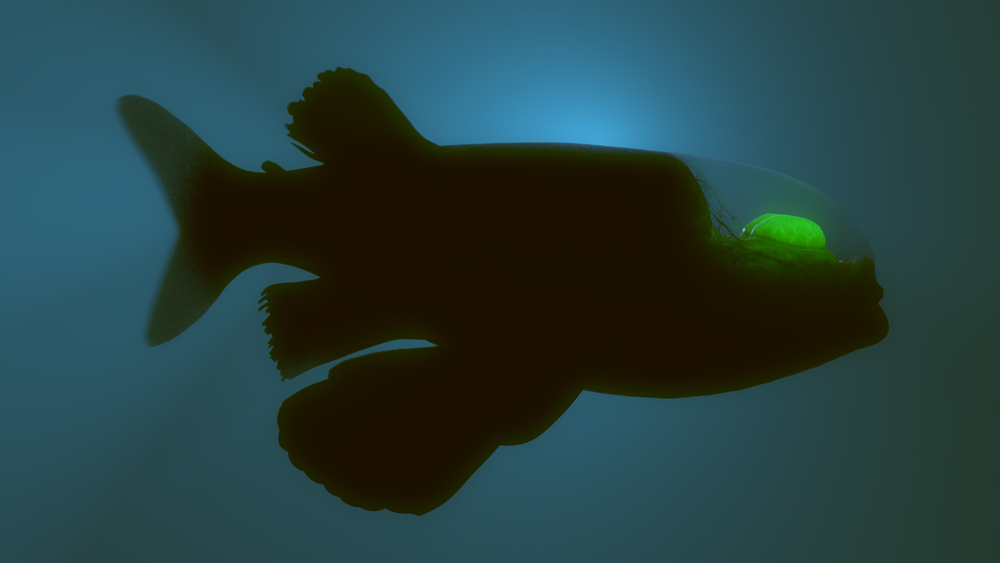
A strange-looking fish with a completely transparent head has given deep-sea scientists an extraordinary opportunity to study one of the ocean’s most unusual creatures. Its eyes can rotate inside its see-through head, allowing it to track potential prey in the darkness hundreds of meters beneath the surface. Now, researchers have captured rare 4K footage showing the animal in remarkable detail, revealing features that are rarely observed so closely.
Contents
show
The unexpected encounter happened around 600 meters (1,970 feet) below the ocean’s surface, when scientists were preparing to finish an expedition. Their underwater robot was already heading back toward the research vessel when a team member spotted something unusual on its camera. What happened next brought scientists rushing into the control room, turning the final moments of their research trip into an extraordinary wildlife encounter.

Scientists Almost Missed Their Rare Deep-Sea Discovery
The encounter took place during an eight-day research expedition called Diving Deep for Delicate Drifters, led by scientists from the Monterey Bay Aquarium Research Institute (MBARI). The team had been investigating unusual marine animals, including jellyfish, siphonophores, and comb jellies. Researchers used scuba diving near the ocean’s surface alongside remotely operated vehicles to observe creatures living hundreds of meters underwater.
By the time the unusual fish appeared, most of the scientists had already moved into the ship’s wet laboratory. They were preparing to catalogue specimens collected during the expedition aboard the research vessel David Packard. Meanwhile, the remotely operated vehicle Doc Ricketts was being piloted toward the surface for recovery when Research Specialist Shannon Johnson noticed something extraordinary on its camera.
Johnson immediately called for the pilots to stop, giving the team an opportunity to examine the animal. It was a barreleye fish, scientifically known as Macropinna microstoma, swimming approximately 600 meters beneath the surface and around 90 kilometers (55 miles) offshore. The sighting was particularly exciting because it represented only MBARI’s eleventh encounter with this species.
News quickly spread throughout the vessel, and scientists who had already started preparing for the next stage of their work hurried back into the ROV control room. Senior Scientist Steven Haddock described the excitement surrounding the discovery, saying, “Seeing a barreleye fish is a rare treat. Crew from across the ship joined the science team in the control room, mesmerized by this remarkable animal.”
The Fish Has A Transparent Head And Rotating Eyes
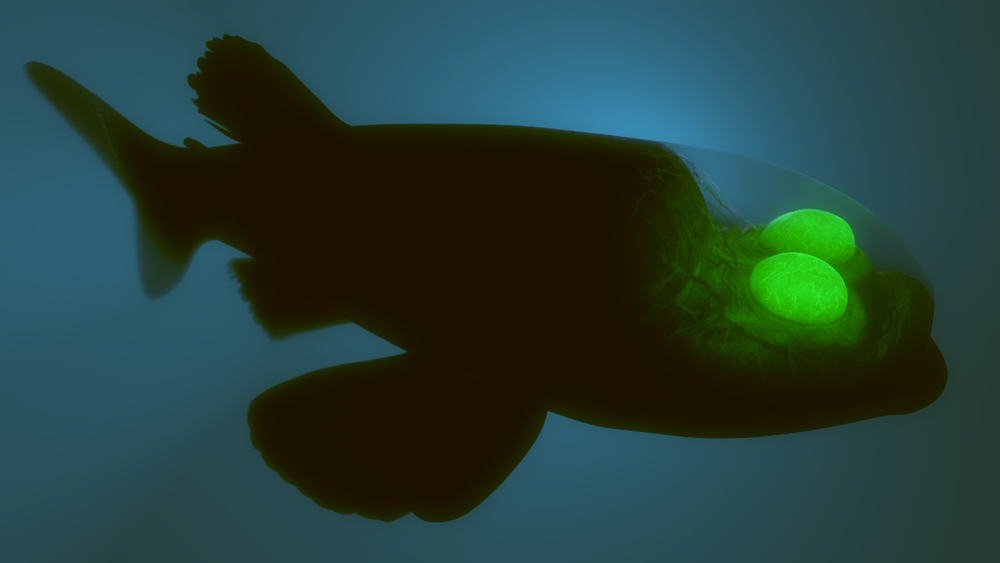
The barreleye fish has one of the most unusual appearances found among deep-sea animals. Its head features a transparent, fluid-filled shield that allows observers to see its internal eye structures. Inside this dome are two large, tubular eyes that point upward, giving the fish a distinctive appearance unlike that of most familiar marine species.
Those unusual eyes serve a specific purpose in the dark waters where the fish lives. By looking upward, the barreleye can detect silhouettes of potential prey moving above it against the faint light filtering down from the ocean’s surface. Its visual system is adapted to an environment where even small changes in available light can help an animal locate food.
The most fascinating feature is the fish’s ability to rotate its eyes beneath the transparent shield. When it spots something worth eating, its eyes can move to follow the target while the fish adjusts its position. This allows it to maintain sight of potential prey as it transitions from searching overhead to preparing for a meal.
The transparent covering also provides protection during feeding. Small crustaceans can become trapped among the stinging tentacles of deep-sea siphonophores, giving the barreleye an opportunity to collect food from these unusual marine organisms. Its protective shield helps prevent the delicate eyes from being damaged while it reaches for its next meal.
Four Unusual Features That Help The Barreleye Survive
The animal’s unusual appearance is closely connected to how it finds food and moves through its environment. Several distinctive adaptations help it survive in the ocean’s twilight zone:
- Tubular eyes: Their upward-facing position helps the fish detect potential prey above its body.
- Rotating eye movement: Its eyes can turn beneath the transparent dome to keep food within view.
- Transparent head shield: The gelatinous covering protects its eyes during feeding.
- Large fins: These help the fish hover steadily and maneuver through the water.
Researchers Captured Something They Had Never Recorded Before
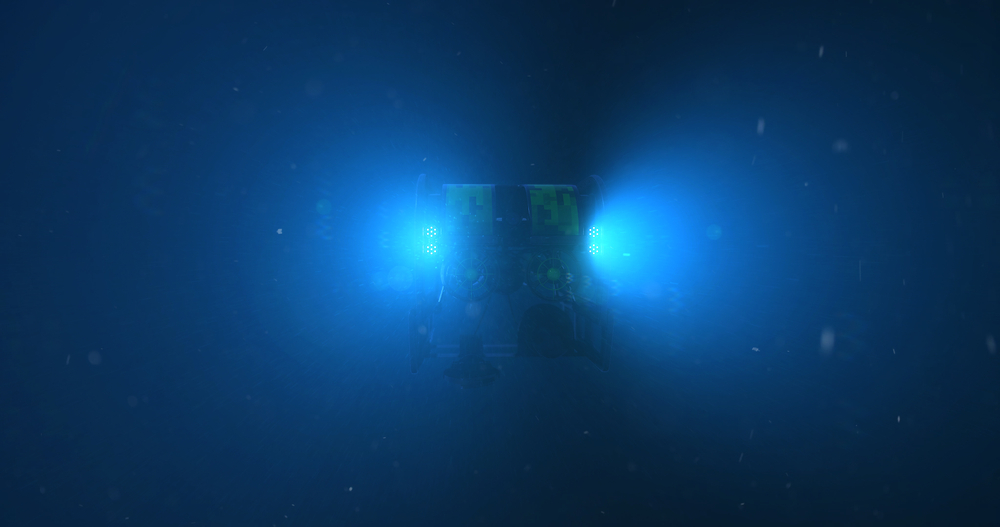
Although MBARI had encountered the species on previous expeditions, this particular sighting offered a new opportunity to document its unusual features. Researchers spent approximately 20 minutes observing the fish through Doc Ricketts’ high-resolution 4K camera, examining its body and behavior while experimenting with different lighting conditions.
The team specifically adjusted the lighting to make the transparent head shield more visible. This allowed them to observe the unusual structure in greater detail while the animal remained in its natural environment. The encounter produced MBARI’s first 4K footage of a barreleye fish and its first recorded sighting of the species from the organization’s new flagship research vessel.
ROV Pilot and Technician Cameron Law also maneuvered Doc Ricketts close enough to capture the animal using a virtual reality camera. The resulting three-dimensional stereo imagery could eventually support educational projects and outreach efforts, giving people an opportunity to experience the unusual fish from a much closer perspective.
Importantly, researchers decided not to collect the animal. Instead, they documented its appearance and behavior before allowing it to continue swimming through its deep-sea habitat. The resulting footage will support further investigations into the species, particularly the unusual visual adaptations that make it so well suited to life in low-light conditions.
Life In The Ocean’s Twilight Zone Requires Extraordinary Adaptations
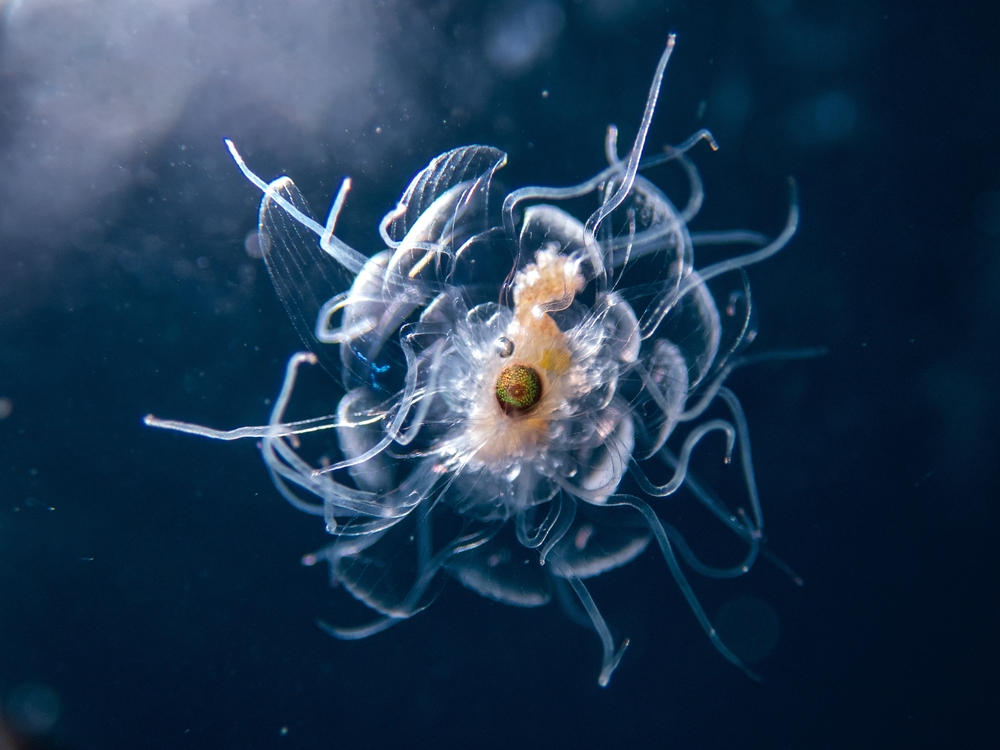
The barreleye lives in a part of the ocean where sunlight becomes extremely limited. At approximately 600 meters underwater, the environment is very different from the brightly lit waters near the surface. Animals living at these depths must rely on specialized biological features to find food, detect predators, and survive.
For the barreleye, its upward-facing eyes provide an advantage when searching for food. It can hover in the water while watching for silhouettes passing overhead, using subtle visual signals to identify potential prey. Its large fins help it remain stable while observing its surroundings, allowing it to conserve energy as it waits for an opportunity to feed.
Other deep-sea animals have developed different strategies for dealing with the same challenging environment. Some produce their own light through bioluminescence, while others have visual systems capable of detecting faint signals that would be difficult to notice in ordinary conditions. These adaptations create an ongoing competition between animals trying to remain hidden and those trying to locate their next meal.
Senior Scientist Steven Haddock explained that many midwater animals depend on subtle optical cues, including shadows passing overhead. He described how these survival strategies create evolutionary competition involving bioluminescent camouflage and increasingly sophisticated visual capabilities. The barreleye offers researchers a particularly interesting example of how specialized vision can help an animal survive in the deep ocean.
Scientists Have Encountered This Species Only 11 Times
MBARI has spent nearly four decades exploring the deep ocean, building an extensive collection of underwater observations. Its researchers have completed approximately 7,000 remotely operated vehicle dives and recorded more than 41,000 hours of deep-sea video. Despite this enormous amount of exploration, encounters with Macropinna microstoma remain relatively uncommon.
The organization’s previous sighting of the species happened in 2021, making the latest encounter another valuable opportunity to study its behavior. Every observation provides researchers with additional information about an animal that spends its life in an environment difficult for humans to access. The rarity of these encounters also makes high-quality recordings particularly useful for future comparisons.
There is another interesting detail from MBARI’s recent exploration efforts. During a summer expedition with the Schmidt Ocean Institute in the mid-Atlantic Ocean, researchers recorded another member of the barreleye family called the binocular fish, scientifically known as Winteria telescopa. Although it shares the distinctive family classification, it is a different species from the transparent-headed Macropinna microstoma.
These discoveries demonstrate how much variety exists among animals living in the ocean’s deeper waters. Even after thousands of research dives, scientists continue encountering creatures with unusual biological features and survival strategies. The barreleye remains one of the clearest examples of how evolution can produce remarkable adaptations in environments where ordinary survival strategies may not work.
The Footage Could Reveal More About How Deep-Sea Animals See
The researchers involved in the encounter belong to MBARI’s Biodiversity and Biooptics Team, which investigates how marine animals interact with light. Their work includes studying specialized visual systems and examining how creatures living in different underwater environments detect their surroundings. The barreleye provides an especially interesting subject because its eyes have evolved to function in extremely dim conditions.
Earlier observations by MBARI Senior Scientist Bruce Robison and Research Specialist Kim Reisenbichler helped explain how Macropinna microstoma uses its unusual eyes while feeding. The latest 4K footage provides another opportunity to examine its visual structures, particularly the transparent shield and the movement of its tubular eyes. Researchers hope these observations will contribute to a better understanding of how vision works among animals living in the twilight zone.
Scientists are also interested in pigments found within the fish’s eye lenses. These pigments are thought to serve a similar function to green pigments present in the eyes of the strawberry squid, another deep-sea animal previously studied by MBARI researchers. Comparing these features could help scientists understand how different species have developed visual adaptations to make the most of limited underwater light.
The research team did not need to remove the fish from its habitat to collect valuable observations. By using advanced underwater cameras and remotely operated vehicles, researchers could examine the animal while leaving it undisturbed. This approach provides an important way to study elusive marine species that might otherwise be difficult to observe in their natural surroundings.
The Deep Ocean Still Holds Creatures Few People Have Seen
The barreleye encounter happened almost by accident, during what should have been a routine return to the research vessel. A single observation by Shannon Johnson gave the team another chance to document an elusive animal that had appeared only a handful of times during decades of exploration. The resulting footage now offers a rare look at one of the ocean’s most unusual visual systems.
Haddock expressed hope that encounters like this could encourage greater appreciation for deep-sea life and inspire people to protect the ocean. The research team continues investigating how marine animals interact with light, using observations like these to understand the adaptations that allow them to survive far beneath the surface.
For most people, the ocean remains an environment they will never personally explore at these depths. Yet the barreleye shows just how extraordinary its inhabitants can be. At 600 meters below the surface, a fish with a transparent head and rotating eyes is quietly watching the darkness above, waiting for its next meal.