
Your cart is currently empty!
Scientists Found Just 10 Minutes of AI Use Can Make Your Brain Less Independent
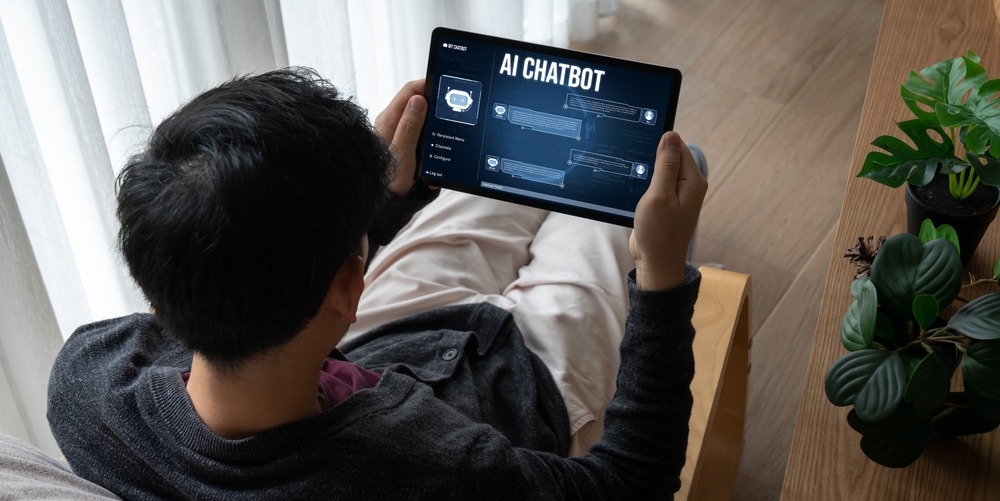
Artificial intelligence has quickly become the go-to tool for everything from writing emails and solving math problems to planning vacations and answering everyday questions. Millions of people now rely on chatbots like ChatGPT as part of their daily routine, often without giving much thought to how that dependence might affect the way they think. While AI has undoubtedly made many tasks faster and easier, a growing number of researchers are beginning to ask whether handing over too much mental work to machines comes with an unexpected cost. New research suggests the effects may appear much sooner than most people would expect.
Contents
show
A new study conducted by researchers from Carnegie Mellon University, the Massachusetts Institute of Technology (MIT), the University of Oxford, and the University of California, Los Angeles, has sparked fresh debate after finding that participants who relied on AI assistance struggled almost immediately once that help disappeared. After only a short period of using an AI chatbot powered by OpenAI’s GPT-5 model, many participants experienced a sharp decline in performance when they were suddenly asked to continue solving problems on their own. The findings add to a growing body of research suggesting that while AI can be a powerful productivity tool, depending on it too heavily may weaken the very thinking skills it is designed to support.

Researchers Tested What Happens When AI Suddenly Disappears
To better understand how AI influences human thinking, researchers divided volunteers into separate groups and assigned them a series of reading comprehension and mathematics exercises. One group completed every question independently, relying only on their own reasoning and problem-solving skills. Another group was given access to an AI chatbot powered by OpenAI’s GPT-5, allowing participants to ask for assistance whenever they needed it.
For the first part of the experiment, those using AI completed the tasks with little difficulty. The chatbot provided explanations, answers, and guidance, making many of the problems easier than they would have been otherwise. Participants quickly adapted to working alongside the AI, treating it as a natural extension of their own thinking process rather than simply another digital tool.
Then the researchers introduced an unexpected twist. Without any warning, AI assistance was removed halfway through the test, forcing participants to continue solving the remaining questions entirely on their own. The sudden change revealed a striking difference between those who had worked independently from the beginning and those who had become accustomed to receiving AI support.
Instead of smoothly transitioning back to independent thinking, many AI users immediately struggled. Their ability to answer questions dropped noticeably, suggesting that even a relatively short period of relying on AI had changed how they approached difficult tasks.

Performance Fell Almost Immediately After AI Was Taken Away
The results surprised the research team. Participants who had relied on AI performed about 20 percent worse than those who completed every task without assistance. Even more telling, they were nearly twice as likely to skip questions entirely instead of attempting to solve them once the chatbot was no longer available.
Researchers observed the same pattern across both reading comprehension and mathematics exercises. The decline was not limited to one particular subject, suggesting the effect may extend beyond a single type of thinking task. Whether participants were interpreting written information or solving numerical problems, those who had leaned on AI consistently found it harder to continue independently.
The researchers believe the explanation lies in how quickly people adapt to outsourcing mental effort. Once AI begins handling the most challenging parts of a problem, users may become less willing to wrestle with uncertainty or push through difficult reasoning on their own. Instead of building stronger cognitive skills through practice, they may begin depending on AI to do the hardest work for them.
Interestingly, not every AI user experienced the same level of decline. Participants who treated the chatbot more like a tutor by asking for hints, explanations, or guidance rather than complete answers generally performed better after the AI disappeared. That finding suggests the way people use AI may matter just as much as how often they use it.

Experts Say AI Doesn’t Have to Harm Your Thinking
The findings add another layer to a debate that has been building for years. Experts have already warned that other forms of technology changed the way people think. GPS navigation, for example, has been shown to weaken people’s ability to build mental maps of places they visit. Search engines also introduced what’s known as the “Google Effect,” where people become less likely to remember information because they know they can instantly look it up again.
According to Adam Green, a professor of neuroscience and director of the Laboratory for Relational Cognition at Georgetown University, AI could accelerate that same pattern because it allows people to outsource far more than simple facts. Instead of just remembering information, AI can now write essays, solve equations, summarize books, generate ideas, and even make decisions that once required sustained mental effort.
Green believes that cognitive struggle plays an essential role in strengthening the brain. Comparing learning to physical exercise, he explained that letting AI perform the hardest parts of a task removes the very challenge that helps people improve. “There’s plenty of evidence that if you are not doing as much of the actual thinking, then your capability to do that kind of thinking is going to atrophy,” he said.
That doesn’t mean AI itself is dangerous. The concern is how people choose to use it. If users consistently allow chatbots to think on their behalf instead of using them to support their own reasoning, researchers fear those critical thinking skills could gradually become weaker over time.
Researchers Found One Type of AI User Performed Better
The study also offered some encouraging news. Not every participant who used AI experienced the same dramatic drop in performance after the chatbot was removed. Researchers noticed a clear difference between people who simply copied answers from AI and those who used it as a learning tool.
Participants who asked the chatbot for hints, explanations, or guidance generally recovered much better once they had to continue on their own. Rather than depending on AI to complete every task, they used it to understand the reasoning behind the answers before attempting the problems themselves.
That distinction could become increasingly important as AI becomes common in classrooms and workplaces. Many schools and businesses are rapidly integrating AI tools into everyday tasks, hoping they will improve productivity without reducing independent thinking.
The researchers argue that these systems should encourage learning rather than replace it. If AI becomes a shortcut that removes the need to think through problems, users may lose confidence when the technology is unavailable. Using AI as a tutor instead of an answer machine appears to produce far better outcomes.
Why These Findings Matter Beyond the Classroom
Artificial intelligence is already woven into everyday life. AI-generated summaries appear at the top of search results, smartphones offer AI-powered writing assistance, and businesses increasingly encourage employees to use chatbots to complete routine work. For many people, avoiding AI altogether is becoming almost impossible.
That growing dependence raises important questions about education, professional training, and long-term cognitive development. If people become accustomed to letting AI solve every difficult problem, researchers worry they may miss out on the mental practice needed to develop strong reasoning, creativity, and problem-solving skills.
Some experts caution against overreacting to the latest findings. Jared Benge, a clinical neuropsychologist at the Dell Medical School at the University of Texas at Austin, says technology itself is not inherently harmful. Previous fears about “digital dementia” have not been supported by large-scale research, and AI could even benefit cognition if it frees people to focus on more meaningful work.
The challenge, experts say, is finding the right balance. AI can be an incredibly useful assistant, but relying on it for every decision, calculation, or piece of writing could leave people less prepared when they have to think independently.
Simple Habits That Can Help You Avoid Overreliance
Researchers and neuroscientists are not suggesting people abandon AI altogether. Instead, they recommend using it in ways that strengthen your thinking rather than replace it.
Some practical approaches include:
- Solve the problem yourself first before asking AI for help.
- Use AI for hints and explanations instead of requesting complete answers.
- Double-check AI responses rather than accepting them automatically.
- Practice critical thinking regularly through reading, writing, puzzles, or problem-solving without digital assistance.
- Treat AI as a learning partner, not a replacement for your own judgment.
These habits allow users to benefit from AI’s speed and convenience while continuing to exercise the mental skills that become stronger through practice.
The latest study doesn’t show that 10 minutes of AI literally “rots your brain,” despite the viral headlines. What it does suggest is that people can become dependent on AI much faster than many expected. As these tools become part of everyday life, the challenge won’t be deciding whether to use AI. It will be making sure it helps you think better instead of thinking for you
Sources:
AI assistance reduces persistence and hurts independent performance. (n.d.). https://ai-project-website.github.io/AI-assistance-reduces-persistence/