
Your cart is currently empty!
Scientists Just Put a Date on the Vikings’ Arrival in America, And It’s Centuries Earlier Than Columbus

For decades, archaeologists knew that Vikings had reached North America long before Christopher Columbus crossed the Atlantic, but they could not put a precise year on the event. That changed when researchers returned to four unimpressive pieces of wood recovered from L’Anse aux Meadows in Newfoundland. The scraps had been sitting in storage for years, yet their tree rings contained a remarkable timestamp left behind by an enormous solar storm nearly three decades before the Vikings cut them down. By tracing that signal through the rings and counting toward the surviving bark, scientists were able to identify a specific year: 1021.
Contents
show
The date places Norse activity in North America 471 years before Columbus arrived in 1492. More importantly, the evidence does not rely on a vague historical estimate or a story passed down through generations. The wood itself records when the trees were felled, while the surrounding archaeological evidence points toward Norse workers using metal tools at the Newfoundland settlement. Researchers are still careful about what the discovery does and does not prove, but one fact is now remarkably difficult to dispute: people associated with the Viking settlement were cutting down trees at L’Anse aux Meadows in 1021.
The Researchers Were Looking For Bark, Not Treasure
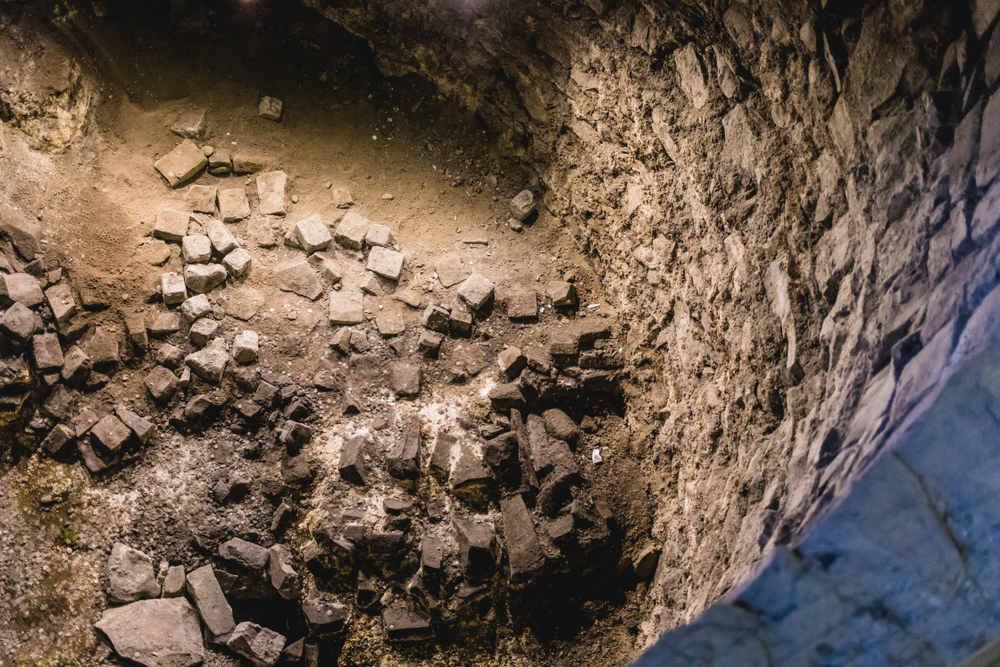
Margot Kuitems was working with wooden material recovered from L’Anse aux Meadows, the archaeological site on Newfoundland’s northern tip that had already been identified as a Norse settlement. The material had been excavated decades earlier, and much of it was hardly the sort of thing that would attract attention in a museum display. Researchers were interested in the pieces that still had their bark because that outer edge could provide something conventional archaeological dating often cannot: the final year of a tree’s life.
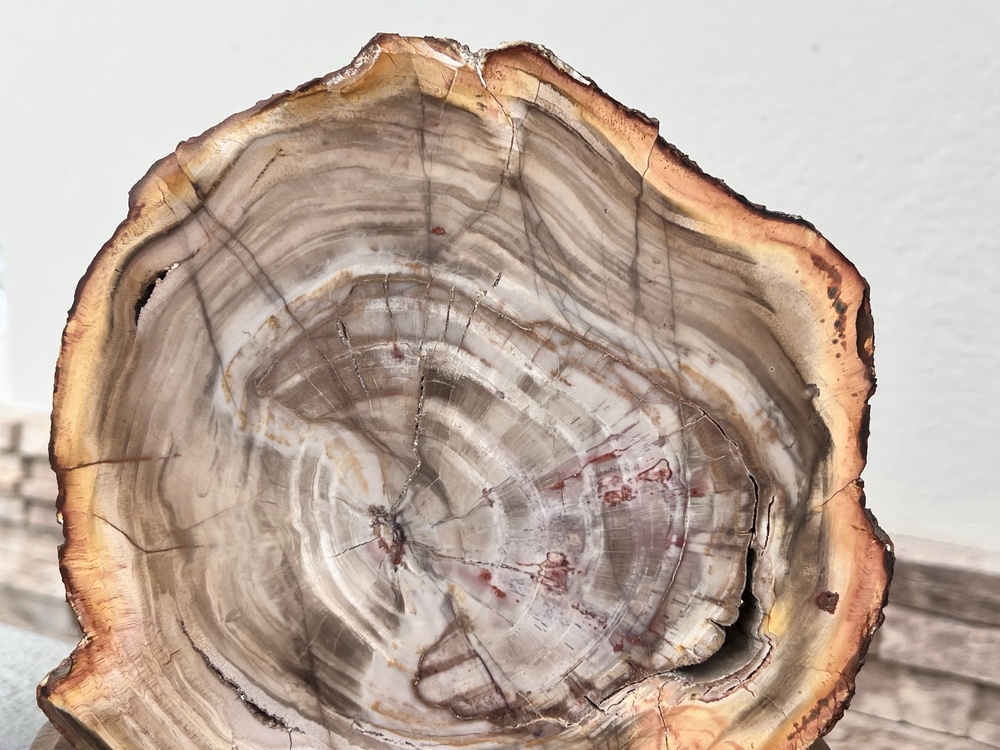
A tree adds a new growth ring each year, and the outermost ring sits directly beneath the bark. Once that bark disappears, researchers lose the ability to know exactly how many years passed between the last surviving ring and the moment the tree was cut. That makes a piece of timber without its bark useful for establishing an approximate age, but a piece with its bark intact can potentially reveal the precise year it was felled.
That was why Kuitems focused on four pieces of fir and juniper that looked more like discarded scraps than valuable artifacts. She described them as “discarded bits of wood,” explaining that they were useful precisely because researchers wanted pieces that included their bark edges. In another description, she emphasized that they were not beautiful objects crafted by Vikings but leftover pieces of wood.
The researchers then examined the growth rings for a particular chemical signal that could serve as a fixed point in time. If they could find that signal and count the rings between it and the bark, they would know how many years passed before the tree was cut. The ordinary-looking scraps suddenly became a kind of archaeological calendar.
A Solar Storm Had Already Marked the Trees
The crucial timestamp came from an event that had nothing to do with the Vikings themselves. In late 992 and early 993, an unusually powerful episode of solar activity caused a sudden increase in radiocarbon in Earth’s atmosphere. Trees growing during that period absorbed the altered carbon, leaving a distinctive signal inside the ring produced at the time.
That signal was especially valuable because the solar event was global. It was not a local environmental change that appeared only in Newfoundland or one particular forest. Trees around the world recorded the same unusual radiocarbon spike, giving scientists a fixed point that could be recognized in ancient timber.
Michael Dee, the Groningen researcher who led the work, explained that the signals appear in the tree-ring record as sudden increases in radiocarbon associated with solar storms. Once researchers identify the 993 signal in preserved wood, they can use it as an anchor and count the annual rings that came afterward.
The technique effectively turned the trees into historical clocks. The scientists did not have to guess when the Vikings might have arrived or rely solely on the broad date produced by earlier radiocarbon methods. They could locate the solar signal, follow the rings toward the bark and determine when the tree stopped growing.

Three Pieces of Wood Produced the Same Year
The researchers found the 993 signal in three of the four pieces that were suitable for the analysis. One piece did not contain enough growth rings to reach back to the solar event, so it could not provide the same calculation. The other three, however, all contained the sequence needed to establish the date.
The solar signal appeared 29 growth rings from the bark edge. Because the ring containing the event represented the year 993, the researchers could count the remaining growth rings toward the tree’s outer edge. There were 28 additional years of growth before the tree was cut.
That calculation produced the year 1021. Kuitems explained that finding the solar signal “29 growth rings in from the bark allowed us to conclude that the cutting activity took place in the year 1021 AD.” The important point was not simply that one piece happened to produce that number. Three separate pieces gave researchers the same result.
That consistency strengthened the conclusion considerably. Instead of a broad range covering several decades, the evidence pointed to one calendar year in which the trees were felled. The researchers could therefore establish that Norse activity at the site occurred in 1021 with a level of precision that earlier archaeological dating could not provide.
The Tool Marks Helped Identify the People Who Cut Them
Dating the timber could establish when the trees were cut, but it could not identify the people holding the tools. That question required the researchers to consider the marks left on the wood alongside the wider archaeological evidence from L’Anse aux Meadows.
All four pieces showed evidence of being cut with metal blades. Researchers interpreted those marks as Norse because the Indigenous populations living in the region at the time were not known to have been working iron. The archaeological site itself provides supporting evidence, including an iron-working area, slag, boat rivets and signs of carpentry.
Those discoveries fit with a settlement occupied by people who had crossed the Atlantic in seagoing vessels and had the skills needed to repair and maintain them. The site was not simply a place where somebody happened to leave a piece of imported timber. It contains a collection of remains associated with Norse activities, making the tool marks on the dated wood much easier to interpret.
There is another clue that suggests the people at L’Anse aux Meadows were traveling beyond the immediate area. Butternuts were found at the site even though the trees do not grow that far north in Newfoundland. That means the settlement’s occupants had access to materials from much farther south, adding another indication that the Norse were using the site as part of a wider travel network.
L’Anse aux Meadows Was Already Known as a Viking Settlement
The 1021 discovery did not reveal the existence of Vikings in North America for the first time. L’Anse aux Meadows had already provided some of the strongest archaeological evidence that Norse explorers reached the continent centuries before Columbus. The site was identified in 1960 after Norwegian explorers Helge Ingstad and Anne Stine Ingstad investigated the area with help from local resident George Decker.
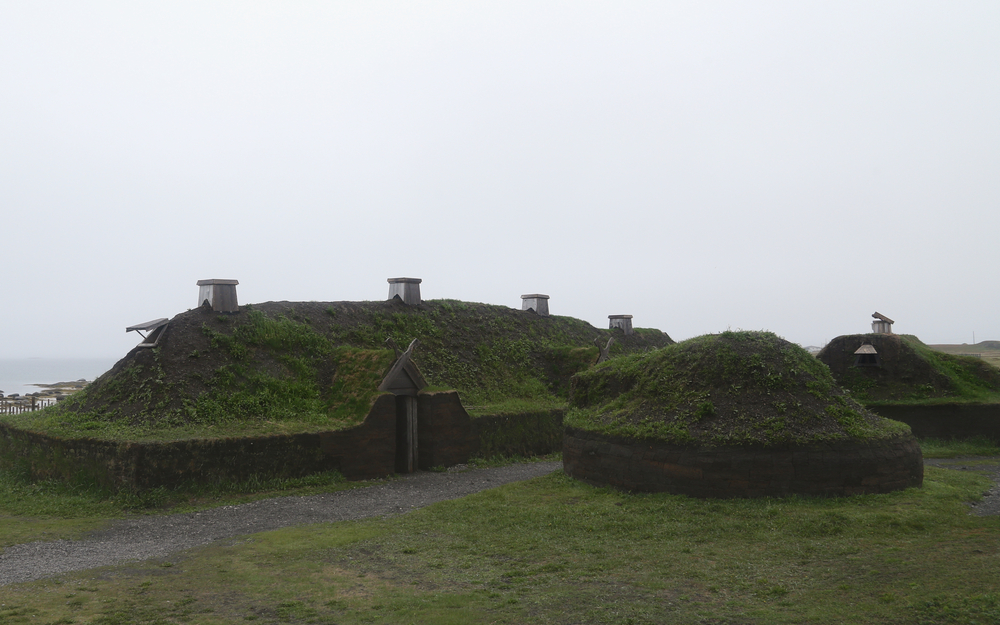
Excavations during the following decade uncovered eight buildings, including three dwellings. The structures were built using timber and turf, and researchers found evidence of activities consistent with Norse occupation. The discovery was important enough that UNESCO later designated L’Anse aux Meadows a World Heritage Site in 1978.
The problem had always been the exact timing. Archaeologists could establish that the settlement belonged somewhere around the Viking Age, but conventional radiocarbon dating could not narrow the occupation down to a single calendar year. The uncertainty left historians with a broad picture rather than a precise moment.
The new tree-ring method changed that. Instead of simply saying the Vikings were probably at L’Anse aux Meadows around the year 1000, researchers could identify a year when people at the settlement were actively cutting timber. That transformed an approximate historical date into a specific archaeological measurement.
The Vikings Were There 471 Years Before Columbus
Christopher Columbus reached the Americas in 1492. The newly dated Viking activity at L’Anse aux Meadows occurred in 1021, creating a gap of 471 years between the two events. That number is striking because Columbus has traditionally occupied a central place in the popular story of Europeans reaching the Americas.
The archaeological record tells a more complicated story. Columbus was not the first European to reach North America, and the Vikings were not merely legendary figures whose journeys existed only in medieval stories. There is physical evidence of their presence, and the new dating technique gives that evidence a precise place on the calendar.
The discovery also provides the oldest precisely dated evidence of Europeans in the Americas. That does not mean the Vikings arrived in 1021 and immediately established a permanent European colony. It means that people associated with the Norse settlement were carrying out activities at L’Anse aux Meadows during that year.
The distinction is important because the evidence is stronger when researchers keep the claim narrow. The wood proves that trees were cut in 1021. The tool marks and archaeological context point toward the Norse. Together, they establish a remarkably clear picture without requiring scientists to claim more than the evidence supports.
The Date Does Not Explain How Long They Stayed
The precision of the date can make the discovery sound as though it solves every mystery surrounding the Viking presence in North America. It does not. Researchers still cannot determine exactly how long the Norse occupied L’Anse aux Meadows based on the dated wood alone, and estimates of the settlement’s duration vary.
The population is also uncertain. Archaeologist Birgitta Wallace, who has worked extensively on the site, has estimated that the settlement may have housed around 70 or 90 people at its largest. Other interpretations have suggested different numbers, because the archaeological remains do not provide a reliable population count.
There is also an unresolved question about whether L’Anse aux Meadows should be identified with Vinland, the region described in the Icelandic sagas. The stories describe Norse voyages and lands across the Atlantic, but connecting their descriptions to specific archaeological locations remains a subject of debate.
Michael Dee has been cautious about the conclusions that can be drawn from the wood. “All we can really say is that they were definitely there in that year.” That may sound like a limited statement, but confirming one precise year is a major achievement in archaeology.

The Vikings Did Not Leave Behind a Permanent Colony
The evidence suggests that the Norse presence in North America was limited rather than the beginning of a massive European settlement. L’Anse aux Meadows contains clear signs that people lived and worked there, but researchers have not found evidence showing that the settlement developed into a large and lasting European population across Newfoundland.
There is also no archaeological evidence at the site establishing disease transmission, widespread intermarriage or sustained exchange with the Indigenous populations already living in the region. The Vikings clearly encountered a part of North America, but the archaeological record does not show that their presence produced the long-term transformation that followed much later European colonization.
Wallace has argued that the Norse activity in North America appears to have been relatively short-lived. Her assessment was blunt: “It really didn’t mean much.” That does not make the voyage unimportant historically. It shows that reaching North America and establishing a lasting colony were two very different achievements.
The Vikings had managed something extraordinary for their time. They crossed the North Atlantic, reached Newfoundland, built structures, worked iron and cut timber. But whatever plans brought them there, they did not result in a permanent European foothold comparable to the colonial expansion that came centuries later.
The Viking Sagas May Have Got the Timeline Right
The discovery also gives historians another reason to take a closer look at the Icelandic sagas. The stories describing Norse voyages westward were written down roughly two centuries after the events they describe, leaving plenty of room for uncertainty about how much was historical memory and how much was storytelling.
The archaeological discovery cannot prove every detail contained in those medieval accounts. It can, however, test whether their broad chronology matches physical evidence. In this case, the answer is surprisingly close.
Davide Zori of Baylor University said the findings showed that the Viking sagas were “correct to within a decade.” That is a striking level of agreement for stories describing events that happened hundreds of years before archaeologists could directly date the settlement.
The result does not turn the sagas into modern historical documents. Instead, it gives researchers another reason to treat them as potentially valuable sources when they are tested against archaeology rather than accepted or rejected wholesale.
The 1021 date shows that at least the broad idea of Norse activity in North America was not simply a medieval fantasy. The physical evidence and the written tradition overlap at a specific point in time.
Ancient Trees Could Reveal More Hidden Dates
The technique used at L’Anse aux Meadows could prove useful far beyond the Viking settlement. The 993 solar event was one of several extreme events that left radiocarbon signals in trees, and researchers can use those signals to establish precise dates for other archaeological materials when enough tree rings survive.
Another major event occurred around 775. Scientists have already used that signal to date archaeological material, including charcoal and a hazelnut shell from a combmaker’s workshop in Ribe, Denmark. These extreme solar events are known as Miyake events, after the physicist who first identified the distinctive radiocarbon pattern.
The potential is significant because archaeological dating often works with ranges rather than exact years. A method that can connect preserved wood to a known global solar event gives researchers a powerful additional tool for narrowing those ranges.
Somewhere in a museum collection, storage box or archaeological archive, there may be another ordinary piece of wood carrying a precise date that scientists have not yet learned to read. The most useful evidence may not always be the artifact that looks important. Sometimes it is the discarded material nobody thought was worth displaying.
A Piece of Wood Put the Vikings on the Calendar
The Vikings left behind no giant monument announcing the year they reached North America. Their most valuable timestamp came from scraps of wood that had been cut, discarded and eventually stored away.
A solar storm in 993 left a chemical signature inside those trees. The growth rings preserved that signal until researchers could finally trace it forward to the bark and calculate when the trees were cut. The answer was 1021.
That means the Norse were in North America 471 years before Columbus. History did not need another legend to prove it. It needed four pieces of old wood and the right way to read them.
1021, ancient history, Archaeological Discovery, archaeology, Christopher Columbus, history mystery, L’Anse aux Meadows, Newfoundland, Norse explorers, Norse history, solar storm, tree rings, Viking Age, Viking history, Viking settlement, Vikings, Vikings in America, Vikings in North America, Vinland