
Your cart is currently empty!
Scientists Say Earth’s Core Sent a Hidden Shockwave That Quietly Shifted Japan
The devastating earthquake that struck Japan in March 2011 has been examined from almost every possible angle. Scientists have spent years studying the powerful tremor, the deadly tsunami it unleashed, and the nuclear disaster that followed. Yet even after more than a decade of research, the event is still revealing new secrets.
Contents
show
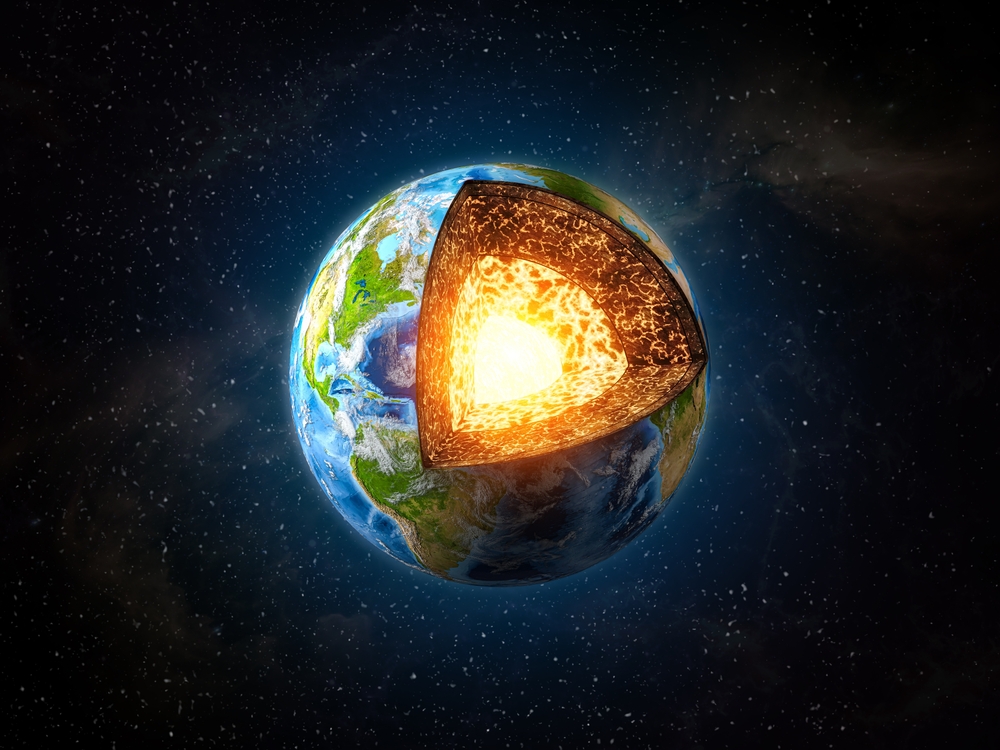
A recent scientific study suggests that one of the earthquake‘s most remarkable effects happened far beneath the surface. Researchers now believe some of the immense seismic waves generated by the magnitude 9.0 earthquake traveled all the way to Earth’s liquid outer core before returning to the crust, where they quietly triggered another episode of tectonic movement.
The newly identified phenomenon has surprised geophysicists because it suggests the planet can continue responding to a major earthquake long after the strongest shaking has ended. Instead of simply dissipating, part of the earthquake’s energy may have completed an extraordinary journey through Earth’s interior before influencing faults near the surface once again.
The Earthquake That Changed Modern Japan
On March 11, 2011, one of the most powerful earthquakes ever recorded struck beneath the Pacific Ocean off Japan’s northeastern coast. Within minutes, violent shaking was followed by a towering tsunami that overwhelmed coastal communities.
Entire neighborhoods disappeared beneath the waves. Ports, highways, rail lines, and thousands of buildings suffered catastrophic damage. More than 15,000 people lost their lives, while hundreds of thousands were forced to evacuate their homes.
The disaster also triggered the Fukushima Daiichi nuclear accident, creating one of the world’s most serious nuclear emergencies since Chernobyl. Even today, the earthquake remains one of the defining natural disasters of the twenty-first century.
Because Japan experiences frequent seismic activity, the country has invested heavily in earthquake monitoring technology. Thousands of GPS receivers and seismic instruments recorded every stage of the disaster, creating one of the most detailed earthquake datasets ever assembled.
Scientists expected those records to answer many questions about how massive earthquakes behave. Instead, years later, they uncovered an entirely new mystery.
An Unexpected Movement No One Could Explain
While reviewing high-precision GPS measurements collected during the disaster, researchers noticed something unusual.
Shortly after the main earthquake ended, monitoring stations across Japan recorded another subtle movement. The shift was only a few millimeters, far too small for people to notice, but sophisticated instruments detected it almost simultaneously across a huge portion of the country.
Normally, movement like this accompanies an aftershock or another recognizable earthquake. This time, however, no conventional quake appeared to explain what the instruments had recorded.
The signal also covered a much broader area than scientists typically expect from a localized fault movement. Instead of pointing toward one section of Japan, it appeared across multiple regions at nearly the same moment.
That unusual pattern suggested something much larger was happening beneath Earth’s surface.

Searching for the Missing Trigger
Researchers explored several possible explanations.
They examined whether an underwater landslide could have produced the movement. They also considered whether a slow-moving fault slip had occurred without generating strong shaking.
Neither theory fully matched the timing or the geographic pattern recorded by Japan’s monitoring network.
As each possibility was ruled out, attention shifted toward an explanation that seemed almost unbelievable. The earthquake’s energy itself may have traveled deep into Earth’s interior before returning to trigger another episode of tectonic movement.
A 3,600-Mile Journey Through Earth’s Interior
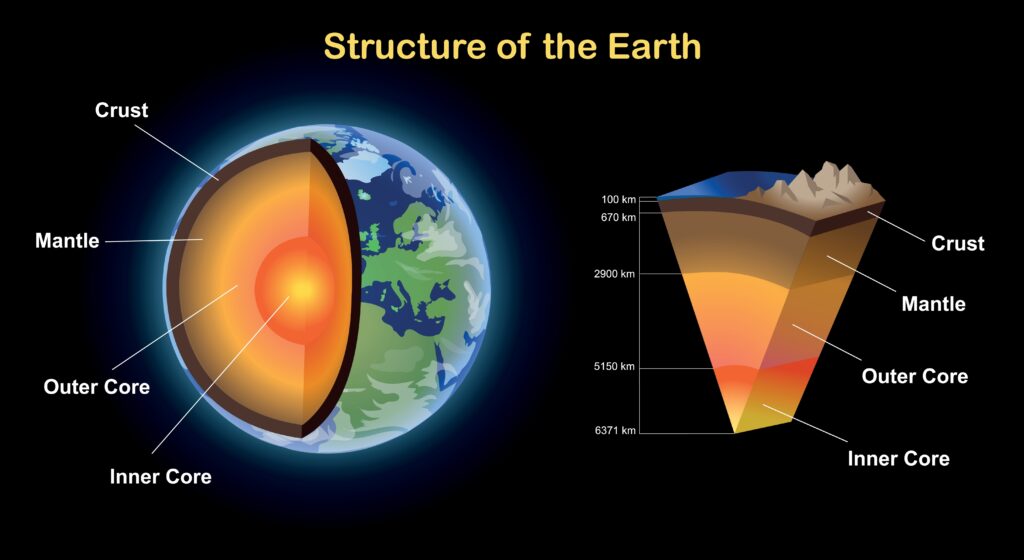
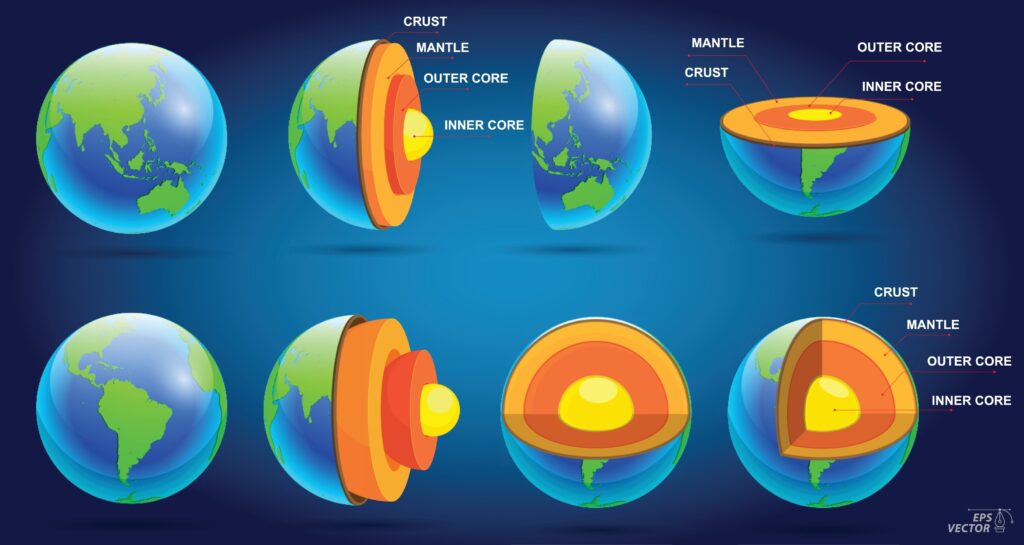
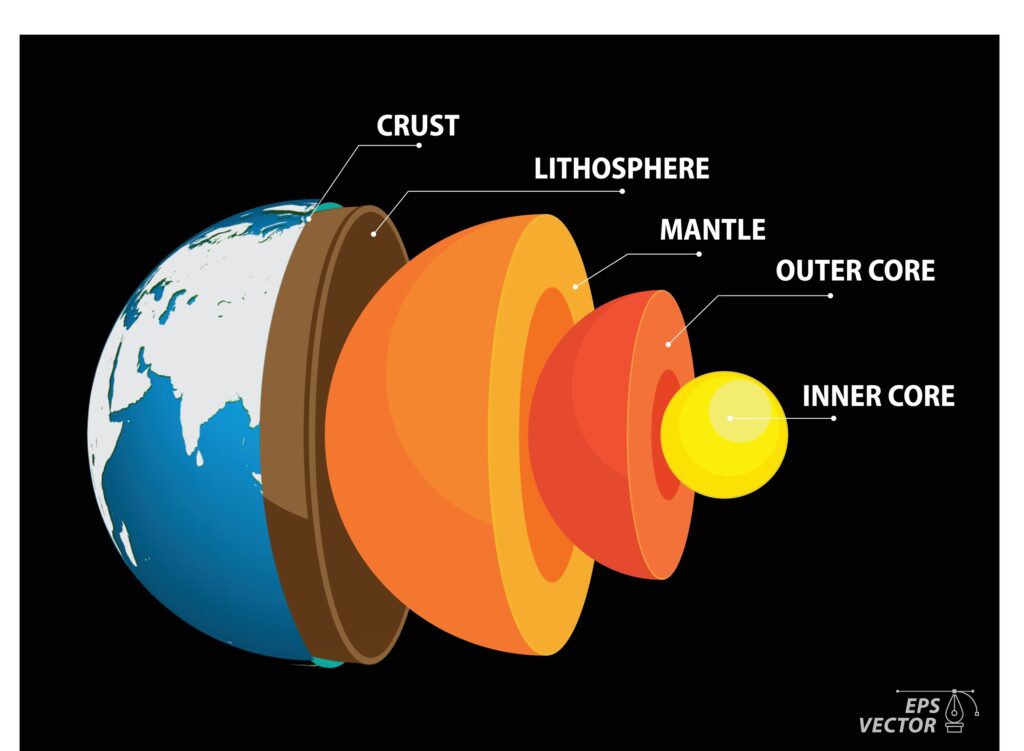
Earthquakes release enormous amounts of energy in the form of seismic waves. Most of those waves spread outward through the crust, producing the shaking people experience at the surface. Others continue traveling much deeper, passing through Earth’s rocky mantle on their way toward the planet’s core.
Scientists have known for decades that some seismic waves can reach the boundary between the mantle and the liquid outer core before reflecting back. Until now, however, those returning waves were largely considered a scientific curiosity rather than something capable of changing conditions near the surface.
The new research paints a different picture.
According to the team’s analysis, waves generated by the 2011 earthquake completed a round trip of roughly 3,600 miles (5,800 kilometers). After striking the outer core, they traveled back through the mantle and reached Japan about 15 minutes after the main earthquake.
By then, the crust had already been pushed close to its breaking point.
Researchers believe the returning waves delivered just enough additional stress to activate faults that had been weakened during the initial earthquake. Instead of creating another destructive rupture, they caused a broad, gentle slip across several tectonic plate boundaries.
The movement measured only a few millimeters, but its scale stretched across much of Japan, making it one of the largest secondary seismic events ever identified.

Tiny Movement, Massive Discovery
A shift of several millimeters might sound insignificant, but to geophysicists it represents something remarkable.
Modern GPS instruments are capable of detecting movements smaller than the width of a fingernail. When thousands of stations record the same motion at nearly the same time, researchers gain an unusually clear picture of how Earth’s crust behaves.
The newly discovered movement was not concentrated around a single fault. Instead, it appeared across an enormous region, suggesting that the returning seismic waves influenced multiple tectonic boundaries simultaneously.
That possibility challenges long-standing assumptions about how earthquake energy moves through the planet.
Why Scientists Didn’t Notice It for Years
The hidden signal remained buried in the data for more than a decade because it occurred during one of the busiest seismic periods ever recorded.
After a magnitude 9.0 earthquake, the Earth does not suddenly become quiet. Hundreds of aftershocks follow, ranging from barely detectable tremors to powerful earthquakes capable of causing additional damage.
Those aftershocks generated countless seismic signals that overlapped with one another, making it difficult to isolate weaker events occurring at the same time.
Researchers eventually combined data from Japan’s GPS monitoring network with detailed seismic records. By comparing both datasets, they were able to separate the subtle nationwide movement from the surrounding seismic noise.
The discovery highlights the growing role of advanced computing and precision monitoring in modern geophysics. Patterns that once remained invisible are becoming easier to detect as scientists develop new ways to analyze enormous datasets.

Japan’s Unique Position Makes It a Natural Laboratory
Few countries are better equipped to study earthquakes than Japan.
The islands lie where several major tectonic plates converge, creating constant geological pressure beneath the surface. As those plates slowly move against one another, stress builds until it is released through earthquakes.
Living with that reality has led Japan to build one of the world’s most advanced earthquake observation systems. Thousands of instruments continuously monitor ground movement across the country, allowing researchers to detect even the smallest shifts.
Without that extensive network, the newly discovered event may never have been recognized.
Scientists say the finding also raises an intriguing possibility. If the same process occurs after other giant earthquakes around the world, similar hidden movements may already exist in historical datasets waiting to be discovered.
Rather than being a one-time event, the phenomenon could represent an overlooked part of how Earth’s interior responds to the largest earthquakes ever recorded.
2011 Tohoku earthquake, Earth Science, Earth’s core, earthquake discovery, earthquake research, earthquake science, Geology, geophysics, Japan earthquake, Japan news, natural disasters, plate tectonics, Science study, seismic hazard, seismic waves, Sunyoung Park, tectonic plates, tsunami, University of Chicago, viral science news