
Your cart is currently empty!
Study Claims There’s Real Evidence Jesus Rose From The Dead
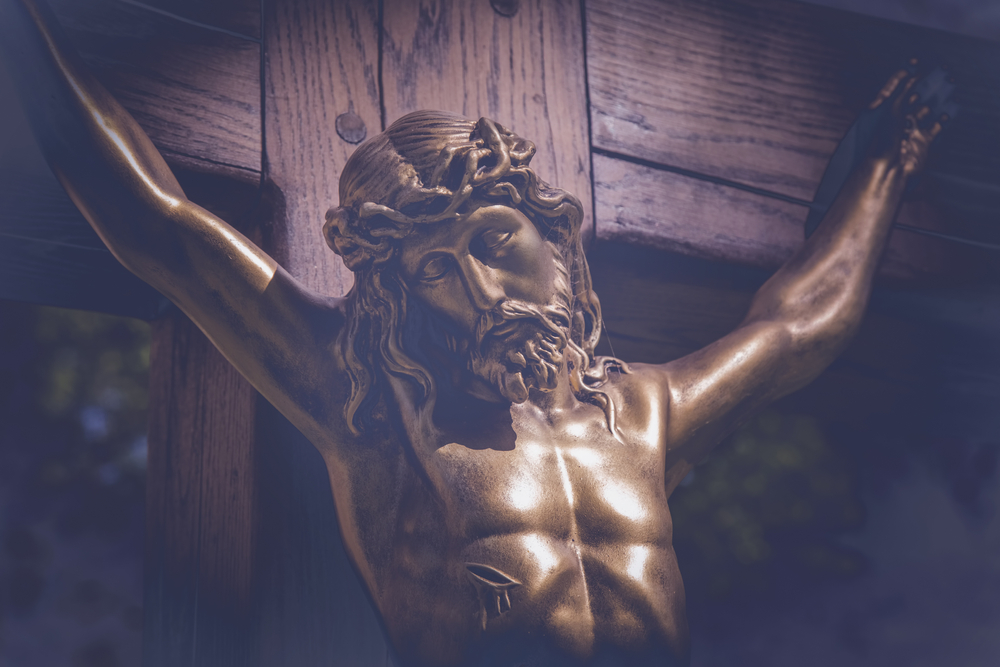
Easter is a time when billions of people across the world pause to reflect on one of the most profound claims in human history that Jesus Christ rose from the dead, a belief that has shaped civilizations, inspired movements, and influenced how countless individuals understand life, death, and what may come after. For many believers, this is not simply a tradition passed down through generations but a deeply personal truth that defines their worldview and gives meaning to suffering, hope in uncertainty, and purpose in everyday life, making it one of the most enduring and emotionally powerful ideas ever recorded.
Contents
show
Now, a new study is bringing renewed attention to this ancient claim in a way that feels both familiar and surprising, as it attempts to examine the resurrection not just through faith or theology but by analyzing historical records, physical descriptions, and philosophical reasoning in a structured and methodical way. The findings suggest that when all available evidence is considered together rather than in isolation, the resurrection may stand as the most coherent explanation for what happened after Jesus’ crucifixion, a conclusion that is already sparking conversation among believers, skeptics, and curious readers who are trying to make sense of how such a claim can still carry weight thousands of years later.
The Claim That Changed Everything
At the center of Christianity is the belief that Jesus died by crucifixion and returned to life three days later, a claim that has been repeated across generations and cultures and remains the foundation upon which the entire faith is built. Easter, Pasch, Pascha, or Resurrection Sunday all refer to this same event, marking what believers see as the ultimate victory over death and the defining proof of Jesus’ identity, and according to the New Testament, Jesus rose from the dead three days after his crucifixion, though the accounts in the text have been widely debated since the beginning of the Abrahamic religion, some 2000 years ago.
Over time, scholars, historians, and critics have examined these accounts in detail, questioning their consistency, their historical reliability, and whether they can be taken as literal descriptions of real events rather than symbolic narratives meant to convey spiritual truths. These debates have produced a wide range of interpretations, with some suggesting natural explanations for what happened while others maintain that the event must be understood within a supernatural framework that goes beyond ordinary human experience.
Despite all of this scrutiny, the core claim has not faded or weakened in its cultural significance, and instead, it continues to be revisited and reinterpreted by each generation, particularly during Easter when the story once again becomes a focal point for reflection, discussion, and renewed belief among millions of people around the world.
A New Study Reopens the Debate
A new study has put all claims to the test to determine that the “resurrection hypothesis” is the most “probable” explanation for what happened to Jesus after his body was placed in a tomb and days later vanished, presenting a conclusion that attempts to bridge the gap between faith and historical reasoning in a way that is both ambitious and controversial. Its author, Pearl Bipin, studied all available pieces of the puzzle, including the empty tomb, people claiming to have seen Jesus after his death, his followers, and naysayers becoming believers, bringing together different strands of information that are often discussed separately.
Rather than approaching the topic from a purely theological perspective, the study aims to compare competing explanations in a structured way, asking which theory can best account for all the known details without leaving major contradictions or unanswered questions. This method reflects a more analytical approach that mirrors how problems are addressed in scientific or technical fields, where multiple hypotheses are tested against available evidence.
By combining historical accounts, reported experiences, and philosophical reasoning, the research suggests that the resurrection should be taken seriously as a possible explanation rather than dismissed outright, encouraging readers to reconsider assumptions and engage more deeply with the evidence that has been debated for centuries.
Historical Accounts Beyond the Bible
The study also looks beyond religious texts to examine references from ancient historians, offering additional context that helps establish whether the events surrounding Jesus’ life and death can be supported by sources outside of Christian writings. For example, the Roman historian Tacitus wrote in the early second century that a person known only as “Christus” was executed during the time Emperor Tiberius ruled under Pontius Pilate, and because Jesus was crucified by the Romans, the fact that this account appears in Roman records and references Roman authorities adds a level of credibility that is often considered significant in historical analysis.
Jewish historian Flavius Josephus also mentioned Jesus being crucified as he talked about his brother James’s death, describing how James, once a sceptic, became a believer after Jesus apparently appeared to him following his death, which is frequently cited as an example of how early accounts describe dramatic shifts in belief among those closest to the events.
These references do not directly prove that a resurrection occurred, but they help build what the study describes as a framework of certainty that Jesus lived and was executed, providing a historical foundation that strengthens the overall discussion and gives more weight to the question of what might have happened afterward.
The Medical Argument About Crucifixion
One of the most important questions in the entire discussion is whether Jesus actually died on the cross, because if he did not, then the resurrection could be explained in a completely different way, and this has led some to suggest that he may have survived the crucifixion and later recovered. However, the study challenges this idea by examining specific details recorded in the Gospel accounts and interpreting them through a medical lens.
In the Gospel of John, it is written that a Roman soldier stabbed Jesus’ side and “blood and water” came out, a detail that has been widely discussed and analyzed over time, and Bipin says this shows that it could explain the possibility of Jesus having a buildup of fluid around the lungs and heart due to heart failure and injury caused by the Romans, which would be consistent with severe trauma and death rather than survival.
According to the study, this detail supports the conclusion that Jesus would have died due to the crucifixion, reinforcing the idea that any explanation for what happened next must begin with the assumption that his death was real and not merely apparent, which significantly narrows the range of possible interpretations.
Why Survival Theory Falls Short
The study directly addresses the idea that Jesus may have survived the crucifixion and later appeared to his disciples, a theory that has been proposed in various forms over the years but remains controversial due to the difficulty of reconciling it with the accounts of his followers’ reactions. It argues that such a scenario would not align with how his followers responded in the days and weeks after the event.
“If Jesus had swooned and appeared to the disciples, he would have looked like a man half dead, desperately in need of medical attention,” the study noted, emphasizing the physical condition he would likely have been in if he had somehow survived. It further adds, “As David Strauss, a German liberal Protestant theologian, noted in the 1800s, such a figure could not possibly have inspired the disciples to proclaim him the ‘Prince of Life’ and the conqueror of death. His survival would have elicited pity, not worship.”
This reasoning highlights the dramatic transformation of the disciples from fearful individuals into bold proclaimers of faith, suggesting that such a shift would be difficult to explain if they had only encountered a severely injured man rather than someone they believed had truly overcome death.
The Three Core Claims Behind the Resurrection
Across both historical study and scientific reflection, three key claims are consistently identified as forming the foundation of the resurrection discussion, and these claims serve as a framework that any explanation must address in order to be considered plausible. The first is that Jesus was crucified and died, a point that is widely accepted among historians, including those who approach the topic from a skeptical perspective.
The second claim is that his body was buried and that the tomb was later found empty, which, while debated, is considered by many scholars to be historically plausible based on cultural practices and textual analysis, and the third claim is that his disciples experienced encounters with someone they believed to be the risen Jesus in the period following his death.
When these three claims are taken together, they create a complex set of facts that are not easily explained by a single naturalistic theory, which is why the study argues that alternative explanations often struggle to account for all of them simultaneously without introducing additional assumptions or inconsistencies.
A Scientist’s Perspective on Faith and Evidence
One scientist describes how their work involves carefully examining even the smallest details to avoid misleading conclusions, explaining that in fields like precision measurement, even a tiny error can completely alter results and lead to incorrect interpretations, which is why every possible source of error must be identified and accounted for before concluding.
This mindset also applies to how evidence is considered in historical and philosophical discussions, where the goal is not simply to accept the most convenient explanation but to evaluate which one best fits the available data, even when that leads to conclusions that may challenge initial assumptions or expectations.
The scientist explains that belief in the resurrection is not necessarily incompatible with scientific thinking, because science primarily deals with repeatable phenomena, while the resurrection, if it occurred, would be a unique historical event that cannot be tested or repeated, meaning that it must be evaluated using a different kind of reasoning that focuses on probability, consistency, and explanatory power.
Why This Debate Still Matters Today
The resurrection continues to be a topic of discussion not only because of its historical claims but because of its lasting influence on culture, belief systems, and personal identity, shaping how billions of people understand morality, purpose, and the possibility of life beyond death in ways that extend far beyond religious practice.
It also raises deeper questions about how people evaluate evidence and form beliefs, particularly in situations where definitive proof may not be available and where different interpretations can coexist based on differing assumptions and perspectives.
This ongoing conversation reflects a broader human desire to understand not just what happened in the past but what it means for the present, showing that even in a world driven by science and technology, questions about meaning, truth, and existence remain just as relevant and compelling.
What Do You Believe?
The idea that a study could point to evidence supporting the resurrection is likely to continue attracting attention, especially during Easter, when the story is already central to global reflection and discussion, and while such research may not provide a final answer, it contributes to a conversation that has been unfolding for centuries.
For some, the resurrection will remain a matter of faith that is deeply personal and rooted in belief, while for others it will continue to be a subject of skepticism and inquiry that invites further investigation and debate.
In the end, the question of what happened after the crucifixion of Jesus is not only about historical events but about how individuals interpret evidence, how they approach belief, and how they search for meaning in a world where some questions may never have a single, universally accepted answer.