
Your cart is currently empty!
Woman Turns A Pink Hair Ban Into A Bizarre Workplace Wig Show
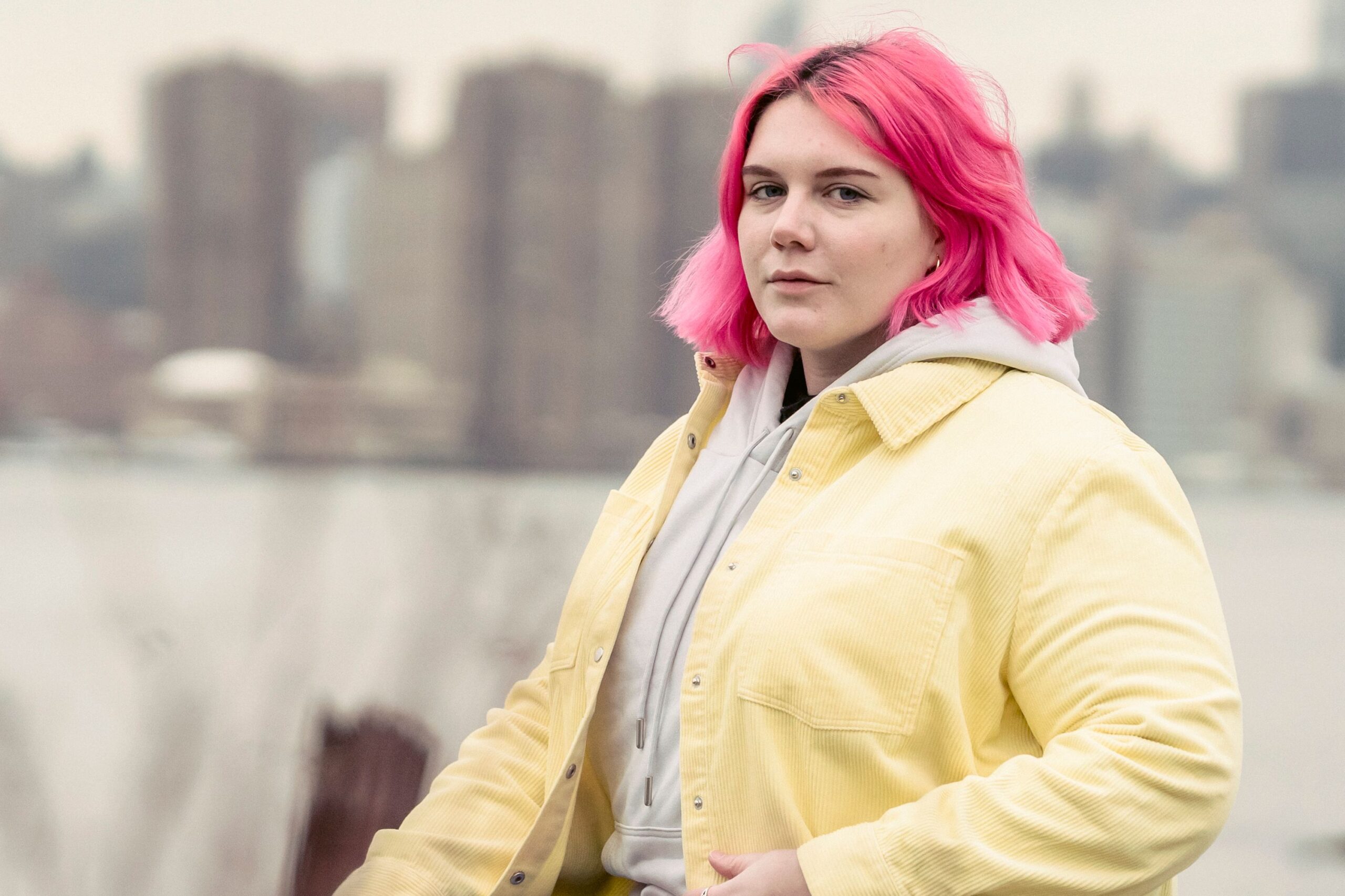
Emily Benschoter had a simple problem before starting her new hospitality job: her employer did not want to see her pink hair.
Contents
show
There is a quiet tax most of us pay for a paycheck, and it never shows up on the pay stub. It is the tie you hate. The opinion you swallow. The small piece of yourself you leave in the car before you walk in.
Emily Benschoter decided she was not paying it.
The 29-year-old from Georgia had just landed a front-of-house job in hospitality, and the offer came without a single video call or in-person interview. Her new manager had never actually seen her. So before her first shift, she reached out to mention one detail: her hair was bright, unmistakable pink.
The answer came back through messages. Pink hair was not allowed. Natural colors only.
She could have dyed it. She could have walked away. Instead she found a third door, and what waited on the other side turned one workplace dress code into a joke the whole internet wanted in on.
Her New Job Came With A Surprising Appearance Rule
Benschoter, who was 29 at the time, had landed a front-of-house hospitality position after being hired without an in-person or video interview.
That meant her new employer had offered her the job without actually seeing the person who would eventually be greeting customers.
There was one problem.
Benschoter’s hair was bright pink.
She contacted her new manager before beginning the job to make sure there would not be an issue. The answer was clear. Pink hair was not permitted, and employees were expected to stick to natural-looking colors.
@anoraaaa01 Boss Banned Her Pink Hair So She Started Wearing Terrible Wigs #wig#corporatelife#hilarious#history#History♬ original sound – Anora
For Benschoter, changing her hair was a much bigger request than it might have seemed on paper.
She had deliberately chosen pink because it was part of how she presented herself. The color made her feel confident, and she did not want to spend the majority of her working week pretending it was not part of her identity.
As she later explained to Good.is, “Dyeing my hair for a job I work at for 40 hours per week wasn’t an option.”
That left her with a choice between changing something she valued and finding another way to satisfy the rule.
She chose the second option.
The Dress Code Had One Very Convenient Loophole

The company’s policy banned pink hair.
It did not, apparently, ban wigs.
That distinction gave Benschoter an opening.
Rather than covering her pink hair with a sensible, natural-looking wig that would make the situation disappear, she decided to have some fun with it.
She started buying wigs that looked deliberately ridiculous.
The basic strategy was remarkably simple:
- Keep the pink hair. She had no intention of permanently changing it for the job.
- Follow the written rule. Her hair would technically appear to be a natural color while she was working.
- Make the wigs ridiculous. If the company wanted conventional-looking hair, she would give them something much stranger.
- Let customers see the irony. The wigs became a conversation starter rather than something she tried to hide.
The result was a growing collection of questionable hairpieces.
And the worse the wigs became, the more entertaining the situation got.
She Decided The Worse The Wig, The Better

Benschoter did not want the wigs to look realistic.
That was the entire point.
She began rotating different styles through her shifts, turning the company’s attempt to control her appearance into a running joke.
“I prefer my pink hair, it’s me to my core. So now I purposely pick wacky wigs which is quite funny,” she told The London Economic.
Her approach also had a practical benefit.
The strange wigs gave customers something to ask about. Instead of quietly covering the pink hair and moving on, Benschoter could use the absurd headpieces to explain why she was wearing them in the first place.
“The worse the wig, the better,” she told The London Economic. “It is a way to open up the conversation with the customers who think it is insane that I have to cover my pink hair.”
That distinction turned an ordinary workplace dress code into something almost theatrical.
A natural-looking brown wig might have satisfied the policy without attracting attention.
A bizarre wig made the policy impossible to ignore.
Then TikTok Turned The Joke Into A Viral Story

Benschoter began documenting the wigs on TikTok under the username @emuhleeebee.
One of her early videos appeared on July 19, 2023, showing her wearing a muted blonde wig while explaining that her workplace did not allow her pink hair.
The concept was instantly easy to understand.
There was no complicated backstory required. Viewers could see the wig, hear why she was wearing it and understand the ridiculous compromise almost immediately.
That helped the story travel.
One video received more than 574,000 views according to Newsweek, while later coverage reported that the total had climbed beyond 600,000.
For a story about a workplace dress code, those numbers were significant.
The comments also showed that viewers were connecting with the underlying frustration rather than simply laughing at the wigs.
One supporter wrote, “Instant follow because corporate pink hair solidarity!”
The reaction gave Benschoter something she probably could not have predicted when she first messaged her manager.
The strange wigs had become a social media series.
Strangers Started Sending Her More Wigs

The internet did more than watch.
According to Upworthy, followers became invested enough to purchase wigs for Benschoter through an Amazon wishlist.
That meant strangers were effectively helping her expand the collection.
Instead of running out of ideas, she suddenly had a growing supply of bizarre hairpieces to bring into work.
The whole thing had taken on a life of its own.
A workplace rule had led to one woman buying a wig.
That wig led to a TikTok.
The TikTok led to hundreds of thousands of views.
Then viewers started sending more wigs.
The ridiculousness became self-sustaining.
The Real Argument Was Never Just About Hair
It would be easy to treat the story as nothing more than a funny workplace prank.
The wigs certainly make it funny.
But Benschoter was also making a serious point about what companies consider professional.
Her frustration was not simply that someone disliked pink hair.
She felt the policy treated an aspect of her appearance as something that had to be erased before she could be considered acceptable at work.
“It’s dehumanizing that I can’t be accepted at face value because my hair is a non-traditional color,” she said.
That statement changed the tone of the story.
The ridiculous wigs were funny because they exposed a contradiction. If the concern was professionalism, what exactly made pink hair unacceptable while an intentionally bizarre wig was acceptable?
The question becomes even more striking because Benschoter worked in a customer-facing position.
Her appearance was visible regardless.
The company could prevent her from showing her real pink hair, but it could not prevent customers from seeing that she was wearing a strange wig.
In that sense, the rule did not remove unusual self-expression.
It simply changed the form it took.

Workplace Hair Rules Have Become A Bigger Cultural Conversation
Dress codes are not new.
Employers have long established rules covering clothing, hairstyles, tattoos, piercings and other visible forms of personal expression.
The difficult question is where reasonable workplace standards end and unnecessary control begins.
An employer can have legitimate reasons for setting appearance standards, particularly in roles where employees interact directly with customers.
But rules can also reflect assumptions about what a professional person is supposed to look like.
Organizational psychologist Gena Cox told Newsweek that rejecting employees because of colored hair can be “a form of bias and a sign that the workplace is not inclusive.”
That does not mean every company must permit every appearance choice in every role.
It does show why these policies can become contentious.
The definition of professional appearance has changed considerably over time. Tattoos, unconventional hairstyles and brightly colored hair are far more visible in workplaces than they once were.
A rule that once seemed completely ordinary can look very different when applied years later.
Her Employer Had Not Responded To The Wig Parade
As the story gained attention in August 2023, there was another question hanging over the whole experiment.
What would the employer do?
Benschoter had technically found a way to comply with the stated rule, but her increasingly outrageous wigs made the situation much harder to ignore.
According to Upworthy, she had not yet received a reaction from the company when asked whether management would intervene.
Her response suggested she was expecting that possibility.
“Not yet…emphasis on yet. I feel it coming,” she said.
That uncertainty became part of the entertainment.
Every new wig raised the possibility that management might finally decide the loophole had gone too far.
Until then, Benschoter kept showing up for work.
And she kept wearing the wigs.

The Internet Had A Simple Question About The Rule
The reason the story spread so easily was that viewers did not need to agree about workplace dress codes to understand the basic contradiction.
The company had drawn a line around hair color.
Benschoter had stepped over that line without technically breaking the rule.
The result was a situation in which the supposedly professional solution could look considerably more distracting than the original pink hair.
That made the policy itself part of the joke.
If a brightly colored hairstyle was considered too unconventional for customers, replacing it with a ridiculous wig seemed like a strange victory for professionalism.
And because Benschoter was documenting the experience, thousands of strangers could watch the contradiction play out in real time.
The internet loves a loophole.
It loves one even more when the loophole exposes how strange the original rule looks.
One Workplace Rule Created An Entire Viral Character
Benschoter’s story took a very ordinary conflict and pushed it to an extreme that was impossible to overlook.
A manager said no to pink hair.
She answered with wigs.
The wigs became stranger.
The videos went viral.
Then strangers started sending her even more wigs.
The whole episode shows why workplace rules can become powerful sources of online comedy when employees find an unexpected way to follow them.
There is a difference between being told what you cannot wear and being told what you have to become.
Benschoter chose the loophole, kept her pink hair and showed up to work anyway.
For the internet, the funniest part was the wig.
For anyone who has ever been asked to tone down some visible part of themselves to fit a workplace image, the pink hair underneath was the real story.