
Your cart is currently empty!
Your Favorite Dark Chocolate Bar May Contain More Heavy Metals Than You Think
Dark chocolate has spent years building a reputation as the smarter sweet treat, especially among people who want something sweet while still getting the naturally occurring compounds found in cocoa. Then researchers started testing what was actually inside some of those familiar bars, and the results raised an uncomfortable question about what comes with the cocoa. Consumer Reports tested 28 dark chocolate bars sold in the United States and found detectable levels of lead or cadmium in every product tested, while 23 contained enough of at least one metal to exceed a conservative California safety threshold when calculated against a daily one-ounce serving.
Contents
show
The findings do not mean that every piece of dark chocolate is dangerous or that consumers need to immediately clear their cupboards. The numbers are more complicated than the headline suggests because the California threshold used in the analysis is designed as a warning level rather than a point at which poisoning suddenly occurs. At the same time, lead exposure is a legitimate public health concern, particularly for children, and the results show that concentrations can vary dramatically between chocolate products. That means the question is less about whether chocolate contains these metals at all and more about how much is present, how frequently the chocolate is eaten and which products contain the highest concentrations.
Every Bar Had Lead Or Cadmium
The Consumer Reports testing covered a mix of major brands and smaller chocolate makers, making the findings harder to dismiss as a problem limited to obscure products or niche chocolate companies. All 28 bars contained detectable levels of lead or cadmium, while 23 exceeded California’s maximum allowable daily dose for at least one of the two metals when the researchers calculated exposure using a one-ounce serving. Five bars exceeded the threshold for both metals, including two Theo products and one each from Hershey-owned Lily’s, Mondelez-owned Green & Black’s and Trader Joe’s. That distinction is important because detecting a metal and exceeding a regulatory threshold are not the same thing. The testing found metals across the entire group, but the 23-bar figure refers specifically to products that crossed the California threshold used in the analysis.
For chocolate lovers, that makes the story more complicated than simply asking whether dark chocolate contains heavy metals. Cocoa naturally contains minerals and other compounds, and environmental contamination can occur at several points before the finished product reaches a supermarket shelf. The amount can also differ considerably between products, even when they look similar on the shelf and contain similar percentages of cocoa. A person eating a small amount occasionally therefore has a different exposure pattern from someone eating a large portion of the same product every day.
Hershey’s Special Dark Reached 265 Percent
Some of the numbers from the testing were particularly striking. A one-ounce serving of Hershey’s Special Dark Mildly Sweet Chocolate contained enough lead to reach roughly 265% of California’s allowable daily level, according to the Consumer Reports analysis. Lindt Excellence Dark Chocolate 85% Cocoa also exceeded the California lead level, reaching around 166% of the threshold while also reaching about 80% for cadmium. Both are familiar supermarket products rather than obscure laboratory samples, which is part of what made the findings notable for consumers who have increasingly turned toward dark chocolate because of its reputation for containing cocoa compounds associated with potential health benefits.
Those figures can sound alarming without the regulatory context. California’s Proposition 65 threshold is a warning trigger rather than a point at which someone suddenly becomes poisoned after eating an ounce of chocolate. The level is intentionally conservative, and it is used to determine when consumers should receive a warning about potential exposure. That does not make the presence of lead irrelevant, but it does mean the percentage above the California level should not be interpreted as a percentage likelihood of illness. The actual health impact depends on factors including the amount consumed, frequency of exposure, age and total exposure from other sources.

Why Lead Gets Onto Cocoa Beans
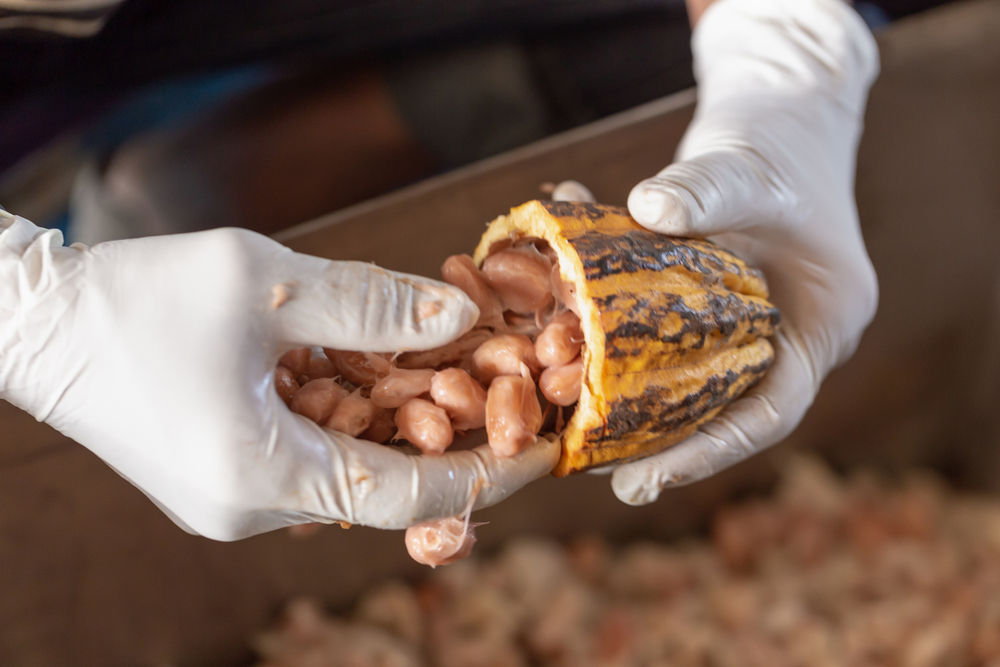
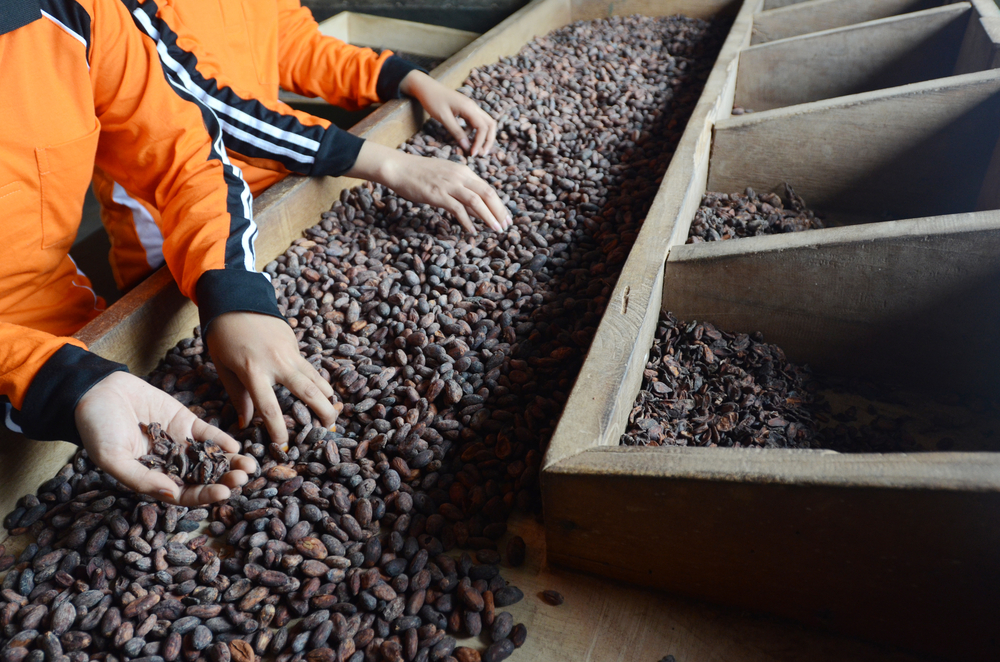
The lead does not appear to come from the cocoa tree pulling it up through its roots. An industry expert committee reported in 2022 that lead is not taken up through cocoa plant roots, meaning the contamination appears to happen primarily through environmental exposure after the cocoa beans have developed. Lead from soil, dust and airborne material can settle onto the outside of the beans after they are removed from their pods, and the way cocoa is handled during fermentation and drying can therefore make a difference. Fresh cocoa beans are covered in a sticky pulp before fermentation and drying, and during the drying process they can spend days exposed to the surrounding environment, sometimes on surfaces close to roads or directly on the ground.
That creates an opportunity for contaminated dust to stick to the outside of the beans before they are processed into cocoa products. Research published in 2005 also used isotope analysis to trace some of the lead signature to emissions from leaded gasoline that was still being burned in the region at that time. The finding helps explain why contamination can increase between the original cocoa bean and the manufactured cocoa or chocolate product. In other words, the problem is not necessarily present in the cocoa tree itself. Some of it can enter later through the environment and handling practices used after harvest.

The Bean Starts Out Much Cleaner
Researchers who sampled cocoa beans from six Nigerian farms in 2005 found average lead concentrations at half a nanogram per gram or lower. The same broader line of research found that manufactured cocoa and chocolate could contain much higher concentrations, with some samples reaching as high as 230 nanograms per gram. That difference suggests that contamination can occur somewhere between harvesting and the finished product, rather than simply being an unavoidable feature of the raw cocoa plant.
The finding also points toward a relatively practical solution for at least part of the lead problem. If beans are protected from contaminated soil and airborne dust during drying, fewer particles have an opportunity to settle onto their surfaces before processing. Better handling practices cannot solve every heavy-metal concern in chocolate, particularly the issue of cadmium, but researchers have identified them as one way to reduce lead exposure before cocoa becomes the ingredient in a finished bar.
Cadmium Has A Different Problem
Cadmium takes a different route into chocolate and may therefore be more difficult to address through changes at the processing stage. Unlike lead, cadmium can be absorbed by the cocoa plant through its roots and then transported into the nibs inside the bean. By the time the cocoa pod is harvested, the metal can already be present within the part of the bean that eventually becomes cocoa solids. That means simply keeping beans away from roadside dust or drying them on a clean surface cannot eliminate cadmium that has already been absorbed by the plant.
Researchers have proposed several ways to reduce the problem, including mapping soil contamination, blending beans from different growing regions, replacing older trees, treating soil and developing cocoa varieties that absorb less cadmium. Those approaches could reduce concentrations over time, but they require changes at the agricultural level and cannot be implemented overnight. For consumers, the important distinction is that lead and cadmium may both appear on a chocolate laboratory report, but they can get there through very different pathways.

Organic Chocolate Was Not Automatically Cleaner
Another study looked at 72 cocoa and dark chocolate products purchased over several years, including products bought in 2014, 2016, 2019 and 2022. Researchers from George Washington University and ConsumerLab found that 31 of the 72 products exceeded California’s lead threshold, while 13 of the 37 products tested for cadmium exceeded that threshold. None of the products exceeded the arsenic threshold used in the study. The research provided another unexpected detail for shoppers who assume that premium or specially certified chocolate automatically means lower exposure to environmental contaminants.
The researchers found that organic products carried higher concentrations of both metals in their analysis, with organic products showing an average difference of 0.4 micrograms per gram for cadmium and 0.02 micrograms per gram for lead. The analysis also found that Non-GMO and Fairtrade certification did not appear to provide protection against exposure to these metals. The researchers wrote that even consumers choosing what they considered “higher” quality products retained no exposure protection. That does not mean those certifications are meaningless, but it does show that farming and sourcing labels cannot answer every question about heavy-metal contamination.
A Healthier Label Does Not Answer Every Question
The findings are a useful reminder that food labels can tell consumers about farming practices, sourcing standards or production methods without necessarily revealing how much environmental contamination is present in a finished food. Organic certification, for example, does not mean that a crop was grown in soil completely free from naturally occurring metals, while environmental exposure can occur regardless of whether a product carries an organic label.
For chocolate shoppers, the label on the front of the package therefore cannot tell the entire story. The cocoa percentage, certification and marketing language may describe one part of the product, while laboratory testing can reveal another. That is particularly relevant for people who eat the same chocolate every day because repeated exposure can matter more than an occasional serving.
California’s Limit Is Not A Poisoning Line
One of the easiest details to miss in the chocolate controversy is what the California threshold actually represents. California’s Proposition 65 system uses a highly conservative warning threshold, and for lead the maximum allowable dose level is 0.5 micrograms per day. Exceeding that level means a warning may be required under the state’s rules. It does not mean a person who eats that amount has crossed an instant poisoning boundary.
Federal guidance uses different reference levels. The FDA’s interim reference levels are 2.2 micrograms per day for children under seven and 8.8 micrograms per day for women of childbearing age. In the George Washington University study, 70 of the 72 products remained below the FDA’s interim reference level. The researchers also noted that median concentrations were below the stricter California thresholds, pointing toward a smaller number of higher-concentration products driving much of the concern.
The FDA’s position is that chocolate and cocoa are safe to eat and represent a minor source of overall lead exposure. That position is important context because the California threshold is intentionally more conservative than the federal reference levels. At the same time, the World Health Organization states that there is no known level of lead exposure without harmful effects, particularly because children are vulnerable to developmental effects. The two points can exist together without contradiction: a chocolate bar exceeding California’s warning threshold does not automatically mean it poses an immediate health danger, while reducing unnecessary lead exposure remains sensible.
Scientists Do Not All Read The Results The Same Way
Other research has produced a more reassuring picture. A Tulane University team tested 155 dark and milk chocolate products for 16 metals and found very limited potential risk from the products examined. Only four products presented a potential risk for children weighing 33 pounds or less, while the researchers concluded that the products posed very little risk to adults under the conditions they studied.
“For adults there is no adverse health risk from eating dark chocolate,” the Tulane researchers concluded. Leigh Frame, who co-directed the George Washington University research, also urged consumers not to panic about the findings, saying, “Don’t panic. I eat chocolate. I ate chocolate last night.” Her comment reflects an important point about interpreting food contamination studies: finding a contaminant does not automatically establish that normal consumption of the food will cause measurable harm.
The other side of the evidence is that lead exposure is not considered harmless. The World Health Organization states that no level of lead exposure is known to be without harmful effects and links exposure to increased risks involving development, blood pressure, cardiovascular health and kidney function. For children, the concern is particularly serious because their developing bodies are more vulnerable to lead. For adults, the available evidence has to be considered alongside total exposure from all sources rather than treating one chocolate bar as the entire picture.
Five Bars Stood Out For Lower Levels
The Consumer Reports testing also produced a finding that may be more useful to shoppers than simply telling people to stop eating chocolate. Five of the 28 tested bars had comparatively low levels of both lead and cadmium, including products from Mast, Taza and Valrhona, along with two Ghirardelli products. The results show that cocoa products can vary substantially even when they belong to the same broad category, which means consumers are not necessarily choosing between chocolate and no chocolate.
For people who eat dark chocolate regularly, the practical considerations are fairly straightforward:
- Pay attention to serving size: The Consumer Reports analysis used a one-ounce daily serving when comparing products with California’s threshold, so eating larger portions can change the exposure calculation.
- Avoid assuming darker means cleaner: Darker chocolate contains more cocoa solids, where many of the compounds associated with cocoa’s potential benefits are found, but those solids can also contain higher concentrations of metals.
- Think about frequency: Eating chocolate occasionally creates a different exposure pattern from eating a large portion of the same product every day.
- Be more cautious with children: Children are particularly vulnerable to the effects of lead exposure, making portion size and frequency more important considerations.
- Look beyond the label: Organic, Non-GMO and Fairtrade certifications do not automatically indicate lower levels of heavy metals.
A Simple Fix Could Reduce Some Lead
The most striking part of the research may be how ordinary one potential solution sounds. Lead contamination can occur when cocoa beans are dried on contaminated ground or exposed to roadside dust, so moving beans onto clean drying tables or tarpaulins can reduce their contact with contaminated surfaces. Other proposed steps include keeping drying areas away from roads, protecting beans from airborne dust and improving cleaning and shelling during processing. Danielle Fugere, president of shareholder advocacy group As You Sow, said lead reductions could be expected within the first year after new handling practices are introduced.
Cadmium requires a different strategy because it can enter cocoa through the roots and accumulate inside the bean. That means agricultural research, soil management and plant breeding may be needed to bring concentrations down over time. The chocolate bar on the shelf may look simple, but its journey there is anything but. A cocoa bean can begin with very little lead and end up carrying much more after growing, harvesting, fermenting, drying and processing.
For consumers, the useful question is therefore not whether dark chocolate should suddenly be considered dangerous. It is how much you eat, how often you eat it and what testing shows about the particular products you choose. The research leaves room for chocolate in a normal diet while also showing why manufacturers and cocoa producers have a clear reason to reduce heavy-metal contamination wherever they can.
Sources:
- Pubmed.ncbi.nlm.nih.gov. (n.d.-e). https://pubmed.ncbi.nlm.nih.gov/16203244/
- Loria, K. (2023, October 25). Lead and cadmium could be in your dark chocolate. Consumer Reports. https://www.consumerreports.org/health/food-safety/lead-and-cadmium-in-dark-chocolate-a8480295550/
- CandyUSA. (2022, November 3). Research Reveals Ways Lead and Cadmium in Chocolate May be Reduced – NCA. NCA. https://candyusa.com/news/research-reveals-ways-lead-and-cadmium-in-chocolate-may-be-reduced/