
Your cart is currently empty!
Archaeological Team Identifies Gospel Miracle Location After 2,000 Years

Beneath the calm waters of the Sea of Galilee, something has waited for two millennia. Ancient stones, carefully arranged by Roman hands, have sat submerged and forgotten while generations of pilgrims walked the shores above. A team of researchers recently donned scuba gear and descended into those same waters, searching for evidence of one of the Bible’s most dramatic miracles. What they found could answer questions that have puzzled scholars for centuries.
Contents
show
Dr. Scott Stripling, director of excavations for the Associates for Biblical Research, has spent years chasing geographical riddles hidden within Gospel texts. His latest investigation centers on a story familiar to millions of Christians around the world. According to the books of Matthew, Mark, and Luke, Jesus once performed an exorcism near the Sea of Galilee that ended with a herd of 2,000 pigs charging down a cliff and drowning in the water below. Skeptics have long questioned whether such events took place at all. Believers have wondered where they happened. Stripling thinks he has the answer.
His team believes they have located the exact spot where Jesus stepped off a boat and encountered a man tormented by what the scriptures call a “legion” of demons. But proving such a claim requires more than faith. It demands careful analysis of ancient texts, modern technology, and a willingness to get wet.
Building the Case
Stripling began his search by analyzing the Gospel accounts with the precision of a detective examining witness statements. All three versions of the story contain specific geographical details that narrow down possible locations. Jesus traveled by boat from west to east across the Sea of Galilee. He landed somewhere with a harbor or suitable beaching spot. Nearby stood a cliff steep enough for pigs to rush down into the water. Tombs dotted the hillside, and the area was populated enough to support herding operations.
“All three gospels say there was a cliff nearby. All three say there were tombs nearby. And they tell us that Jesus was coming in on a boat from the west side to the east side,” Stripling explained in a recent presentation.
Each detail acts as a filter, eliminating sites that fail to match the description. Many locations along the Sea of Galilee have cliffs. Fewer have cliffs near ancient harbors. Even fewer have tombs in proximity. Finding a place where all these elements converge within a small radius becomes the challenge.
Stripling turned to research from a 1985 excavation that documented ancient harbors along the lake’s shoreline. Those surveys identified dozens of Roman-era ports, most now buried under modern development or submerged as water levels changed over centuries. One location stood out among the others.
Kursi Emerges
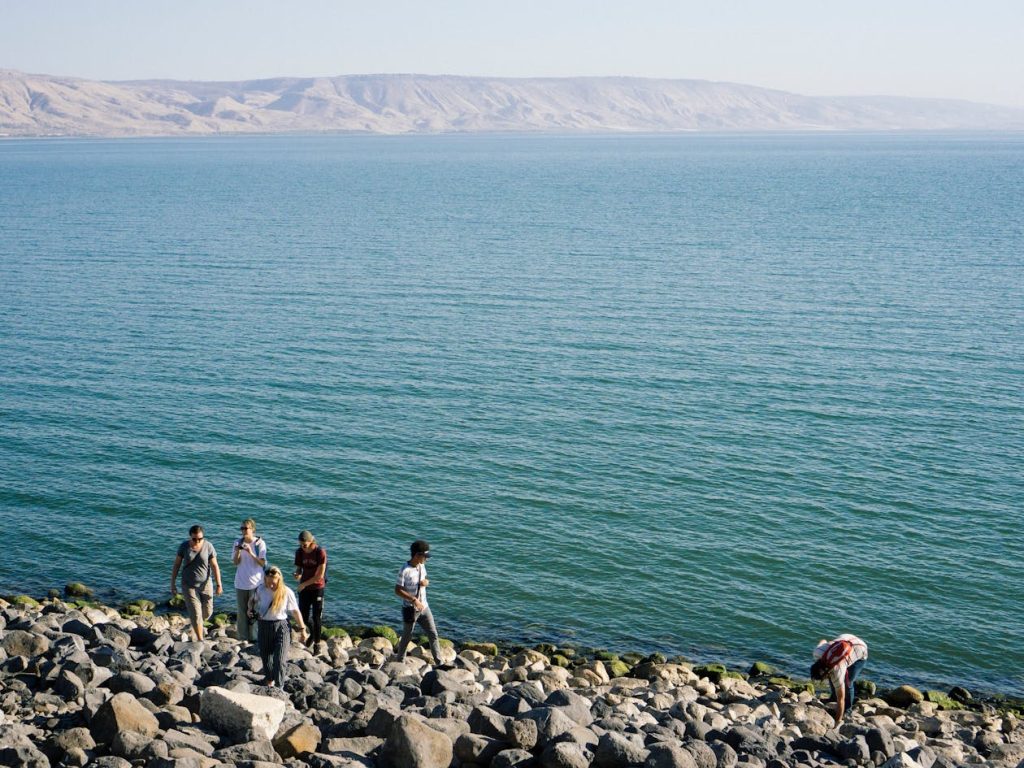
Kursi, a small settlement on the eastern shore of the Sea of Galilee in modern-day Israel, matched the Gospel descriptions with unusual precision. Ancient records showed that a harbor once operated there. Archaeological work had revealed massive stone jetties and a large fish tank used to keep catches fresh before transport to market. Early Christian pilgrims had built a chapel on the hillside above, suggesting they believed something significant had happened at that spot.
But decades had passed since the 1985 excavation. Water levels had risen again, swallowing the harbor remains. Stripling needed to confirm the old findings and establish whether the site truly matched every detail from the biblical account.
In 2023, he assembled a team and returned to Kursi armed with GPS coordinates, old excavation photographs, and scuba equipment. Finding a submerged Roman harbor isn’t simple. Lake sediment obscures structures. Centuries of shifting stones can scatter evidence across the lakebed. Even with modern technology, underwater archaeology demands patience and skill.
Stripling and his divers navigated using landmarks visible above water, including the mouth of Wadi Semak and the unmistakable ancient fish tank that had survived near the shore. They descended into water clear enough to see but dark enough to require careful exploration.
Stones That Tell Stories
What happened next confirmed decades of speculation. “We felt the stones before we saw them. Massive, dressed blocks forming twin piers, classic harbor construction,” Stripling recalled.
Roman engineering leaves distinctive signatures. Harbors built during that era followed specific patterns, using carefully cut stones arranged to create stable piers that could withstand waves and weather. Kursi’s underwater ruins matched those patterns. Twin jetties extended from the shore, creating a protected area where boats could dock safely. Stone blocks, some weighing hundreds of pounds, sat arranged with the precision that comes only from skilled builders.
Finding the harbor solved the first piece of the puzzle. But a miracle site needs more than a dock. Stripling and his team moved onshore to check the other Gospel details against the terrain.
A cliff rises less than 164 feet from the waterline at Kursi. Pigs rushing down that slope would have had no chance to stop before plunging into the lake. Ancient tombs carved into the hillside still exist, exactly the kind of burial sites common in the region during Jesus’s lifetime. Open grazing land would have provided space for herds.
“From the harbor, every biblical detail aligns within a 656-foot radius,” Stripling noted.
Memory and Monument
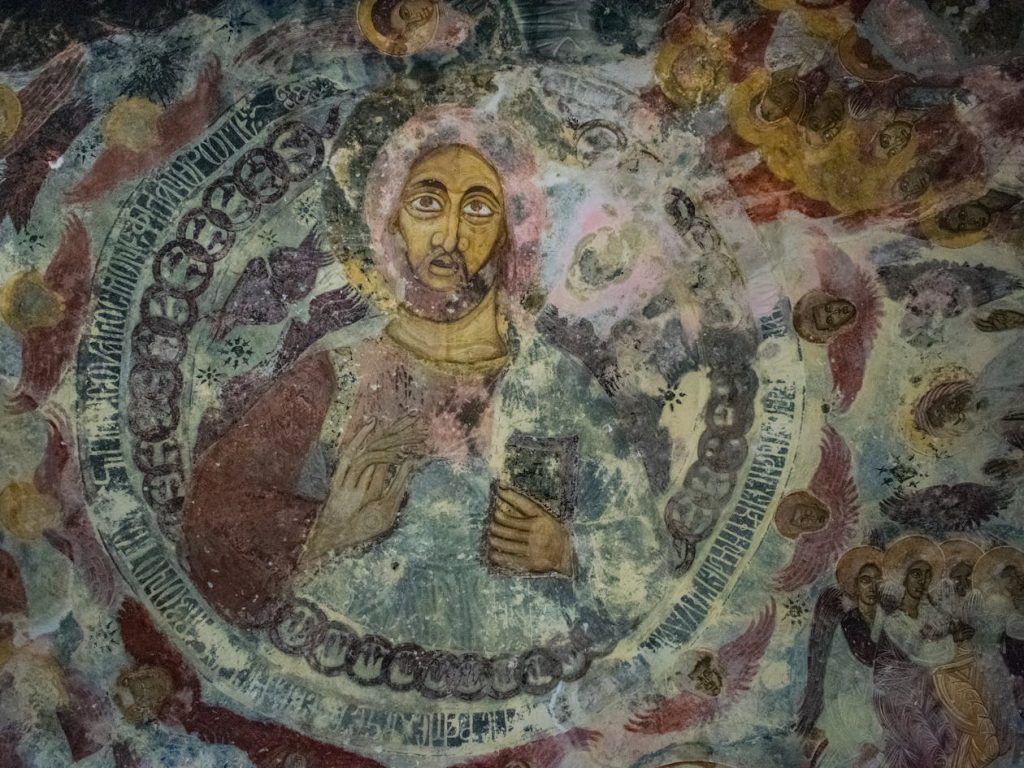
Physical geography only tells part of the story. Archaeological sites gain credibility when ancient people themselves marked them as important. At Kursi, that evidence comes from a Byzantine chapel built roughly 500 years after the events described in the Gospels.
Early Christians constructed what became known as the Chapel of the Miracle on the hill above the harbor. A mosaic floor decorates the interior, and some scholars interpret its patterns as depicting pigs, though interpretations vary. Pilgrims have visited the site for more than 1,500 years, suggesting a continuous tradition linking the location to the biblical account.
Byzantine Christians didn’t build chapels randomly. They studied earlier sources and interviewed locals about traditional holy sites before selecting construction locations. One of their key references was Origen, a third-century Christian scholar who traveled through the region documenting places associated with Jesus’s ministry. If Origen identified Kursi as the miracle site, later builders would have trusted that assessment.
Roman Context
Understanding why pigs were present in the area requires knowledge of the region’s political and military situation during the first century. Kursi sat within the Decapolis, a league of ten Greco-Roman cities that maintained closer ties to Rome than to Jewish tradition. Pork consumption was forbidden in Jewish law but embraced by Roman soldiers and Gentile populations.
Roman legions stationed in the region needed steady meat supplies. Pigs bred faster than cattle and required less grazing land, making them economical for military contracts. Herds near Kursi likely supplied the Roman 10th Legion, which used a boar as its emblem. When the Gospel writers mention demons calling themselves “Legion,” they may have been drawing a deliberate parallel to Roman military occupation.
A man living near a pig-herding operation in Gentile territory would have been outside mainstream Jewish society. Whether he worked as a failed military recruit or a laborer serving Roman interests, his presence in that location makes cultural sense. His torment, described as demonic possession in the Gospels, and subsequent healing would have carried both spiritual and political overtones for early readers.
What Changed After

Biblical narratives rarely follow up on minor characters, but the Gospel of Mark mentions an interesting detail. After Jesus healed the possessed man and sent the demons into the pigs, the man begged to follow Jesus as a disciple. Jesus refused, instead telling him to return home and tell others what had happened to him.
When Jesus returned to the region roughly a year later, according to Mark’s timeline, a large crowd greeted him. Stripling interprets that reception as evidence that the healed man had obeyed instructions. His testimony about the miracle apparently sparked interest that spread through the Decapolis communities.
“His obedience changed a region,” Stripling reflected. “We’re not just finding stones. We’re standing where despair met deliverance.”
Questions of Proof

No archaeological discovery will definitively prove miracles occurred. Science can establish that a harbor existed, that the geography matches ancient descriptions, and that early Christians venerated a specific location. Whether supernatural events happened there remains a matter of faith, not excavation.
What Stripling’s work does provide is what he calls a “criterial screen.” Multiple independent factors must align for a site to be considered credible. Kursi passes tests that other proposed locations fail. It has the correct harbor orientation for a west-to-east crossing of the Sea of Galilee. It has cliffs, tombs, and grazing land in proximity. Early Christians marked it as holy ground. No other site along the lake combines all these elements.
Debates about biblical historicity will continue regardless of archaeological findings. Some scholars argue that the Gospel writers created narratives to serve theological purposes rather than document historical events. Others maintain that the texts contain reliable eyewitness accounts preserved through oral tradition before being written down decades after the events they describe.
Stripling’s discovery doesn’t settle those debates, but it does ground one Gospel story in concrete geography. Whether Jesus performed miracles or the stories served as parables, the locations described in the texts correspond to real places where real people lived, and real events occurred.
Beneath the Surface

For now, Kursi’s harbor remains mostly hidden. Water levels in the Sea of Galilee fluctuate based on rainfall and management of the lake as a water resource for Israel. During drought years, ruins emerge from the shallows, visible from shore. In wetter periods, they disappear beneath meters of water, accessible only to divers with proper permits and equipment.
That submersion has protected the site from looting and casual disturbance, but it also limits research opportunities. Full excavation would require significant resources and cooperation from multiple Israeli government agencies. For the moment, the stones wait as they have for 2,000 years, patient and silent.
Stripling’s team documented their findings through underwater photography and GPS mapping. Those records will allow future researchers to study the site even when it lies beneath the waves. As archaeological techniques improve and interest in biblical sites continues, Kursi may receive more attention from scholars seeking to understand the physical world Jesus and his followers inhabited.
Whether one accepts the miracle account or sees it as an allegory, the work at Kursi demonstrates how archaeology can illuminate ancient texts. Each stone block tells part of a story about Roman engineering, fishing economies, military supply chains, and the daily lives of people who lived along the Sea of Galilee two millennia ago. Somewhere among those stones, according to three Gospel writers, something happened that changed at least one man’s life forever. Now, researchers can point to where that change may have begun.