
Your cart is currently empty!
Scientists Finally Identify Tiny Blue Sea Creature Spotted Nearly 6,000 Feet Underwater
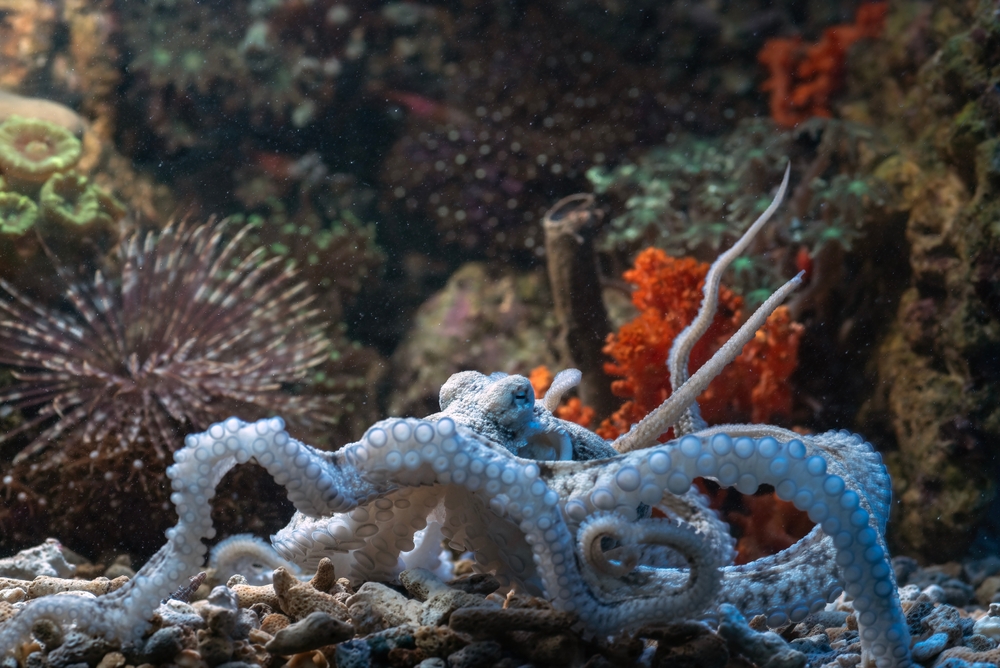
A tiny blue octopus spotted nearly 6,000 feet beneath the Pacific Ocean has turned out to be something scientists had never seen before. The unusual creature, discovered deep below the waters surrounding the Galápagos Islands, is small enough to fit between the base of a person’s palm and the first knuckle of their middle finger. While it was first filmed more than a decade ago, researchers have only now confirmed that it belongs to a completely new species.
Contents
show
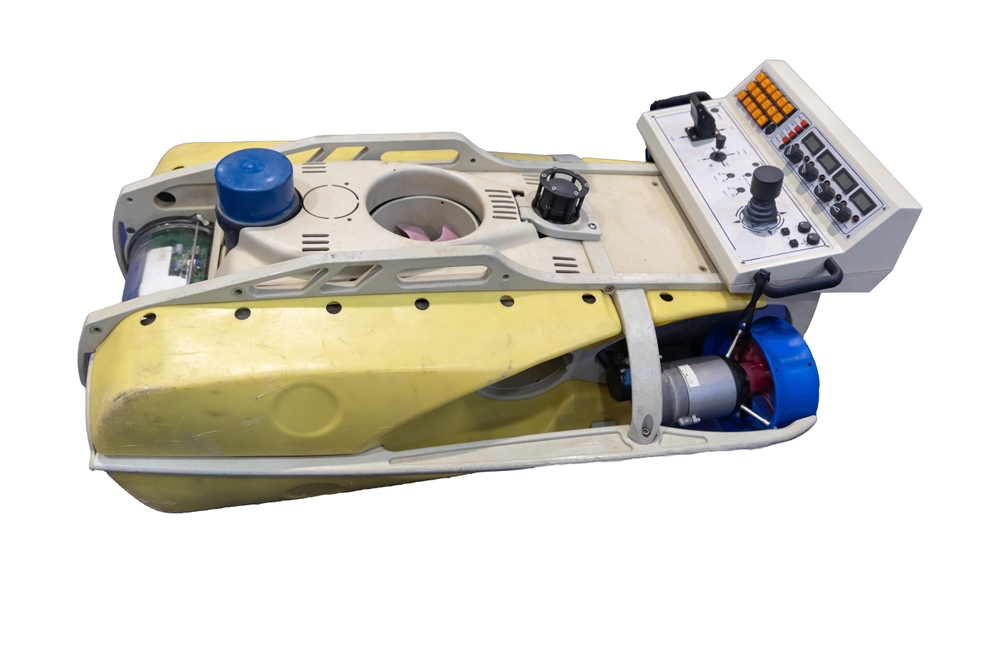
The discovery began when a remotely operated underwater vehicle captured footage of the animal moving across the seafloor in 2015. Scientists watching from a research vessel immediately noticed the strange creature. One crew member compared it to a plush toy, while another could be heard saying, “Is that a cute little guy, or what?” What seemed like a brief encounter with an unusual deep-sea animal would eventually lead to the identification of a species never before recorded by science.
A Rare Encounter Deep Beneath The Galápagos
The tiny octopus was discovered during an expedition carried out in collaboration with the Charles Darwin Foundation and the Galápagos National Park Directorate. The animal was found resting on sediment nearly 5,800 feet below the ocean’s surface, a part of the world that remains largely unexplored despite decades of scientific research.
Unlike many marine discoveries that can be quickly examined in laboratories, this specimen faced a long journey before researchers could begin studying it in detail. Although the animal was collected years earlier, paperwork and logistical challenges delayed its arrival at Chicago’s Field Museum until 2022.
By the time researchers finally had access to the specimen, they knew they had something unusual. The octopus displayed several physical traits that did not seem to match any known species from the region. Its striking blue coloration, large eyes, and compact body immediately separated it from the image most people have of a traditional octopus.
The challenge was proving whether those differences were enough to classify it as an entirely new species.
Why Scientists Had To Be Extremely Careful
Janet Voight, curator emerita of invertebrates at the Field Museum, quickly realized that studying the specimen would require extraordinary caution. The octopus was a female carrying large eggs, which created complications during preservation.
Although the animal had been preserved in formaldehyde, the chemical could not fully penetrate every part of the body because of the large eggs inside its ovaries. As a result, portions of the specimen remained unusually delicate despite years in storage.
Voight knew there would be little room for error during the examination process. “If you make the wrong cut or tear something, it’s gone forever,” she said.
The stakes were especially high because finding another specimen could take years. Deep-sea expeditions require significant funding, advanced equipment, and a great deal of luck. Even if researchers returned to the same location, there was no guarantee they would ever encounter another individual of the same species.
Technology Helped Unlock The Mystery
Rather than risk damaging the specimen through traditional dissection, researchers turned to a tool that allowed them to see inside the animal without making a single cut. The Field Museum had recently acquired a CT scanner capable of producing highly detailed images of preserved specimens.
Thousands of X-ray images were captured and digitally combined to create a three-dimensional model of the octopus. The scans allowed researchers to examine internal structures that would otherwise have required invasive procedures.
The digital reconstruction provided crucial information about the animal’s anatomy. By comparing those details with known octopus species, researchers were able to determine where the mysterious creature fit within the octopus family tree.
The results eventually confirmed what scientists had begun to suspect. The animal represented a species completely unknown to science. It was officially named Microeledone galapagensis in a study published in Zootaxa.
Not What Most People Imagine When They Think Of An Octopus
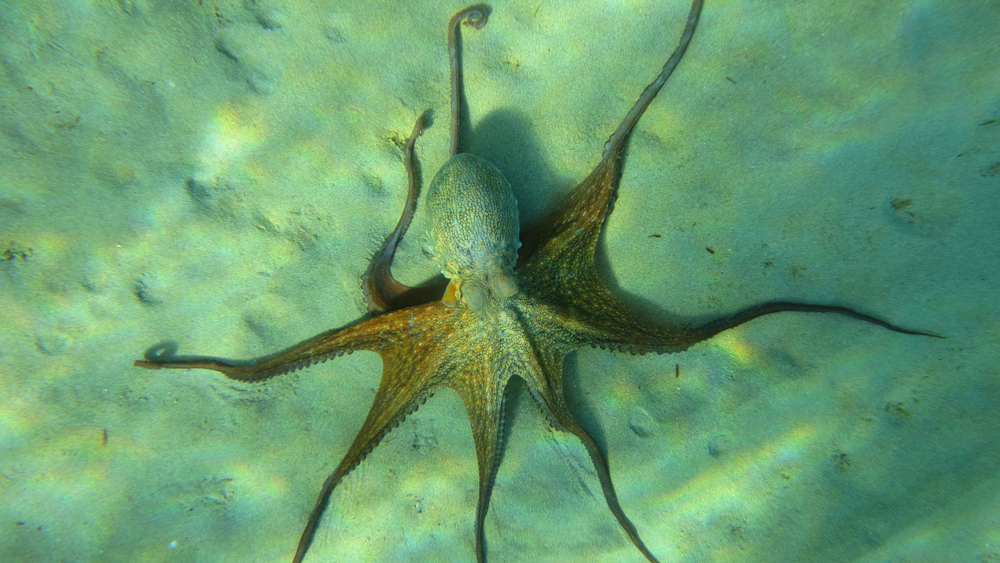
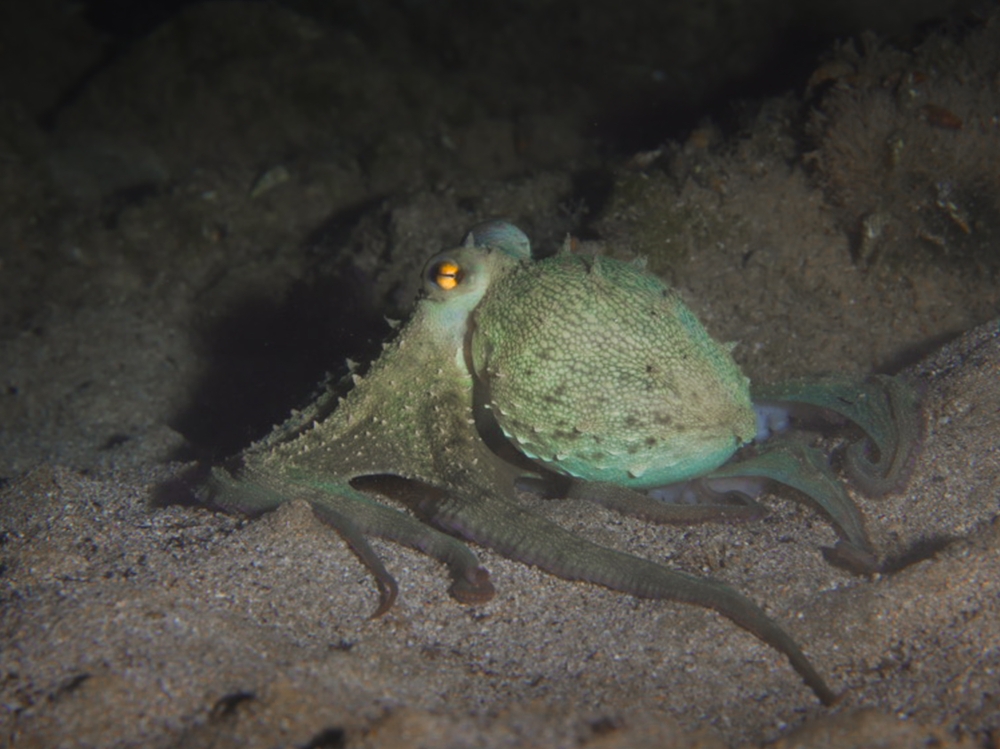
For many people, the word octopus brings to mind an animal with a large body and long arms stretching outward in every direction. Microeledone galapagensis looks noticeably different.
“When you think about octopus, you think of an animal with long arms,” Voight said. “Not this guy.”
The newly identified species belongs to the Microeledone genus, one of the rarest groups of octopuses known to science. Before this discovery, the genus contained only one recognized species, Microeledone mangoldi, which was discovered near New Caledonia in the southwest Pacific Ocean.
Researchers found several similarities between the two species, including smooth skin, large funnel organs, and comparable gill structures. At the same time, important differences in pigmentation and anatomy clearly distinguished the Galápagos specimen from its distant relative.
A Connection Across The Pacific Ocean
One of the most surprising aspects of the discovery is the enormous distance separating the two known members of the Microeledone genus. One species lives near the Galápagos Islands, while the other was discovered thousands of miles away near New Caledonia.
The connection suggests that their evolutionary history may stretch across vast portions of the Pacific Ocean. Scientists believe the two species likely share a common ancestor that existed somewhere between those distant regions.
“Their common ancestor must have been from somewhere in between,” Voight said. “So there’s a common link, and we should expect to see more animals show that connection.”
The finding raises new questions about how deep-sea species spread throughout the world’s oceans and how isolated populations eventually evolve into distinct species. Future expeditions could reveal additional relatives that help scientists better understand that evolutionary journey.
The Deep Sea Remains One Of Earth’s Greatest Mysteries
Despite covering most of the planet, the deep ocean remains one of the least explored environments on Earth. Scientists estimate that humans have directly observed only a tiny fraction of the seafloor.
That means discoveries like Microeledone galapagensis may be far more common than many people realize. Every expedition into the deep sea has the potential to uncover species that have never been documented before.
Jim Barry, senior scientist at the Monterey Bay Aquarium Research Institute, believes the discovery highlights how little is known about deep-sea biodiversity. “We just don’t know enough about the biodiversity of the deep sea in general,” Barry said, “so as discoveries like this keep coming up every dive, you may see something new that’s never been seen before.”
The Galápagos Islands are already famous for hosting species found nowhere else on Earth. More than 20% of the marine life in the region exists exclusively within those waters. Scientists believe similar patterns of biodiversity may be hidden throughout the deep ocean, waiting to be discovered.
Climate Change Is Reaching Even The Deepest Waters
The discovery also serves as a reminder that many deep-sea ecosystems remain poorly understood at a time when environmental pressures continue to increase. Scientists are still identifying species that inhabit these regions while the conditions around them are already beginning to change.
Deep-sea environments play an important role in maintaining healthy ocean systems. They contribute to nutrient recycling, carbon storage, and processes that influence the global climate. Yet many of these ecosystems remain largely unmapped.
Barry warned that climate-related changes are already affecting parts of the deep ocean. “Climate change is penetrating the deep sea,” he said. “That is changing some of the systems in the deep sea and ecosystems in the deep sea before we even really know what’s there.”
For researchers, every newly identified species represents another piece of a puzzle that is far from complete. Understanding what lives in the deep ocean may become increasingly important as environmental changes continue to reshape marine ecosystems around the world.
A Tiny Discovery With Huge Implications
The newly named Microeledone galapagensis may be small enough to sit comfortably in the palm of a person’s hand, but its discovery has opened a much larger window into life beneath the ocean’s surface. More than ten years passed between the moment researchers first spotted the tiny blue animal and the day scientists finally confirmed its identity.
“It lets us know who we’re sharing the planet with,” Voight said.
For all the technology available today, vast stretches of the deep ocean remain unexplored. Somewhere in that darkness, countless species may still be waiting for their first encounter with humans.
Sources:
- Voight, J. R., Smith, S. M., Buglass, S., & Ziegler, A. (2026). A new species of Microeledone from Galápagos Islands and an amended diagnosis of the Megaleledonidae (Octopoda: Incirrata). Zootaxa, 5814(4), 533–549. https://doi.org/10.11646/zootaxa.5814.4.5
- This newly-discovered blue octopus from the Galápagos Islands could curl up in the palm of your hand. (2026, May 24). Field Museum. https://www.fieldmuseum.org/about/press/this-newly-discovered-blue-octopus-from-the-galapagos-islands-could-curl-up
- This newly-discovered blue octopus from the Galápagos Islands could curl up in the palm of your hand. (2026b, May 24). EurekAlert! https://www.eurekalert.org/news-releases/1128860
animal discovery, biodiversity, blue octopus, cephalopods, climate change, deep ocean, deep sea discovery, Environmental News, Field Museum, Galápagos Islands, Janet Voight, Marine biology, marine life, nature news, new species, ocean conservation, ocean exploration, ocean species, octopus, Pacific Ocean, rare animals, Science news, sea creatures, underwater discovery, wildlife news