
Your cart is currently empty!
Scientists Studied 183 Countries and Found a Dark Personality Pattern

Almost 1.8 million people answered the same uncomfortable questions about themselves, giving researchers a rare opportunity to compare personality patterns across much of the world. When those answers were placed alongside decades of data on corruption, violence, inequality, and poverty, a striking pattern emerged.
Contents
show
The results put countries including Indonesia and Mexico toward the higher end of one measure of aversive personality traits, while Denmark and New Zealand appeared toward the lower end. But the researchers also found major exceptions, making the story far more complicated than a simple ranking of the world’s “best” and “worst” personalities.
What Scientists Mean by a “Dark” Personality
The research does not diagnose entire countries or suggest that everyone from a particular nation shares the same personality. Researchers were measuring average levels of aversive personality traits, including characteristics linked with aggression, cheating, manipulation, and exploitation.
The concept has roots in the Dark Triad, a term coined by psychologists Delroy L. Paulhus and Kevin M. Williams in 2002.
The three traits are narcissism, associated with excessive self-regard; Machiavellianism, associated with manipulation and deception; and psychopathy, which is associated with low empathy and remorse.
The University of Copenhagen team focused on the broader Dark Factor of Personality, often called the D-factor. Professor Ingo Zettler described it as “the common core of all dark traits like those in the Dark Triad,” allowing researchers to examine what different aversive traits may have in common.
The Study Included Nearly 1.8 Million People
The 2025 study, published in the Proceedings of the National Academy of Sciences, drew on data from almost 1.8 million people across 183 countries. Researchers also examined information from around 144,000 participants in the United States.
The team compared personality scores with societal conditions from roughly 20 years earlier, including levels of corruption, violence, inequality, and poverty. Many participants would have been growing up during that earlier period, giving researchers a way to examine the possible relationship between social environments and later personality patterns.
Zettler summarized the central finding by saying: “The more adverse conditions in a society, the higher the level of the Dark Factor of Personality among its citizens. This applies both globally and within the United States.” The relationship was described as clear but moderate, meaning societal conditions were associated with personality patterns without determining them completely.
Indonesia and Mexico Appeared Higher
Countries including Indonesia and Mexico appeared toward the higher end of the D-factor measure, while Denmark and New Zealand appeared lower. The researchers connected those broad differences with the societal conditions people experienced rather than presenting them as evidence that some nationalities are naturally better or worse.
Zettler suggested that people can learn behavioral strategies from the environments around them. “In societies where rules are broken without consequences and where the conditions for many citizens are bad, individuals perceive and learn that one should actually think of oneself first,” he said.
That explanation focuses on adaptation. When institutions appear unreliable and people repeatedly see rules ignored, cooperation and trust may feel less useful. Self-interest can become a learned strategy, although the research does not claim that every person exposed to difficult conditions develops aversive personality traits.
Nevada Ranked Highest in US Data

The researchers found a similar pattern within the United States. Nevada ranked highest in one reported state-level comparison, followed by New York, South Dakota, and Texas, while Vermont appeared at the lower end, followed by Utah, Maine, and Oregon.
The broader research summary also contrasted states including Louisiana and Nevada with Utah and Vermont, which were associated with more favorable societal conditions. The differences are notable because the states exist within the same country while still exposing residents to different economic circumstances, local institutions, and social environments.
Geography Can Shape Daily Experience
Personality is often treated as something formed entirely by genetics, family, or individual experiences. The study suggests that the wider environment may also contribute to what people learn about trust, cooperation, and self-interest.
Children grow up surrounded by more than their immediate families. Schools, neighborhoods, economic pressures, institutions, and everyday examples of whether rules appear to work can all shape the environment in which behavior develops.
Singapore and Zambia Complicated the Pattern
The international data did not follow a perfect formula. Zambia scored relatively low on dark personality traits despite scoring high on the index of adverse societal conditions, while Singapore showed the opposite pattern by scoring relatively high on the personality measure despite having lower societal risk factors.
China, South Korea, Japan, and Myanmar also scored relatively high on the personality measure while sitting closer to the middle of the conditions index. These exceptions show why corruption, inequality, poverty, and violence cannot provide a complete explanation for personality differences across countries.
Zettler pointed toward social norms as another possible factor. “People have different norms. And they can then make justifications based on the norms quite easily that result in more bad behaviour,” he said. The results suggest that societies may shape behavior through several overlapping forces rather than one simple cause.
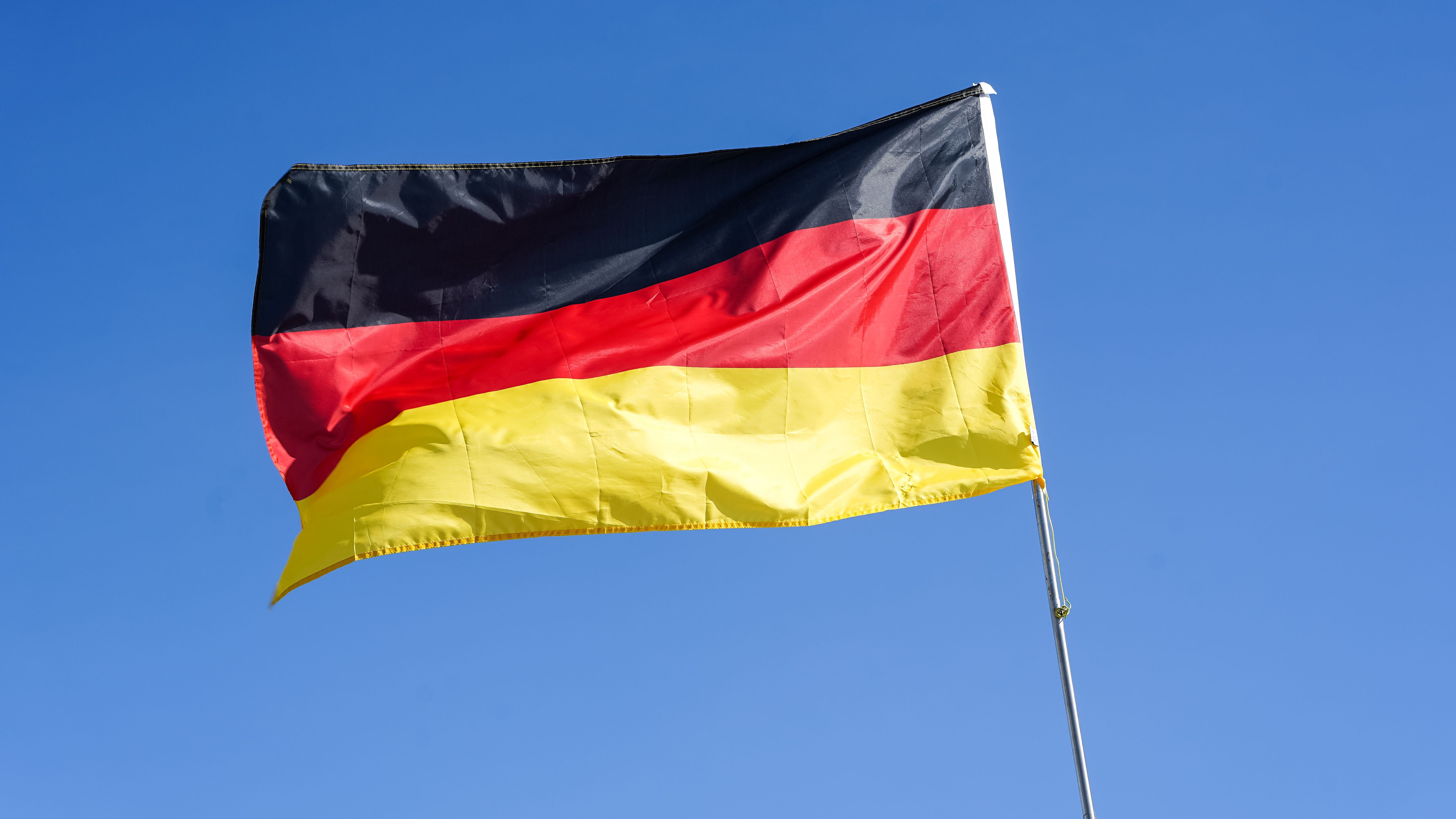
Germany Topped a Separate Narcissism Study
A separate 2026 study focused specifically on narcissism and produced another surprising international ranking. Researchers Macy Miscikowski, Rebekka Weidmann, Sara H. Konrath, and William J. Chopik surveyed more than 45,000 people across 53 countries.
Germany ranked highest in that study, followed by Iraq, China, Nepal, and South Korea. Serbia, Ireland, the United Kingdom, the Netherlands, and Denmark appeared at the lower end.
“One of the more surprising findings was that people from more collectivistic countries sometimes reported higher, not lower, levels of narcissism,” Chopik said. He added that “Narcissism isn’t just a ‘Western’ phenomenon, nor does it look wildly different across cultures.”
The rankings cannot be directly merged with the Copenhagen study because narcissism is only one trait, while the D-factor represents a broader group of aversive characteristics.
Politics and Everyday Rule-Breaking Showed Similar Links

Other studies have explored connections between personality-related behavior and wider social systems. A 2025 paper in Scientific Reports examined more than 200,000 people across 75 nations and found patterns connected with political conditions and trust.
“Citizens living in countries with more democratic practices have positive views and are more trusting of others,” researcher Craig S. Neumann said. The findings added to evidence that social environments may influence how people view others and respond to the rules around them.
A 2016 Nature study also tested honesty by asking 2,568 young people in 23 countries to privately roll a die for money and report the result. Cheating was higher in countries where everyday rule-breaking was more common, including Tanzania, Morocco, and Guatemala, while Austria, the Netherlands, and the United Kingdom appeared toward the lower end.
Why the Rankings Need a Major Warning Label

The most important caution is that a national average is not a personality test for millions of people. A country scoring higher or lower on a particular measure says nothing definitive about the next individual someone meets.
The Copenhagen researchers described their findings as moderate rather than deterministic. Other studies in this field also have limitations, including uneven samples and heavy reliance on university students in some international research.
Several factors make country-level comparisons difficult to interpret:
- Individual differences: People within the same country can have radically different personalities.
- Survey limitations: Students and online participants may not represent an entire population.
- Cultural differences: People may interpret and answer personality questions differently.
- Correlation limits: Historical conditions cannot prove direct causation.
- Different measurements: Narcissism, psychopathy, Machiavellianism, and the D-factor are related but distinct concepts.
These limitations do not erase the patterns researchers found. They do mean the rankings should be read as broad population-level findings rather than labels attached to entire nations.
The Research Points Back to Social Conditions
The most interesting finding may be the possibility that personality is shaped partly by the society surrounding people. Zettler argued that the results challenge the idea that personality is fixed entirely at birth.
“Our findings substantiate that personality is not just something we are born with, but also shaped by the society we grew up and live in,” he said. That shifts some attention toward the conditions countries create for their citizens.
Denmark and other lower-scoring countries were not presented as places filled with naturally superior people. The research instead raises a more practical possibility: societies where rules work, institutions are trusted, and people face fewer adverse conditions may help create environments where extreme self-interest is less useful.
The rankings may grab attention, but the deeper question is what societies teach people through the conditions they create. If environments can help shape behavior over generations, then improving those environments could influence far more than economic statistics.