
Your cart is currently empty!
Young Engineer Creates Mobile Denture Lab For People Who Cannot Afford Dental Care
Most college students spend their weekends studying, working part-time jobs, or trying to figure out what they want to do after graduation.
Contents
show
Connor Gibson spends his weekends helping strangers smile again.
The 22-year-old Tennessee engineer never planned to work in dentistry. He wasn’t trained as a dentist. He didn’t grow up fascinated by teeth. In fact, when he first started volunteering at a nonprofit healthcare organization, he knew almost nothing about either dentistry or 3D printing.
A few years later, he has helped thousands of Americans receive free dentures, cutting waiting times from months to just hours and creating moments that regularly leave patients in tears.
For Gibson, those moments have a name.
He calls them “mirror moments.”
A Volunteer Opportunity That Changed Everything
Gibson was still attending Walters State Community College when he first encountered Remote Area Medical (RAM), a nonprofit organization that provides free medical, vision, and dental care to underserved communities across the United States.
Founded in 1985, RAM operates mobile clinics staffed largely by volunteers. The organization focuses on helping people who often have nowhere else to turn for healthcare services.
Like many volunteers, Gibson initially joined because he wanted to help.
What he didn’t expect was that the experience would completely reshape his future.
After seeing firsthand how many people depended on RAM’s services, he began wondering whether his engineering skills could solve some of the organization’s biggest challenges.
One issue stood out immediately.
Patients who needed dentures often faced a long and complicated process before they could receive them.
The Problem Hidden Behind Every Missing Smile
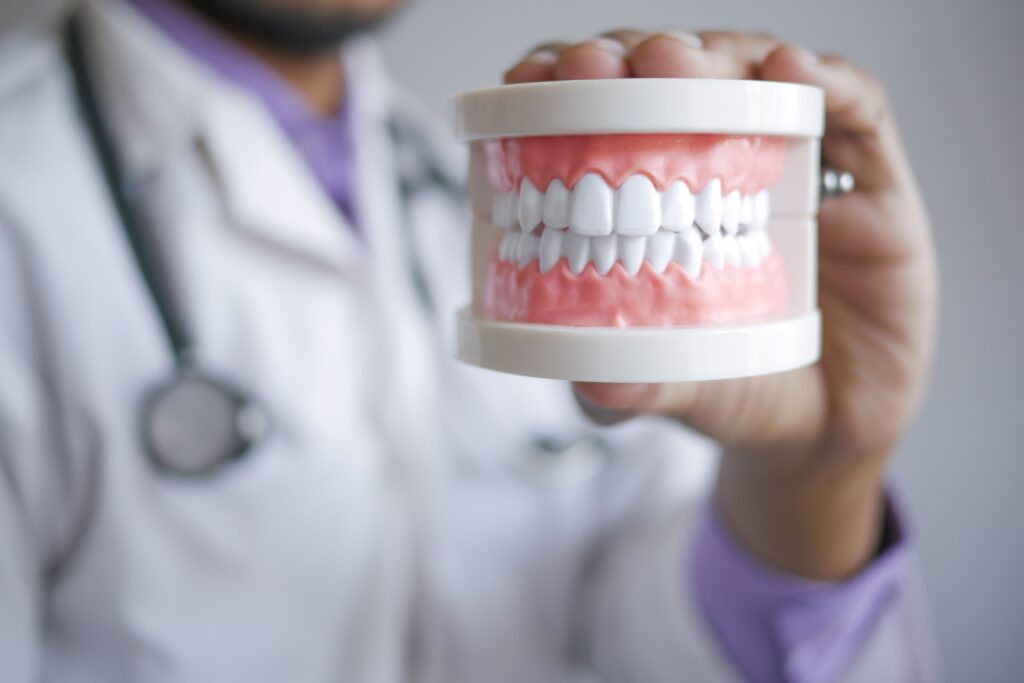
For many Americans, dentures are not simply a cosmetic issue.
Missing teeth can affect a person’s ability to eat comfortably, speak clearly, and feel confident in social situations.
The challenge is that dentures can also be expensive.
According to figures cited by RAM, around 72 million adults in the United States do not have dental insurance. Even Medicare generally does not cover many routine dental procedures, including dentures and implants.
For people already struggling financially, replacing missing teeth can become an impossible expense.
Traditional denture production also takes time.
The process typically involves molds, castings, adjustments, and multiple appointments. Patients may wait weeks or even months before receiving their final dentures.
For individuals relying on mobile clinics that visit only occasionally, those delays create another barrier.
Gibson looked at the process and saw an opportunity.
The problem was that he had absolutely no experience in the field.
Teaching Himself An Entirely New Profession
Most people would have viewed that lack of experience as a reason to stop.
Gibson treated it as a challenge.
He began studying everything he could find about dentures, dental anatomy, digital design software, and 3D printing technology.
Videos became his classroom.
Documents became his textbooks.
Industry tutorials became his assignments.
“I made it my mission and studied up like I was doing a test,” Gibson explained.
The engineering student spent countless hours teaching himself concepts that dental professionals typically spend years learning.
RAM CEO Chris Hall later recalled that Gibson arrived with no dental experience at all.
Yet his determination quickly set him apart.
While others saw obstacles, Gibson saw information waiting to be learned.
His background in computer-aided design gave him a foundation, but the dental world was still unfamiliar territory.
Little by little, he connected the dots.
Soon he was creating digital denture models on a computer screen and figuring out how to turn them into physical products using 3D printers.
The Birth Of A Mobile Denture Lab

As Gibson learned more, he became convinced that the traditional denture process could be dramatically improved.
The existing system required multiple visits and long waiting periods.
Patients often waited up to three months.
That seemed unnecessarily slow.
Using his engineering mindset, Gibson began designing a completely different approach.
The result was RAM’s Mobile Digital Denture Lab.
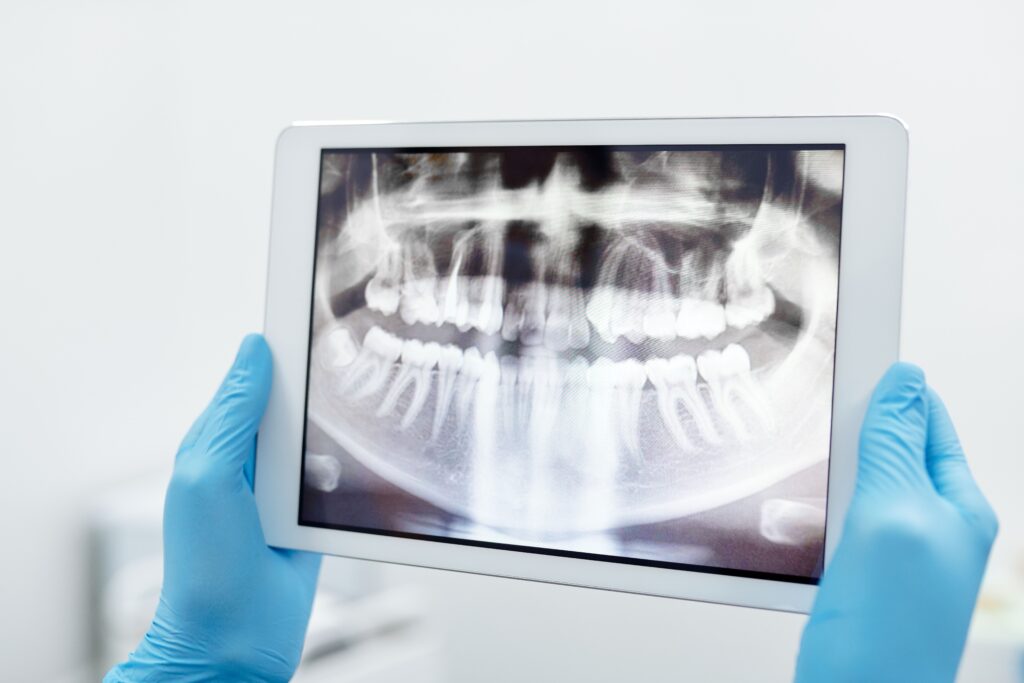
Instead of relying entirely on traditional molding techniques, patient scans and images could be converted into digital files. Those files could then be used to design custom dentures tailored to each person’s anatomy.
Once the design was complete, 3D printers could produce the dentures far faster than conventional methods.
The transformation was dramatic.
What once took months could now be accomplished in hours.
Patients who visited a weekend clinic could potentially leave with dentures during that same event.
For many people, it meant avoiding repeated travel, missed work, and months of waiting.
The impact was immediate.
When Nobody Wanted To Listen
Success did not arrive overnight.
Before Gibson’s system became widely recognized, he faced plenty of rejection.
He attended 3D printing conventions hoping to find partners and supporters for the idea.
Many vendors dismissed him.
Some showed little interest in what a young engineering student was trying to accomplish.
At the time, Gibson had no impressive title and no long list of achievements.
He simply had an idea and a belief that it could help people.
Rather than abandoning the project, he kept moving forward.
He searched for grants.
He pursued funding opportunities.
He continued refining his designs and processes.
Eventually, those efforts paid off.
Through grants, Gibson secured RAM’s first 3D printers and helped build what is believed to be the first mobile denture laboratory of its kind in the United States.
Years after being overlooked at industry events, he found himself recognized at dental conferences as a leading figure in the expansion of digital dentistry.
It was a remarkable turnaround.
The Mirror Moments That Keep Him Going

Technology is a major part of Gibson’s story.
Human emotion is the reason it resonates.
The most meaningful moments don’t happen when a printer finishes its work.
They happen when patients see themselves.
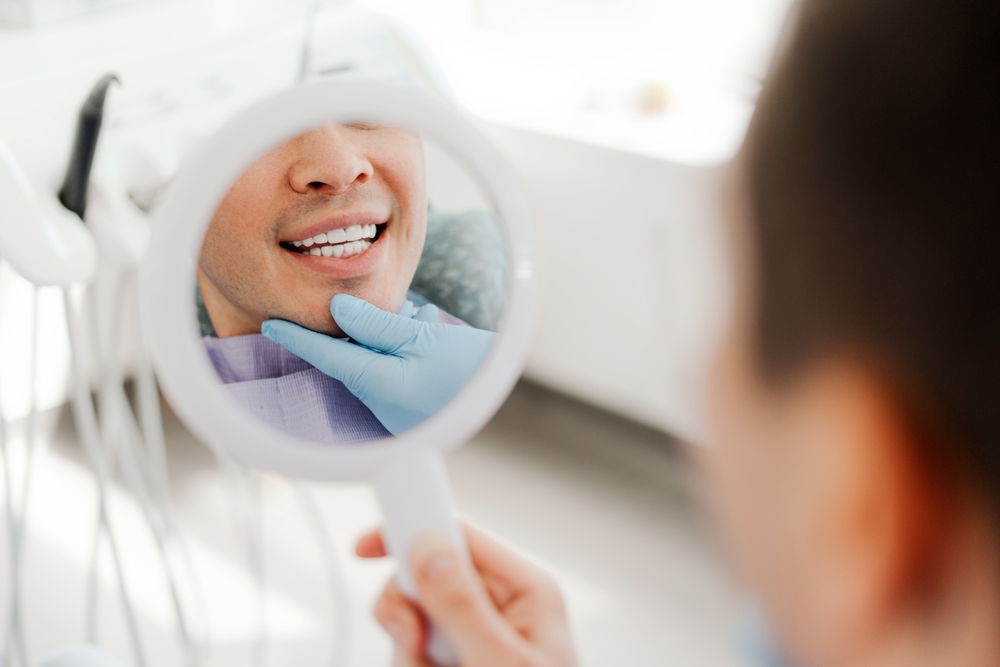
Gibson describes watching people look into mirrors after receiving their new dentures.
Some laugh.
Some stare silently.
Others cry.
He has watched elderly widows become emotional as they see their smiles restored.
He has seen tough-looking men covered in tattoos break down in tears.
Those reactions never lose their impact.
“Something that I was able to have a hand in makes a grown man burst into tears,” Gibson said.
He calls these experiences “mirror moments.”
For many patients, the dentures represent far more than replacement teeth.
They represent confidence.
They represent dignity.
They represent a chance to recognize themselves again.
One of Gibson’s favorite parts of the job is simply standing nearby and witnessing those transformations.
The emotional weight of those moments reminds him why the work matters.
What A New Smile Can Really Change
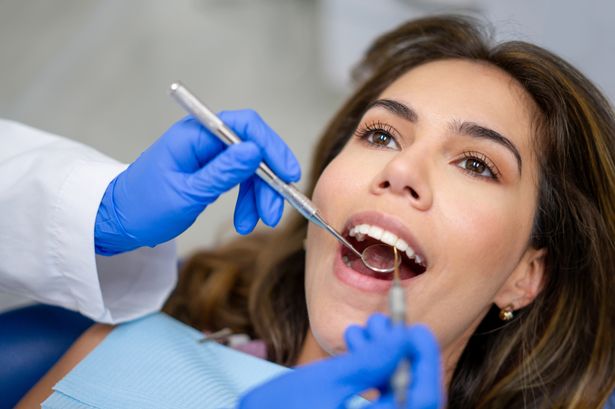
The benefits of restored teeth extend well beyond appearance.
For many patients, dentures affect multiple aspects of daily life.
Some of the most common improvements include:
- Improved ability to eat a wider variety of foods comfortably.
- Greater confidence during conversations and social situations.
- Better pronunciation and speech clarity.
- Increased willingness to smile in photographs and public settings.
- A stronger sense of self-esteem and personal dignity.
These changes may sound simple, but they can influence relationships, employment opportunities, and overall quality of life.
A missing smile often affects far more than a person’s reflection.
When people regain confidence, the effects can ripple through families and communities.
That broader impact is one reason RAM continues expanding its services.
Working Around The Clock For Patients
The demand for help remains enormous.
At many RAM clinics, hundreds or even thousands of people line up seeking medical, dental, and vision care.
Gibson often spends entire weekends inside the mobile denture lab.
While patients sleep, the printers continue working.
The machines run around the clock.
At one point, Gibson achieved a personal record by producing 35 dentures during a single weekend clinic.
Even with those efforts, demand still exceeds capacity.
That reality remains one of the hardest parts of the job.
“You have people that are really down on their luck,” Gibson explained.
He understands that every patient has a story.
Many have spent years postponing dental care because they simply could not afford it.
Others have lost teeth because insurance coverage was unavailable.
Some arrive carrying embarrassment that has followed them for years.
The line outside the clinic serves as a reminder of how widespread the need remains.
Carrying Forward Stan Brock’s Vision
Remote Area Medical was founded by Stan Brock, the British-born adventurer and television personality who later dedicated his life to improving healthcare access.
Over the decades, RAM has provided nearly $240 million worth of care and served more than one million patients through the efforts of roughly 230,000 volunteers.
The organization’s mission inspired Gibson from the beginning.
He first learned about RAM after watching a documentary about Brock with his father.
The film opened his eyes to the scale of healthcare challenges facing many Americans.
Soon afterward, he began volunteering.
Chris Hall believes Gibson embodies the same spirit that drove Brock’s work.
Although the two never met, Hall has often reflected on how closely Gibson’s determination aligns with the organization’s founding values.
The goal has always been simple: help people who otherwise might go without care.
Gibson found a way to advance that mission using skills few would have associated with dentistry.
National Attention Brings New Opportunities
The story eventually attracted national attention.
RAM and Gibson were featured on CBS’s 60 Minutes, introducing their work to a much larger audience.
The response was immediate.
Donations increased.
Volunteers reached out.
Industry partners expressed interest in supporting the program.
Perhaps most importantly, manufacturers offered newer and more advanced 3D printers.
Those additions could significantly expand RAM’s capabilities.
Instead of operating a single mobile denture lab, the organization hopes to expand to multiple units.
That growth would allow the team to produce more than 100 dentures during a single weekend clinic.
For patients waiting in line, those numbers represent access to care.
For Gibson, they represent more opportunities to create mirror moments.
An Engineering Degree With An Unexpected Purpose
When Gibson first entered college, he likely imagined a future involving design projects, technical challenges, and engineering solutions.
Few people would have predicted that dentures would become part of that story.
Even Gibson admits he never saw it coming.
“Honestly, if you told me three years ago, this is what I would be doing, I would have called you crazy,” he said.
Yet his journey highlights something powerful about innovation.
Life-changing solutions do not always emerge from experts working within traditional boundaries.
Sometimes they come from people willing to learn unfamiliar skills and ask simple questions.
How can this work better?
How can it help more people?
How can we remove barriers?
Those questions transformed a volunteer engineering student into someone who has restored thousands of smiles.
The printers inside RAM’s mobile laboratory create dentures one layer at a time. Gibson’s impact has grown the same way. One patient, one weekend, and one mirror moment at a time.