
Your cart is currently empty!
Miss World Uganda Stuns in Gown Inspired by the Layers of Childbirth
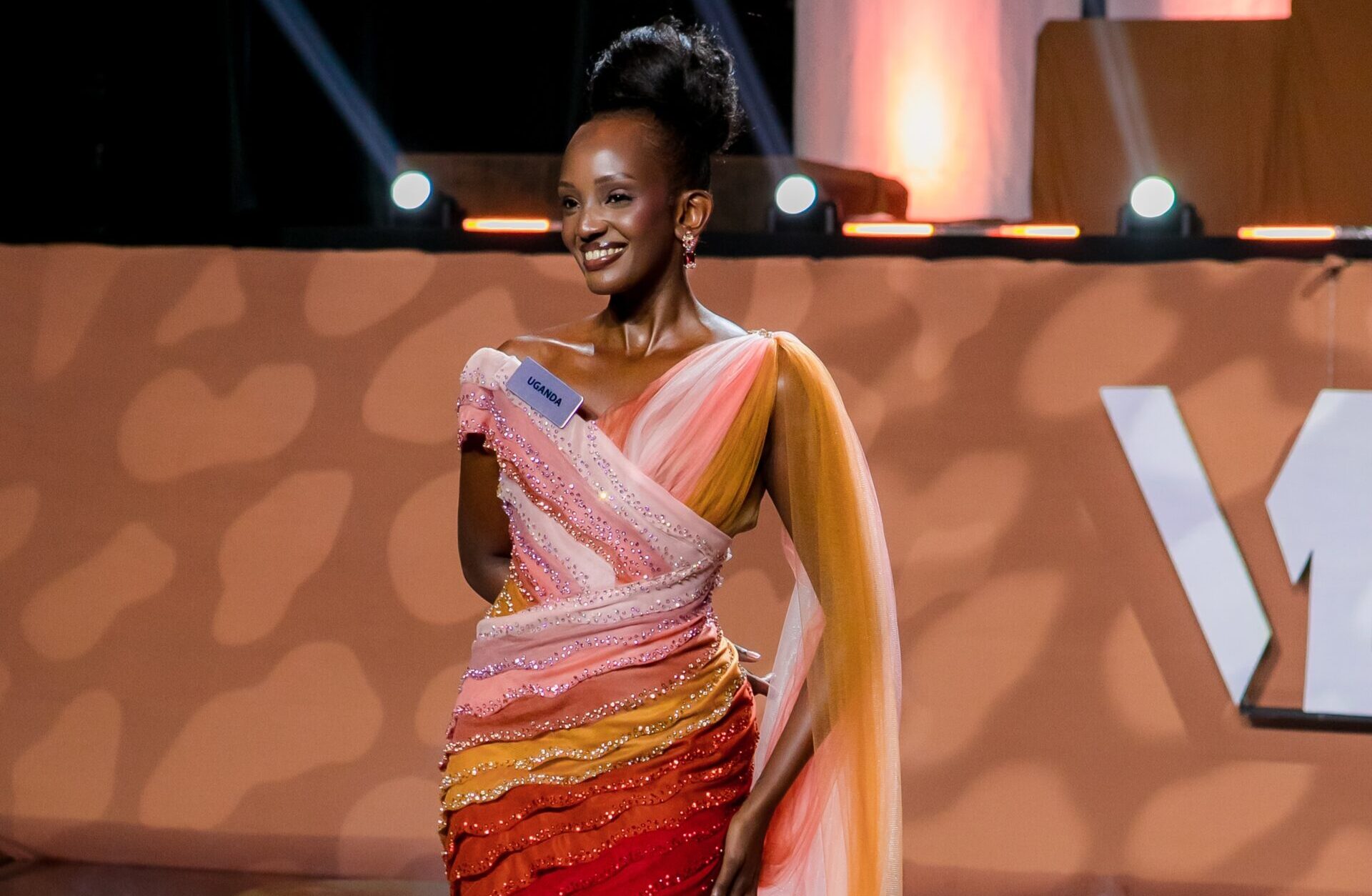
A glamorous pageant gown inspired by a C-section is turning heads for a reason few people would guess at first glance.
Contents
show
Miss World Uganda Trivia Elle Muhoza appeared in Vietnam wearing a dramatic couture creation based on the seven anatomical layers associated with a Caesarean section. The colourful gown, titled “The Layers of Life,” has since drawn praise from women who say its powerful message about childbirth made them feel seen.
The Gown Brought An Unusual Story To The Miss World Stage
Muhoza wore the custom creation during Miss World 2026 events in Vietnam, where contestants showcased couture designs during the Top Model and World Designers Challenge festivities.
The gown was created by Ugandan designer Keesha Abdallah, who wanted to produce something that would stand apart from the more familiar inspirations seen in high fashion.
Instead of looking to flowers, architecture or traditional ideas of red-carpet glamour, Abdallah found her inspiration in the human body. More specifically, she became fascinated by the physical layers involved in a C-section.
The finished design featured a dramatic ombré progression of colours, layered fabric and sparkling details. While the dress made an immediate visual impact, the story behind its construction gave every layer a deeper meaning.
A New Mother’s Idea Became Couture

Image Credits : Instagram @muhozatriviaelle
The idea behind the gown was personal for Abdallah, who is a new mother herself. While developing concepts for Miss World Uganda’s appearance, she collected images connected to childbirth and searched for an approach that felt fresh and original.
One image captured her attention more than the others. It showed a simplified illustration of the seven layers encountered during a C-section, using different colours to distinguish the tissues and structures.
“I had this crazy idea to turn the layers of childbirth into a couture gown,” Abdallah explained while sharing the story behind “The Layers of Life.”
She said the opportunity to design for Miss Uganda on the international stage made her want to create something “fresh, original and highly inspired.” The medical image eventually became the creative foundation for one of the competition’s most talked-about looks.
How The Seven Layers Inspired The Dress
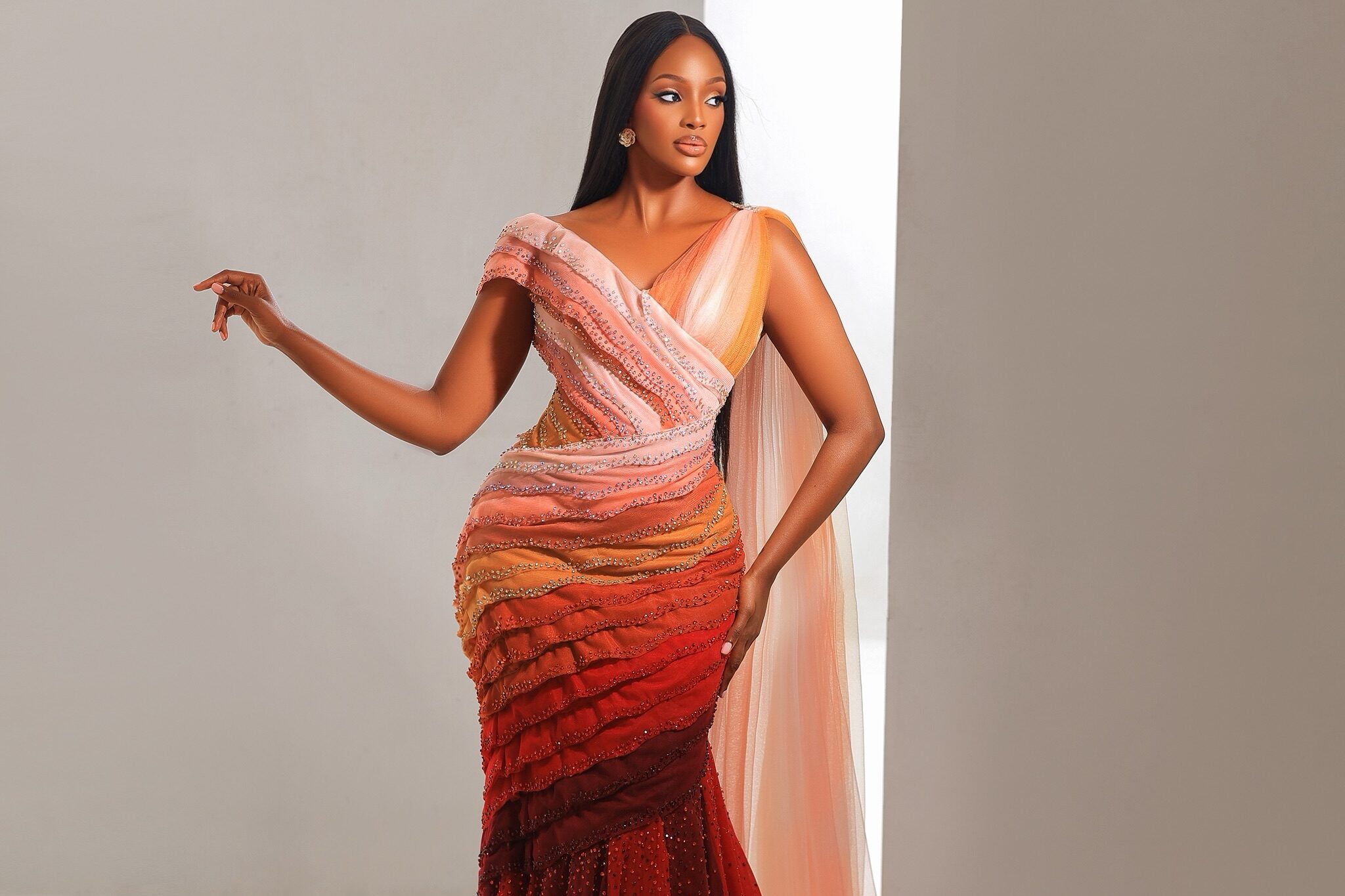
Image Credits : Instagram @muhozatriviaelle
The seven-layer concept is a simplified way of visualising the tissues and structures involved during a C-section. Surgical techniques and individual circumstances can vary, but the illustration that inspired Abdallah’s work provided a striking visual framework.
The layers commonly described in the concept include:
- Skin: The body’s outer protective layer.
- Subcutaneous Fat: Tissue found beneath the skin.
- Fascia: Connective tissue that surrounds and supports structures in the body.
- Abdominal Muscle: The muscular layer associated with the abdominal area.
- Peritoneum: A membrane connected with the abdominal cavity.
- Uterus: The organ where pregnancy develops.
- Amniotic Sac: The fluid-filled sac surrounding a developing baby.
Abdallah did not attempt to turn the gown into a literal anatomical diagram. Instead, she used colour, texture and layers of fabric to create an artistic interpretation of the process.
Colour Became Part Of The Story

The finished gown incorporated shades including peach, yellow, orange, pink, red, maroon and burgundy. Reports on the creation also described layered tulle, stretch satin and decorative details such as pearls, glass beads and crystals.
The changing colours were intended to represent stages, textures and transitions within the larger story of childbirth.
As the gown gained attention online, some people questioned whether the colours were meant to represent different races or skin tones. Abdallah directly addressed that interpretation.
“When we began creating this gown, race or skin colour was never part of the conversation,” she said.
“Each colour and layer was chosen to represent a stage, a texture, or a transition within that story, not to represent a particular race.”
The designer said the starting point was simply a woman and the remarkable layers of the body she carries within her.
Why The Designer Called It ‘The Layers Of Life’
View this post on Instagram
The C-section was the visual starting point, but Abdallah’s message was much broader than one surgical procedure.
“The concept was inspired by the layers encountered during a C-section and, more broadly, by the extraordinary journey of bringing life into the world,” she explained.
That wider perspective gave the gown its name.
“And that is precisely why we called it ‘The Layers of Life,’” Abdallah said. “Because life itself does not belong to one race, one country, or one colour. Life has no colour. Life is universal.”
The designer also described the piece as a celebration of womanhood, the human body and the experience of bringing new life into the world.
A Different Way To Represent Motherhood

Childbirth is frequently represented through images of pregnancy, newborn babies and family celebrations. Abdallah chose to focus on something that usually remains hidden from public view: the physical journey experienced by the mother’s body.
A C-section is major abdominal surgery, and the procedure can involve a demanding recovery. By using the layers associated with the operation as her artistic inspiration, Abdallah brought attention to an aspect of childbirth that is rarely seen in a couture setting.
The decision also gave the gown a powerful contrast. Its source material came from medical imagery, while the finished creation belonged on an international fashion stage.
That unexpected combination appears to be one of the reasons the design has attracted so much attention.
Women Who Had C-Sections Said They Felt Seen

The response on Abdallah’s Instagram posts quickly became deeply personal. Women who had experienced C-sections filled the comments with praise for the concept and its representation of childbirth.
One commenter wrote, “WOW… This dress is an absolute masterpiece!! I am in awe of how you honored the profound reality of childbirth, transforming the physical and emotional layers of the C-section journey into literal art.”
Another person described the work as powerful and said the design was difficult to put into words.
A particularly emotional response came from a woman who said she had undergone two C-sections herself.
“This is art at it’s best!! Well done. This is so appreciated as a woman who had two C-sections. I feel seen,” she wrote.
The Comments Went Beyond Fashion
The reaction showed that viewers were connecting with the story behind the dress as much as its appearance.
For women who have experienced a C-section, the procedure can carry memories of surgery, pain, recovery and the moment they first met their child. Abdallah’s design interpreted that experience through fabric and colour without claiming to tell every woman’s story.
The comments repeatedly returned to the idea of recognition. Several women thanked the designer for representing an experience they felt was rarely acknowledged in such a visible and artistic way.
One commenter praised the craftsmanship behind the piece, referring to the hand-placed details and the hours spent cutting and stitching. Another simply wrote that women who had experienced childbirth felt seen by the creation.
The gown’s story had clearly moved beyond the runway.
View this post on Instagram
Turning A Medical Concept Into Couture Was A Challenge
Coming up with the idea was only the first step. Abdallah and her team then faced the challenge of transforming an ambitious sketch into a finished garment suitable for the Miss World stage.
The colour palette required extensive experimentation. With numerous shades available, the team had to work through different combinations before finding tones that matched the visual progression Abdallah had imagined.
“I was attracted to the pictures of 7 layers of C-section and how deep the whole C-section is,” Abdallah explained.
Once Miss Uganda approved the sketch, the designer had to turn the idea into something wearable without losing the meaning that had inspired it.
The Finished Look Balanced Detail And Drama
The layered construction gave the dress the depth needed to reflect its central concept. The colours moved through different tones, while beads, pearls and crystals added the kind of detail expected from a couture piece.
From a distance, the gown delivered the visual drama needed for a major competition. Up close, the story behind its construction became clearer.
That balance allowed the dress to work on two levels. Someone could admire the silhouette and craftsmanship without knowing its inspiration, then discover an entirely different story after learning where the concept came from.
The fabric was part of the message. The layers were there to represent something, giving the design a purpose beyond simply creating volume or movement.
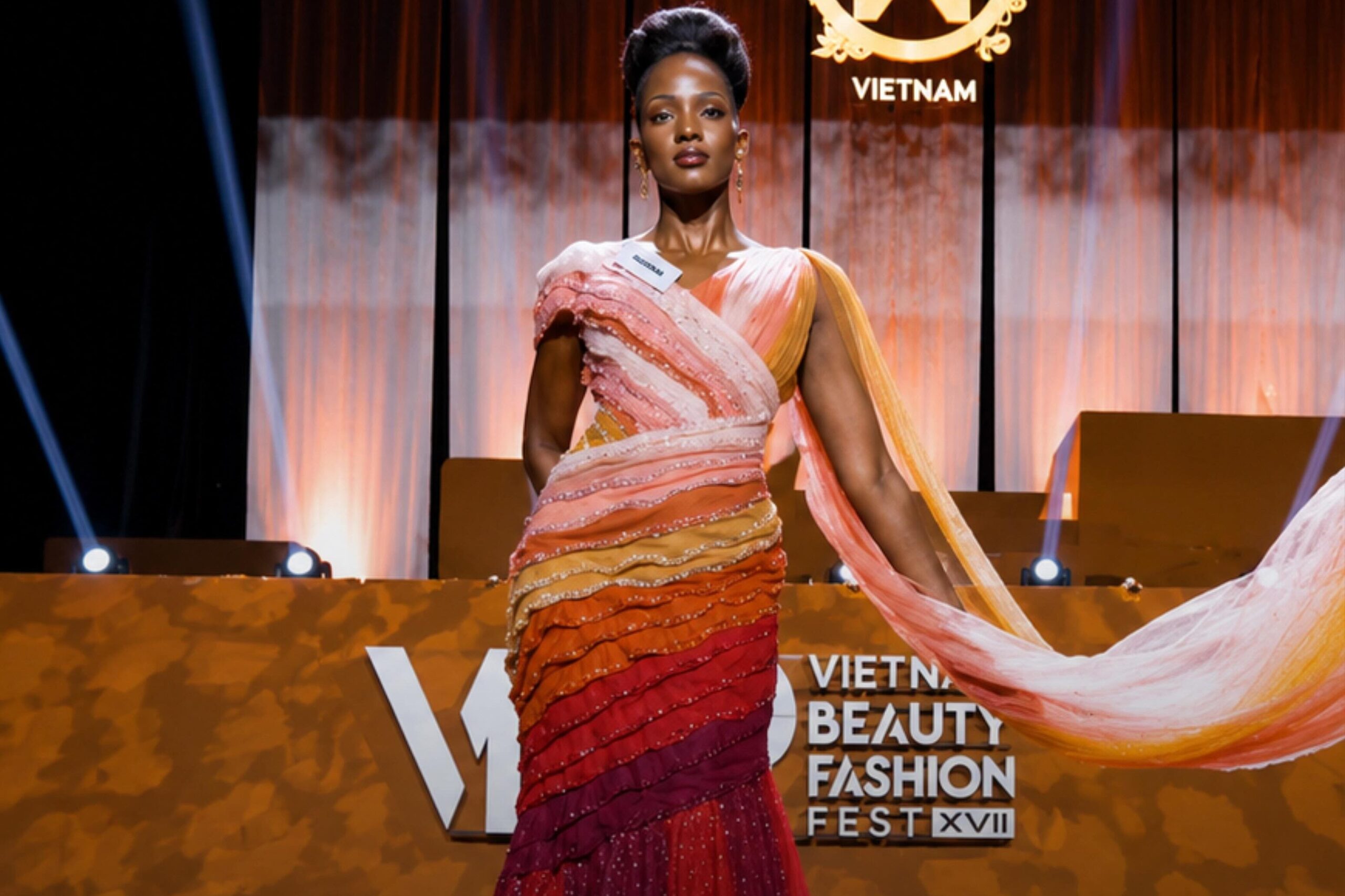
Image Credits : Instagram @muhozatriviaelle
Trivia Elle Muhoza Took The Message Global
The woman wearing the gown also brought her own story to the Miss World competition.
Trivia Elle Muhoza was crowned Miss Uganda in 2025 and is representing Uganda at Miss World 2026. According to her official Miss World profile, she has a background in aviation and works as an entrepreneur in the beauty and skincare sector.
Her advocacy has also included work connected to menstrual health education. Miss World reported that Muhoza visited communities in Uganda’s Kabale and Rubanda districts to discuss menstrual hygiene, confidence and self-care while reusable sanitary pads were distributed to girls.
She has also expressed interest in philanthropy, including supporting vulnerable children and raising awareness about gender-based violence.
Fashion Can Carry A Message Beyond The Runway
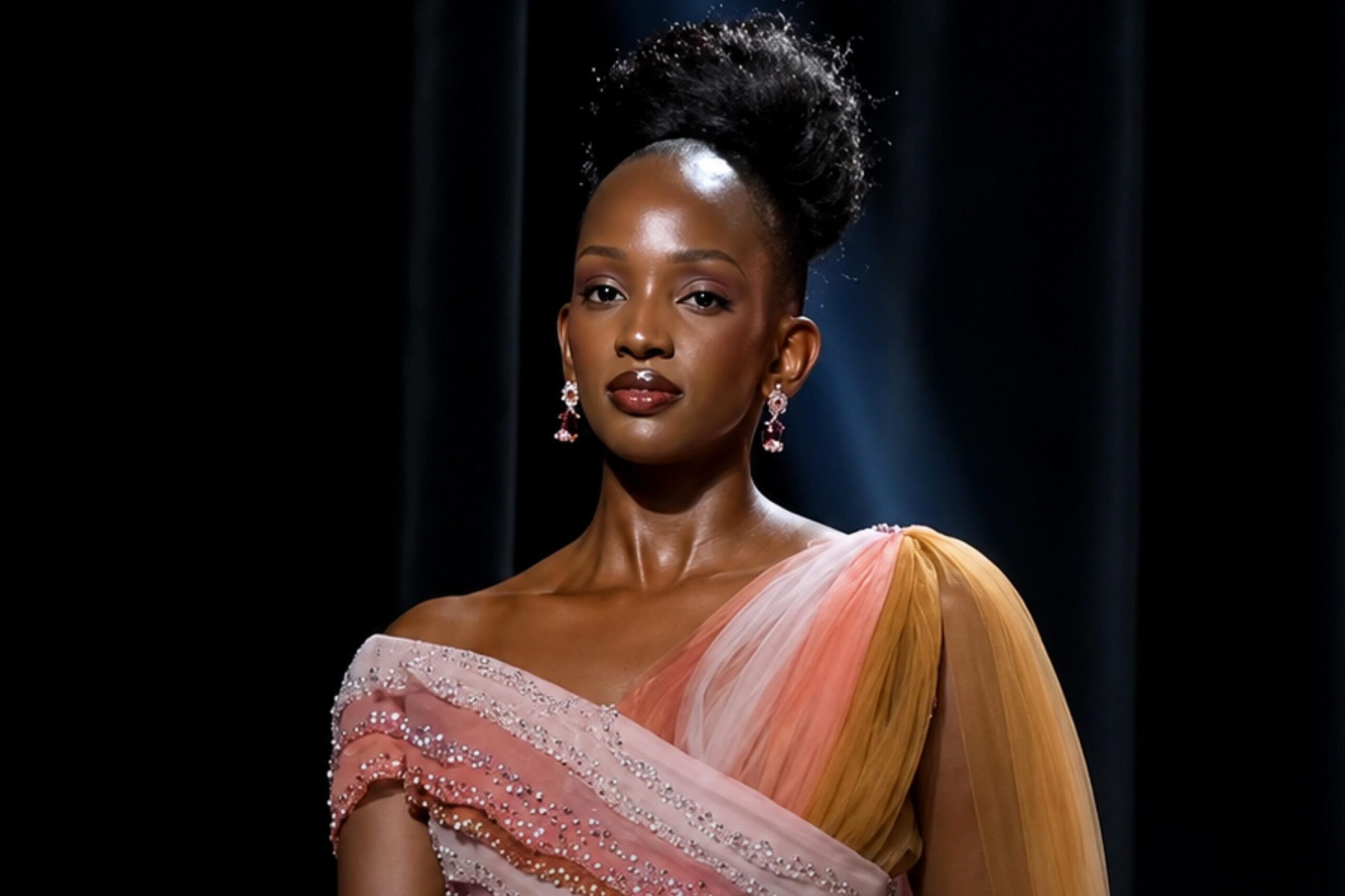
Image Credits : Instagram @muhozatriviaelle
Pageant fashion has often been used to represent culture, national identity and personal causes. “The Layers of Life” added another subject to that tradition by bringing childbirth and the female body into the conversation.
Muhoza gave the design a global platform, allowing a concept developed by a Ugandan designer to reach audiences far beyond the country.
The gown was not presented as a medical campaign, but its focus on womanhood and childbirth connected naturally with wider conversations about women’s health and experiences.
For Abdallah, the international stage provided an opportunity to turn a deeply personal source of inspiration into something visible on a much larger scale.
The Human Body Became The Blueprint
Fashion designers have drawn inspiration from almost everything imaginable, from historic buildings to flowers and works of art. Abdallah chose a source that was both familiar and rarely discussed in this context.
The human body became her blueprint.
The contrast between the original inspiration and the finished gown is difficult to ignore. A C-section is associated with a hospital, surgery and recovery, while couture belongs to a world of glamour and spectacle.
Abdallah found a way to connect those two worlds through colour and construction.

The Design Changed After You Learned Its Story
The real impact of “The Layers of Life” comes from the moment viewers discover what inspired it.
Before learning the backstory, the dress appears to be an elaborate ombré creation with carefully arranged layers and sparkling details. Once the C-section connection is explained, those same elements carry a completely different meaning.
The design does not present childbirth as a simple or polished symbol. It takes inspiration from the physical complexity behind it and transforms that complexity into art.
That approach also explains why the response has been so emotional. Many people were not simply reacting to an unusual dress. They were responding to the idea that an experience often discussed privately had been placed on one of fashion’s most visible stages.
A Gown That Turned Heads For A Deeper Reason
Abdallah has made clear that the C-section was the starting point for a wider celebration of childbirth rather than the only subject of the gown.
Her message extends to motherhood, womanhood and what she describes as the universal experience of bringing life into the world.
“This gown was created to celebrate womanhood, the human body and the miracle of life,” Abdallah explained.
The striking part is how an idea drawn from a medical illustration became something capable of generating such an emotional response. The gown delivered the visual spectacle expected from an international pageant, but its story gave people something more substantial to discuss.
A dress inspired by the seven layers of a C-section was always going to be unusual. What made “The Layers of Life” memorable was the way it transformed a physical experience often hidden from view into a piece of art that women around the world could recognise as part of their own stories.
Featured Image Credits : Instagram @muhozatriviaelle