
Your cart is currently empty!
NASA Voyager Discovers Scorching Boundary At The Edge Of The Solar System
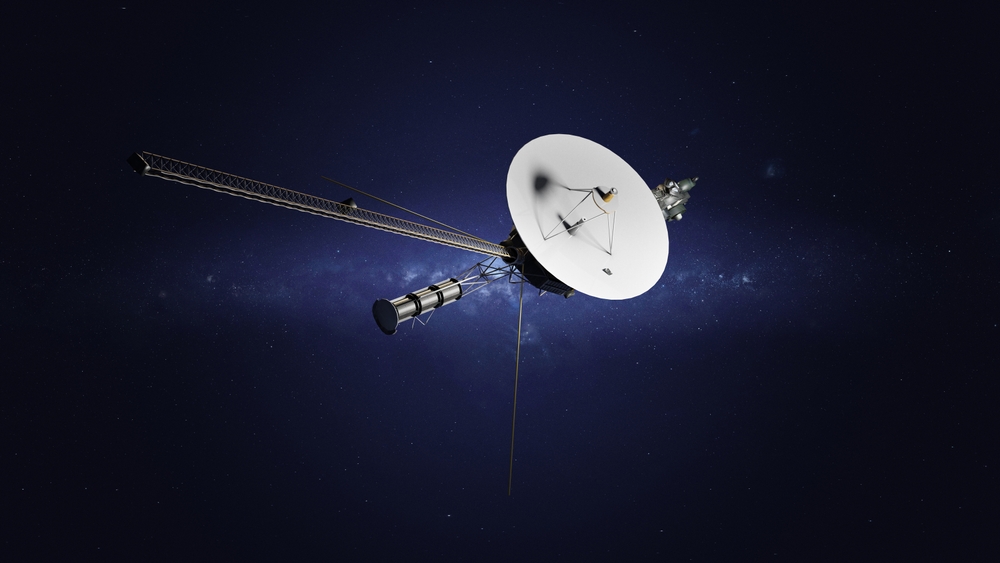
For more than four decades, NASA’s Voyager spacecraft have been quietly drifting through space, carrying with them humanity’s curiosity, questions, and ambitions. Launched in 1977, Voyager 1 and Voyager 2 were never expected to become cosmic pioneers at the edge of our solar neighborhood. Yet today they are doing exactly that, sending back information from a region no human-made object has ever explored before.
Contents
show
Recently, scientists revealed one of the most astonishing findings yet. Data from the Voyager missions suggests the existence of an extremely hot region at the boundary of our solar system, sometimes described as a wall of fire. Temperatures in this boundary zone are estimated to range between 30,000 and 50,000 Kelvin, far hotter than most people would imagine for the cold emptiness of space.
The discovery has sparked widespread fascination and confusion. How can something so hot exist in a region that is almost completely empty? Does this mean spacecraft are burning as they leave the solar system? And what does this reveal about how our solar system interacts with the rest of the galaxy?
This story is not just about extreme temperatures. It is about the invisible forces shaping our cosmic home, the resilience of aging spacecraft, and how much remains unknown even in our own celestial backyard.

Understanding The Edge Of The Solar System
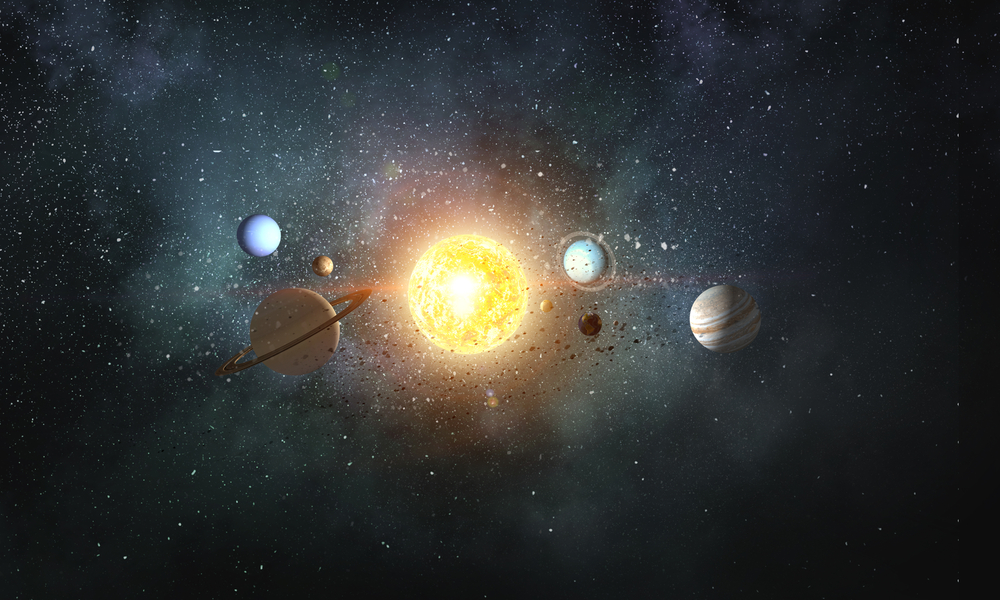
The edge of the solar system is not a solid boundary or a sudden drop into nothingness. Instead, it is a vast and complex region where the influence of the Sun gradually gives way to the interstellar environment. Scientists call this boundary the heliopause, and it marks the outermost limit of the Sun’s protective bubble known as the heliosphere.
The heliosphere is formed by the solar wind, a continuous stream of charged particles flowing outward from the Sun in all directions. This wind creates a kind of cosmic shield that helps deflect harmful cosmic radiation from deep space. For decades, this invisible bubble was only a theoretical concept, discussed in textbooks and models rather than observed directly.
As Voyager 1 crossed the heliopause in 2012 and Voyager 2 followed in 2018, scientists finally gained direct measurements of this boundary region. What they found challenged many assumptions. Rather than a smooth transition, the edge of the solar system appears turbulent, dynamic, and far more energetic than expected.
This is where the so-called wall comes into play. It is not a physical barrier but a region where particles slow down, compress, and heat up as the solar wind collides with the interstellar medium. The extreme temperatures are a result of energy transfer, not flames or burning material.
What Scientists Mean By A 30000 To 50000 Kelvin Wall
The phrase wall of fire can sound alarming, but it can also be misleading without context. In space, temperature does not behave the same way it does on Earth. Temperature measures the energy of individual particles, not how hot something would feel to the touch.
In this boundary region, particles are extremely sparse. Even though individual ions and electrons carry enormous energy, there are very few of them. This means that a spacecraft passing through would not suddenly melt or burst into flames. There simply is not enough material to transfer heat in the way we experience it in an atmosphere.
Scientists estimate the temperature based on particle energy readings from Voyager instruments. These readings suggest values between 30,000 and 50,000 Kelvin, which is hotter than the surface of the Sun. Yet paradoxically, this region of space would still feel colder than the best vacuum chambers on Earth.
This contrast highlights how counterintuitive space physics can be. The wall is better understood as an energetic boundary layer, where the solar wind piles up and releases energy as it encounters resistance from the interstellar environment.
How Voyager Detected This Extreme Boundary
The Voyager spacecraft was never designed with this discovery in mind. Their instruments were built to study planets like Jupiter and Saturn, not the edge of the solar system. Yet their longevity has allowed scientists to repurpose their data in remarkable ways.
Voyager carries instruments that measure charged particles, magnetic fields, and plasma waves. As the spacecraft moved farther from the Sun, scientists noticed dramatic changes in these readings. Particle speeds dropped, magnetic field directions shifted, and plasma density increased.
One of the key clues came from plasma wave measurements. These waves allowed researchers to infer the density and energy of particles surrounding the spacecraft. When Voyager crossed the heliopause, these measurements showed a sharp jump in energy levels consistent with extreme temperatures.
By combining multiple data sources, scientists were able to build a clearer picture of the boundary region. What emerged was not a single wall but a layered structure where solar and interstellar forces collide and interact in complex ways.

Why This Discovery Changes How We See Space
For many people, space is imagined as a silent, frozen void. Discoveries like this challenge that image and reveal a universe full of motion, pressure, and energy. The edge of our solar system is not calm or empty but an active frontier shaped by powerful forces.
This finding also reshapes our understanding of how stars interact with their surroundings. The Sun is not isolated. Its influence extends far beyond the planets, shaping a protective bubble that interacts continuously with the galaxy around it.
Understanding this interaction is crucial for astrophysics. It helps scientists model how cosmic rays travel, how stellar winds behave around other stars, and how habitable environments might be protected elsewhere in the universe.
On a human level, the discovery is a reminder that exploration often yields surprises. Even in regions scientists thought they understood, nature reveals layers of complexity that force us to rethink our assumptions.

The Remarkable Journey Of The Voyager Spacecraft
Voyager 1 and Voyager 2 are among the most distant human made objects in existence. Traveling at tens of thousands of miles per hour, they continue to send data back to Earth despite being powered by fading nuclear generators.
Each spacecraft carries a golden record intended as a message to any intelligent life that might one day encounter them. These records contain sounds, images, and music from Earth, serving as a time capsule of humanity’s culture and curiosity.
The fact that these aging machines are still making groundbreaking discoveries is a testament to the ingenuity of their designers. Engineers never expected the Voyagers to last this long, let alone explore interstellar space.
Their continued operation offers a rare opportunity. No other mission is currently capable of reaching or studying this boundary directly. Voyager remains our only direct window into this distant region.
A Boundary That Inspires Wonder
The idea of a scorching wall at the edge of our solar system captures the imagination because it feels almost mythic. Yet the reality is even more fascinating. It is a region shaped by invisible forces, extreme energies, and delicate balances.
This boundary reminds us that the universe does not conform to everyday intuition. Heat, cold, emptiness, and energy behave in ways that challenge simple explanations and invite deeper inquiry.
Voyager’s findings encourage a sense of humility. Our planet, our star, and our solar system are part of a vast interconnected galaxy. Even the limits of our Sun’s influence are shaped by interactions with something much larger.
As Voyager continues its silent journey into interstellar space, it carries with it a powerful message. Exploration is not just about reaching destinations but about expanding understanding. Sometimes the most profound discoveries lie at the very edges of what we thought we knew.