
Your cart is currently empty!
Scientists Warn Modern Life May Be Overloading The Human Brain
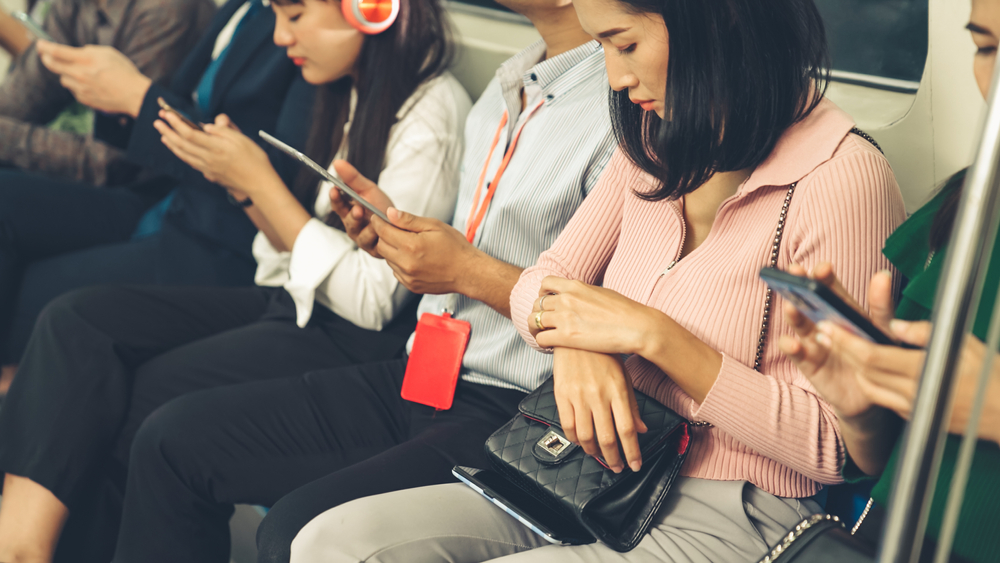
The train doors close and within seconds, phones appear across the carriage. One commuter checks a message, another scrolls through a video, someone reads a breaking-news alert while another watches a stranger’s carefully edited holiday unfold on a screen. In the space of a single journey, the human brain can be exposed to war, celebrity drama, career success, relationship announcements, political arguments and hundreds of unfamiliar faces.
Contents
show
That would have been an extraordinary amount of information for a human being to encounter before the digital age. Now it is an ordinary Tuesday morning. Researchers in Singapore have put forward a theory that could help explain why so many people feel stressed, distracted, lonely or overwhelmed. Their argument is that the modern environment has changed at a speed the human brain has never had time to catch up with.
Modern Life Has Turned Competition Into A Constant
A 2026 review published in Behavioral Sciences examines a concept known as evolutionary mismatch. The paper was written by Jose Yong of James Cook University in Singapore and Sarah Chan of the Lee Kuan Yew Centre for Innovative Cities. Their argument centers on a simple problem: human instincts were shaped in environments that looked nothing like the digital world people now inhabit.
Competition is one of the clearest examples. For most of human history, people lived in relatively small communities where social comparison had natural limits. You knew the people around you, understood roughly where you stood within the group and had only so many opportunities to compare your life with somebody else’s. There was no endless stream of strangers displaying their achievements from every corner of the planet.
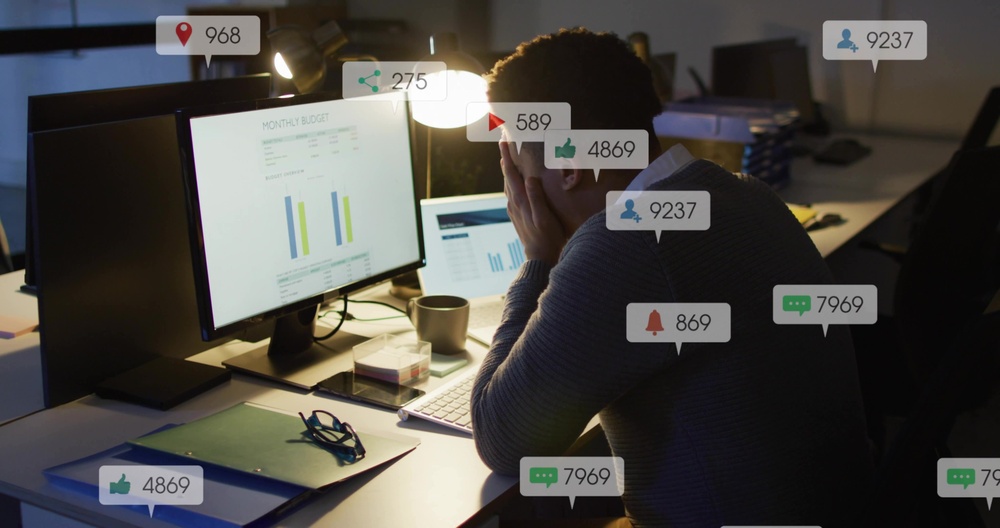
Modern technology has removed many of those boundaries. A person can now compare their career with a stranger in another country, their home with an influencer’s home and their appearance with carefully edited photographs before they have even finished breakfast. The comparison group is effectively unlimited, and there is no obvious point at which the measuring stops.
“Competition is not new, but modern life can make it feel constant,” Yong said in a statement issued with the paper. That distinction is important because the researchers are not suggesting that competition itself is a modern invention. Their argument is that an ancient social instinct is now operating inside an environment that can keep activating it almost continuously.

Social Media Has Created A Never-Ending Comparison
The problem becomes even more complicated because social media rarely shows people the full picture. A person might see someone’s new house without seeing the financial pressure behind it, a career promotion without knowing the years of work that preceded it or a seemingly perfect relationship without seeing the ordinary arguments and disappointments that happen away from the camera.
The brain still receives the social signal, however. Someone else appears to be succeeding, and the mind can automatically register that information as relevant to its own position. When the number of people providing those signals increases from a small community to hundreds or thousands of digital connections, the brain is being asked to process a volume of social information that earlier humans simply did not encounter.
“Stress, loneliness and anxiety are often treated as personal or lifestyle problems,” Chan said. The researchers argue that those experiences can also be viewed through the environment surrounding the individual. That does not mean every case of anxiety or loneliness has the same cause, but it does raise the possibility that some modern pressures are being amplified by the conditions in which people now live.
The difference can be seen in how easily comparison follows people throughout the day. A person can wake up and immediately see what colleagues, friends and strangers are doing. They can continue checking those updates at work, on the commute home and in bed at night. The old instinct may have survived perfectly well, but the social environment around it has become almost impossible to switch off.
Your Attention Is Being Pulled Apart All Day
Social comparison is only one part of the problem described by the researchers. Modern life also demands constant shifts in attention, with notifications, messages, emails, headlines, videos and advertisements competing for the same limited resource. The average person can move between several unrelated subjects in minutes without ever consciously deciding to make those switches.
Gloria Mark, an informatics professor at the University of California, Irvine, has spent years studying how people divide their attention while working with digital devices. Her research provides one of the clearest illustrations of how screen behavior has changed. In 2004, she found that people spent an average of two and a half minutes on a screen before switching their attention.
“So back in 2004, we found the average attention span on any screen to be two and a half minutes on average,” Mark told the American Psychological Association. “Around 2012 we found it to be 75 seconds, and in the last five, six years, we found it to average about 47 seconds.” Those figures came from observing people’s behavior rather than simply asking them whether they thought they were distracted.
The numbers sound dramatic, but they need to be handled carefully. They do not prove that smartphones or social media directly caused attention spans to shrink, and Mark herself has pointed out that researchers can see two parallel trends without being able to establish exactly what caused what. Technology may be changing attention, changing attention may be influencing technology, or several factors may be interacting at the same time.
Still, the basic environment is difficult to ignore. People now spend large portions of their day surrounded by devices designed to compete for attention. Even when an individual intends to concentrate, there can be another message, another headline or another piece of content waiting one tap away.

The Brain Has A Much Smaller Information Limit
There is another problem hiding beneath the constant stream of information: working memory. Psychologist Nelson Cowan has argued that working memory can hold roughly four chunks of information at once, challenging the older and widely repeated idea that people could comfortably hold around seven items in their minds at a time.
The precise limit remains debated, with researchers suggesting somewhat different figures depending on how working memory is measured. But even the higher estimates are tiny compared with the amount of information a modern person can encounter during an ordinary day. A smartphone can deliver messages, work alerts, news updates, advertisements, entertainment and social information in the space of a few minutes.
That does not mean the brain can only receive a handful of pieces of information before shutting down. Human beings are capable of learning, remembering and processing enormous amounts of information over time. The limitation concerns the amount that can be actively held and manipulated at once, which is why interruptions can make demanding tasks much harder.
The modern information environment therefore creates a strange mismatch. The brain has a narrow channel for active attention, while the digital world behaves as though that channel is effectively unlimited. Every new alert competes with whatever was already occupying the mind, and every switch can make it harder to return to the original task with the same level of concentration.
The Famous 150-Person Rule Is Not So Simple
Another popular idea often appears in conversations about modern social overload: the claim that humans can comfortably maintain around 150 meaningful relationships. The number is associated with anthropologist Robin Dunbar and has become a familiar reference point in discussions about human social behavior and the size of communities.
But newer analysis has challenged the idea that human social capacity can be reduced to one precise number. A 2021 analysis published in Biology Letters reconstructed the calculation using complementary datasets and produced estimates ranging from 16 to 109. One model produced a confidence interval extending from 4 to 520, leading the researchers to conclude that “specifying any one number is futile.”
That does not mean humans suddenly have unlimited social capacity. It means the popular 150 figure should not be treated as a hard biological rule. The broader point remains more useful: human beings developed social instincts within comparatively limited communities, while modern technology allows an individual to encounter an enormous number of people without ever physically meeting them.

A person scrolling through a social platform can move from a close friend to a celebrity, then to a politician, a professional athlete, an influencer and a complete stranger within minutes. Each person can provide information that triggers some form of social judgment or comparison. The exact size of the ancient human social circle may be uncertain, but the scale of the modern digital crowd is beyond anything previous generations experienced.
The Researchers Say The Environment May Need To Change
Yong and Chan’s paper is a conceptual review, which means it does not provide a single experiment proving that modern environments cause stress, anxiety or loneliness. Instead, the researchers bring together existing findings and propose evolutionary mismatch as a framework for understanding several pressures that appear to be increasing in modern life.
That distinction matters because it would be easy to turn the argument into a simple claim that phones have damaged the human brain. The evidence does not establish that. Even Mark’s attention research shows patterns rather than a definitive causal chain, and the authors of the review acknowledge that their ideas need to be tested through further real-world research.
Where the paper becomes particularly interesting is its focus on the environments surrounding people. Yong and Chan point toward factors such as neighbourhood design, access to green space, community connections and the way digital platforms determine what people see. Rather than treating every problem as an issue of individual discipline, they suggest that the physical and digital environments themselves deserve examination.
“We should think about how cities and communities are designed,” Chan said. Yong similarly argued that interventions should work with human nature rather than against it. “We need to design interventions that work with rather than against our evolved human nature,” he said.
That could mean thinking differently about public spaces, community life and technology design. A person cannot rewrite millions of years of evolution by deciding to be more disciplined tomorrow morning. But cities can change their layouts, communities can create more opportunities for genuine interaction and digital platforms can make different choices about how they compete for attention.
The Most Unsettling Part Happens When The Phone Stops
There is one detail from Mark’s research that makes the entire issue more complicated. The problem may not disappear simply because external interruptions are removed. According to Mark, people can become so accustomed to distraction that they begin generating interruptions themselves.
“If we’re not being interrupted by some external source, then we turn on ourselves and we begin to interrupt ourselves because we’re so used to being distracted,” Mark said. That observation suggests that constant stimulation can become a learned pattern of behavior rather than something that only happens when a notification appears.
It helps explain why sitting down to read a book, complete a difficult task or simply spend several minutes doing nothing can feel strangely uncomfortable for some people. The phone may be silent, but the urge to check something can still appear. The original trigger is gone, yet the habit remains.
That does not mean every person who checks their phone frequently has a damaged attention span. It does suggest that the relationship between technology and attention can become more complicated over time. The environment trains certain behaviors, and those behaviors can eventually continue even when the original stimulus is absent.
Thirty Hands Reach For Their Phones Anyway
Go back to the train carriage. Nobody tells those commuters to pick up their phones. The doors close, screens light up and the same familiar cycle begins almost automatically. For the people inside, it probably feels completely ordinary.
That is what makes the research so interesting. The human brain has not suddenly become defective, yet the environment surrounding it has changed at extraordinary speed. People are now expected to process huge amounts of information, monitor enormous social networks, respond to constant interruptions and compare themselves with people they may never meet.
The research does not prove that modern technology is responsible for every case of stress, anxiety, loneliness or poor concentration. It does suggest that some of the strain may come from the collision between ancient human limitations and an environment that has changed far faster than those limitations.
The next time thirty people reach for their phones when a train door closes, the scene may look slightly different. It is not evidence that everyone is addicted or that technology has ruined the brain. It is a glimpse of an experiment humanity has been running without knowing exactly what the long-term results will be.
Sources:
- Singapore University of Technology and Design. (2026, July 2). Modern life may be outpacing the human mind. Phys.org. https://phys.org/news/2026-07-modern-life-outpacing-human-mind.html
- Neuroscience News. (2026, July 2). How 21st-Century screens hijack brain circuitry. https://neurosciencenews.com/evolutionary-mismatch-stress-competition-30981/
- Perez, G. (2015, November 8). Our 47-Second attention span with Gloria Mark (S5: EP3) transcript. Steelcase. https://www.steelcase.com/research/articles/our-47-second-attention-span-with-gloria-mark-s5-ep3-transcript/