
Your cart is currently empty!
What Artemis astronauts might experience after just 10 days in space
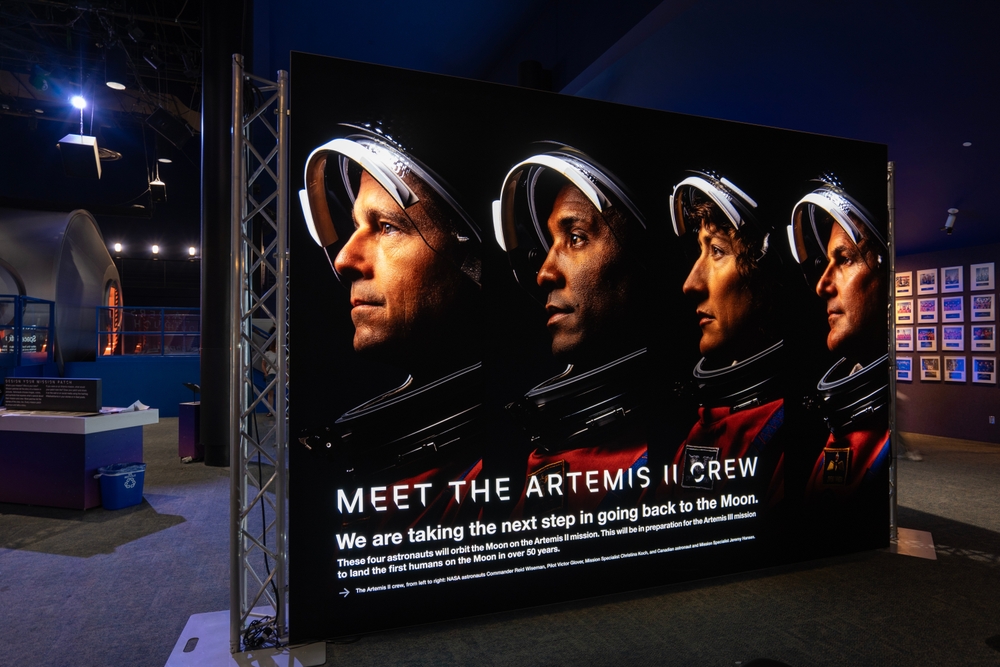
The journey to the Moon is often presented as one of humanity’s greatest achievements, something that blends cutting-edge technology with an almost dreamlike sense of exploration. But as the Artemis II crew prepare to return to Earth after more than a week in space, the focus begins to shift away from the mission itself and toward something far more personal and rarely discussed. While millions of people imagine the thrill of floating in zero gravity and seeing Earth from above, very few consider what that experience does to the human body once it ends. For astronauts, the return home is not just a triumphant moment, it is the beginning of a demanding physical adjustment that can feel as challenging as the mission itself.
Contents
show
After traveling at extreme speeds, witnessing the far side of the Moon, and spending days in an environment the human body was never designed for, the astronauts will soon splash down in the Pacific Ocean. From the outside, this moment will look like a clean and controlled success, but internally their bodies will be going through something much more complicated. Muscles that have not been used in the same way, balance systems that have essentially been switched off, and bones that have quietly weakened will all react the moment gravity takes hold again. It is a stark reminder that while space exploration continues to advance rapidly, the human body is still deeply tied to Earth in ways that cannot be easily overcome.
The Dramatic Return to Earth
Before any recovery can even begin, the astronauts must first make it safely through one of the most intense and dangerous phases of their entire mission, which is re entering Earth’s atmosphere. At speeds of around 25,000 miles per hour, the Orion capsule will slam into the atmosphere and generate extreme heat as it descends, creating conditions so intense that the spacecraft effectively rides through a controlled fireball. The heat shield plays a critical role here, protecting the crew from temperatures that can reach roughly half that of the sun, and any failure at this stage would have catastrophic consequences.
If everything goes according to plan, the capsule will splash down in the Pacific Ocean just off the coast of San Diego, where a carefully coordinated recovery operation will already be underway. Teams on the ground and in the air will work in precise synchronization, with helicopters circling the spacecraft to monitor its position and stability in the water. This moment, although brief, is filled with tension because even small errors could complicate the recovery process.
Once the capsule is stable, a flotation collar is attached to keep it upright, ensuring that the astronauts can be safely extracted. One by one, they are lifted out using a recovery basket and transported to a nearby naval vessel for immediate medical checks. From there, they will be flown back to Houston, but despite the smoothness of this operation, it marks the point where their bodies begin to feel the full force of gravity again, something they have not experienced properly for over a week.
Why Space Feels Easy At First
One of the more surprising aspects of space travel is that astronauts often describe their first days in orbit as enjoyable and even relaxing, which might seem counterintuitive given how extreme the environment actually is. Without gravity constantly pulling on the body, many of the physical demands of everyday life simply disappear, allowing the body to operate in a way that feels unusually effortless and light. Movements that would normally require coordination and strength become smooth and almost instinctive, creating a sense of freedom that is difficult to replicate on Earth.
Astronaut Tim Peake captured this feeling when he said “It feels like a holiday” and went on to explain “Your heart is having an easy time” and “Your muscles and bones are having an easy time.” These comments reflect how the body initially benefits from the absence of gravity, as systems that usually work hard to keep us upright and functioning are suddenly given a break. For a short time, it can feel like the body is operating under ideal conditions.
However, this comfort is deceptive, because the human body depends on gravity to maintain its strength and structure. When that constant force is removed, the body begins to adapt in ways that are not beneficial in the long term. What feels like rest is actually the start of a gradual weakening process, which only becomes obvious once astronauts return to Earth and are forced to rely on those same systems again.
Muscle Loss Builds Faster Than Expected
One of the most immediate and noticeable effects of spending time in microgravity is the rapid loss of muscle strength, something that can happen much faster than most people would expect. On Earth, even simple actions like standing still or maintaining posture require continuous muscle engagement, but in space, those demands disappear almost entirely. As a result, muscles begin to weaken because they are no longer being used in the same way, leading to a decline in strength over a surprisingly short period of time.
This issue has been studied extensively, and the results highlight just how quickly the body can change in space. Kevin Fong explained the seriousness of this effect by saying “In some experiments with rats, they’ve seen up to a third of muscle from particular muscle groups being lost within seven to 10 days of flight – that’s a huge, huge loss.” This shows that even relatively short missions can have a significant impact on the body, despite the best efforts to prevent it.
To counteract this, astronauts follow strict exercise routines while in space, using specialized equipment designed to simulate resistance in a weightless environment. Jeremy Hansen described how this works, saying “We can change the dynamics of this device so that we can do weightlifting with it. So we can do squats. We can do dead lifts. We can do curls. We can do high pulls.” Even with these measures in place, it is impossible to completely replicate the effects of gravity, which means some level of muscle loss is inevitable and becomes very apparent once the astronauts return home.
Bones and the Reality of Accelerated Ageing
While muscle loss tends to be more immediately noticeable, the effects on the skeletal system are equally important and potentially more long lasting. Bones rely on constant stress and resistance to maintain their density, and in the absence of gravity, that process is disrupted. Over time, this leads to a reduction in bone density, making bones weaker and more fragile, which can increase the risk of injury during and after missions.
Experts often describe this process as a form of accelerated ageing, because it mirrors the way bone density decreases over time on Earth but happens at a much faster rate in space. Professor Damian Bailey highlighted this by saying “Every month, about 1% of their bone and muscles are going to wither away – it’s accelerated ageing.” This comparison helps put into perspective just how significant the impact of microgravity can be on the human body.
Recovery from this type of change is not straightforward, and in many cases, it can take years for bone density to return to normal levels. Even then, some subtle changes may remain, suggesting that the body does not fully revert to its original state. This presents a major challenge for future missions, especially those that will require astronauts to spend extended periods of time in space.
Fluid Shifts and Changes Inside the Body
Another lesser known but equally fascinating effect of microgravity involves the way fluids move within the body. On Earth, gravity pulls fluids downward, which helps maintain a natural distribution throughout the body. In space, however, this force is no longer present, causing fluids to shift upward toward the chest and head, leading to noticeable physical changes.
One of the most visible effects of this shift is the development of a puffy face, while the legs appear thinner due to the reduced fluid volume. While this may seem like a minor cosmetic issue, the internal effects can be much more serious, as the redistribution of fluids can place pressure on the brain and eyes. This can lead to a range of complications that scientists are still working to fully understand.
These changes are associated with a condition known as spaceflight associated neuro ocular syndrome, which can affect vision and alter the structure of the eye. In some cases, astronauts experience blurred vision or other visual disturbances that may persist even after returning to Earth. This highlights how space travel affects not just muscles and bones, but the entire body in complex and sometimes unpredictable ways.
Why Balance Feels Completely Off
One of the most immediate challenges astronauts face upon returning to Earth is regaining their sense of balance, something that most people take for granted in everyday life. The body’s vestibular system, which is responsible for maintaining balance and orientation, becomes disrupted in space because there is no clear sense of up or down. As a result, the brain adapts to this new environment, which makes the transition back to Earth particularly difficult.
NASA astronaut Jasmin Moghbeli described this experience by saying “With eyes closed, it was almost impossible to walk in a straight line.” This simple statement highlights just how disorienting the return to gravity can be, even for individuals who are highly trained and physically fit. Tasks that would normally require little thought suddenly become challenging and require conscious effort.
Other astronauts have reported similar experiences, reinforcing how widespread this effect is. Andreas Mogensen explained “I felt wobbly for the first two days. My neck was very tired from holding up my head.” These accounts show that the body needs time to readjust, as muscles and balance systems gradually relearn how to function under the influence of gravity.
The Long Road Back to Normal Life
Returning to Earth is not the end of the journey for astronauts, but rather the beginning of a recovery process that can take weeks, months, or even longer depending on the individual and the duration of the mission. After spending time in space, the body needs to rebuild strength, restore coordination, and adapt once again to the constant pull of gravity. This process is carefully managed through structured rehabilitation programs designed to help astronauts regain their physical capabilities.
Jeanette Epps provided insight into this process when she said “You have to move and exercise every day, regardless of how exhausted you feel.” This highlights the level of dedication required during recovery, as astronauts must push their bodies even when they feel fatigued in order to regain lost strength and function. It is a demanding process that requires both physical and mental resilience.
While muscle mass can often be rebuilt within a few months, other aspects of recovery, such as bone density, can take significantly longer and may never fully return to pre mission levels. This underscores the importance of ongoing research and preparation, as space agencies continue to look for ways to reduce these effects and make long duration missions safer for future astronauts.
A Powerful Reminder of Human Limits
The return of the Artemis II crew is undoubtedly a moment of celebration and achievement, marking another step forward in humanity’s exploration of space. However, it also serves as a powerful reminder of the limits of the human body and the challenges that come with pushing beyond those limits. Space may offer incredible opportunities for discovery, but it also presents conditions that the body is not naturally equipped to handle.
As these astronauts take their first steps back on Earth, they are not just returning from a mission, they are readjusting to the environment they were designed to live in. Every unsteady step and every moment of recovery reflects the complex relationship between humans and gravity, something that is easy to overlook but impossible to escape.
Looking toward the future, especially with plans for longer missions to destinations like Mars, understanding these effects will become even more important. The story of Artemis II is not just about reaching new heights, but about recognizing the challenges that come with returning home, and finding ways to overcome them as humanity continues to explore beyond Earth.
Artemis II, astronaut rehabilitation, astronauts returning to Earth, bone density loss, effects of space on humans, human body in space, microgravity impact, muscle loss in space, NASA Artemis mission, NASA astronauts, space health risks, space mission recovery, Space Science, space travel effects, zero gravity effects