
Your cart is currently empty!
Study Finds Dancing May Be More Effective Than Medication for Depression

For millions of people living with depression, getting through an ordinary day can feel like a battle nobody else can see. Laura Hogzett knows that feeling personally. She is a licensed professional counselor who understood the language of mental health, yet she still found herself isolating, withdrawing from people, and slipping further into a place where she no longer felt like herself. Then something unexpected began pulling her back: music, movement, and a room full of strangers.
Contents
show
The Huge Study That Put Exercise To The Test

In February 2024, researchers led by Dr. Michael Noetel at the University of Queensland published one of the largest analyses ever assembled on exercise and depression. The team examined 218 randomized trials involving 14,170 people and looked at how different types of physical activity compared with established approaches, including antidepressant medication and psychological therapies. Rather than focusing on one particular workout, the researchers wanted to see how a wide range of activities performed across the available evidence.
The results gave people plenty to talk about. Walking helped, while jogging, yoga, strength training, and tai chi also showed meaningful benefits for depression. Exercise was not simply treated as something people should do because it is generally healthy. The analysis found evidence that different forms of movement could have a measurable impact on depressive symptoms.
“We found activities such as walking, jogging, yoga and strength training were extremely beneficial for treating depression,” Noetel said. But one activity stood out from the rest, and it was not the kind of treatment most people would expect to see near the top of a medical comparison.
Dance came out ahead of the other exercise categories included in the analysis. That does not mean researchers have suddenly discovered a replacement for antidepressants or therapy. It does mean an activity that many people think of as entertainment, recreation, or something reserved for people who know what they are doing has now become an interesting subject for serious mental health research.
Dance Produced The Biggest Effect In The Review

The numbers behind the headline are what made the finding so striking. Researchers use effect sizes to compare the strength of different interventions, with scores above 0.8 generally considered large. In the analysis, dance recorded an effect size of 0.96 against active controls, while walking and jogging reached 0.63, yoga reached 0.55, and strength training came in at 0.49.
The comparison became even more interesting when the researchers looked at established treatments. SSRI antidepressants recorded an effect size of 0.26 in the analysis, while cognitive behavioural therapy came in at 0.55. Those figures created an easy headline, but the researchers themselves were much more careful about what the numbers actually prove.
“One striking finding was that the effect of aerobic exercise appeared to be numerically larger than for SSRIs, although there weren’t many head-to-head studies and so this result needs to be interpreted cautiously,” Professor Jonathan Roiser, a neuroscientist at University College London, said. That final qualification is crucial because the study was not designed to prove that dancing works better than medication.
There was another encouraging detail buried beneath the headlines. The researchers found moderate, clinically meaningful benefits when exercise was added to SSRI treatment. In other words, the evidence does not necessarily put movement and medication on opposite sides of the table. Exercise may have value as another part of the treatment picture.
The Most Exciting Finding Comes With A Big Warning
There is a catch that should not be buried beneath the dance headlines. The specific dance result was based on only five studies involving a total of 107 people, and most participants were young women with an average age of 31. That is a very small sample compared with the enormous number of people living with depression around the world.
The researchers acknowledged the problem themselves. They wrote that “the small number of studies, low number of participants, and biases in the study designs prohibits us from recommending dance more strongly.” Noetel was also surprised that there were so few studies available to analyze.
“I was surprised dance even had five studies on it,” Noetel said. Professor Roiser went further, warning that the dance result “should not be taken too seriously owing to the low number of studies included.” The finding is interesting, but it needs much more research before anyone can confidently declare dance the best exercise for depression.
There is also no evidence here that people should stop taking antidepressants or abandon therapy in favor of a playlist and a living room dance session. Professor Michael Bloomfield, a psychiatrist at University College London, made that distinction clear.
“It is not possible to say at this stage that exercise on its own is better than existing treatments including medication and psychological therapies,” Bloomfield said. Anyone taking prescribed medication should speak with their doctor before making changes to treatment.
There Could Be More To Dance Than Exercise

So why did dance perform so well? One possibility is that it combines several things that other forms of exercise often separate. A run can give someone physical activity, while listening to music can affect mood and spending time around other people can provide social connection. Dance can bring all three into the same experience.
“Between the physical activity, social interaction, and the infusion of music, I’m not surprised that dance performed well,” Noetel said. That combination could be especially relevant for people whose depression has also pushed them toward isolation. Getting out of the house, moving the body, hearing music, and sharing a space with other people may create an experience that feels very different from exercising alone.
The researchers also found stronger effects associated with vigorous exercise, suggesting that intensity could be another part of the equation. But dance has something that a treadmill or weight machine cannot necessarily reproduce: expression. For some people, movement can become a way of communicating feelings that are difficult to explain with words.
“Dance is a language of the body. Our brain understands gestures that we may do as we dance like an expressive language,” researcher Julia Christensen said. Noetel summed up the wider potential of exercise in an equally memorable way: “If exercise was a pill, it would fly off the shelves.”
Other Researchers Are Finding Similar Clues
The BMJ analysis is not the only research examining dance and mental health. UCLA researchers surveyed roughly 1,000 people who practiced conscious dance, a free-form style where participants do not have to follow a fixed routine or learn complicated choreography. The survey found that 98% of participants said the practice improved their mood.
Most participants who were living with depression, anxiety, or a history of trauma also reported that conscious dance helped them cope. The study was a survey rather than a large randomized clinical trial, so it cannot provide the same level of evidence as a controlled experiment. Still, it adds another piece to a growing area of research.
“It is free flow, it’s free moving. It invites reflection. It’s more meditative rather than physical,” Dr. Prabha Siddarth, the UCLA research statistician behind the survey, said. Janet Lo, one of the dancers involved, described a similar experience in much simpler terms.
“I feel more present in my body. I feel more present in the moment. I’m more relaxed,” Lo said. That sense of becoming more connected to the body could be particularly interesting when considered alongside depression, which can affect how people experience their surroundings, relationships, and everyday activities.
Laura Hogzett Found Her Way Back Through Dance
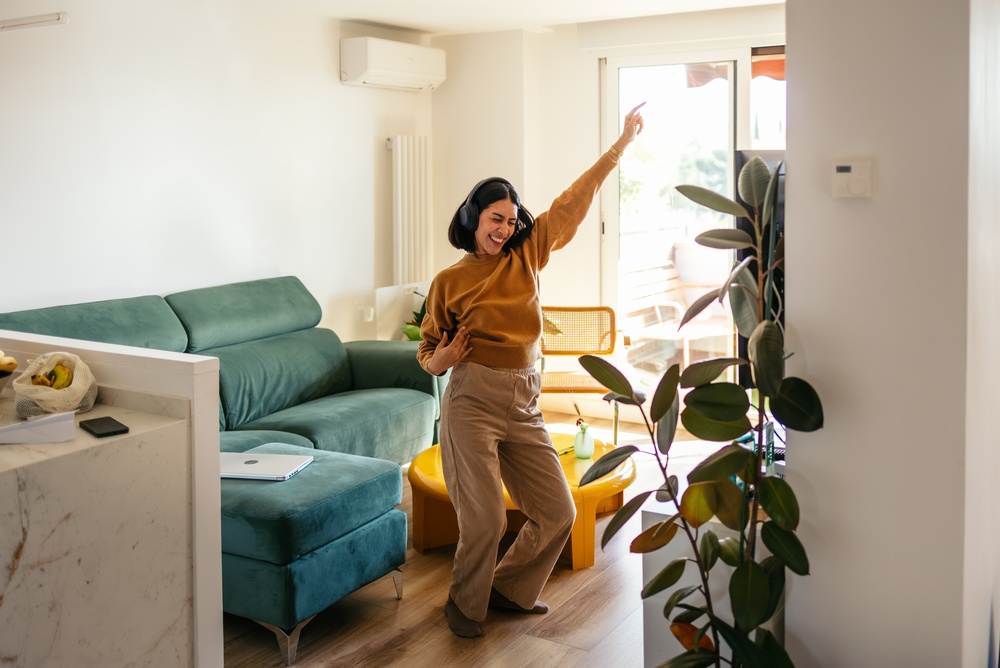
Long before researchers started calculating effect sizes, Hogzett had already discovered something about movement that the numbers would later help explain. During her own struggle with depression, she had become isolated and disconnected from the person she felt she used to be.
“I had begun to isolate, slipping quietly into the shadows of my own mind,” she wrote. “Depression crept in.”
Being around other people, hearing music, and allowing her body to move gave her another way to process something she could not easily put into words. For someone who had been trained to understand mental health professionally, that experience came from an unexpectedly simple place.
She later wrote that dance “gave me a way to express what I didn’t know how to articulate.”
Her final description is short, but it captures what the research is beginning to investigate.
“I felt like I was home.”
Source:
- PeopleHouse. (2025). Healing Through Ecstatic Dance: Can Movement, Community, and Sound Heal You Back to Life? || By Laura Hogzett MA, LPC, EMDR – PeopleHouse. In Peoplehouse.org. https://peoplehouse.org/healing-through-ecstatic-dance-can-movement-community-and-sound-heal-you-back-to-life-by-laura-hogzett-ma-lpc-emdr/