
Your cart is currently empty!
Scientists Found The Mushroom Behind The Tiny People Hallucinations
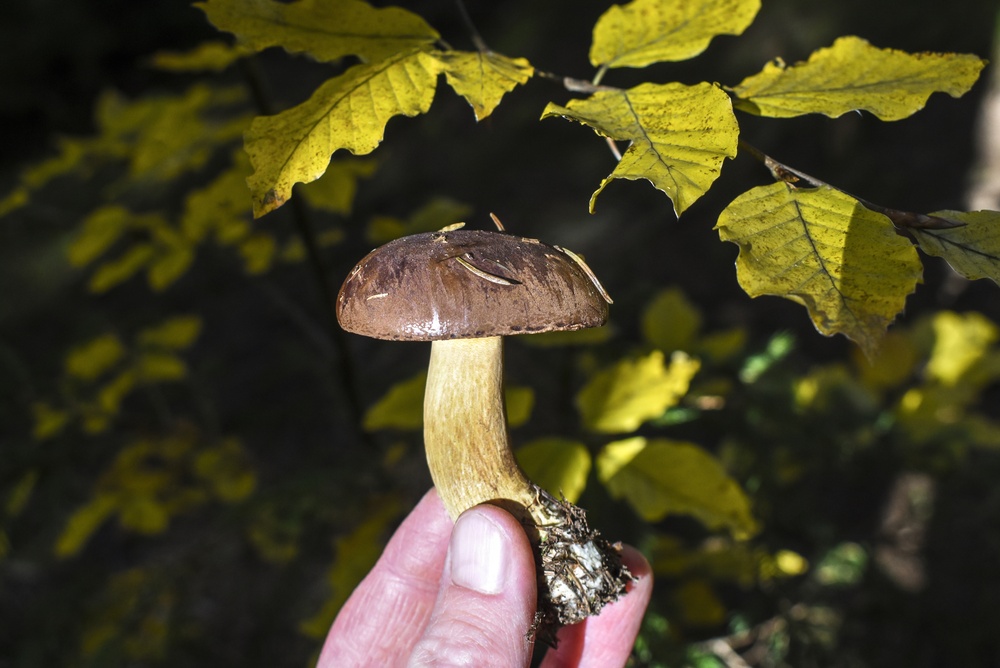
A mushroom served across parts of southwest China comes with an unusually specific warning: wait before eating it, or you might start seeing tiny people.
Contents
show
That strange effect has been documented in hospital records and firsthand accounts for decades. Now researchers have sequenced dozens of specimens and discovered something even more puzzling. The usual mushroom hallucinogens appear to be missing.
The Mushroom Behind The Bizarre Hallucinations
The mushroom is known as Lanmaoa asiatica, a red bolete prized in Yunnan, China. Its local name, jian shou qing, roughly translates to “turns blue in the hand.”
It is considered good enough to appear on restaurant menus, including hot pot restaurants where diners are warned to wait before eating it.

Colin Domnauer, a doctoral candidate at the University of Utah, encountered that tradition while visiting Yunnan. At one restaurant, a server set a 15-minute timer before telling the diners they could safely eat.
The warning was unusually precise: eating the mushroom too soon could make people see “little people.”
That strange claim has more evidence behind it than you might expect.
Hospital Records Reveal A Striking Pattern
Researchers reviewed records involving hundreds of people who became ill after eating the mushroom.
Among 398 patients admitted to a Yunnan University-affiliated hospital between January 2020 and December 2021, 90% experienced hallucinations.
Even more strikingly, 96% of affected patients in the reviewed hospital records reported seeing “little people” or elves.
The hallucinations generally appeared 12 to 24 hours after the meal. That delay can make the connection surprisingly difficult for someone experiencing it for the first time.
One moment, a person has eaten mushrooms for dinner. By the following day, miniature figures may apparently be moving around their home.
One Professor Saw Hundreds Of Tiny Soldiers

The descriptions become even stranger when people explain what the figures actually do.
A professor in Yunnan described seeing swirling colors and shapes before searching for the tiny figures he had heard about from local accounts.
At first, he found nothing.
Then he looked underneath a tablecloth.
What he saw was a crowd of miniature figures that appeared to be marching.
“When I lifted the tablecloth higher, the heads came off and stuck to the bottom of the cloth and the bodies kept marching in place,” the professor recounted.
He repeatedly checked what he was seeing. The figures kept appearing.
He even measured them.
“They were 2 cm high,” he said.
That detail is particularly unusual because these hallucinations are often described as occupying the physical environment rather than simply appearing as patterns floating across someone’s vision.
Why The Tiny Figures Look So Real

The phenomenon has a name: Lilliputian hallucinations.
The term refers to hallucinations involving miniature people, animals or other small figures. The name comes from the tiny inhabitants of Lilliput in Gulliver’s Travels.
A 2021 systematic review examined 226 documented Lilliputian hallucination cases from different causes. Those cases appeared alongside conditions including schizophrenia spectrum disorders, alcohol-related conditions, vision loss and neurological disease.
The mushroom cases have their own distinctive pattern.
People have reported dozens or even hundreds of figures. They can appear between roughly 3 and 30 centimeters tall, with many described as elves, clowns or fairy-like characters wearing colorful clothing.
The Figures Seem To Follow The Rules Of The Room
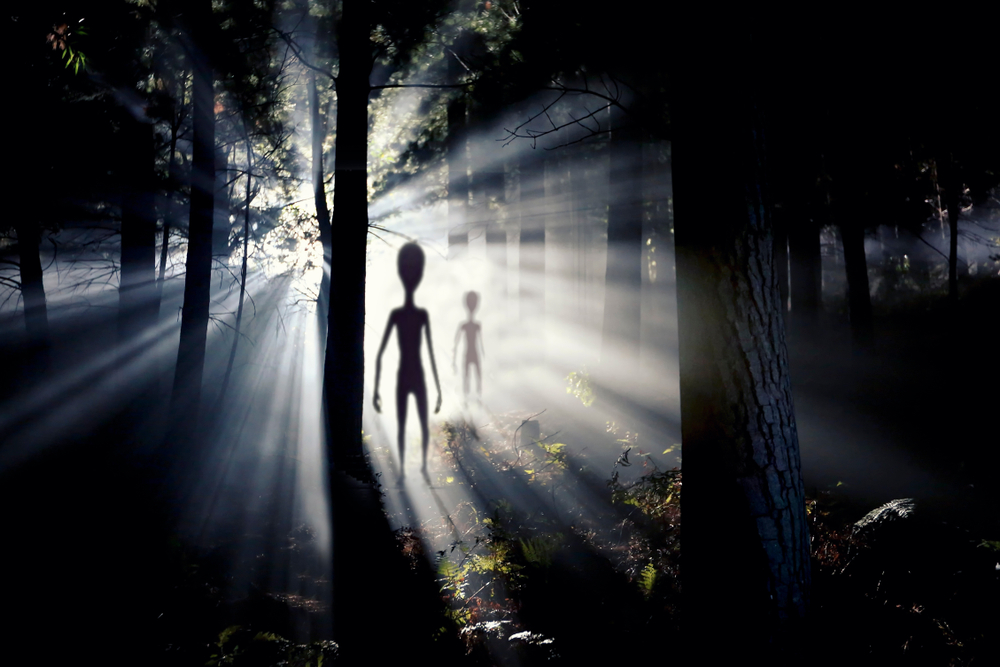
This is where the mystery becomes particularly interesting.
The figures are often described as though they occupy the surrounding space. They can appear to stand on floors, move behind furniture and interact with objects.
Domnauer described the effect by saying, “Lilliputian hallucinations inhabit and interact with the world according to physical laws.”
That raises a different question from simply asking why someone sees a hallucination.
The brain appears to be generating miniature figures while also giving them an apparent size, location, depth and relationship to the surrounding environment.
The University of Utah’s description of the research put the puzzle this way: “The brain is not simply generating an image of a miniature person.”
The figures seem to be inserted into an internally coherent representation of the room.
Scientists Looked For The Usual Hallucinogens

Researchers initially had an obvious direction to investigate.
Mushrooms can produce powerful hallucinations through compounds such as psilocybin. So scientists looked for the genetic machinery associated with familiar psychoactive mushroom compounds.
The results were unexpected.
Domnauer and mycologist Bryn Dentinger sequenced 53 wild and fungarium specimens of Lanmaoa asiatica. They compared 1,515 single-copy genes across the genus.
The research, published in Mycologia in June 2026, found no close genetic matches for genes known to produce mushroom psychoactive compounds.
The researchers specifically looked for the genetic machinery associated with psilocybin and ibotenic acid.
Neither provided the answer.
Domnauer summed up the problem bluntly: “We genuinely don’t know what the active compound is.”
Earlier Chemical Searches Also Came Up Empty

The genetic results were not the first clue that something unusual was happening.
Earlier chemical investigations had failed to identify an obvious hallucinogenic compound in the mushroom itself. Blood samples from affected patients also failed to provide the answer.
The latest research therefore leaves scientists with a particularly awkward mystery.
The hallucinations are repeatedly documented. The mushroom has a clear association with them. Researchers have ruled out familiar suspects.
But the substance responsible remains unidentified.
The Mystery Goes Back Much Further Than China
The strange reports are not confined to modern Yunnan.
A Western account from Papua New Guinea in 1934 described similar experiences involving mushrooms known locally as Nonda.
In northern parts of the Philippines, related mushrooms are known as Sedesdem.
The names differ, but accounts of miniature figures appear across the regions.
One elder in Papua New Guinea described seeing tiny people with mushrooms around their faces. The figures teased him, and he tried to chase them away.
There is an even older reference.
A Daoist text dating to the third century reportedly describes a mushroom that causes someone to “see a little person” and “attain transcendence immediately.”
That does not establish that every historical account involved the same species or compound. It does, however, show how long stories of mushroom-related miniature figures have been circulating.
Cooking The Mushroom Does Not End The Mystery
The 15-minute restaurant timer might sound like an odd local custom, but the underlying concern is serious.
Most reported incidents involve fresh mushrooms. Frozen mushrooms have also been implicated.
Cases have reportedly occurred even after the mushrooms were fried or exposed to high cooking temperatures.
That suggests the substance responsible may be relatively stable under heat.
Researchers therefore have several unanswered questions:
- What is the active compound? Scientists have not identified the substance responsible for the hallucinations.
- Why does it produce tiny people? The unusually consistent imagery remains unexplained.
- Why do the figures appear embedded in the environment? Their apparent interaction with floors, furniture and other surfaces adds another layer to the puzzle.
- How does cooking affect the compound? The available reports suggest heat does not always eliminate the risk.
- Why has the effect appeared across different historical accounts? Similar descriptions stretch across regions and centuries.
The evidence also has important limits. Much of what scientists know comes from hospital records and personal accounts rather than controlled human experiments.
The genetic research rules out familiar explanations. It does not yet identify the correct one.
The Mushroom Is Delicious Enough To Keep Serving
Perhaps the strangest part of the story is that the mushroom has not become a forbidden curiosity.
It remains a valued food in Yunnan.
That creates an unusual relationship between tradition and risk. People know the mushroom can cause hallucinations when prepared incorrectly, yet it continues to appear in local cuisine.
For diners, the timer becomes part of the meal.
For scientists, the timer points toward a much larger question.
If a mushroom can repeatedly produce such a specific hallucination, there should be something inside it capable of affecting the brain in a particular way.
Yet after examining its genetics and searching for familiar compounds, researchers still cannot say what that substance is.
Scientists Are Still Chasing The Missing Molecule
Domnauer remains interested in the mystery partly because of how widely the phenomenon has been reported.
“I’m fascinated by how far the knowledge of these mushrooms extends, across both space and time,” he said.
That history now gives researchers an unusual trail to follow.
There are modern hospital records. There are firsthand descriptions of tiny figures. There are centuries-old references. There are genetic sequences from dozens of mushroom specimens.
And still, the molecule itself has not been found.
For now, Lanmaoa asiatica remains a rare scientific oddity: a mushroom people have eaten for generations, a hallucination researchers can document, and a chemical mystery that refuses to reveal itself.
The tiny people have been measured. The mushroom has been sequenced. The compound is still missing.