
Your cart is currently empty!
Pope Leo Issues Stark Warning About AI And Says It Must Be “Disarmed”

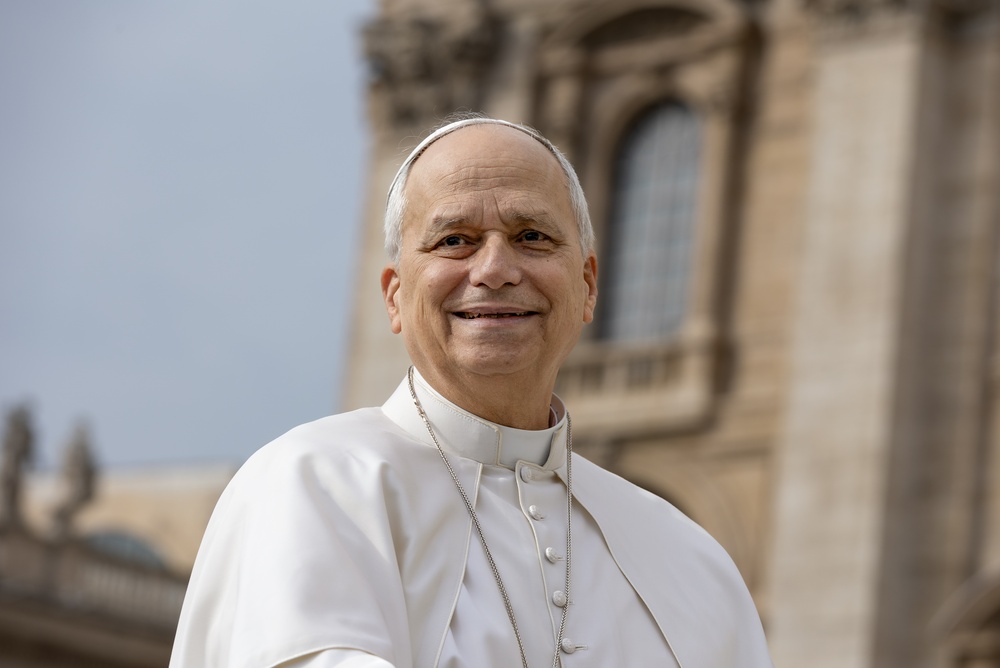
The Vatican has stepped directly into one of the biggest global fights of the modern era, and Pope Leo XIV is not using soft language about it. In his first major teaching document since becoming pope, Leo warned that artificial intelligence risks reshaping society in ways that could damage democracy, erase human dignity, intensify war, and leave millions of workers behind. The most talked-about line from the massive document came when the pope declared that AI must be “disarmed,” a phrase that immediately sparked reactions across political, religious, and tech circles because of how aggressively it framed the dangers surrounding rapidly advancing technology.
Contents
show
The 200-page encyclical, titled Magnifica Humanitas (“Magnificent Humanity”), goes far beyond chatbots or social media algorithms. Pope Leo used the document to confront a much larger question about whether humanity is allowing technology companies and political systems to move faster than society can ethically handle. He warned against AI-driven misinformation, military systems controlled by machines, growing inequality, and what he called “new digital slaveries” tied to the hidden labor behind the global AI economy. The document also included one of the strongest apologies ever issued by a pope regarding the Catholic Church’s role in slavery, making the encyclical one of the most politically charged Vatican teachings in years.
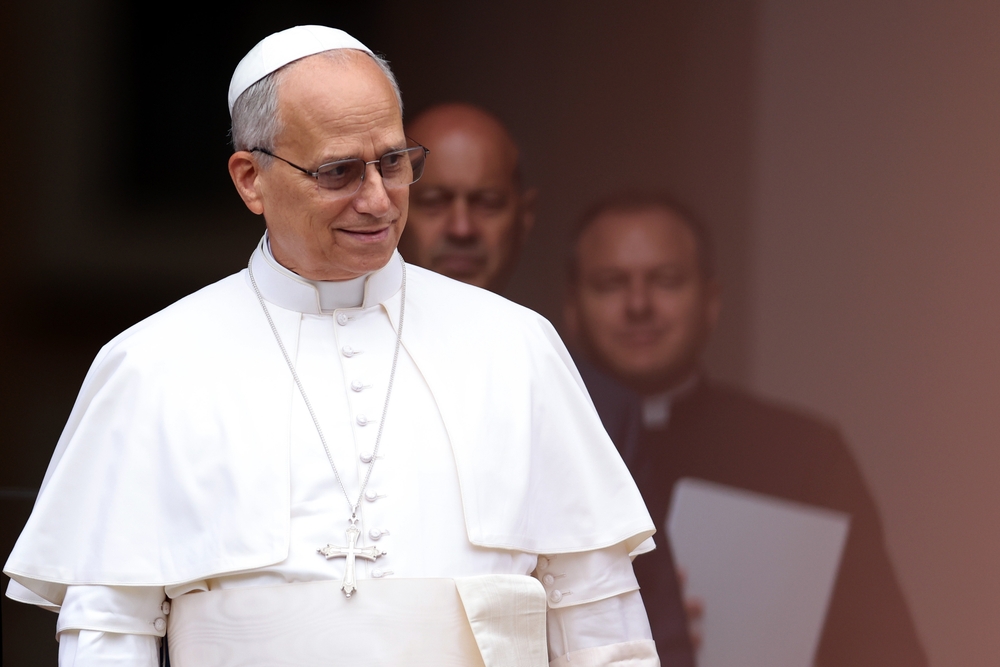
Pope Leo Says AI Is Threatening Human Dignity
Pope Leo repeatedly stressed that artificial intelligence should never be treated as equal to human beings because machines cannot experience life the way people do. He argued that AI systems imitate intelligence without possessing emotion, responsibility, love, suffering, or moral understanding.
“So-called artificial intelligences do not undergo experiences, do not possess a body, do not feel joy or pain, do not mature through relationships and do not know from within what love, work, friendship or responsibility mean,” Leo wrote.
The pope made clear that his concern is not simply about future technology. He warned that AI systems are already shaping politics, economics, education, and warfare while being controlled by a small number of powerful corporations and governments. According to Leo, the danger grows when society starts treating technological progress as something inevitable rather than something human beings can regulate and challenge.
He also argued that technology always reflects the priorities of the people designing it. “Technology is never neutral, because it takes on the characteristics of those who devise, finance, regulate and use it,” the pope wrote. He added that developers “bear a particular ethical and spiritual responsibility, for every design choice reflects a vision of humanity.”
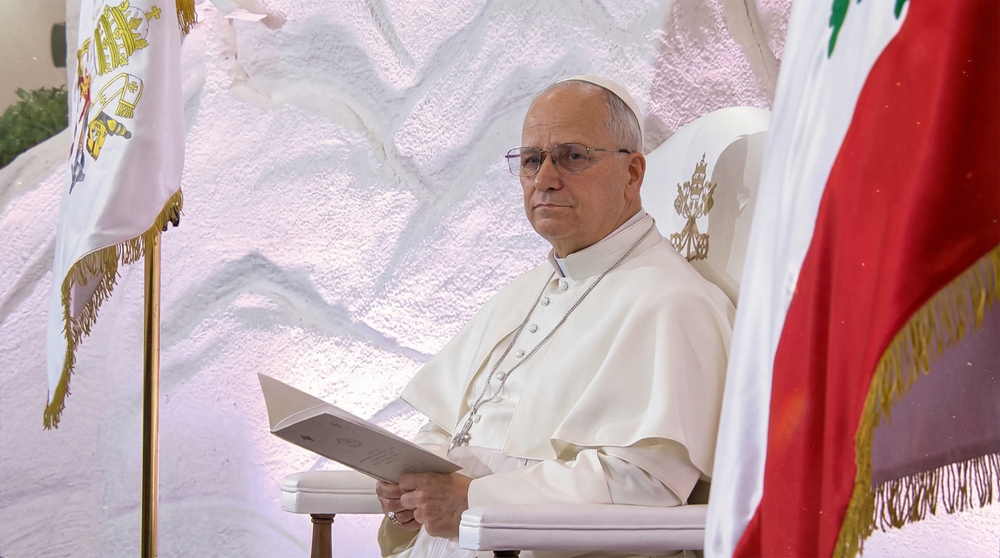
The Vatican Has Been Quietly Working With AI Leaders For Years
The release of the encyclical revealed how deeply the Vatican has already become involved in conversations about artificial intelligence behind closed doors. Church officials confirmed that the Vatican has spent nearly a decade holding discussions with major technology companies about ethics and AI development.
One source involved in the outreach effort explained that tech leaders had actively looked to the Church for guidance on how emerging technology should serve humanity rather than dominate it. The Vatican’s willingness to involve Silicon Valley directly became even more obvious when Christopher Olah, co-founder of AI company Anthropic, appeared alongside Vatican officials during the encyclical’s official presentation.
Olah acknowledged that AI companies often operate under intense commercial pressure. He admitted that every major AI lab functions “inside a set of incentives and constraints that can sometimes conflict with doing the right thing.” He also warned that the moral questions raised by AI are too important to leave entirely in the hands of engineers and developers.
“The questions raised by AI are bigger than the AI research community,” Olah said during the Vatican event. His appearance alongside cardinals and theologians highlighted how seriously the Church now views artificial intelligence as a global issue that extends far beyond technology itself.
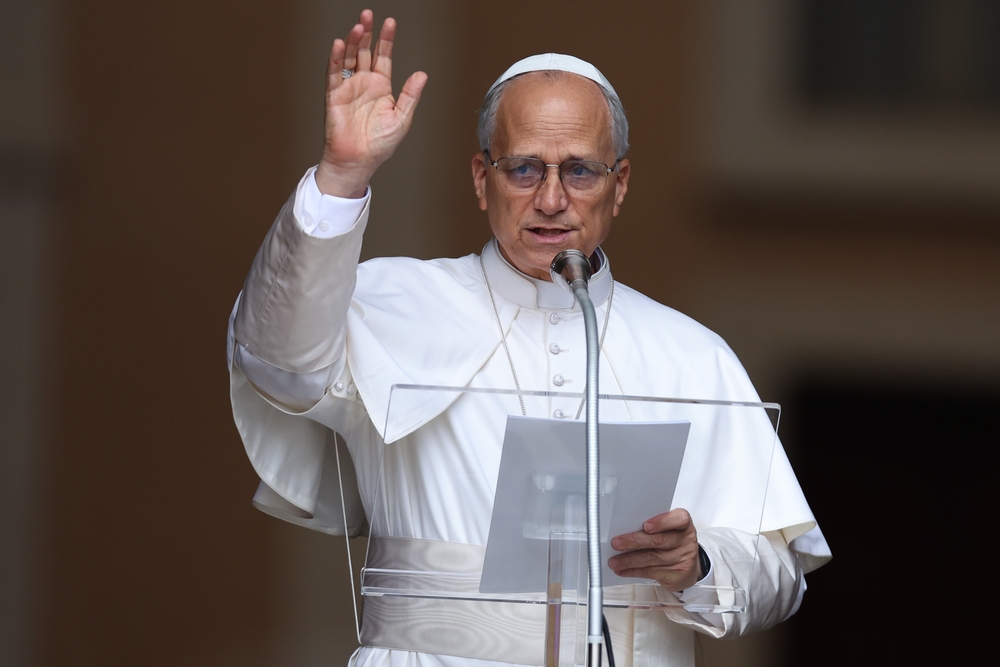
Pope Leo Delivered A Blistering Warning About AI Warfare
Some of the strongest language in the document focused on military technology and the growing use of AI in warfare. Pope Leo condemned the idea of handing lethal decisions to artificial systems and warned that advanced military algorithms could make future conflicts even more dangerous.
“It is not permissible to entrust lethal or otherwise irreversible decisions to artificial systems,” the pope wrote. He added that accountability cannot disappear into “the machine” simply because an algorithm was involved in making a deadly choice.
Leo also argued that AI risks lowering the threshold for violence because automated systems create emotional distance between military action and human suffering. “No algorithm can make war morally acceptable,” he wrote while criticizing the growing development of autonomous weapons and predictive military technologies.
The pope went even further by directly challenging the Catholic Church’s traditional “just war” theory. “Today, more than ever, without prejudice to the right to self-defense in the strictest sense, it is important to reaffirm that the ‘just war’ theory, which has all too often been used to justify any kind of war, is now outdated,” he wrote. The statement immediately drew attention because it marked one of the clearest rejections yet of the centuries-old framework used by the Church to evaluate armed conflict.
The Main AI Threats Leo Identified
- AI-powered misinformation campaigns
- Autonomous weapons systems
- Mass job displacement through automation
- Corporate concentration of technological power
- Young people becoming dependent on machines
- Political polarization amplified by algorithms
- Loss of human judgment and critical thinking
The Pope Warned Democracy Is Being Weakened By Algorithms
A major section of the encyclical focused on how AI-driven systems influence public debate and political life. Pope Leo warned that algorithms designed to maximize engagement often reward outrage, conflict, and disinformation.
“Indifference to the truth leads, slowly but surely, to a descent into totalitarianism,” he wrote while discussing the dangers posed by manipulated media, biased information systems, and online polarization.
The pope argued that many people now consume information inside algorithm-driven environments that constantly reinforce emotional reactions and ideological divisions. According to Leo, this weakens democratic societies because people become less capable of genuine dialogue and thoughtful disagreement.
He also criticized what he described as a “violent culture of power” emerging through digital systems that reward confrontation and simplify complex political realities into friend-versus-enemy narratives. The pope specifically warned that AI-powered media manipulation could distort public understanding and make democratic decision-making increasingly unstable.
Pope Leo Issued One Of The Strongest Vatican Apologies For Slavery
One of the most surprising sections of the encyclical had nothing to do with AI itself. Pope Leo directly confronted the Catholic Church’s delayed condemnation of slavery and issued one of the clearest institutional apologies ever delivered by a pope.
“It was impossible not to feel deep sorrow when contemplating the immense suffering and humiliation endured by so many,” Leo wrote before acknowledging the Church’s historical failures.
“Despite the church’s consistent affirmation of universal human dignity, it took eighteen centuries for its full incompatibility with slavery to be explicitly recognized,” the pope continued. “For this, in the name of the Church, I sincerely ask for pardon.”
Leo linked historic slavery to the modern digital economy supporting artificial intelligence. He argued that many AI systems depend on underpaid workers performing data labeling, content moderation, and resource extraction under difficult conditions that remain largely invisible to the public. The pope warned that society risks normalizing exploitation again through what he described as “new digital slaveries.”

AI Could Wipe Out Jobs And Deepen Economic Inequality
The economic consequences of artificial intelligence formed another major focus of the document. Pope Leo warned that widespread automation could create severe structural inequality if governments and corporations fail to protect workers.
A study cited in reports surrounding the encyclical estimated AI could replace nearly 11.7% of the American workforce. Leo argued that technological progress cannot become an excuse for sacrificing human livelihoods in pursuit of efficiency and profit.
“The pursuit of greater profits cannot justify choices that systematically sacrifice jobs,” the pope wrote. “Because the human person is an end, not a means, and the economic order must remain subordinate to human dignity and the common good.”
Leo also criticized economic systems that focus too heavily on GDP while ignoring broader measures of wellbeing and social stability. He called for stronger oversight of algorithms influencing hiring decisions, access to services, and financial systems. The pope additionally defended labor unions and urged institutions to help workers adapt to technological changes instead of abandoning them.

Pope Leo Says Young People Face Serious Digital Risks
The encyclical repeatedly returned to concerns about younger generations growing up surrounded by digital technology. Pope Leo warned that excessive dependence on screens and AI-powered systems could damage emotional development and weaken critical thinking.
“Having a personal mobile device at too early an age and using it without adult supervision can exacerbate young people’s vulnerabilities, foster addiction and expose them to isolation, bullying and cyberbullying,” the pope wrote.
Leo argued that many young people now struggle to connect information with deeper understanding because of how modern digital systems encourage constant distraction and fragmented attention. He urged schools and families to place greater importance on reading, silence, reflection, and in-depth study.
The pope also warned against the temptation to treat machines as replacements for human judgment. He argued that society risks making thoughtful reflection seem unnecessary precisely when technological changes require stronger moral and intellectual engagement.

The Vatican Is Trying To Become A Major Voice In The Global AI Debate
Pope Leo’s encyclical immediately positioned the Vatican as one of the loudest religious voices in the international debate over artificial intelligence. Governments, universities, and tech companies are already struggling to figure out how to regulate AI systems that continue advancing at extraordinary speed.
The pope framed the issue as something much larger than technology policy. He argued that the future of AI is directly connected to questions about truth, work, democracy, war, education, and the value of human life itself.
“We cannot allow a handful of actors to dictate these processes on their own,” Leo wrote while warning against the concentration of technological power among a small group of companies and political elites.
Near the end of the document, the pope quoted Gandalf from The Lord of the Rings while urging people not to become passive observers during a period of massive technological change. “The civilization of love will not arise from a single or spectacular gesture, but from the sum total of small and steadfast acts of fidelity that serve as a bulwark against dehumanization.”
AI and democracy, AI and humanity, AI arms race, AI dangers, AI Ethics, AI jobs, AI misinformation, AI regulation, AI warfare, Anthropic AI, artificial intelligence, Catholic Church, Christopher Olah, digital slavery, Magnifica Humanitas, Pope Leo AI warning, Pope Leo encyclical, Pope Leo XIV, religion and technology, tech news, trending news, Vatican AI, Vatican news, Vatican statement, World News